Remember when I shared Diane DeCillis’s exquisite poem, “Opera Buffa”?
I’m still sighing over “gnocchi lifted itself off the fork” and that lovely Panna Cotta — “silky, quivering cream adorned with fresh berries.” Remember silly Antonio, who wasn’t interested in ordering dessert? You simply cannot trust a man who doesn’t like sweets!
After reading “Opera Buffa,” I yearned for more of Diane’s poetry, which is why I was ecstatic when her debut collection, Strings Attached (Wayne State University Press, 2014), was released in May.
What a beautiful, lush, finely crafted feast of brilliance!
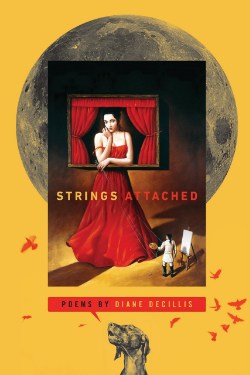 Her 60+ poems tease the intellect, warm the heart, please the ear, whet the physical and spiritual appetites, and nourish artistic sensibilities with their worldly elegance, lyricism, surprising turns-of-phrase, and evocative narratives.
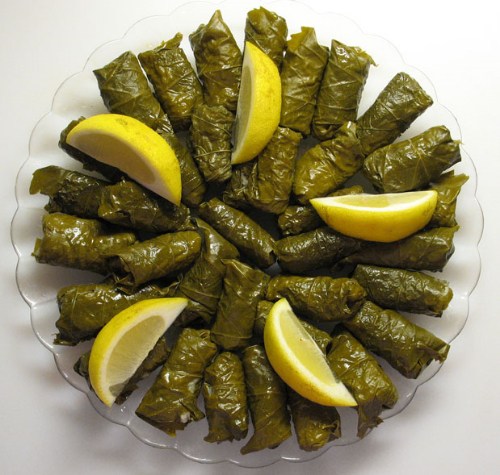
I love how Diane’s passions for art, music, literature, food and family inform structure, theme, cadence, image, and metaphor. As in “Opera Buffa,” the food-related poems are infused with tantalizing sensory detail, whether she muses about her Lebanese grandmother’s stuffed grape leaves or leban (yogurt), “ethereal profiteroles filled with crème de la moo,” or terrapin soup à la Babette’s Feast.
Pop culture and high art happily co-exist in the layers of Diane’s imagination as she riffs on the likes of Van Gogh, Cezanne, Picasso, Magritte, Duncan Hines Pineapple Cake Mix, Tab Hunter/ Sandra Dee in a fleabag motel, Chopin, Debussy, Rilke, Gertrude Stein, “Like Water for Chocolate,” “Punch Drunk Love.”
Diane brings her own brand of self-deprecating humor to these poems (“What Would Hitchcock Do?”), but there are also poignant notes of longing for an absent father (“Finding Fathers”), the push-pull dynamics of generational clashes (“Milk”), the vagaries of love, the liberation of dreams, the richness of cultural heritage.
Today I’m happy to share one of several prose poems from Strings Attached, perhaps the “foodiest” in the collection. I love how Diane has composed this sensorial symphony of sounds, colors, flavors, aromas and textures, lovingly capturing a cherished moment in time. A masterful culinary canvas!
* * *

 Though he was deliciously famous during Victorian times and has been called the first celebrity chef, today Soyer is curiously the man history forgot.
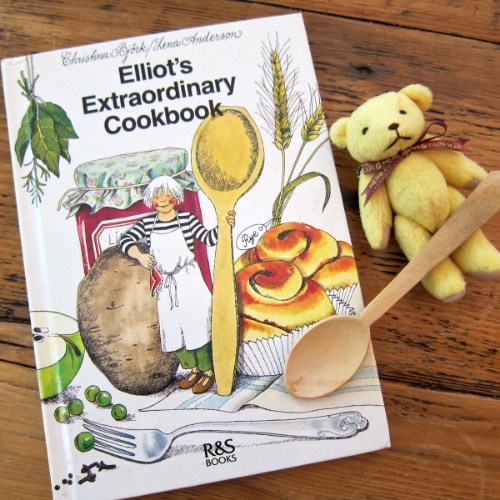
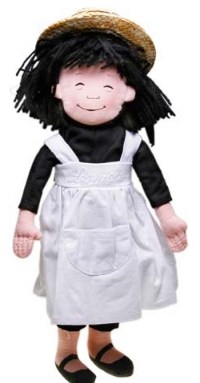 Though I’m a longtime Christina Björk and Lena Anderson fan (they’re the Swedish author and illustrator team who created Linnea in Monet’s Garden and Linnea’s Almanac, among many others), I didn’t know about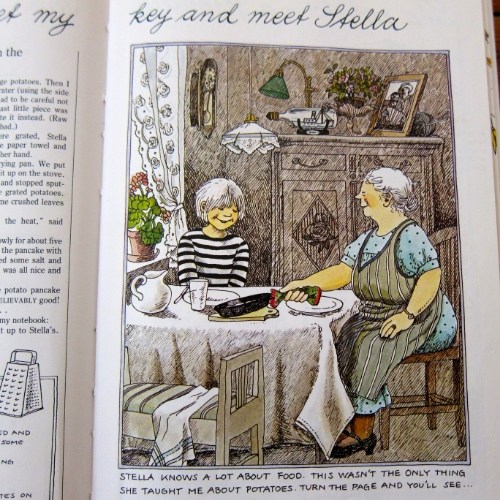
 I’m pleased today to welcome Maryland poet
 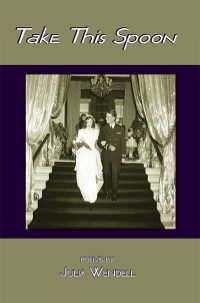 Julia explores the complicated relationship humans have with food by fixing a personal lens on her own family. In artfully crafted scenes, (a mother keeping her daughter out of the kitchen so she won’t see her drinking, a young woman bringing home a bohemian boyfriend to dinner at her mother’s “immaculate table,” a woman aching for her deceased mother as she comes across her handwriting on recipe cards), the subtexts of pain, regret, loss, and contention are plated to perfection. Her descriptions of food are lyrical and sensual, her voice intimate and honest, her ability to align what is being eaten with what eats away at the heart and soul is powerful.
 Jama's Alphabet Soup