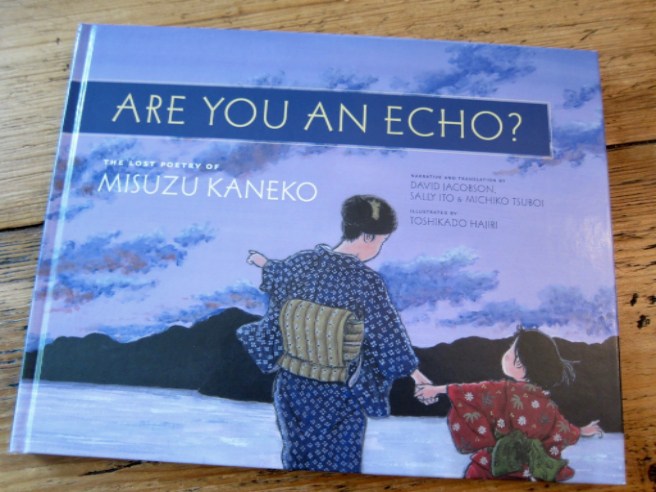
[review] Are You an Echo?: The Lost Poetry of Misuzu Kaneko by David Jacobson, Sally Ito, Michiko Tsuboi, and Toshikado Hajiri

Though every elementary school student in Japan is familiar with Misuzu Kaneko’s poetry, relatively few in the English-speaking world are familiar with her work.

Marked by a refreshing ingenuousness, curiosity, and extraordinary empathy for the world around her, Misuzu’s poems resonate with people of all ages, demonstrating that quiet, gentle words have their own special power.

DEWDROP

Let’s not tell anyone.

In the corner of the garden this morning,
a flower shed a tear.

If word of this spreads
to the ears of the bee,

it’ll feel it’s done wrong
and go back to return the nectar.

Thanks to this breathtakingly beautiful picture book, a new audience of North American children can now read a selection of Misuzu’s poetry in English, learn about her short tragic life and the fascinating backstory of how her work was lost for half a century before being rediscovered in 1982.

 In Are You an Echo?: The Lost Poetry of Misuzu Kaneko (Chin Music Press, 2016), author David Jacobson frames the story of Misuzu’s life with an account of how young student poet Setsuo Yazaki read one of her poems and was so impressed by it that he spent the next 16 years searching for more.
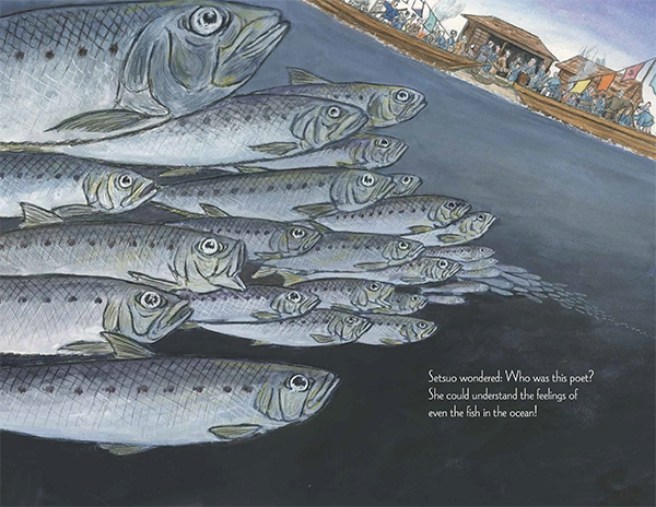
Art © 2016 Toshikado Hajiri

BIG CATCH

At sunrise, glorious sunrise
it’s a big catch!
A big catch of sardines!

On the beach, it’s like a festival
but in the sea, they will hold funerals
for the tens of thousands dead.
Continue reading

autumn pleasures: three poems, butternut bisque, and gingerbread applesauce cake

Hello Friends. Can’t believe it’s already the end of October!

Fall is going much too fast for me. I wish there was a way to make it last longer — trees aflame with color, deep blue skies, crisp mornings, apple everything and friendly pumpkins! If I had my way, I would skip summer entirely and have two autumns in a row.

More than any other season, Fall reminds me to make the most of each moment. Lovely though it may be, there’s always this sense of reckoning, the gathering in and taking stock, and with that an acute awareness of life’s evanescence.

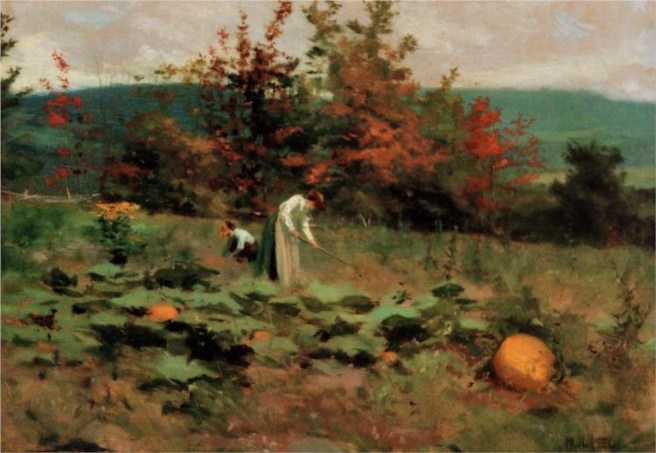
“Pumpkin Patch” by Paul Peel

AUTUMN
by Linda Pastan

I want to mention
summer ending
without meaning the death
of somebody loved

or even the death
of the trees.
Today in the market
I heard a mother say

Look at the pumpkins,
it’s finally autumn!
And the child didn’t think
of the death of her mother

which is due before her own
but tasted the sound
of the words on her clumsy tongue:
pumpkin; autumn.

Let the eye enlarge
with all it beholds.
I want to celebrate
color, how one red leaf

flickers like a match
held to a dry branch,
and the whole world goes up
in orange and gold.

~ from Heroes in Disguise (W.W. Norton, 1992)

*

Continue reading

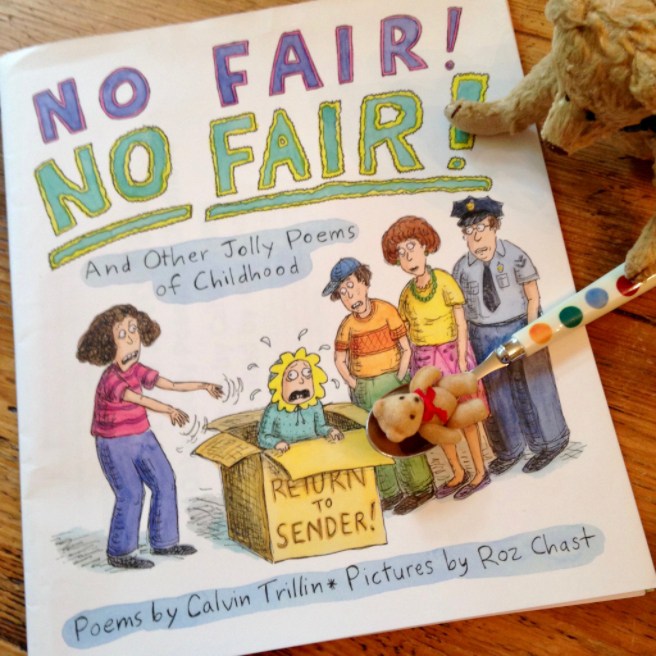
[book review] No Fair! No Fair! And Other Jolly Poems of Childhood by Calvin Trillin and Roz Chast

Do you have a bossy older sibling? Wish you could eat ice cream for breakfast instead of oatmeal? Why ride the bus to school when a helicopter would be so much better?

Ah yes, life’s little injustices! If you can’t change them, may as well laugh about them.

In No Fair! No Fair! And Other Jolly Poems of Childhood (Orchard Books, 2016), eminent New Yorker contributors Calvin Trillin and Roz Chast serve up big helpings of funny with their poems and pictures about various and sundry everyday things that can drive kids nuts. No matter our age, we’ve all been there. Ever have a wardrobe crisis in the morning?

GETTING DRESSED

Oh, this is such a silly rule —
That people must wear pants to school.
A better rule, a wise man said,
is wear your underpants instead.

This little morning complaint is just the beginning. There are complaints about school and for the evening, too. As the title states, no fair! no fair!

Many of the 23 rib-ticklers in this collection were inspired by real-life experiences from Trillin’s children, grandchildren, and his own childhood. Young readers will giggle in recognition at the ploys used to convince one’s parents to get a pet, the earnest desire to send back a new baby brother, and horror of all horrors — sitting next to a scoocher sister who won’t stay on her side of the backseat. Grrrrrr.

She’s over the line,
she’s over the line.
She occupies space
That’s rightfully mine.

Continue reading

to dance beneath the diamond sky with one hand waving free

“He’s a poet. Basically he’s a poet. He does not trust his voice. He doesn’t trust his guitar playing. He doesn’t think he’s good at anything, except writing—and even then he has self-doubts. Have you heard that thing he wrote about Woody Guthrie? That to me is the sum of his life’s work so far. Whatever happens, that is it. That sums it up.” ~ Eric Clapton on Bob Dylan

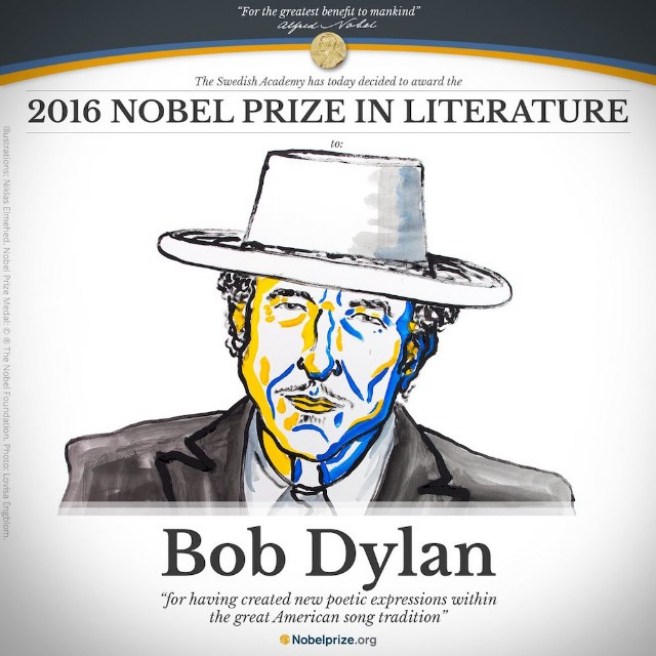
Glory Be! The man has gone and done it!

The 2016 Nobel Prize in Literature is such a crowning achievement for our favorite song and dance man. Bob turned 75 this year and is still breaking boundaries as the only singer-songwriter to have ever been awarded this coveted prize.

Aside from my inner fangirl whooping for joy and turning cartwheels at the sheer awesomeness of the whole thing, what I’m most happy about is that perhaps this distinction will inspire the average person to broaden his/her view of what constitutes “poetry.”

A rare smile!

Poetry doesn’t have to be esoteric, elitist, abstract or inaccessible. It doesn’t have to live in slim volumes with boring covers. It can be the well crafted lyrics of anthemic compositions that capture the heartbeat of personal and social history through time.

After all, poetry began as an oral tradition, much of it meant to be performed with music. To those who find Dylan undeserving, I would ask that they throw off their cloaks of intellectual snobbery and abandon preconceptions about conventional “Literature.”

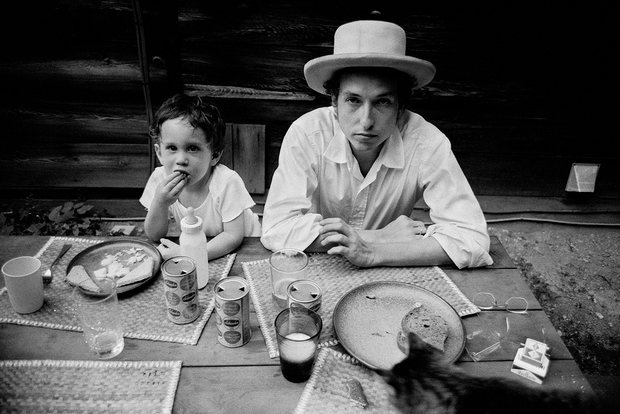
Bob with his son Jesse

“Literature” is not limited to printed novels, plays, or short stories. Talk to me about more than five decades of enormous cultural influence, words of searing truth, crackling inventiveness. Talk to me about enlarging the possibilities of American popular music.

Take the average Joe in a grocery store check-out line. Chances are he’s never read any of the Nobel Prize winning novels, but he’s heard a Dylan song or two.

A song is a poem for everyman.

I consider myself a poet first and a musician second. I live like a poet and I’ll die like a poet.

Eight years ago, the very first time I hosted Poetry Friday, I asked participants to post their favorite Dylan lyrics. I shared the 8th of Dylan’s “11 Outlined Epigraphs.” He was 22 when he wrote this in 1963:

Continue reading

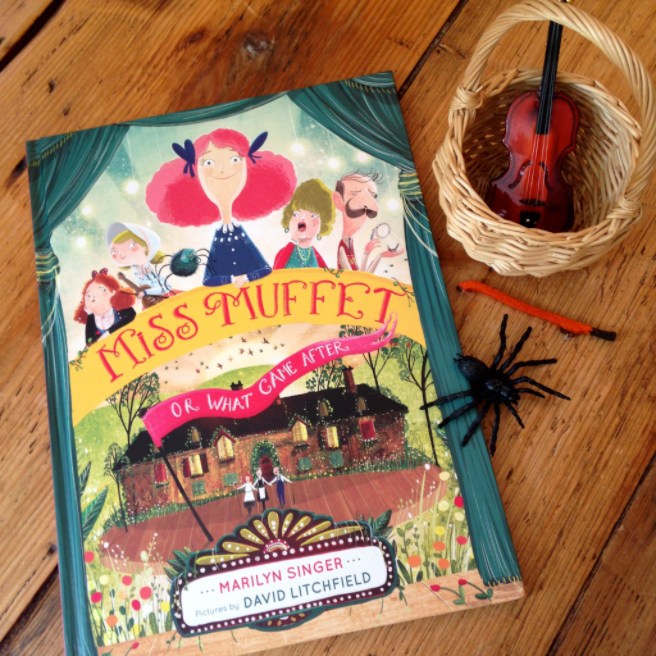
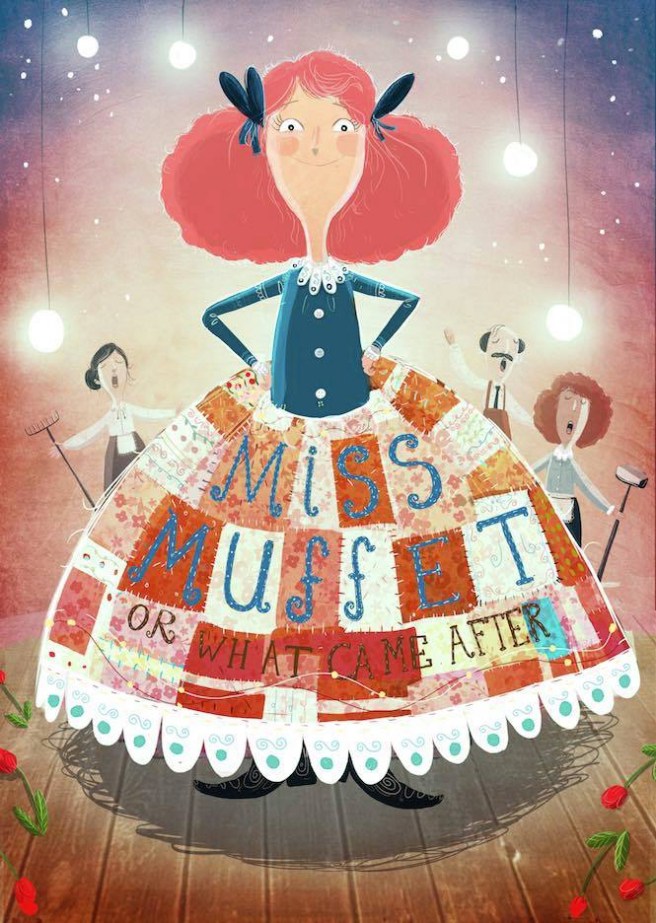
[review, recipe, giveaway!] Miss Muffet, or What Came After by Marilyn Singer and David Litchfield

Little Miss Muffet
Sat on a tuffet,
Eating her curds and whey;
Along came a spider,
Who sat down beside her,
And frightened Miss Muffet away.


Well, no. Not exactly.

There’s more to this story than meets the eye.

Curtain Up!

*

🎻ACT ONE, or The Real Story 🎻

It seems nursery rhymers of yore mistook our dear Miss Muffet for a dainty scaredy-cat milquetoast without really considering:

  1. her true potential
  2. some spiders are undeniably cool
  3. the inherent power of cottage cheese.

Now, thanks to Marilyn Singer and David Litchfield, Miss Patience Muffet finally gets her props in a hilarious new picture book, Miss Muffet, or What Came After (Clarion, 2016), proving, once and for all, that where there’s a will there’s a whey. 🙂

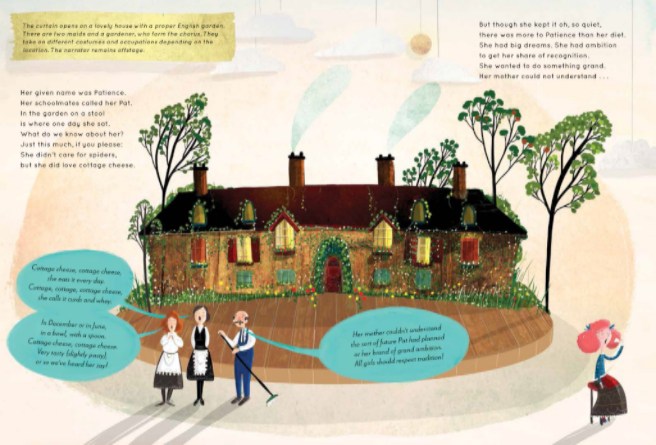
Told in sprightly verse as a rousing musical theatre production, the book features a fetching cast that includes an off-stage narrator, a chorus of three (gardener + 2 maids), Webster the spider, and nursery characters Little Bo-Peep and Old King Cole, among others. These clever players had me from their opening lines.

Narrator:

Her given name was Patience.
Her schoolmates called her Pat.
In the garden on a stool
is where one day she sat.
What do we know about her?
Just this much, if you please:
She didn’t care for spiders,
but she did love cottage cheese.

Chorus:

Cottage cheese, cottage cheese,
she eats it every day.
Cottage, cottage, cottage cheese,
she calls it curds and whey.

In December or in June,
in a bowl, with a spoon.
Cottage cheese, cottage cheese.
Very tasty (slightly pasty),
or so we’ve heard her say!

We soon learn that much to her parents’ dismay (her mother yearns for a perfect little miss and her father wishes she’d share his passion for bugs), Pat has a mind of her own.

Continue reading