There’s lots of talk these days about borders, walls, who belongs and who doesn’t. Talk of one color being superior to another, talk of entitlement.
There is selfish indignation that welcoming newcomers will somehow diminish one’s own security and economic opportunities, with worry over being displaced, disregarded, devalued.
This inspiring and life affirming poem is a call to embrace our common humanity, a meditation on creating our own nirvana.
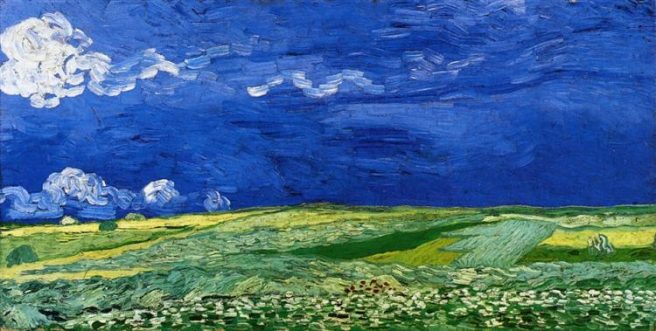
Blue sky = symbol of heaven, divinity, peace, infinite possibilities.
I love the layers of meaning the poet wove into his poem. No one can take away our right or ability to dream. There are no walls big enough to contain human potential or imagination. Above all, there is always hope.
*
The lovely and talented Jone MacCulloch is hosting the Roundup at Deo Writer. Zip on over to check out the full menu of poetic goodness being shared around the blogosphere this week. Have a nice weekend!
“If the politicians and the scientists, or both working together, cannot save us, perhaps those less practical friends and aiders of those who would live in the spirit, the poets, can provide us with a vision we can trust and live with?” ~ Hyatt H. Waggoner (Visionary Poetry: Learning to See, 1981)
Happy True Blue Year!
Yes, we’re going blue again in 2020, hopefully a year marked by truth and clarity. With 20/20 vision, we must resolve to see things as they really are by taking a good look at the facts and focusing on what is truly important for our survival as citizens and human beings.
In previous years, we made progress with THINK BLUEand BELIEVE IN BLUE. We now have a Democratic majority in the House of Representatives, and in 2019, Virginia turned blue and you-know-who was impeached. Step by step. In this all-important Presidential election year, we must take blue to the finish line. 🙂
Ahem. I suppose you know what the Pantone color of the year is:
Here is why Classic Blue was selected:
We are living in a time that requires trust and faith. It is this kind of constancy and confidence that is expressed by PANTONE 19-4052 Classic Blue, a solid and dependable blue hue we can always rely on . . . Imbued with a deep resonance, PANTONE 19-4052 Classic Blue provides an anchoring foundation. A boundless blue evocative of the vast and infinite evening sky, PANTONE 19-4052 Classic Blue encourages us to look beyond the obvious to expand our thinking; challenging us to think more deeply, increase our perspective and open the flow of communication.
~ Leatrice Eisman (Executive Director, Pantone Color Institute)
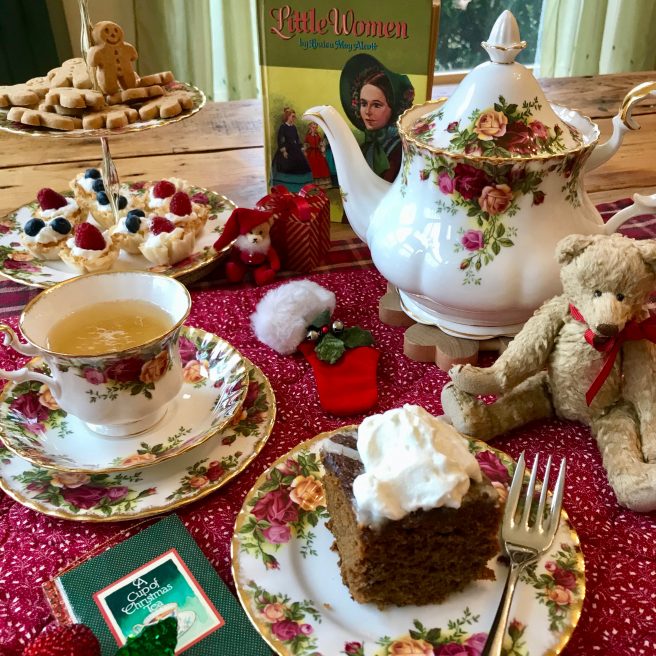
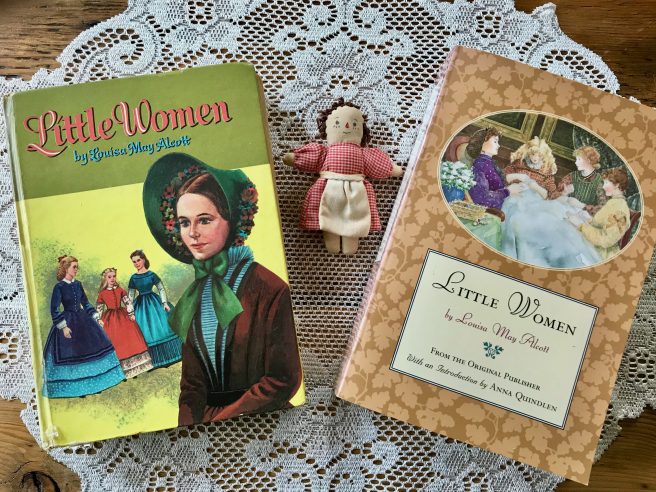
I think most of us can remember when we first read Louisa May Alcott’s classic — I was nine, staying with two older girl cousins downtown for about a week during the summer. We spent most of our time playing “school,” and during one of our “classes,” I began reading Little Women.
Since I wasn’t able to finish before it was time to return home, my cousin Judy let me take her copy with me (it was an abridged edition published by Whitman in 1955). I can’t remember if it was a loan or a gift, but I do remember her telling me how much she loved the book and that I should definitely read it.
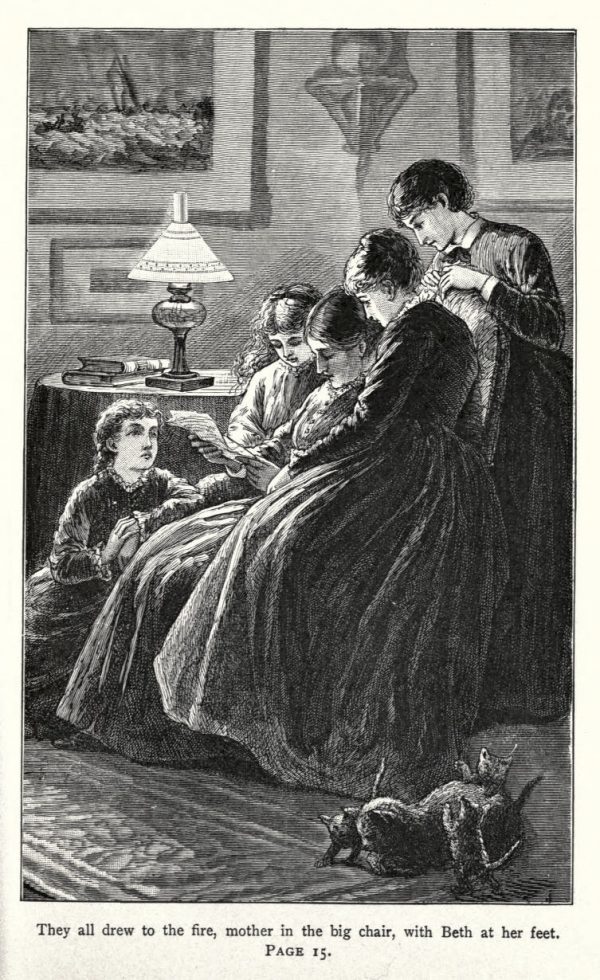
Fast forward to 6th grade, when we acted out the opening scene in English class. “Christmas won’t be Christmas without any presents,” was my Jo March ‘stage debut,’ marking the first time I would read the entire novel. Like so many others, generation after generation, I was hooked for life.
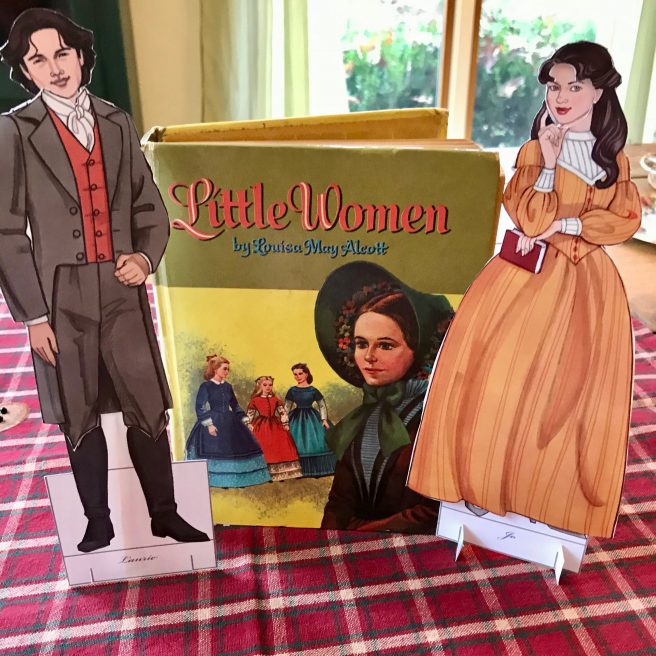
I so wanted to belong to the March family, to experience that deep bond of sisterhood. I had a huge crush on Laurie, and loved Mr. Laurence because just like Beth, I loved music and playing the piano. Of course I identified with Jo, because she was a writer, only wishing I could be as feisty and forthright. And wasn’t Marmee the best mother anyone could ever ask for? As the child of a working mother, I envied children whose moms had the time and patience to listen to all their concerns.
Just like The Secret Gardenmade me fall in love with England, Little Womenmade me long to visit New England — the gorgeous autumn colors and beautiful winter vistas! the rich history and Colonial architecture! the lobstah rolls, fish chowdah, maple syrup, brown bread, baked beans, boiled dinners, Indian pudding, Yankee pot roast . . . *drools* . . . “licks chops”. . . oh wait, where was I?
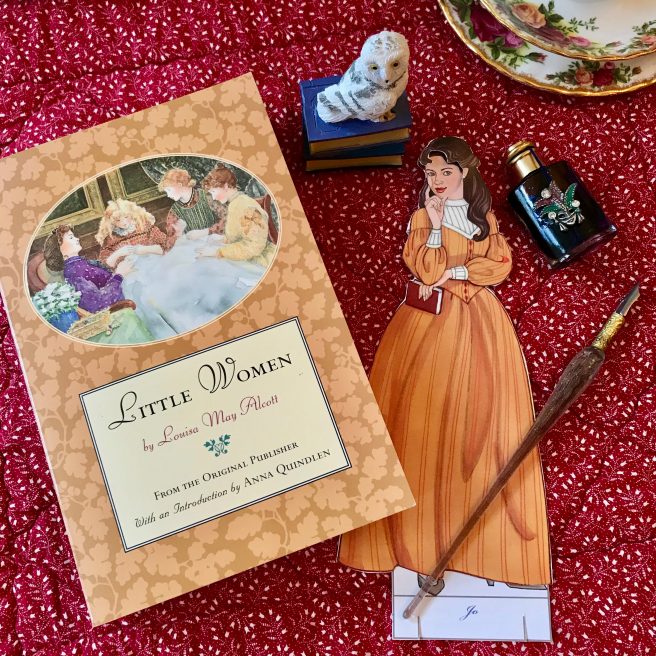
With the new movie coming, I decided to reread the book, since it had been about a decade since I last gave it my full attention. When I scanned my bookshelves, I found Judy’s copy alongside my Little, Brown edition. Didn’t realize I still had it! It’s probably the only book that survived my childhood. My mother gave away my entire Golden Books collection (still grieving), and though I read voraciously, I didn’t own many novels — mostly everything came from the library.
One of the things I especially enjoyed this time around was taking a closer look at the poems Alcott included in the story. There was the elegaic “My Beth” of course, as well as the incantations in Jo’s play featuring Hagar, Roderigo, and Zara. In a letter Jo sent to Marmee, she included “a silly little thing” for her to pass on to Father about helping Hannah with the wash, the delightful “A Song from the Suds.” And who can forget that splendid Christmas when Jo and Laurie made a snow-maiden, complete with a crown of holly, a basket of fruit and flowers, and a carol, “The Jungfrau to Beth,” to cheer up the convalescent?
At gate C22 in the Portland airport
a man in a broad-band leather hat kissed
a woman arriving from Orange County.
They kissed and kissed and kissed. Long after
the other passengers clicked the handles of their carry-ons
and wheeled briskly toward short-term parking,
the couple stood there, arms wrapped around each other
like he’d just staggered off the boat at Ellis Island,
like she’d been released at last from ICU, snapped
out of a coma, survived bone cancer, made it down
from Annapurna in only the clothes she was wearing.
Neither of them was young. His beard was gray.
She carried a few extra pounds you could imagine
her saying she had to lose. But they kissed lavish
kisses like the ocean in the early morning,
the way it gathers and swells, sucking
each rock under, swallowing it
again and again. We were all watching —
passengers waiting for the delayed flight
to San Jose, the stewardesses, the pilots,
the aproned woman icing Cinnabons, the man selling
sunglasses. We couldn’t look away. We could
taste the kisses crushed in our mouths.
But the best part was his face. When he drew back
and looked at her, his smile soft with wonder, almost
as though he were a mother still open from giving birth,
as your mother must have looked at you, no matter
what happened after — if she beat you or left you or
you’re lonely now — you once lay there, the vernix
not yet wiped off, and someone gazed at you
as if you were the first sunrise seen from the Earth.
The whole wing of the airport hushed,
all of us trying to slip into that woman’s middle-aged body,
her plaid Bermuda shorts, sleeveless blouse, glasses,
little gold hoop earrings, tilting our heads up.
Don’t you love it when a poem takes you by surprise? If you’re really lucky, it might even take you to a whole new world.
POEM FOR ROSS GAY by Jeff Friedman
In the time it took me
to cut four Athena melons
Ross ate them.
Then he ate the entire container
of Mediterranean hummus
on a loaf of organic
sprouted spelt bread.
To distract him from his hunger,
I brought in
Larry Levis’s book Elegy,
and he said his favorite poem
was the one about the cook
growing lost in his village —
whatever that means.
He flipped through the pages
and read the poem aloud.
“That’s a great poem,” he said.
He stretched out his long legs
and arms and smiled.
Then he ate the book, too.
But he wouldn’t eat
the chocolate chip cookies
or the King Arthur chocolate
onyx wafers because his body
is a temple. Nor would he eat
the balsamic chicken, though
he scrambled all the eggs
over peppers and onions
and polished them off.
“Stay out of the kitchen,”
I ordered, “the fridge is empty.”
“Let’s do kettle bells,” he replied
and pulled out a twenty-five pound
iron ball with a handgrip.
When did you escape
from the chain gang, I asked.
He began swinging it
from between his legs up
over his head faster
and faster until he let it go.
The ball cracked open
the cathedral ceiling,
flying into the sky
like a bomb in reverse.
Tree branches fell.
Glass shattered. The phoebes
cleared out of town quick.
The kettle bell exploded
in a cloud, pieces
of gold nougat and caramel
falling on our table.
Then Ross ate the sun
and pretty soon, he was glowing.
Friedman had me at the opening lines. When someone eats four melons, I’m all in. I smiled at the hummus and spelt bread, delighted to know this voracious eater was also hungry for poetry.
When Ross ate the book (oh!), I happily stepped into Friedman’s world of altered reality. Curious and appreciative of his humor, I was game for anything from then on (yeah, my body is a temple too, but I wouldn’t turn down a chocolate chip cookie).
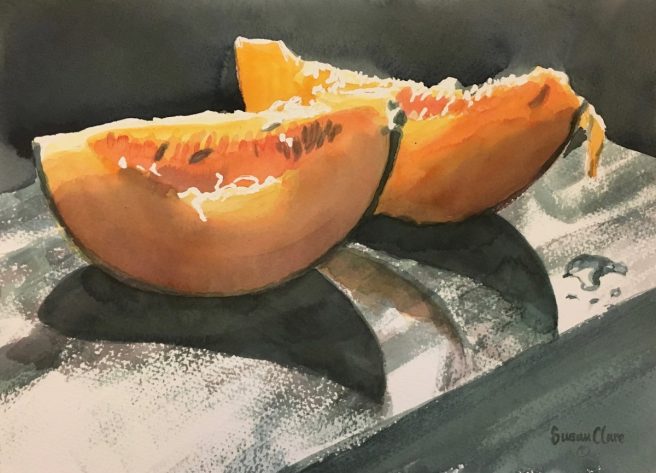
“Cantaloupe Slices” by Susan Clare”
As the narrative, fable, fantasy, tall tale (or whatever else you wish to call it) unfolded, I liked the sense of not knowing what would come next. It’s a good poet who can make you suspend disbelief and whet your appetite at the same time. 🙂
I didn’t know those weighted iron balls with the handles were called kettle bells. I also didn’t know Athena melons are actually cantaloupes. But I do know that the final image of the kettle bell shattering the ceiling, flying up into the sky and exploding in a cloud was one of those Emily Dickinson moments:
If I feel physically as if the top of my head were taken off, I know that is poetry.
Pieces of gold nougat and caramel falling on our table. Then Ross ate the sun and pretty soon, he was glowing.
Wow.
Didn’t see that coming at all. Loved the feeling of wonder, exhilaration, breaking free, imagination unleashed. Words can take us anywhere and whatever we consume gives us power.
The poem starts out in a matter of fact tone, grounded in reality. It slowly builds as the reader is transported.
Ross is the tall one in the brown shirt.
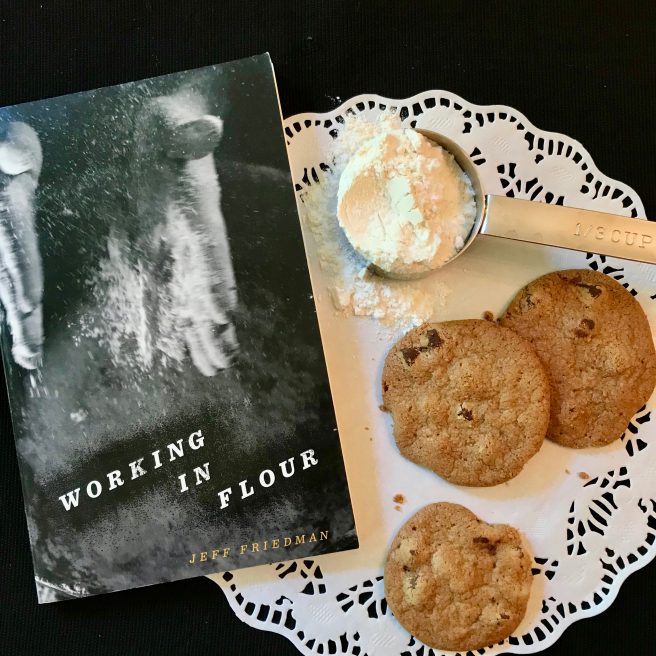
I found this poem in Friedman’s book Working in Flour, after reading his interview with Annelies Zijderveld, a.k.a. The Food Poet. I was doubly rewarded, as I wasn’t familiar before with poet and Indiana Professor Ross Gay, whose Catalog of Unabashed Gratitudewon the 2015 National Book Critics Circle Award and the 2016 Kingsley Tufts Poetry Award.
Apparently Gay is a founding board member of the Bloomington Community Orchard, a non-profit, free-fruit-for-all food justice and joy project. And he does work out with kettle bells. That explains it.
I also liked the round orb metaphor — melon to kettle bell to sun — each packed with its own brand of energy. Maybe Friedman was trying to say, “you are what you eat.” 🙂
What’s your biggest take away from the poem? All I know is cantaloupes will never be the same . . .
*
Jeff Friedman has published six poetry collections, five with Carnegie Mellon University Press, including Pretenders (2014), Working in Flour (2011) and Black Threads (2008). His poems, mini stories and translations have appeared in American Poetry Review, Poetry, New England Review, The Antioch Review, Poetry International, Hotel Amerika, Flash Fiction Funny, Plume, Agni Online, The New Bloomsbury Anthology of Contemporary Jewish Poets, Smokelong Quarterly, and The New Republic and many other literary magazines.
He has won numerous awards, including a National Endowment for the Arts Literature Translation Fellowship, and two individual artist grants from the New Hampshire State Arts Council. Dzvinia Orlowsky’s and his translation of Memorials by Polish Poet Mieczslaw Jastrun was published by Lavender Ink/Dialogos in August 2014. He also collaborated with Nati Zohar on a book of translations of Israeli poets: Two Gardens: Modern Hebrew Poems of the Bible, published by Singing Bone Press in 2016. Friedman’s seventh book, Floating Tales—a collection of prose poems, fables and mini tales—is forthcoming from Plume Editions/MadHat Press in fall 2017.
Jeff Friedman lives in West Lebanon, New Hampshire with artist Colleen Randall and their dog Ruby.
*
The beautiful and infinitely talented Tanita S. Davis is hosting the Roundup at fiction (instead of lies).Tippy toe over to check out the full menu of poetic goodness being served up in the blogosphere this week. Happy December!



 The lovely and talented Jone MacCulloch is hosting the Roundup at Deo Writer. Zip on over to check out the full menu of poetic goodness being shared around the blogosphere this week. Have a nice weekend!






 Jama's Alphabet Soup