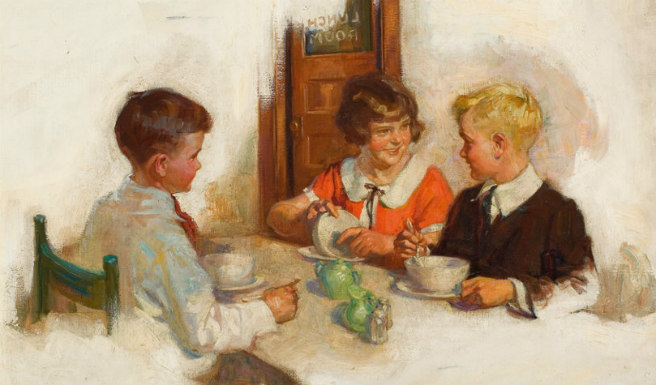
“Great Breakfasts of My Childhood” by Ryan Warren

“Every Boy and Girl Needs a Hot Breakfast”/Cream of Wheat ad by Frederic Kimball Mizen (1926)


Good Morning!

Hungry for a little breakfast?

Coming right up!

*
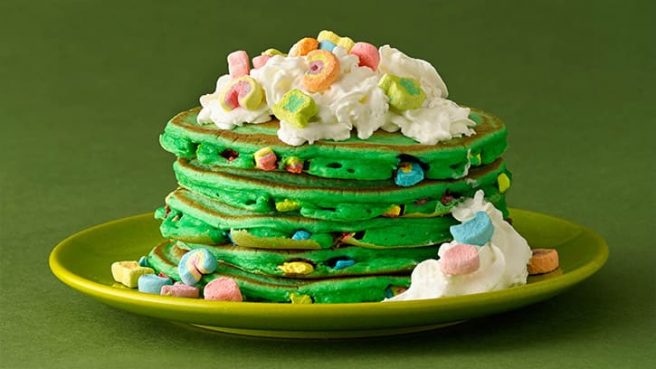
 

Top ‘o the Morning Lucky Charms Pancakes


GREAT BREAKFASTS OF MY CHILDHOOD
by Ryan Warren

My grandfather liked to fry potatoes on Sundays,
peppery and thick with soft onions,
though he knew I did not care for onions,
people didn’t seem to ask much then
children’s opinion on food preparation.
My grandfather, who lived to pull crisp waffles
from the electric iron, though always soggy
by the time you ate them. Who loved a big stack
of Krusteze pancakes, cooked a little too black,
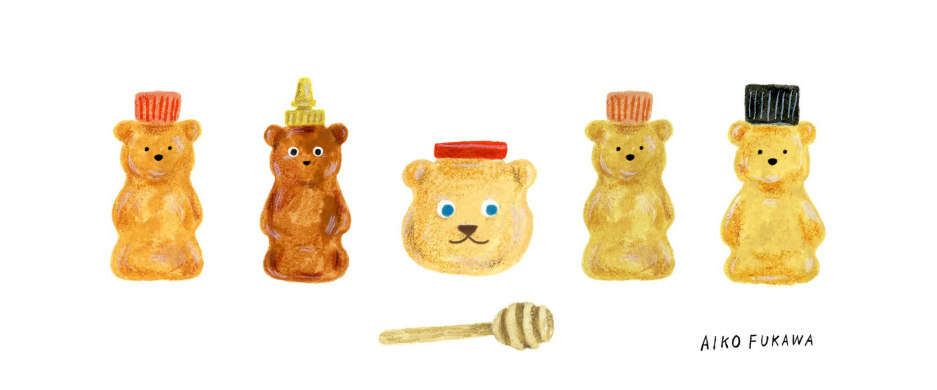
adorned by cold chunks of margarine and Log Cabin Syrup.
On weekdays, though, it was oatmeal,
thick from the pot, clumps of hardening raisins
softening as they were stirred in
with milk, with little rocks of brown sugar.
occasionally, Cream of Wheat instead.
My mother rose later, with my brothers,
and breakfast from her was always a surprise —
though she loved toast the best. Cheese toast,
melted cheddar sprinkled with sugar, cinnamon toast,
toast with peanut butter, with honey, with butter and jam,
with a soft boiled egg quivering atop, sprinkled
with salt and pepper. Eggs, eggs so many ways.
Scrambled with hot dogs, with cheese. Poached. Fried,
yolk unbroken, toast to sop up that sunny puddle of delight.
We were a breakfast family, no “Just a cup of coffee for me.”
Breakfast — to fortify your day, arm you for school, work,
occasionally, and for feverish stretches at a time, for church.
Different churches, different times. We moved in strange
cycles of devotion. But from breakfast we never wavered.
I’ve never understood those for whom food is merely fuel.
And I’m sure they’ve never understood me. How even a bowl
of sugar cereal, dug deep into a cartooned Saturday morning,
Lucky Charms or Captain Crunch or Frosted Flakes
or whatever had been on sale that week, could be a kind of devotion,
a ritual, richer than any of the churches we wove in and out of.
Or sometimes we just had it for dessert.
Don’t even get me started on dessert.

~ first published in The Scarlet Leaf Review (April 2017)
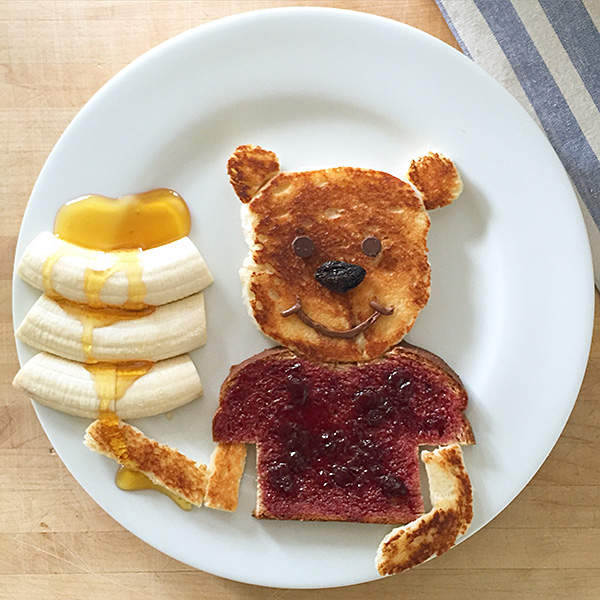
 

Pooh Toast by Marie Saba

*

Continue reading

[guest post + recipes] What I Eat is How I Feel by Julia Wendell

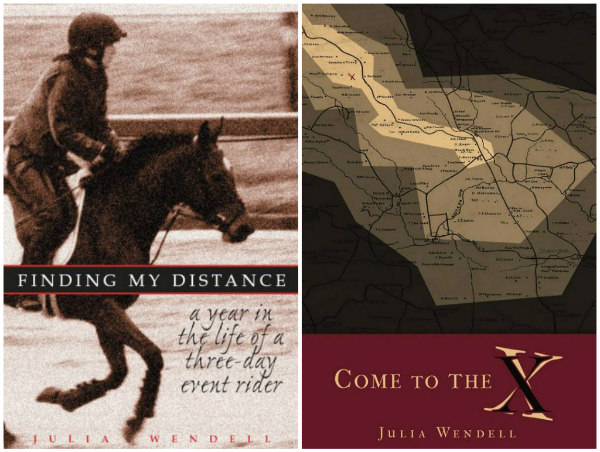
We’re delighted to welcome back poet, author, and equestrian athlete Julia Wendell. She was last here discussing her poetry chapbook Take This Spoon (Main Street Rag Publishing Co., 2014), which explores the complicated relationship humans have with food. In her new memoir, Come to the X (Galileo Press, May 2020), food is again a central trope as it was in her previous book, Finding My Distance: A Year in the Life of a Three-Day Event Rider (Pathway Books, 2020). Both memoirs combine poetry and prose, showing how food reflects inner weather.

*


WHAT I EAT IS HOW I FEEL

by Julia Wendell

In writing Come to the X (forthcoming, Galileo Press, 2020), I was struck by the way what I eat over the last decade has changed, and how my patterns of eating and relationship to food reflected the events in my life.


In Finding My Distance (Galileo Press, 2009), elaborate dinners and their preparation were like a reward. From lamb to shrimp, exotic pastas to salads, mountains of crabs and all the fixin’s — caesar potato salad and Asian cole slaw — to rich desserts like ice cream and homemade chocolate sauce, crisps and mousses and souffles. The long work days always ended with focus on cocktail hour and dinner, prepared and eaten with relish by this family of four, including two kids who were introduced as toddlers to an adult palate — whatever we ate got whizzed in a blender — a husband who is a stress eater, as well as myself, who has a history of anorexia. Whatever the complex motivations, and whatever stressful life events vying for our attention, sharing dinner and sitting down together as a family were key.

We head to Annapolis to meet my Aunt Kay for dinner at Cantler’s Riverside Inn, where we introduce her to a slice of Maryland she’s not partaken of before: platters of crabs brought steaming to our table. Barrett shows her how to crack open and hammer and peel, and before we know it, several mountains of spent legs and shells litter our brown-papered table, along with empty plastic containers of cole slaw and straggler fries and rings. Crab parts go flying, Aunt Kay busily wipes her white shirt, the clientele whoop it up at the tables and bar behind us, dusk starts to fall, and the Magothy River starts to sparkle behind us. We order another round of beers, another half-dozen crabs, and more slaw. After we’ve consumed our very last crab, we still have room for more and order key lime pies all around. Our server doesn’t even bother to clear away the mess before bringing out dessert, and now we’ve got a Vesuvius on our table.

“I’ve never seen you eat with such gusto, Julia,” Aunt Kay says.

“You’ve never seen me eat crabs before,” I reply. She’s amazed by the mess.

Finding My Distance, in contrast to Come to the X, is a book filled with hope and purpose; it is largely about my determination as a middle-aged equestrian athlete to climb the levels in three-day eventing. It is also about the challenges of being the mother of two young adults. Food, and specifically dinner preparation and its sharing with family, complement the inner weather of the book. After attending the Preakness Race:

My day ends well with Barrett’s shrimp pad thai and lots of Anapamu, and reruns of our eventing and racing videos. There goes Foolish Groom from the back of a twelve-horse pack, picking off his contenders in the last quarter mile, winning again by a good 10 lengths.

Continue reading

Barbara Crooker’s “Fifteen Bean Soup” with “Saltines”

“Nothing in the world is permanent, and we’re fools when we ask anything to last, but surely we’re still more fools not to take delight in it while we have it.” ~ W. Somerset Maugham/epigraph from Some Glad Morning


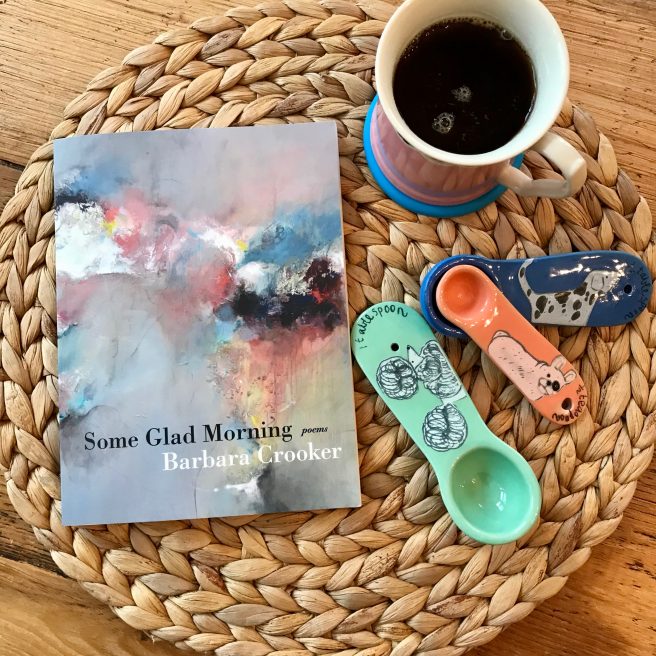
There’s nothing more restorative on a chilly winter’s day than a spot of Yorkshire Gold and reading the luminous poems in Barbara Crooker’s latest book, Some Glad Morning (University of Pittsburgh Press, 2019).

True to W. Somerset Maugham’s quote, Barbara’s ninth collection inspires us to take joy in everyday pleasures, hold fast to fleeting moments, and cherish the here and now.

Whether she is exalting in an explosion of spring flowers, mourning the loss of a friend, awestruck by an unexpected murmuration, ruminating on a Matisse painting, or celebrating food, glorious food (martinis, BLTs, cream puffs, summer peaches, fried eggs!), she is wholly present with verses that read like lyrical prayers, inviting us to a space of hope and light.

Over and over, she says, life is transient, ever-changing. Though loss, grief, and an acute awareness of mortality may be constant companions, these are the very things that make what we do have even more precious. We will always have the power to create our own realities.

Let the terrible politicians practice/their terrible politics.
At my kitchen table, all will be fed. I turn
the radio to a classical station, maybe Vivaldi.
All we have are these moments: the golden trees,
the industrious bees, the falling light. Darkness
will not overtake us.

Speaking of food, glorious food, it’s time for soup and crackers. In these two poems, Barbara serves up delectable portions of memory, nostalgia, metaphor, slurp-worthy detail, and earnest praise. Put on your bibs and enjoy!

*

Continue reading

[review + recipe + giveaway] The Superlative A. Lincoln by Eileen R. Meyer and Dave Szalay


We’re celebrating Lincoln’s birthday this week with several sample poems from a new picture book biography and a recipe for his favorite cake.

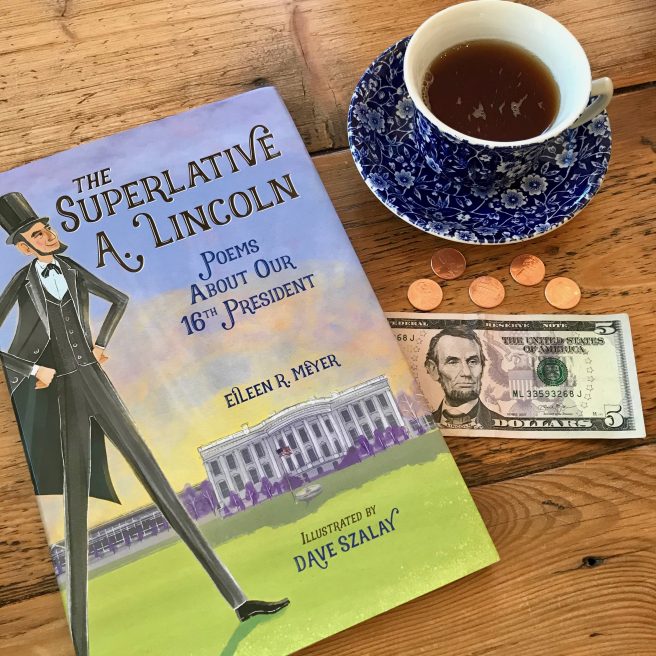
As a Presidential trivia buff and a big Lincoln fan, I was excited when The Superlative A. Lincoln: Poems About Our 16th President by Eileen R. Meyer and Dave Szalay (Charlesbridge, 2019), came out this past November.

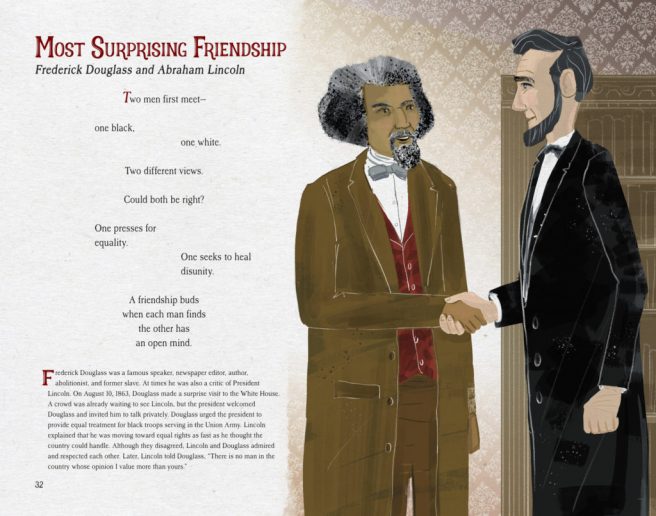
Meyer’s theme of “superlatives” is a fun and effective way to help kids understand why Lincoln is widely considered to be our greatest President. Her nineteen narrative poems — lively, rhyming, upbeat, captivating — describe some of Lincoln’s most commendable skills, attributes, dreams, and milestones, while providing interesting insights into his personality and character.


The poems are arranged chronologically from Lincoln’s humble beginnings as “Most Studious” (a self-taught learner), to his youth as “Most Distracted Farmer” (who preferred reading to farm chores), to being “Most Respected” (short stint at boot camp), to his tenure as President (a “Most Permissive Parent” whose sons ran wild in the White House). With the “Strongest Conviction,” he signed the Emancipation Proclamation, then later delivered his “Greatest Speech,” the Gettysburg Address.

Continue reading

“Letter Perfect” by Alice N. Persons

#58 in an ongoing series of posts celebrating the alphabet


I’ve always had a thing for the letter “O.” Hardworking and versatile with many shades of pronunciation in English, its simple circular shape (eternal and open) is pleasing to the eye. Lacking any sharp edges, smooth, amiable O is happy any side up and is always ready to roll.

As a distinctive exclamation, O is a word unto itself and knows how to command our attention in verse as well as song (Shakespeare was especially fond of O):


O Romeo, Romeo, wherefore art thou Romeo? (Romeo and Juliet)

O curse of marriage! (Othello)

O brave new world (The Tempest)

O that this too too solid flesh would melt (Hamlet)

O Captain! my Captain! Our fearful trip is done . . .(Walt Whitman)

O perfect Love, all human thought transcending (Dorothy F. Gurney)


Such heft, such strong emotion! Sometimes, only O will do. 🙂

If it seems like O is always looking at you, it’s because it evolved from the Egyptian hieroglyphic symbol for the human eye. And O is the only letter whose name creates its shape on the speaker’s lips.

Say it now: “O.”

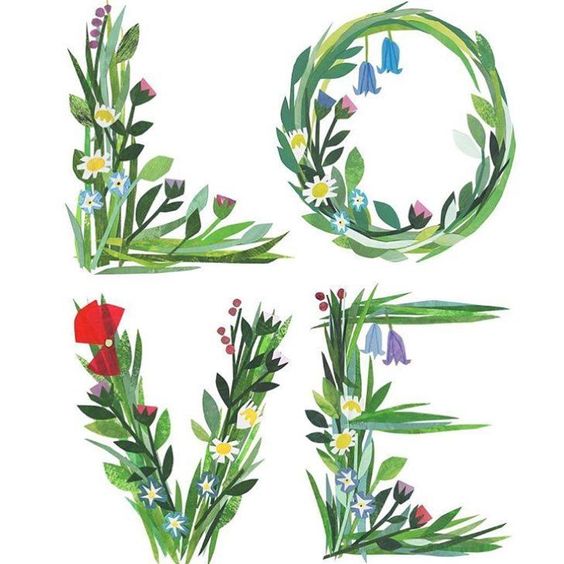
Perfect letter, perfect love.

*


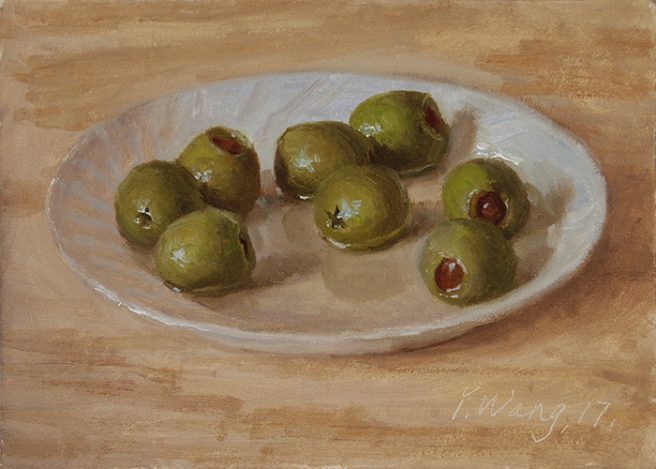
“Olives” by Youqing Wang (2017)


LETTER PERFECT
by Alice N. Persons

~ for Dennis Camire

let us praise O
so round, friendly,
the circle with no opening
a letter of distinction:
Ovid, Odysseus, Ozymandias
of odd instruments,
oboe and ocarina
traveler to exotic places — the
Orient, Odessa, Opalocka, Oz.
Imagine the peculiar all-O diet:
okra, olives, oatmeal, Oreos, oranges,
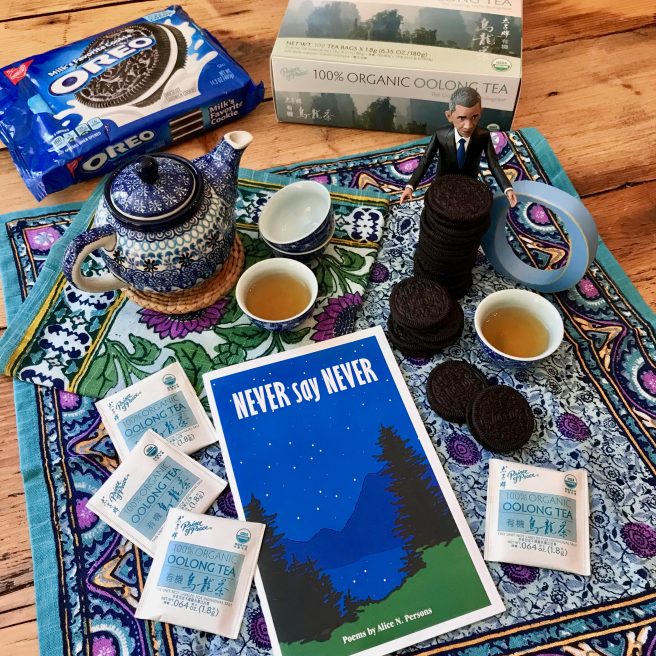
osso buco, or oolong tea!
The natural world would greatly miss O —
that ocelot in the oleander,
the owl perched in an oak
and the osprey winging over the orchard,
where an opossum feigns sleep.
Some O names make us laugh —
Ophelia Butt, Olive Oyl, Paddy O’Furniture,
Oprah as Orca
and think of the great Oscars —
Wilde, Levant, Peterson, Meyer, and
the sleek golden Hollywood prize.
Where would sexy writing be without
Oral, orgasm, onyx and opal, the story of O?
O, most perfect letter,
you contain so much that is important —
and best of all, you are always
in love.

~ from Never Say Never (Moon Pie Press, 2004)


by Clover Robin


*

Continue reading