
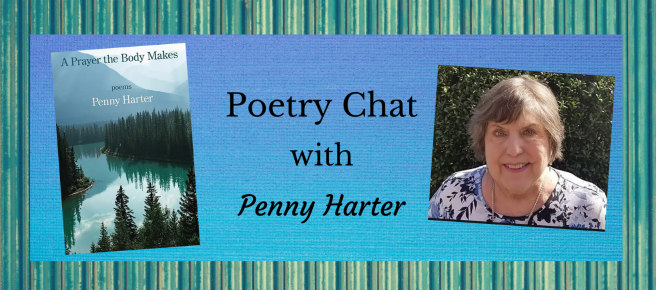
The pandemic has made me even more grateful for poets.
It’s truly a godsend to find comfort and solace in poems, and with this much prolonged worry, fear, and uncertainty defining our daily lives, I’ve been needing double or even triple doses of my usual poetry fixes. Luckily New Jersey poet Penny Harter began sharing new poems on social media a few months ago. Her words are an oasis of calm, a chance to dwell in stillness and beauty, reconnect with wonder, and cultivate gratitude.
Penny also just recently published a new poetry collection called, A Prayer the Body Makes (Kelsay Books, 2020). With astute observations of the natural world, life affirming childhood memories, and poignant reflections on coping with grief and loss, we are reminded that poetry can be both prayer and meditation, an important means of looking without and within to strengthen inner resolve.
I’m happy to welcome Penny to Alphabet Soup today to talk about her new book, and what she calls her “poetry ministry” on Facebook. She’s also sharing a comfort food recipe just right for fall. Before we hear from her, here’s one of her social media “pandemic poems” to whet your appetite.
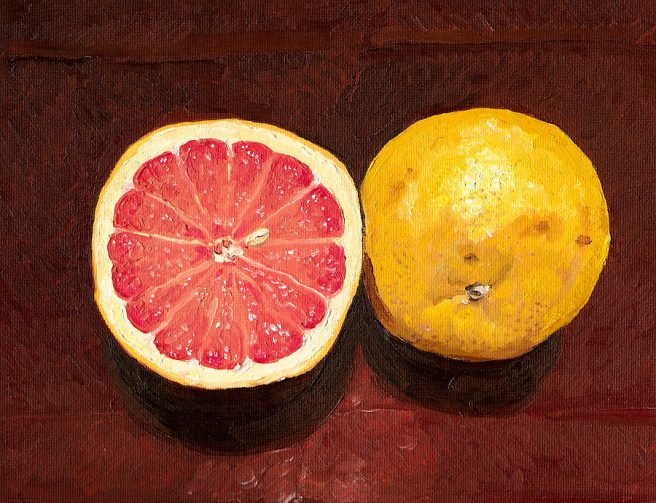
JUST GRAPEFRUIT
Carefully, I place half a grapefruit
into the small white bowl that fits
it perfectly, use the brown-handled
serrated knife to cut around the rim,
separate the sections.
The first bite is neither sweet nor bitter,
but I drag a drop or two of honey around
the top, I love how it glazes each pink piece,
then seeps between dividing membranes.
Pale seeds pop up from their snug burial
in the center hole, and when I’m finished,
I squeeze sticky juice from the spent rind
and drink it down.
Each grapefruit is an offering, its bright
flesh startling my fasting tongue. When
bitterness spills from the morning news,
I temper it with grapefruit, savor hidden
gifts as I slice it open, free each glistening
segment, and enter honeyed grapefruit time.
*
CHATTING WITH PENNY HARTER
For the last several months, you’ve been writing and sharing almost daily poems on social media, a welcome “island of calm” amidst these trying pandemic times. How and where are you finding focus and inspiration within your lockdown routine? Any advice for those who might like to do something similar?
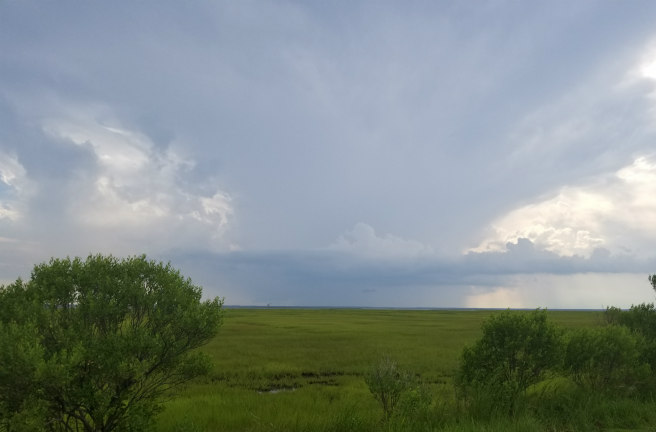
There are several sources of inspiration for me. Often I go for a daily drive, mostly local, just to get out for a bit. I’m fortunate that there are marshes, lakes, even the bay and sea not that far from where I live, here in Atlantic County, NJ, and I frequently see things that inspire me, from birds and other animals, to plants. And of course the sky in all kinds of weather.

I also read poems, both online posted by friends and in various books, and often find lines that inspire me there. I view this almost daily writing and posting as a practice or a kind of poetry-ministry.
What can you tell us about the day in early June when you wrote, “Just Grapefruit”? How did you find your way into this poem?
I find it important to deliberately “center” in the moment. I usually have a grapefruit for breakfast. I entered grapefruit time, focused on it, and slow-motioned the preparing and eating it. It was a kind of meditation.
I love the abundance of natural imagery in your poetry overall, especially the mention of various birds and trees. Would you please share your three favorite tips for writing poems about nature?
The best way I can answer this question is to quote one of my recent daily poems:
Before the Naming
Yesterday I met some unknown flowers blooming
along the foundation of the neighboring condo—
the former home of an old woman who died some
years ago. I’d never noticed them before, though I’ve
lived here a decade, never witnessed their blossoms.
Like an aging nature spirit, a woodland wise-woman,
my neighbor tended her garden as if each species were
her child. She even rescued the tiny, failing rosebush
given to me when my husband died, found for it the
fertile, sunny corner where it thrived.
She planted her flowers, and they endure though she
is gone into a wicker casket strewn with roses, given
a green burial bordering the woods. Yesterday, I could
not name those pink and white pitchers, but today
I find them in a photograph, name them calla lilies.
Before the naming, seeing. Before the seeing, pausing
long enough to be there, to slowly approach whatever
is calling you into its family, and then to listen for what
it has to tell you—perhaps a name it has given itself,
or the name it has chosen for you.
* * *
We have to keep our eyes, mind, heart, and spirit open to the beauties and mysteries of the natural world. One thing this lockdown has given me is slow-motion time—time enough to really “see” each thing’s radiant being, from grapefruit to blossom.
A Prayer Your Body Makes is my favorite of all your poetry collections. How would you describe the book to someone who might be unfamiliar with your work? What are you most proud of regarding the book?
The poems in A Prayer the Body Makes range back and forth in time, exploring the relevance of memories as we age and acknowledging mortality while affirming our connections to one another and the cosmos.
A number of the poems reflect my changing perceptions as a result of my journey through cancer and chemotherapy. Craft-wise, I’ve been working on creating a ‘turn’ in my poems, and sometimes incorporating surreal elements. Above all, I hope that these poems celebrate the miracle of our being here at all.
I’m especially proud of the variety of poems in the book, and of my continuing ability to create poems that speak from my heart, even though I’m now a very senior citizen.
Some of the most poignant poems in your new book reference your spousal loss support group and your late husband Bill Higginson, who passed away 12 years ago this October. What have you learned since then about poetry’s power to console and facilitate healing?
My late husband William J. (Bill) Higginson died almost 12 years ago now. I found great support attending the weekly meetings of a chapter of H.O.P.E., a south Jersey spousal loss organization. After a year or two, I took on a leadership role for the same chapter.
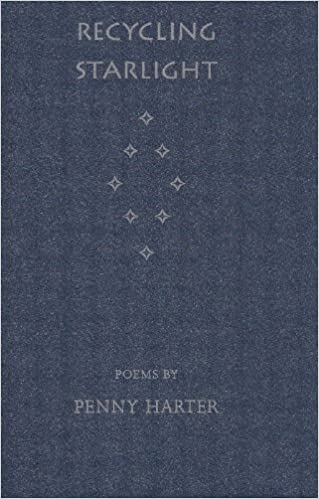 The first collection I wrote after Bill died was Recycling Starlight, charting the first 18 months of my grief journey. I found the writing to be enormously helpful in my healing. I needed to give voice to my sorrow, claim and confront my memories. Share my grief.
And speaking of the new book, although years have passed since Bill died, and I am well over the hard passage of grief, I miss and love him still, so sorrow echoes in many of my poems, along with celebrating the miracle of my being here at all.
I especially enjoyed the glimpses of your childhood and reading about people and places that are so dear to you. I love your description of the kitchen in, “A Kind of Hunger.” Could you provide a little backstory about this poem?
A KIND OF HUNGER
Where have they gone, those who stirred
the pancake batter, greased the pan for
the fish fry, shucked corn-on-the-cob,
sliced fresh tomatoes?
And where is the galvanized steel tub
we kids were sluiced in, salt and sand
running off our naked bodies as we
giggled, unashamed?
Night peers through the windows here,
casting shadows on the worn countertop,
the dulled stainless double-sink, the usual
dim and messy corner.
This kitchen breathes as if a sea-wind
has entered, riding the dark, sweeping
it all away until only hungry ghosts
remain, inhaling everything.
~ from A Prayer the Body Makes (Kelsay Books, 2020)
* * *

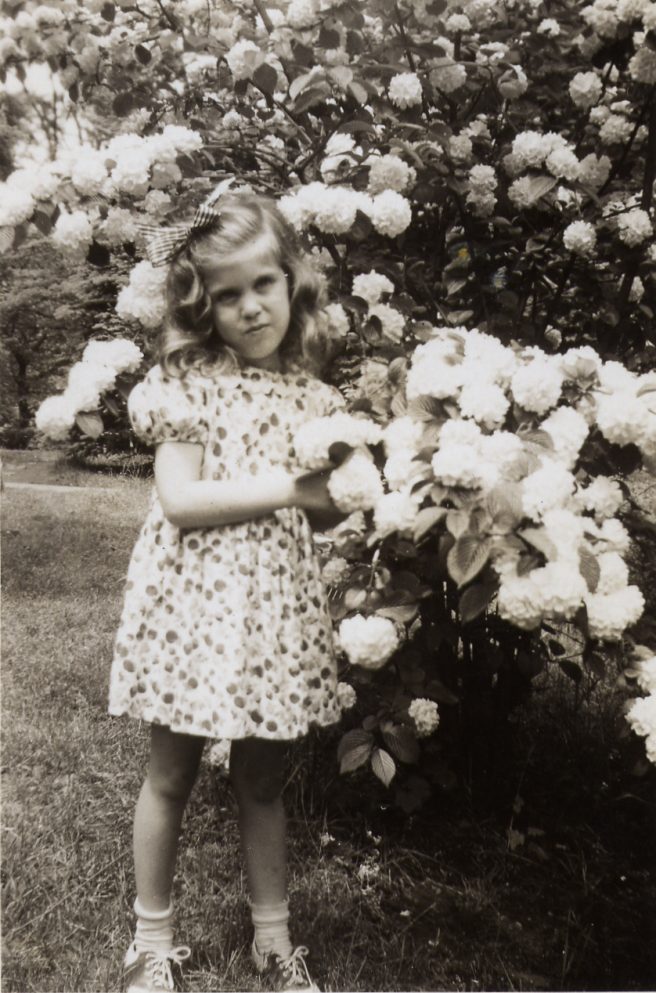
Every summer when I was a child, my family vacationed at my mother’s great-aunt’s and uncle’s old, brown shingled beach cottage at Barnegat Light, a town on Long Beach Island, NJ. In that house was the kitchen I depict, the homemade table, the galvanized tub we sloshed the sand off in (we being me, my little sister, and various assorted cousins). I revisited it, triggered by a photograph of a similar rustic kitchen, and the memories flooded in.
Can you recommend any poems or books by other writers that you’ve found especially comforting, hopeful, or uplifting?
Absolutely. So many, hard to name, these new or recent:
Two anthologies:
Healing the Divide: Poems of Kindness & Connection, edited by James Crews (Green Writers Press, 2019)
Poetry of Presence: An Anthology of Mindfulness Poems, edited by Phyllis Cole-Dai and Ruby R. Wilson (Grayson Books, 2017)
*
Bluebird by James Crews (Green Writers Press, 2020)
Some Glad Morning by Barbara Crooker (University of Pittsburgh Press, 2019)
Hush by Rosemerry Wahtola Trommer (Middle Creek Publishing, 2020)
Wind Over Stones by Adele Kenny (Welcome Rain Publishers, 2019)
Any collection by Jane Hirshfield
Finally, have you been doing any notable pandemic cooking and/or baking? If so, please share a favorite recipe. 🙂
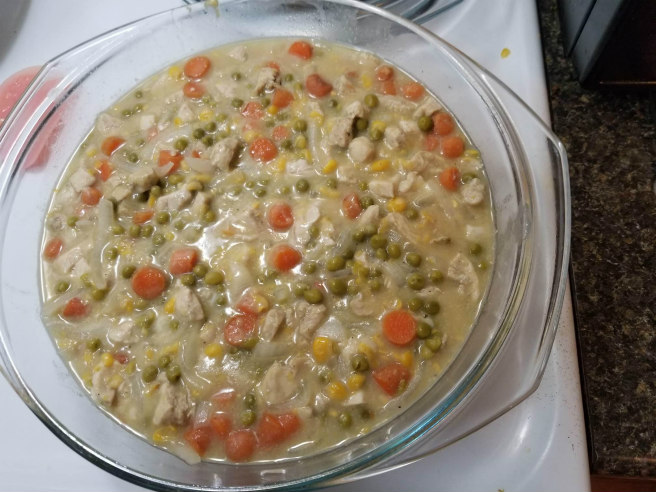
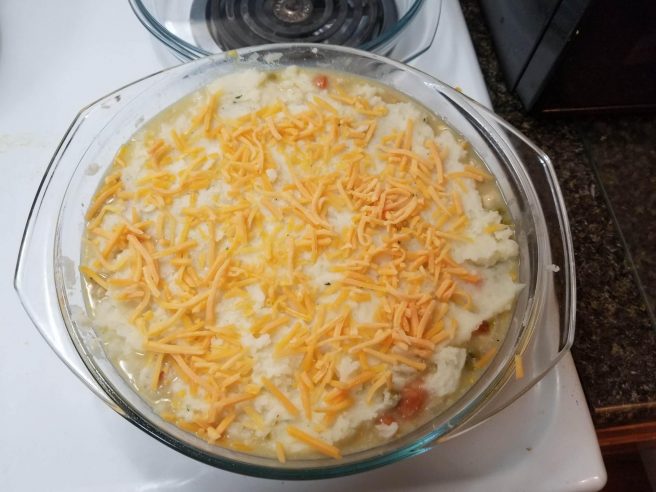
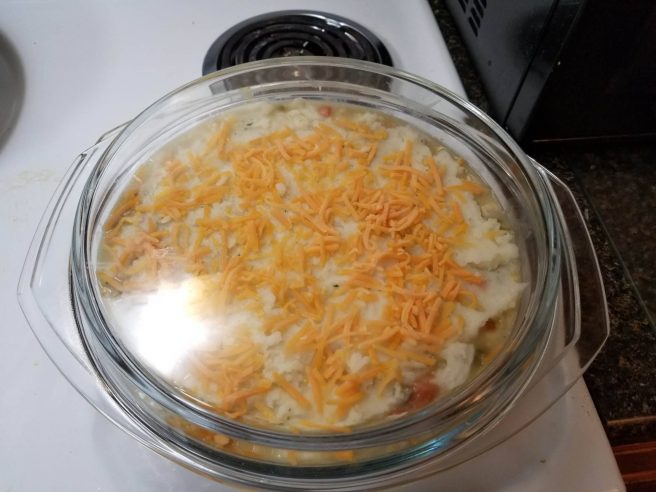
I took a shepherd’s pot pie recipe I found online and modified it to a chicken “cottage pie” recipe. The changes I made were, in part, the result of what I had on the shelves when I first decided to make the dish.
I had a bag of frozen peas and diced carrots in the freezer. I had a box of regular instant mashed potatoes rather than the garlic pouch in the recipe. I decided to top the mashed potato topping with grated cheddar cheese.
I’m off wheat so used 3 tablespoons of a gluten free all purpose baking mix to thicken the melted butter / stock mix. Also, I limit salt so added none, just used poultry seasoning. And I chose to use stock rather than milk for flavor. Did use milk for instant potatoes though.
After I tasted the first result, I loved it so stuck with my changes. 
*The original recipe for Chicken Shepherd’s Pie can be found at Taste of Home.
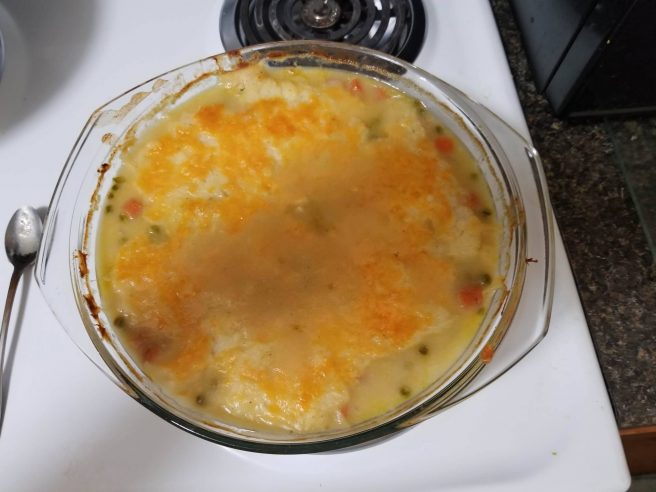
Chicken Cottage Pie
Ingredients
- 2 boneless skinless chicken breast halves (6 ounces each), cubed
- 4 tablespoons butter, divided
- 1 pouch instant mashed potatoes (for 8 people)
- 3 tablespoons gluten free all purpose flour/baking mix
- 1/2 – 3/4 cup low sodium chicken stock
- 2 teaspoons poultry seasoning
- 3/4 cup shredded Swiss cheese
- 1/4 cup grated cheddar cheese
- 1 bag frozen peas and carrots (10-12 oz)
- 1 can creamed corn (14.75 oz)
- 2 small onions, sliced
Directions
- In a small skillet, cook chicken in 1 tablespoon butter until no longer pink; set aside and keep warm. Prepare mashed potatoes according to package directions.
- Meanwhile, in a large saucepan, melt remaining butter over medium heat. Whisk in flour until smooth. Gradually add stock; stir in seasonings. Bring to a boil. Reduce heat; cook and stir for 1-2 minutes until thickened.
- Remove from the heat. Stir in 3/4 cup Swiss cheese until melted. Add peas and carrots, corn and chicken. Transfer to a 2 quart baking dish coated with cooking spray. Top with mashed potatoes; sprinkle with cheddar cheese.
- Bake, uncovered, at 350 degrees F for 40-50 minutes or until heated through. Let stand for five minutes before serving.
~ Adapted from Chicken Shepherd’s Pie, Taste of Home website.
*
ABOUT THE POET
 Penny Harter’s work has appeared in Persimmon Tree, Rattle, Tiferet, and many other journals and anthologies. Her poem “In the Dark” was featured in Ted Kooser’s American Life in Poetry column. Among her twenty-two published books and chapbooks, her most recent collection is A Prayer the Body Makes (2020). A featured reader at the 2010 Dodge Poetry Festival, she has won three fellowships from the New Jersey State Council on the Arts, two fellowships from Virginia Center for the Creative Arts (VCCA), and awards from the Geraldine R. Dodge Foundation and the Poetry Society of America. For more info, please visit: pennyharterpoet.com
*

A PRAYER THE BODY MAKES
by Penny Harter
published by Kelsay Books, May 2020
Poetry Collection, 76 pp.
♥️ Read Penny’s almost daily poems by friending her on Facebook, or view them at her website blog (click “More” and then “Blog” from the drop-down menu).
♥️ Other Penny Harter poems at Alphabet Soup:
- “Marmalade” (included in A Prayer the Body Makes)
- “One Bowl” (a haibun)
- “Your Grandmother’s Whisk”
- “Moon-Seeking Soup”
*
♦ BOOK GIVEAWAY WINNERS ♦
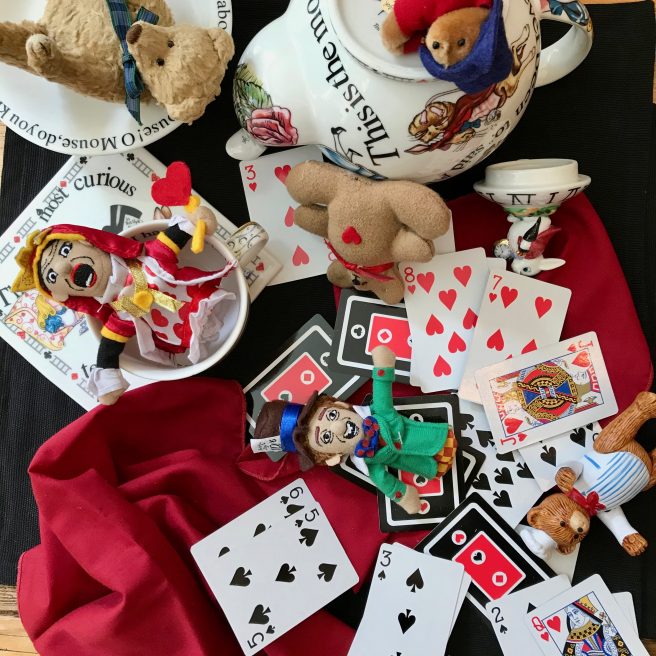
Since we had to pick three separate winners, we decided we definitely needed to contact Monsieur Random Integer Generator for assistance.
As you may remember from past giveaways, it is not always easy to locate this debonair, monocled bon vivant. He is always on the move and up to something exciting and adventurous.
 In the past we tracked him down skiing in the Swiss Alps, hunting pigs with pygmies in the Andaman Islands, designing a Valentino suit in Milan, and taking afternoon tea with the Queen at Sandringham.
Mr Cornelius, our resident bear vivant, is the only one of his species to have M. Generator’s personal cell number. After trying for three days, Mr Cornelius finally reached him, en route via train to Johnstown, Pennsylvania. Yes! M. Generator is in America! And don’t tell anyone — but he’s campaigning with Joe Biden (incognito of course). 🙂
Because of his busy schedule and the pandemic, which prohibits him from personally visiting us here at the Alphabet Soup kitchen, he agreed to pick the winners by mental telepathy. Of course such a feat requires some form of nourishment (M. Generator is generally ravenous) — so Cornelius teleported him some homemade provisions: 350,000 lemon bars, 4,569 cranberry orange scones, and 849 blueberry muffins.
M. Generator made quick work of everything, then picked these names:
For a copy of THE SECRET GARDEN COOKBOOK by Amy Cotler, the winner is:
Laurie Dunston!
For a copy of ONLY THE CAT SAW by Ashley Wolff, the winner is:
Susan H.!
And for a copy of KAMALA HARRIS: Rooted in Justice by Nikki Grimes and Laura Freeman, the winner is:
Marcia S.!
CONGRATULATIONS, LAURIE, SUSAN AND MARCIA!! WOO HOO!!
**thunderous applause**
**cartwheels**
**backflips**
Please email your snail mail addresses so we can send your books off to you lickety split.
Thanks, everyone, for all the great comments. Our next giveaway will be for a copy of JOEY: The Story of Joe Biden by Jill Biden and Amy June Bates, so stay tuned!
*
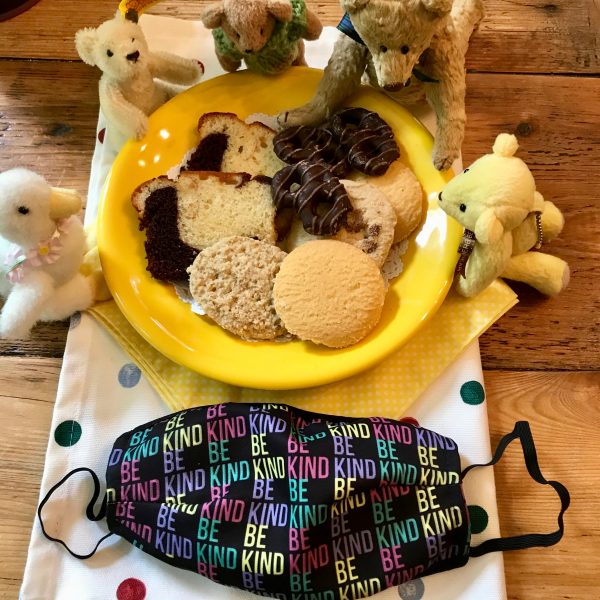
 Lovely and talented Tabatha Yeatts is hosting the Roundup at The Opposite of Indifference. Shimmy on over to check out the full menu of poetic goodness being served up around the blogosphere this week. As always, stay safe, be well, wear your mask, and have a good weekend!
Copyright © 2020 Jama Rattigan of Jama’s Alphabet Soup. All rights reserved.


 Jama's Alphabet Soup