Brian Doyle’s prose poem got me thinking and sparked some interesting flights of fancy.
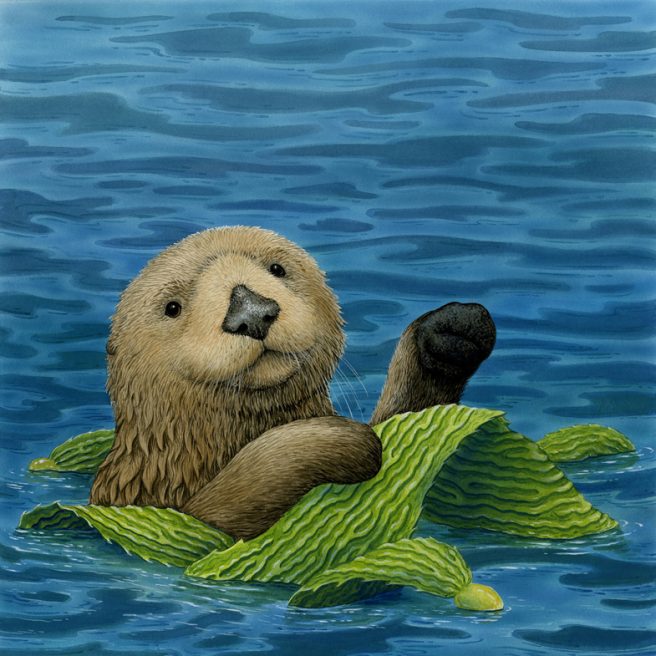
Carol Schwartz (What If There Were No Sea Otters?, 2010).
IF YOU COULD DO ANYTHING ELSE, WHAT WOULD YOU CHOOSE?
by Brian Doyle

Given another interest, or absorption, in life, asks a student
In the high school, what is it you would choose? And don't
Think about it -- just blurt out whatever leaps to your mouth.
Otter observer! I say, and perhaps half the students laugh,
But the others look puzzled. Bear expert! Bassoon maestro!
Cartoonist! Trumpeter in a ska band playing the early stuff!
Professional badger herder! The guy who brings radio back
As the coolest media ever! Editor of a magazine about jays!
He who banishes despair with a touch of his left forefinger!
He who miraculously hears yes again every afternoon when
He sends his request to be married through the holy ether to
One woman in particular! And there I pause, just as startled
As the kids at what has jumped out, and then, unforgettably,
A few kids start to applaud, and then a few more. Afterward
One shy girl says to me I sure hope I meet a boy who thinks
Like that about the woman he thinks about, and I said I hope
So too and he thinks about you, and we shook hands and she
Slipped away, and the next kid says to me, sir, really, otters?

~ from How the Light Gets In: And Other Epiphanies (Orbis, 2019).
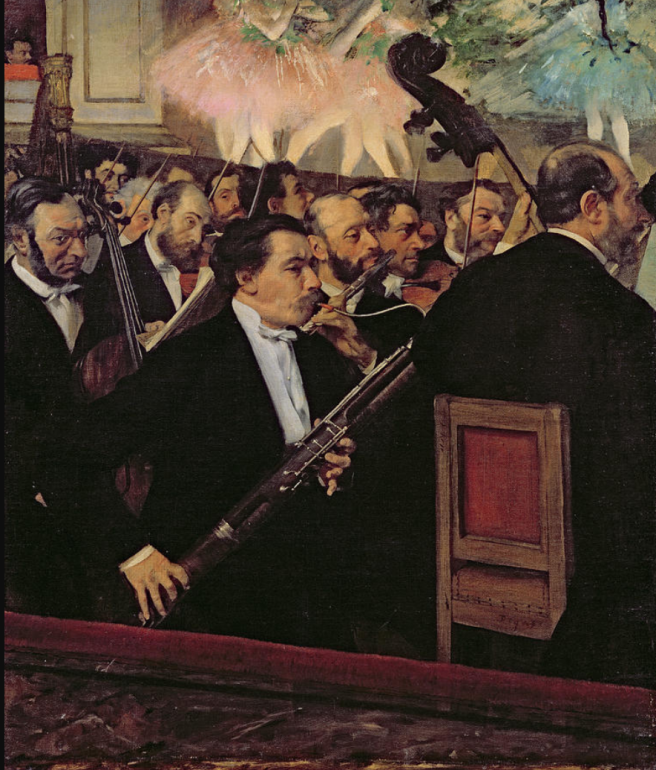
“The Orchestra at the Opera” by Edgar Degas (1870)
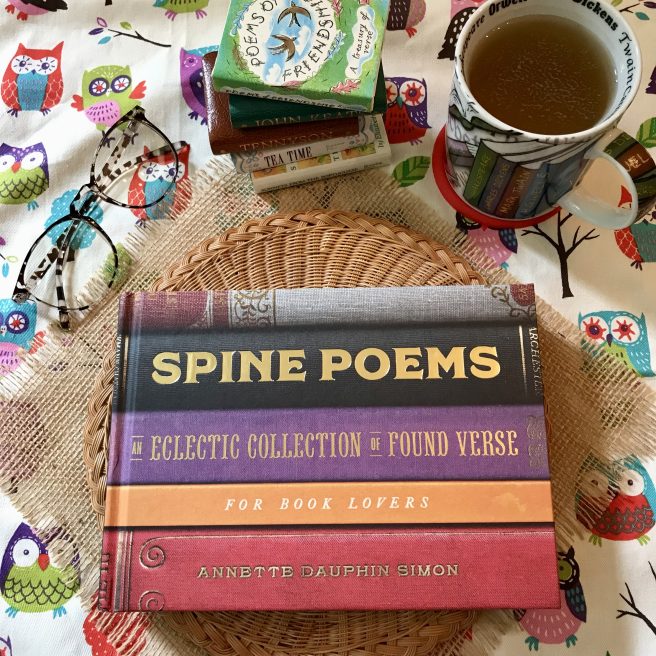
Annette Dauphin Simon first discovered the delights of found verse about a decade ago while working as a bookseller for an independent bookshop in Florida.
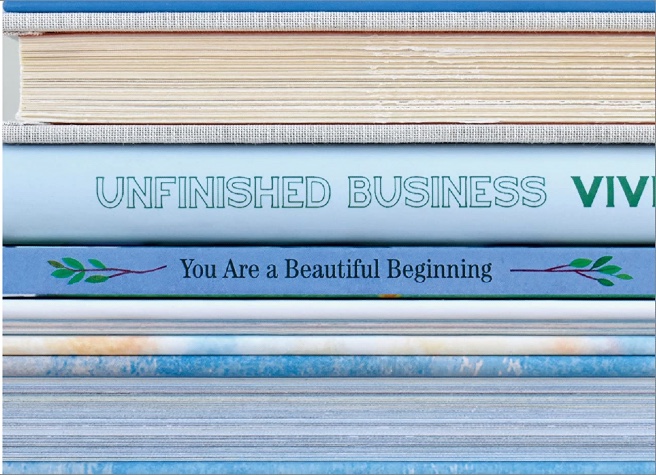
Titles by Vivian Gornick/Nina Laden and Kelsey Garrity-Riley
Unfinished Business
You Are a Beautiful Beginning
One rainy Sunday afternoon, during a lull following a rush of customers, she and a colleague looked at the stacks of books lying in disarray around the store. After laughing at the random arrangement of titles resulting from genres mingling together, they came up with their own game of “rearrangements.”
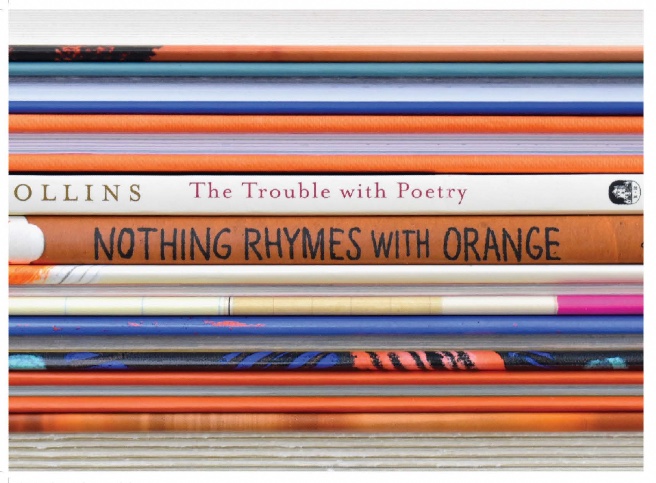
Titles by Billy Collins/Adam Rex.
The Trouble With Poetry
Nothing Rhymes with Orange
Science fiction + business. History + mystery. A book from here with a book from there. Creating these collages from other people’s words was so much fun. Since some of their new constructions appeared poem-like, they called them “found verses,” not knowing at the time that it’s a recognized form of writing dating back to the 1920s.
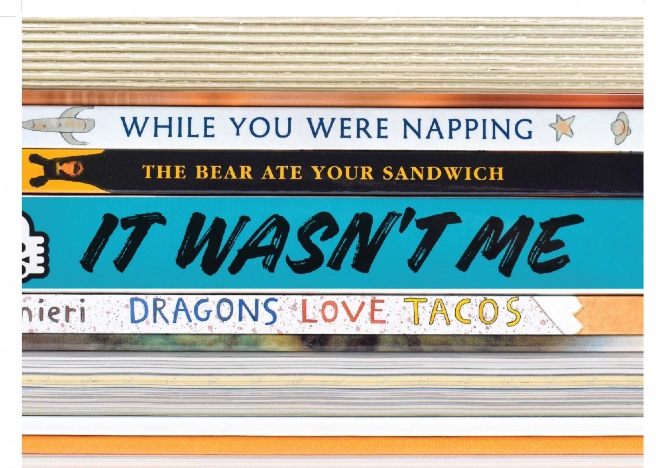
Titles by Jenny Offill and Barry Blitt/Julia Sarcone-Roach/Dana Alison Levy/Adam Rubin and Daniel Salmieri.
While You Were Napping
The Bear Ate Your Sandwich
It Wasn't Me
Dragons Love Tacos
Well, Annette was hooked. She shared new verses with her colleagues on a regular basis and documented her spine poetry with her camera. She shared her poems on social media and even turned some of them into greeting cards.
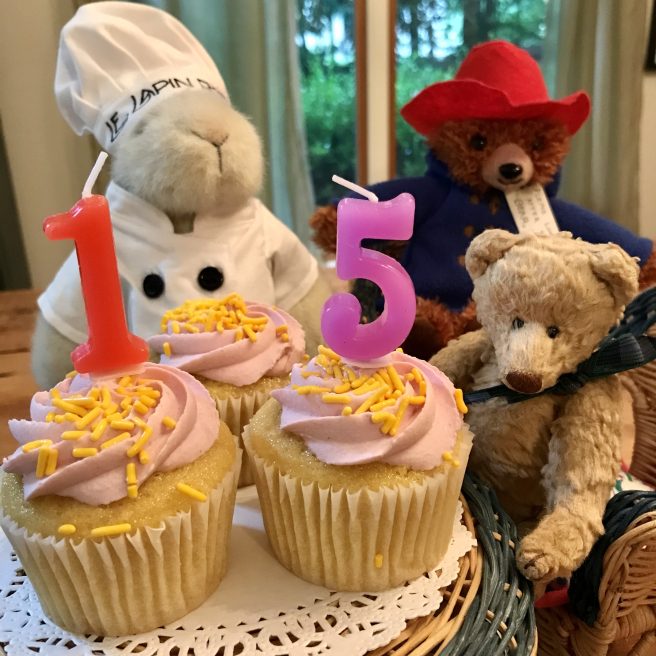
Mr Cornelius and the Alphabet Soup kitchen helpers are especially excited to be celebrating 15 years of blogging. 15 years! So that means I started when I was just a toddler (picture chubby little hands tapping away on a keyboard). 😀
Back in 2007, I never dreamed I’d still be crafting posts in 2022. What’s most surprising is that I haven’t yet run out of things to say – pretty unusual for someone who’s not that talky in real life. But I do have the smartest, most inspiring blog readers so . . .
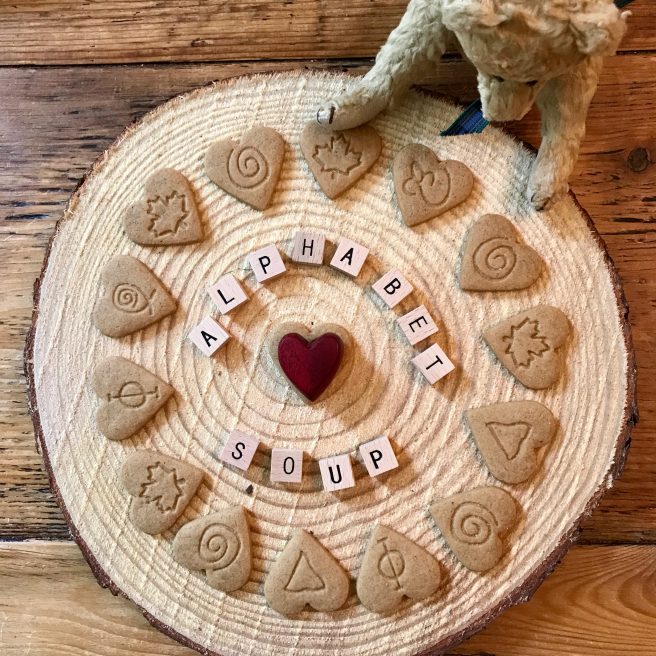
15 gingersnap hearts for you.
Recently I was thrilled to stumble upon the perfect poem by former Maine poet laureate Stuart Kestenbaum. He’s new to me, and all I can say is, “Stuart, where have you been all my life?” Surely he wrote this one just for me.
*
PRAYER FOR JOY
by Stuart Kestenbaum

What was it we wanted
to say anyhow, like today
when there were all the letters
in my alphabet soup and suddenly
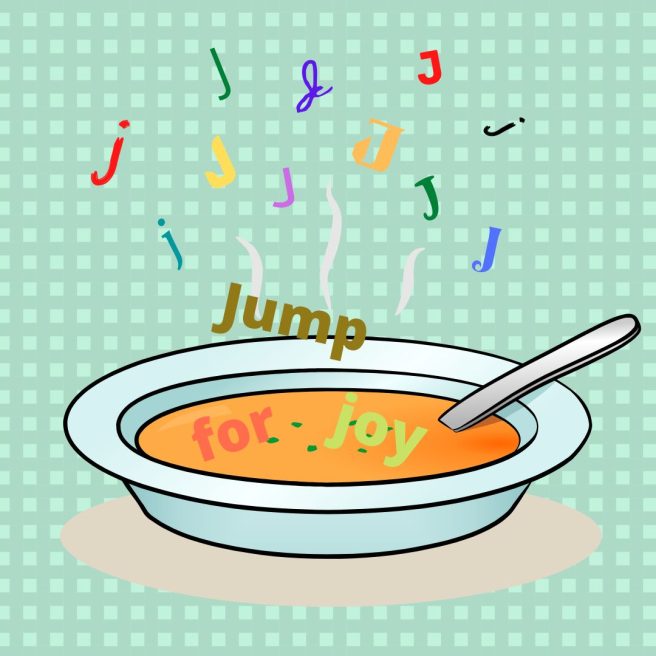
the 'j' rises to the surface.
The 'j', a letter that might be
great for Scrabble, but not really
used for much else, unless
we need to jump for joy,
and then all of a sudden
it's there and ready to
help us soar and to open up
our hearts at the same time,
this simple line with a curved bottom,
an upside down cane that helps
us walk in a new way into this
forest of language, where all the letters
are beginning to speak,
finding each other in just
the right combination
to be understood.

~ from Only Now (Deerbrook Editions, 2014).
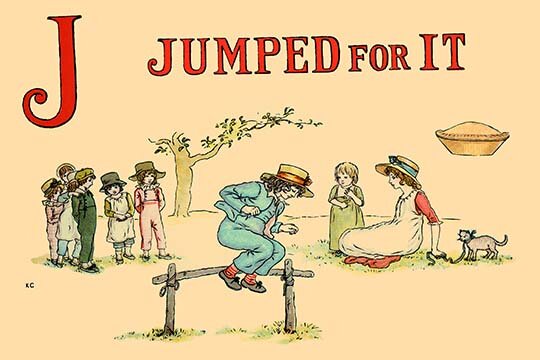
Kate Greenaway (A Apple Pie, Frederick Warne, 1886)
I had another post planned for today, but after hearing about Her Majesty Queen Elizabeth’s death yesterday, I wanted to share a special poem in her honor.
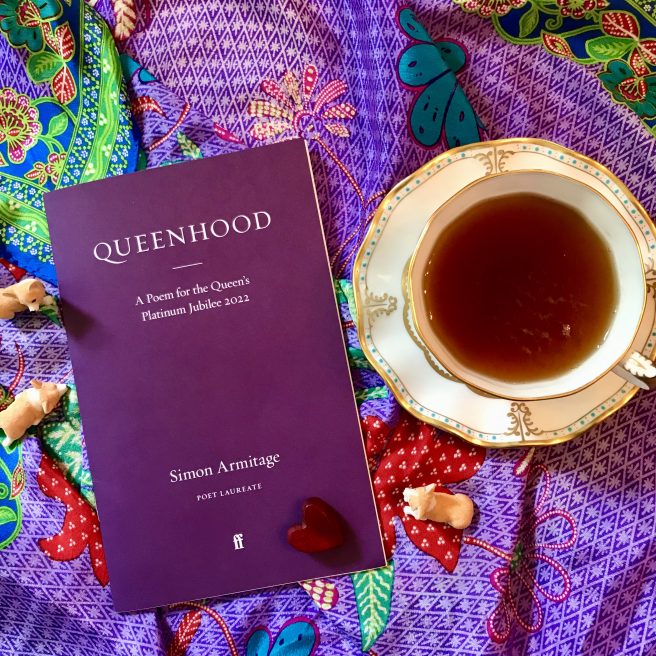
“Queenhood” was written by UK Poet Laureate Simon Armitage in celebration of Elizabeth’s Platinum Jubilee this year. It’s a beautiful tribute to her unique life as the longest serving monarch in British history.
It’s hard to believe that just a few short months ago, Britain was in high spirits celebrating her glorious 70-year reign. Now the world is mourning her passing. Whether you’re a monarchist or not, something must be said for someone who so selflessly devoted her life to duty and public service for decades with such deep humility.
I’ve long admired this extraordinary woman, and am sad that she’s gone. It’s hard to imagine the UK, and indeed the world, without her.
*
Coronation Day portrait by Cecil Beaton (Westminster Abbey, June 2, 1953).
Carol Varsalona is hosting the Roundup at Beyond LiteracyLink. Be sure to check out the full menu of poetic goodness being shared around the blogosphere this week.
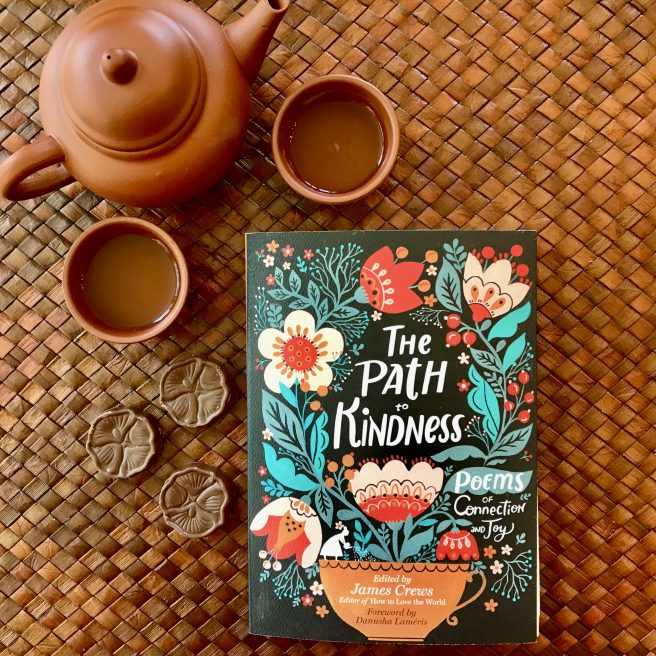
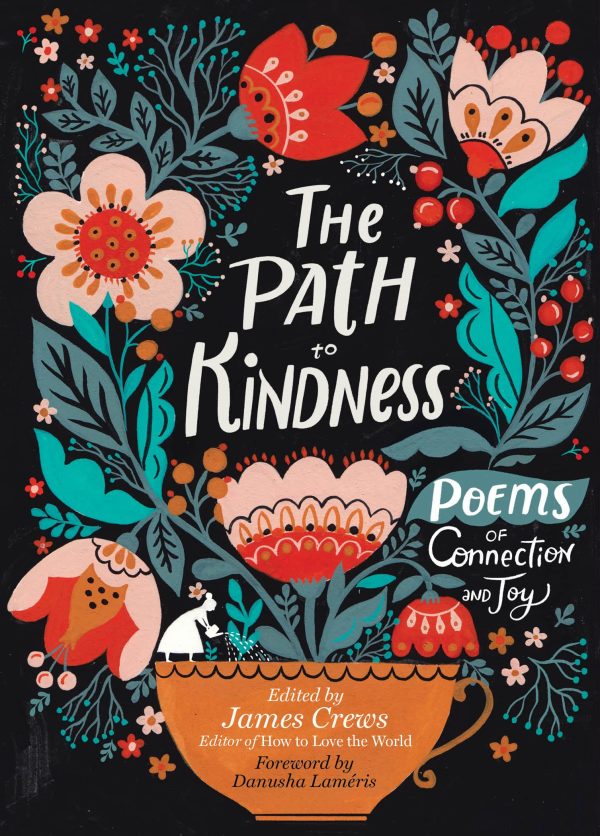
Like his previous book, How to Love the World: Poems of Gratitude and Hope (2021), this “perfect-in-the-hand” soul-nourishing collection contains 100+ poems by a diverse group of established as well as emerging poets. It’s such a pleasure to spend time with “old friends” Barbara Crooker, Andrea Potos, and Penny Harter, and to catch up with PNWers Susan Rich and Kelli Russell Agodon, whose work I featured here awhile ago.
Current Poet Laureate Joy Harjo is included, as well as Young People’s Poet Laureate Naomi Shihab Nye. And as before, Crews offers (for select poems) Reflective Pauses and Invitations for Writing and Reflection – breathing room for readers to explore ideas, delve deeper, and absorb inspiration for journaling or even writing their own poems.
Today I’m happy to share one of my favorites from the book. Brad Aaron Modlin is new to me, and he does what good poets do: take us a little off center so we can consider ideas from a fresh perspective.
*
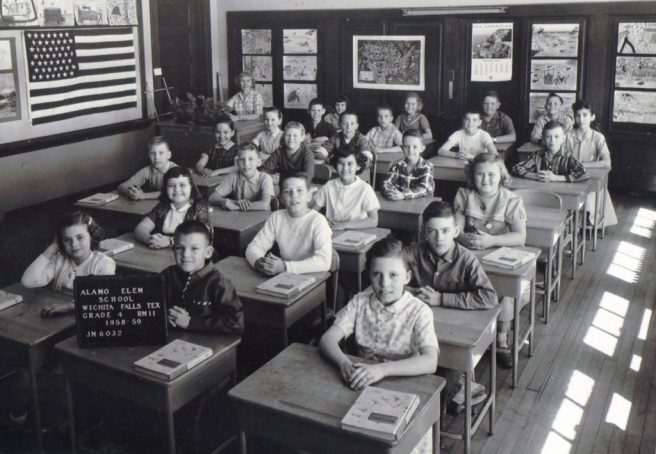
1959 Fourth Grade Classroom photo by Larry Syverson
WHAT YOU MISSED THAT DAY YOU WERE ABSENT FROM FOURTH GRADE
by Brad Aaron Moldin

Mrs. Nelson explained how to stand still and listen
to the wind, how to find meaning in pumping gas,

how peeling potatoes can be a form of prayer. She took
questions on how not to feel lost in the dark.

After lunch she distributed worksheets
that covered ways to remember your grandfather’s

voice. Then the class discussed falling asleep
without feeling you had forgotten to do something else—

something important—and how to believe
the house you wake in is your home. This prompted

Mrs. Nelson to draw a chalkboard diagram detailing
how to chant the Psalms during cigarette breaks,

and how not to squirm for sound when your own thoughts
are all you hear; also, that you have enough.

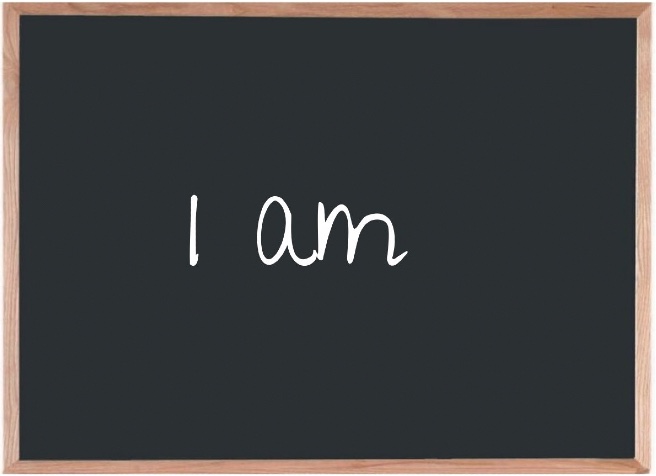
The English lesson was that I am
is a complete sentence.

And just before the afternoon bell, she made the math equation
look easy. The one that proves that hundreds of questions,

and feeling cold, and all those nights spent looking
for whatever it was you lost, and one person

add up to something.

~ from Everyone at This Party Has Two Names (Southeast Missouri State University Press, 2016)
*
I love all the quirky lessons Mrs. Nelson shared with her class. Often the most far reaching things can’t be found in textbooks.
Ideally, all children should be reassured that they already have enough, and more importantly, are enough.
“I am” just may be the most empowering belief any of us can own.
Ultimately, Modlin reminds us that we aren’t alone in feeling that we might have missed that all-important memo everyone else got.
Hopefully with all the rich experiences we’ve had so far, we’ve come to realize that peeling potatoes can indeed be a form of prayer, and standing still to listen to the wind is an excellent practice – as is being kind especially when it is the most difficult.
What do you wish your teachers, parents, or mentors had taught you?
*
THE PATH TO KINDNESS: Poems of Connection and Joy edited by James Crews published by Storey Publishing, April 2022 Poetry Anthology, 224 pp.
The lovely and talented Buffy Silverman is hosting the Roundup. Be sure to check out the full menu of poetic goodness being served up around the blogosphere this week. Have a lovely weekend!


 Jama's Alphabet Soup