What’s the weather like where you are? Are you buried under mounds of snow, down with a bit of cabin fever, or reveling in a February thaw?
Chances are good you’ve already been dreaming of spring, and if you live in our neck of the woods, have likely seen the first robins returning from their winter vacations.
All I know is it’s never too early to celebrate the arrival of warmer days as tiny buds appear, animals begin to stir, and slabs of ice slide down the roof. Let the great melt begin!
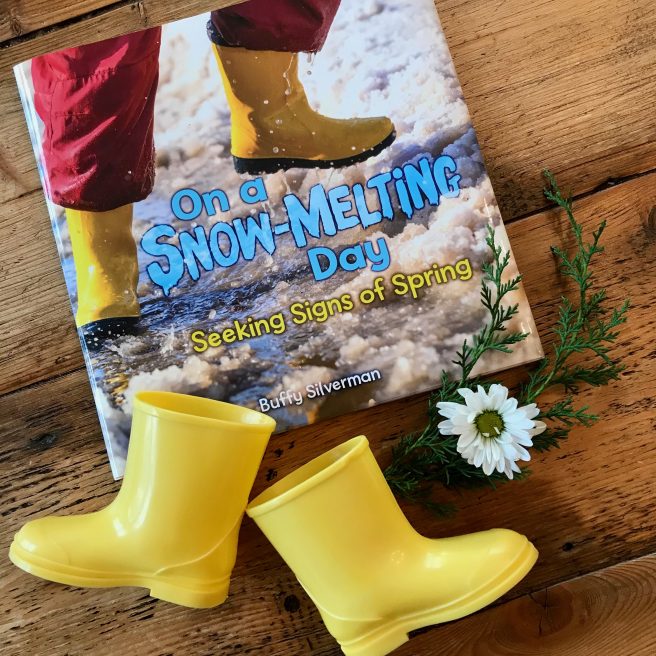
On a Snow-Melting Day is actually a cleverly crafted extended poem, with each line accompanied by a splendid color photo. Buffy has invited us on a fun, illuminating, multi-sensory lakeside amble featuring plants, birds, insects, mammals, reptiles, and the star of the show — water — in all three of its forms.
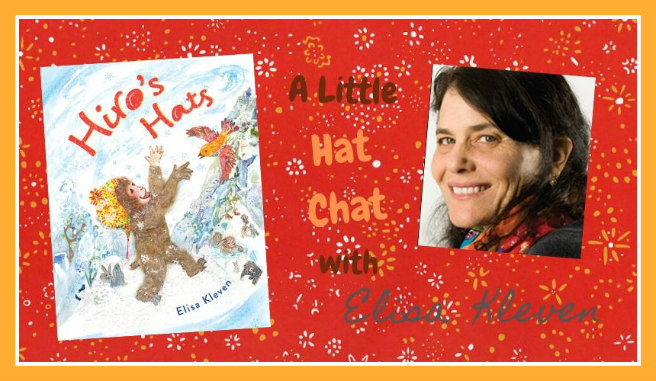
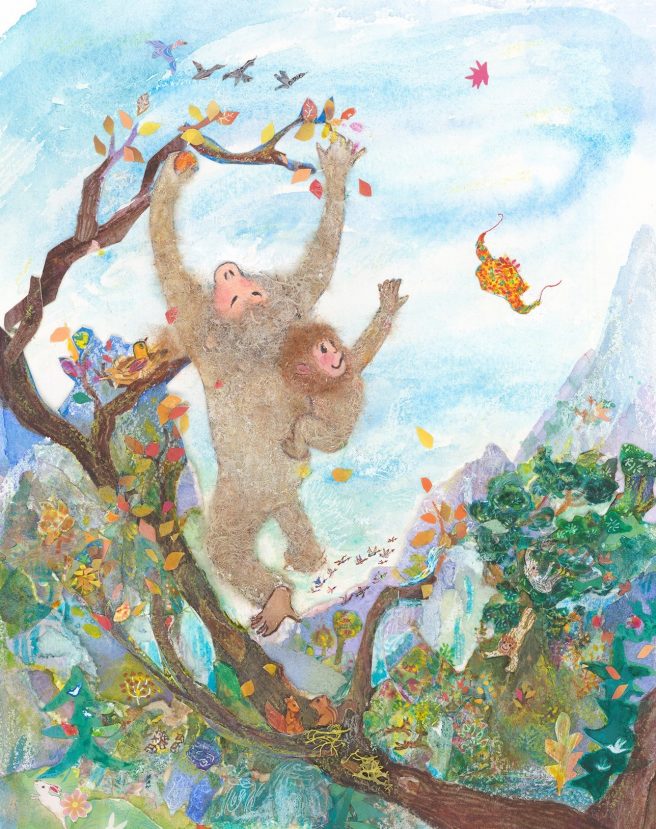
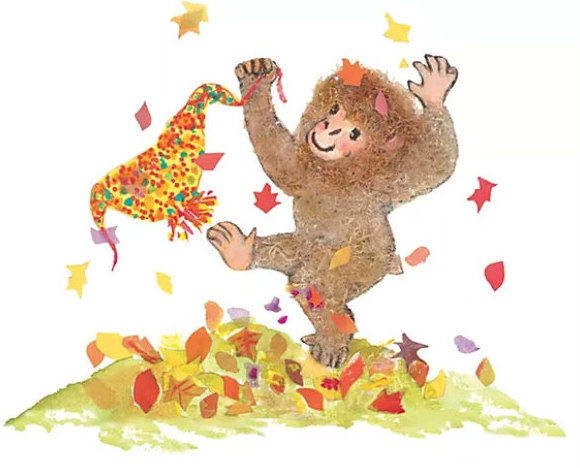
In this whimsical wintry tale set in the mountains of Japan, an adorable snow monkey finds a colorful hat “flying like a bright bird through the sky.” Soon after Hiro waves hello and the hat waves back, it flutters down to play, jumping in the leaves and flying like a kite in the wind.
Although his siblings tease him, Hiro loves the hat and considers it a friend. The hat seems to love him back, too. When it begins to snow and the world turns “as white as the moon,” the hat keeps him warm.
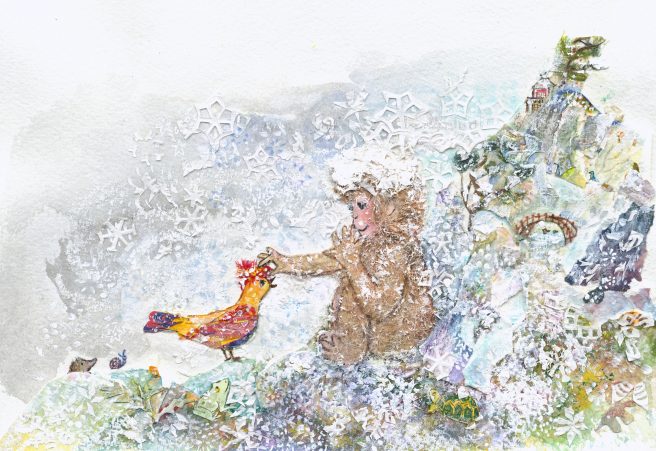
Only a friendly robin seems to understand. She wishes she had a hat just like Hiro’s, but he warns her that other robins might tease her. She assures him that they already do, calling her a baby because she loves her cozy nest.
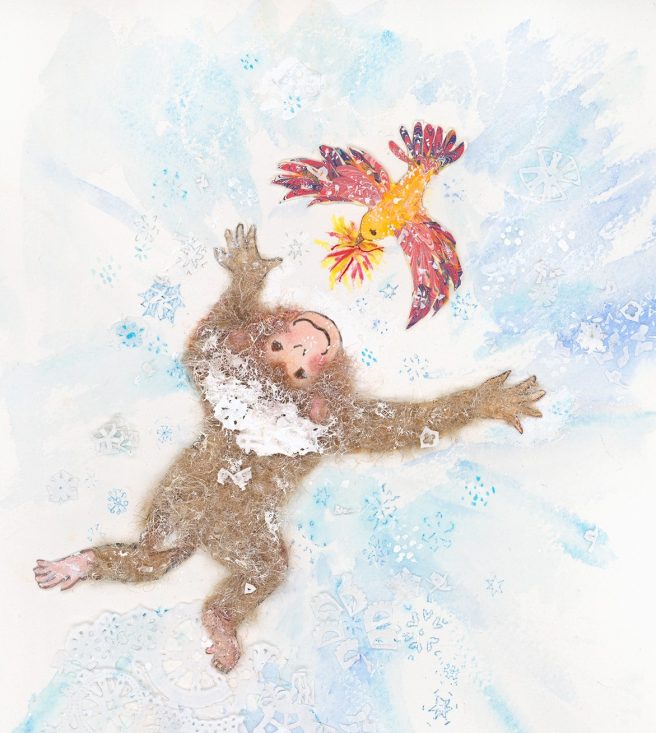
Hiro and Robin joyously play together, making a snow monkey with a moss hat. When the wind snatches both hats away, Robin goes after Hiro’s hat, disappearing into the storm. Now Robin and her nest are gone, and Hiro is devastated. The next morning, Hiro wakens to find he’s wearing a snow hat and he hears singing.
It’s Robin! The friends are happily reunited and spend the rest of the winter together. With Robin snuggling on Hiro’s head with outstretched wings, he now has a warm feathery hat while she has a cozy nest. Come spring, Robin provides Hiro with the best hat of all, while all the other snow monkeys gleefully celebrate the season with silly spring hats of their own. You’ll have to read the story to find out what actually happened to Hiro’s very first hat. 🙂
Elisa’s engaging text and exquisite mixed media collages will captivate young readers, appealing to their love of creative play and making them wish they could be Hiro’s friend. His personality is so endearing and child-like, and as we see him giving his hat a bath, tumbling in the snow, or gleefully interacting with Robin, he’s just plain lovable and irresistibly charming.
Hiro’s Hatsis perfect for imaginative readers who like emotionally resonant stories about animals, friendship, and the seasons, and who appreciate beautifully textured illustrations with a wealth of fine details. Elisa has also included some interesting facts about snow monkeys at the end for those wanting to learn more.
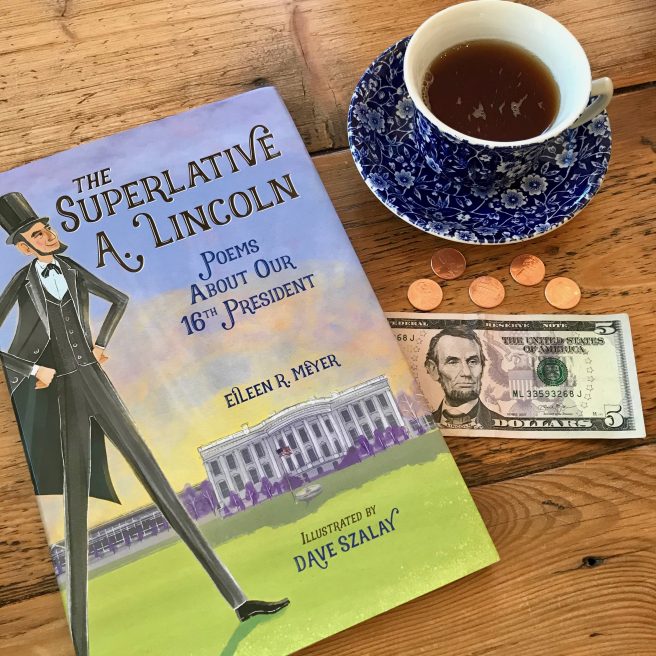
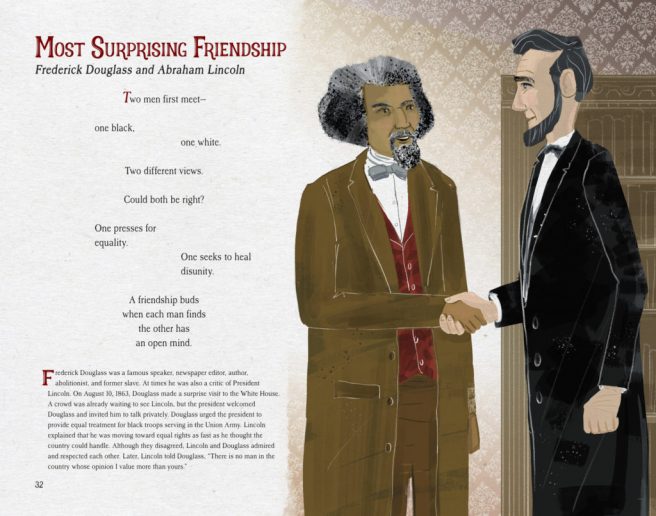
Meyer’s theme of “superlatives” is a fun and effective way to help kids understand why Lincoln is widely considered to be our greatest President. Her nineteen narrative poems — lively, rhyming, upbeat, captivating — describe some of Lincoln’s most commendable skills, attributes, dreams, and milestones, while providing interesting insights into his personality and character.
The poems are arranged chronologically from Lincoln’s humble beginnings as “Most Studious” (a self-taught learner), to his youth as “Most Distracted Farmer” (who preferred reading to farm chores), to being “Most Respected” (short stint at boot camp), to his tenure as President (a “Most Permissive Parent” whose sons ran wild in the White House). With the “Strongest Conviction,” he signed the Emancipation Proclamation, then later delivered his “Greatest Speech,” the Gettysburg Address.
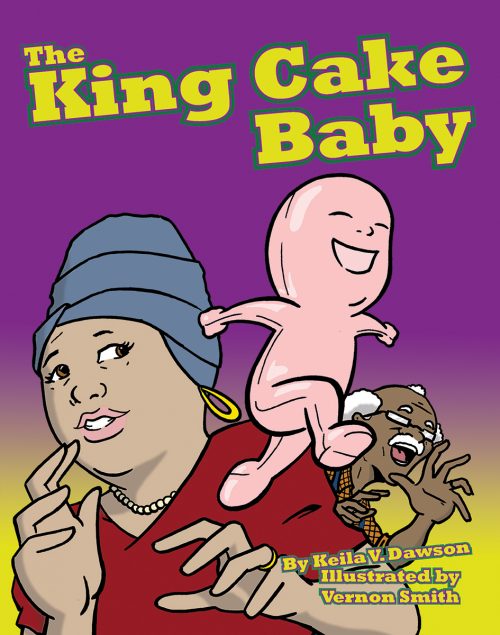
As a New Orleans native, I enjoy sharing my culture with others, especially our food and traditions. When I wrote THE KING CAKE BABY, a story about eating King Cake throughout the Carnival season, I wanted to share a taste of Louisiana with kids. That tradition has a sweet spot in my heart.
Carnival has been celebrated for hundreds of years in Louisiana and historians have traced the custom that became the modern King Cake to the pre-Christian ancient Roman rituals. During the winter solstice Saturnalia festival ordinary citizens joined in the celebration to give thanks to Saturnus, the god of sowing or seed. Partying, feasting, merrymaking, role-reversals, and making mischief were all part of the festivities. And yes, there was cake!
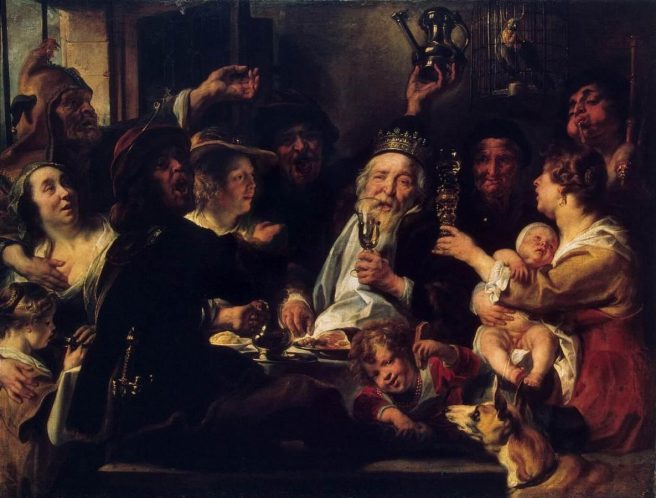
A fava bean was hidden in that cake and the person who found it in their piece became ruler of the day or the “Lord of Misrule.” It’s believed the festival allowed those among the lowest levels of society temporary relief from societal pressures imposed by the ruling class.
“The Bean King” by Jacob Jordaens (ca. 1638)
During the Middle Ages Europeans continued to celebrate the return of the sun during the winter solstice and worshipped numerous non-Christian gods. Although the church prohibited the pagan festival, the fun and festivities remained popular. Evidence suggests the church replaced the winter solstice celebration with the feast of the Epiphany on January 6, twelve days after Christmas. This date coincided with the winter solstice and the church intended to secure the worship of only one god –Jesus Christ. Also known as Kings’ Day, this feast honors the three wise men bearing gifts and recognizing the divinity of the baby Jesus. And yes, there was cake!
If you’re wondering how the good times had by all centuries ago translated into Let the good times roll and eating King Cake in Louisiana today, it’s because La Louisiane territory was once ruled by the French and the Spanish. And many customs, even laws, from Latin Louisiana are still practiced today.
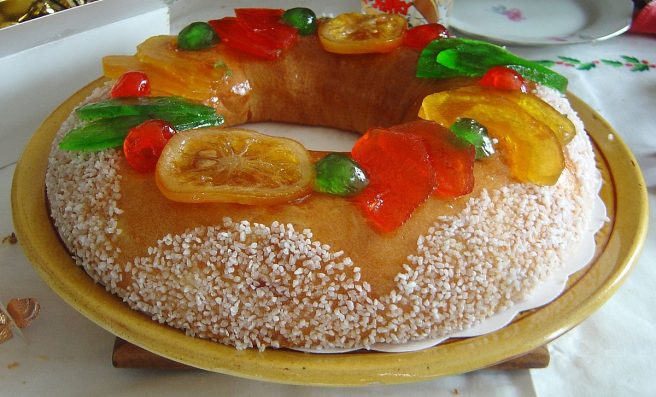
Over centuries, serving kings’ cake on the Epiphany remained popular in France. Bakers in boulangeries (a bakery specializing in bread) and pastry chefs in patisseries (a bakery specializing in pastries) each wanted the sole right to sell the cake. When the king granted pastry chefs the monopoly, they made the gâteau des rois shaped into a ring. The gâteau is made of a brioche, a dough using yeast, and topped with jewel-colored candied fruit. This variety is also eaten in Spain but is known as a Tortell De Reis.
Gâteau des rois
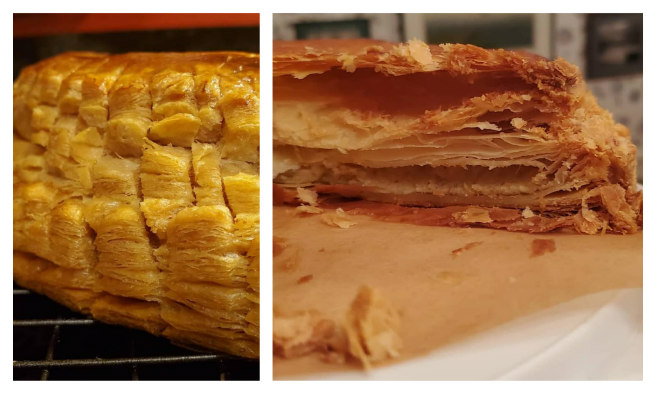
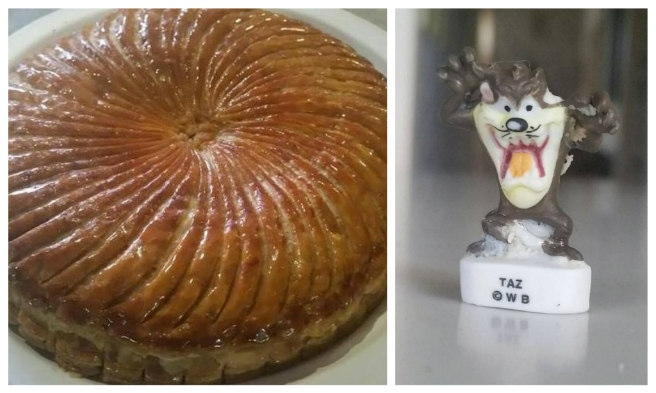
Not to be outdone, the bakers made galette des rois with a puff pastry in the shape of a pie. The names translate into “cake of kings.” Eventually small porcelain figures replaced the fève (bean) hidden in the cake. The name and the tradition of becoming king or queen when found, continued. My son is a baker and as you can see, this cake has multiple thin layers and filled with frangipane. A friend who trained as a pastry chef in Paris made the other pictured below. And I got the porcelain fève she hid inside it!
Galette des rois made by Connor Frenck, Baker, Brown Bear Bakery
Galette des rois made by Nori Thompson, Pastry Cook, NoriNoir Bakery and Porcelain fève
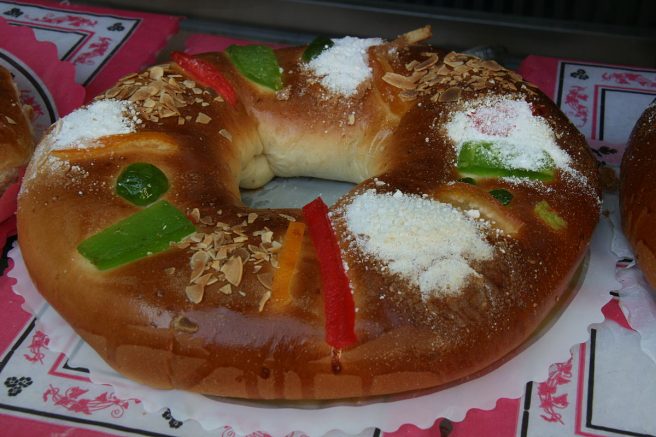
In Spain and throughout Latin America, Roscón de Reyes is eaten to celebrate the Fiesta de Los tres Reyes Mages or festival of the Three Magi on January 6. This cake is a sweet bread, garnished with dried and candied fruits.
Roscón de Reyes
During the early colonial period, the cakes baked in Louisiana varied depending on what areas of Europe colonizers were from. The Epiphany or Twelfth Night on January 6th marked the end of Christmas. However as the interest in celebrating a Christmas season shifted to one day, December 25, King Cake began to symbolize the beginning of the Carnival season. And today, the cake is eaten from January 6 until Mardi Gras Day.
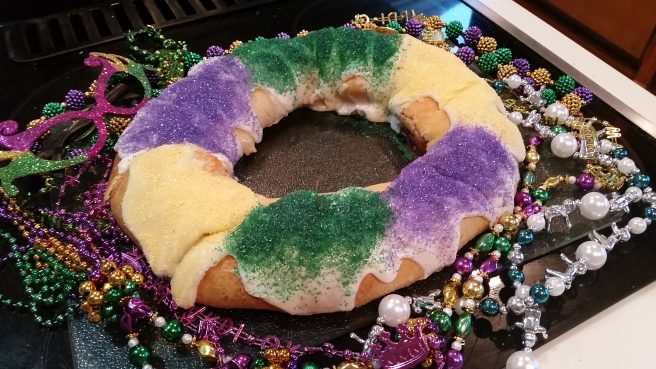
Social clubs called krewes were established and in 1872 the Krewe of Rex gave us the King of Carnival and the official colors – purple, green, and gold symbolizing justice, faith, and power. Louisiana King Cakes are decorated accordingly.
I made this traditional King Cake below filled with a cinnamon-sugar mixture using the recipe from my book.
A typical Louisiana King Cake is made from bread or broiche dough.
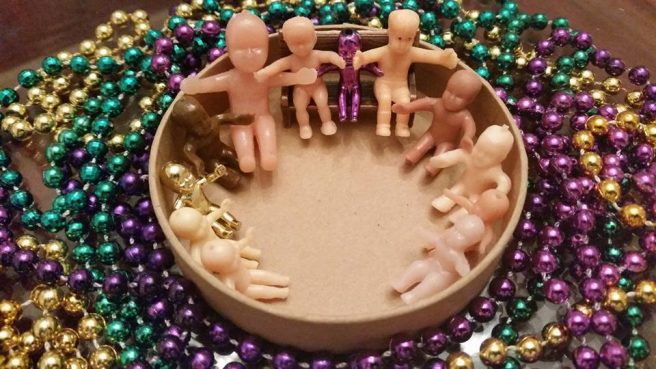
A local bakery in New Orleans named McKenzie supplied these krewes with King Cakes and as the popularity grew, either because of expense and/or availability, the owner substituted the porcelain trinket with a small plastic baby. And today, the King Cake babies come in all shapes, sizes, and colors.
Keila’s collection of King Cake Babies.
In Catholic tradition, the small plastic baby signifies the baby Jesus. And anyone who finds it is blessed and will have good luck. Another widely practiced custom is to crown whoever “gets the baby” king or queen for the day. But they are also obligated to buy the next cake.
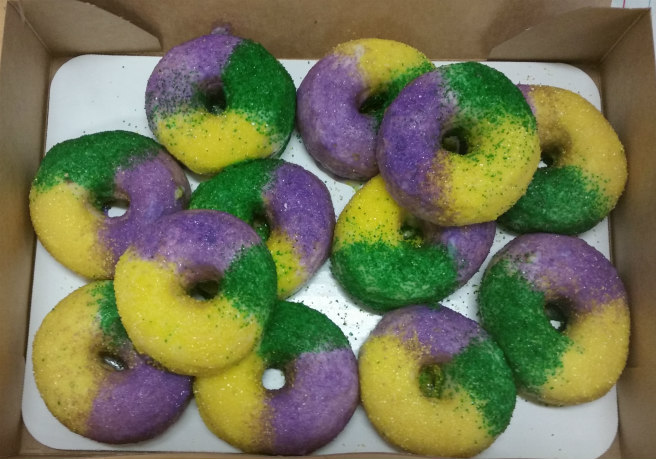
Every year bakeries and chefs get more and more creative with the King Cakes, using different variety of doughs, and fruit fillings. And you can enjoy King Cake donuts, King Cake coffee, King Cake ice cream, King Cake liquor and . . .
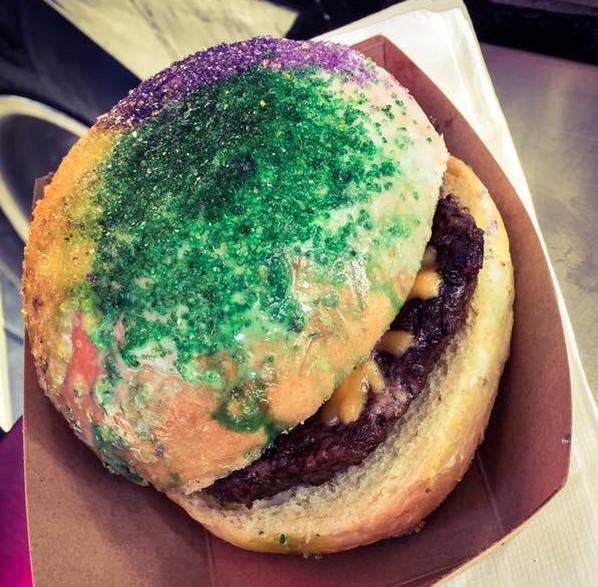
. . . King Cake Burgers!
Food Drunk food truck’s King Cake Burger
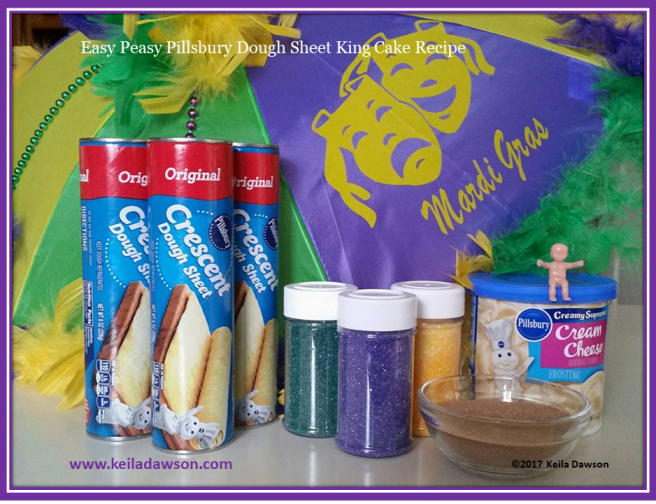
Eating King Cake is the tastiest way to celebrate Carnival and you don’t have to leave your home to do it. You can find many recipes online. In addition to the frozen bread dough recipe in my THE KING CAKE BABY, here’s my Easy Peasy Pillsbury King Cake recipe using dough sheets. Just don’t forget the baby!
*
ABOUT THE AUTHOR
Before becoming a children’s book author, Keila Dawson worked as a teacher, school administrator, and educational consultant in the U.S., the Philippines, Japan, and Egypt.
Her debut picture book is THE KING CAKE BABY (Pelican Publishing Co. 2015), her second book, NO VOICE TOO SMALL: Fourteen Young Americans Making History, co-edited with Jeanette Bradley and Lindsay H. Metcalf (Charlesbridge) will release in September 2020.
Keila is a member of SCBWI, writes monthly author studies for the Reading for Research Month (ReFoReMo) blog, and reviews books for Multicultural Children’s Book Day. When Keila isn’t reading, writing, and visiting schools, she’s traveling, playing tennis, or digging in genealogical archives.
She is represented by Dawn Frederick, Red Sofa Literary
One lucky winner will get a signed copy of The King Cake Baby. Enter the Rafflecopter HERE until February 14, 2020, at 11:59 p.m. EST. U.S. addresses and zip codes only. When time expires, the winner will be notified via email. Good Luck!! I hope you get the baby!!
What ingredients would you need to have a wonderful, jubilant, extra-happy, a little bit mysterious winter holiday?
Hmmm, perhaps two furry brown animals (one adorably stout, the other tall and sleek), a perky, yellow-feathered birdie, a warm hollow with a cozy fire, and CAKE!
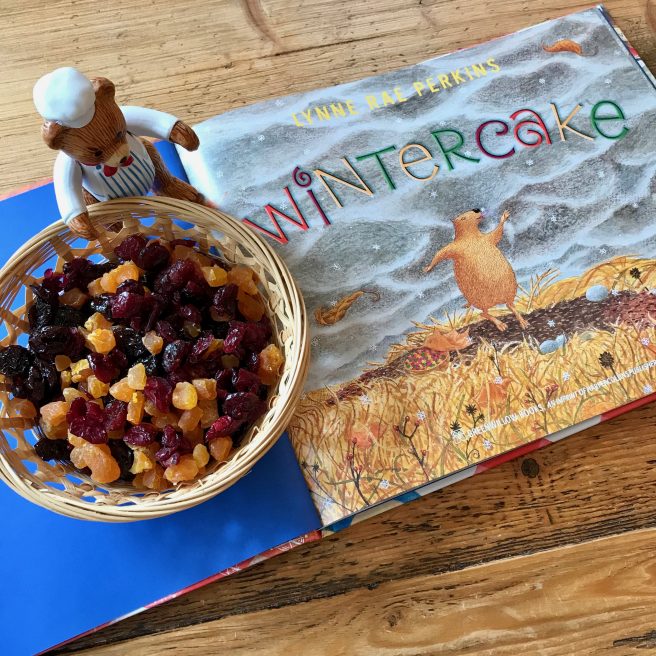
For added flavor (why not?), add a bustling tea room with chatty critters in the middle of the woods, a basket of dried fruit, and three mistakes (that’s the mysterious part) — and you have the utterly charming new picture book, Wintercake (Greenwillow, 2019),written and illustrated by Newbery winner Lynne Rae Perkins.
You could say this one was written with my name all over it. I will say it’s one of my top three fave picture books of the year, and definitely one of my all-time favorite holiday books. After all, I do love little furry animals (I’m married to one), we do live in the woods (I dream of opening a tea room), and after eating enough cake, I could very well be described as stout. 😀
What’s that? You’re a little concerned about the ‘mysterious mistakes’? I thought as much. Don’t worry, because in this story, we see how mistakes can lead to good things — an adventure, new friends, new traditions — all cause for celebration. Let me explain . . .
 Before becoming a children’s book author, Keila Dawson worked as a teacher, school administrator, and educational consultant in the U.S., the Philippines, Japan, and Egypt.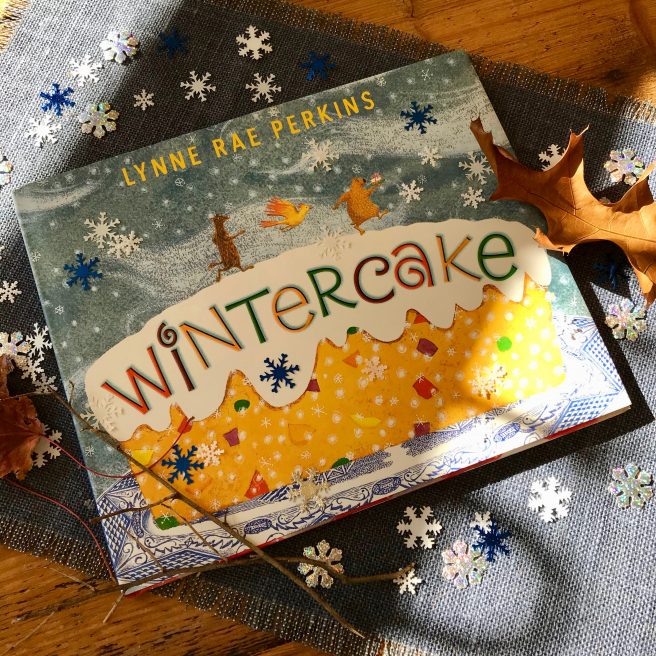
 Jama's Alphabet Soup