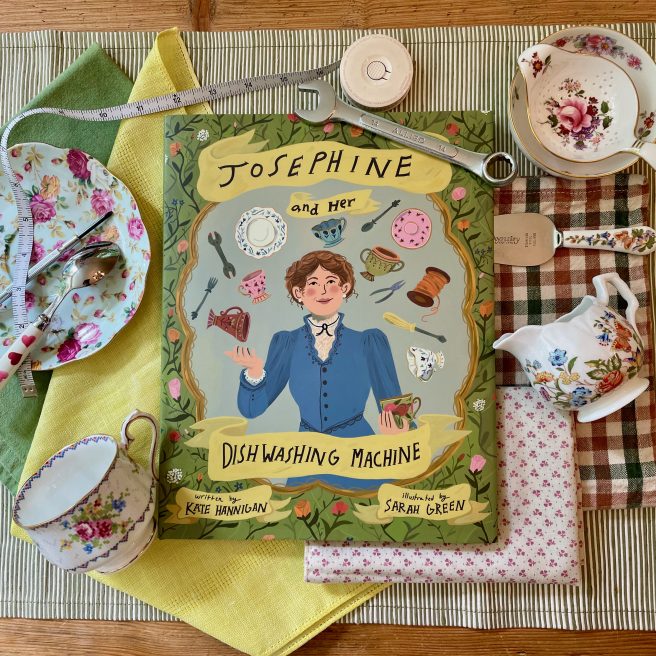
[splashy clean review] Josephine and Her Dishwashing Machine by Kate Hannigan and Sarah Green

“The woman of the future will have the memory of Josephine Garis Cochrane in grateful remembrance. It was she who invented the machine which has set woman free from the most slavish and disgusting task of housekeeping — dishwashing.” ~ The Daily Picayune, April 2, 1892.
First there’s a hum as the motor engages, the sound of water filling, then a swoosh as the pump starts up. After a couple of friendly knocks, my dishwasher settles into a comforting churn; sometimes a plate or two clinks with satisfaction. Ahhh!! Soon we’ll all be so clean and sparkly!

I like hearing the sudsy slosh and the jet spray during the rinse cycle. But as much as I’ve appreciated this efficient, time-saving appliance, I never really knew who invented it until I read Josephine and Her Dishwashing Machine by Kate Hannigan and Sarah Green (Calkins Creek, 2023).
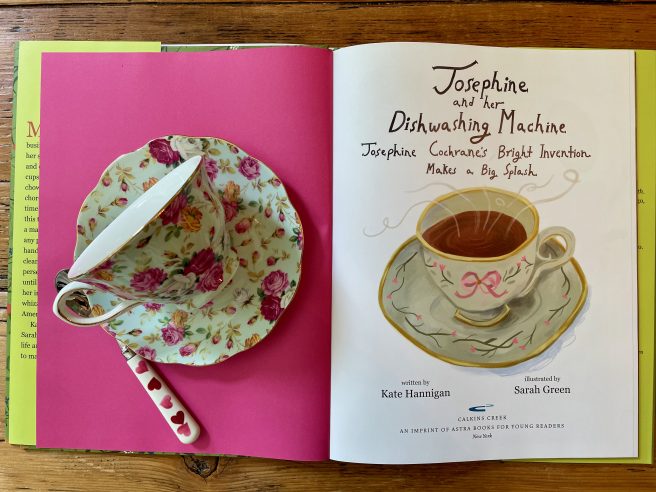
In lively, rhythmic prose, Hannigan relates how Chicago socialite Josephine Garis Cochrane invented the first practical and successful hand-powered dishwasher despite societal hurdles, lack of professional training and financial hardship.

It all began one night after a dinner party when, much to her dismay, Josephine discovered cracks and chips in some of the china her household staff had washed. She then tried washing the dishes herself, but hated the laborious, never-ending drudgery that robbed her of precious time she’d rather spend doing pleasant things, like playing the piano, picking flowers, frosting cakes, or scratching “the furry ears of her beloved hounds.”
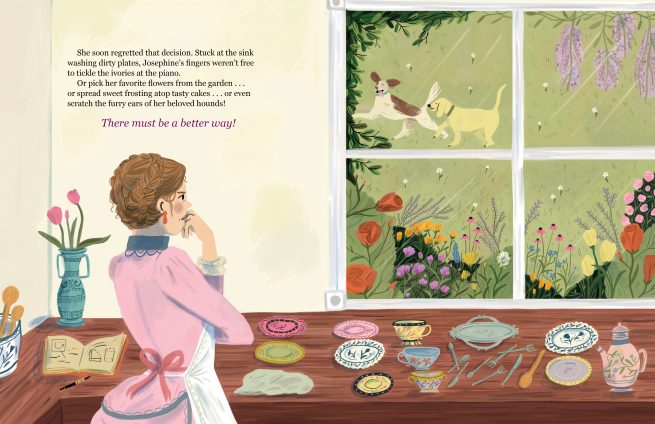
Convinced “there must be a better way,” she set about designing her own dishwashing machine. This wasn’t such a far fetched idea, as her great-grandfather, John Fitch, had secured a patent for the steamboat, and her father, John Garis, was an engineer who built bridges. This innovative spirit was also characteristic of the time period (Second Industrial Revolution), when many notable inventors were at work: Alexander Graham Bell (telephone), Margaret E. Knight (paper grocery bags), Thomas Edison (light bulb), Sarah E. Goode (convertible bed).

Continue reading
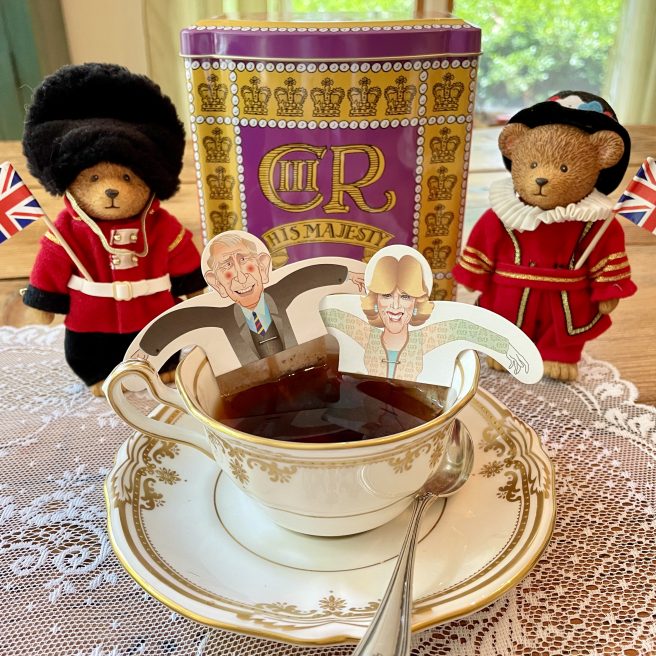
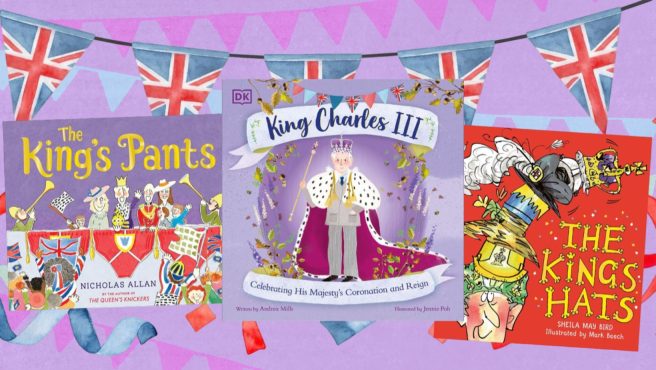
a trio of King Charles III picture books

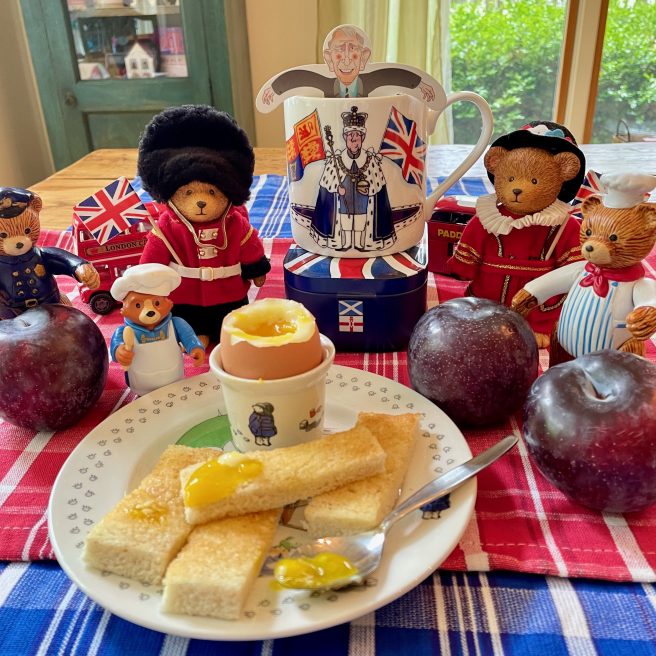
Don your sparkly tiaras and ermine robes! Today we’re celebrating the upcoming coronation of King Charles III with three recently published picture books about the green-planet-loving, lunch-skipping, kilt-wearing, cheesy baked eggs aficionado Charles Philip Arthur George.

Our “sovereign sandwich” consists of one meaty nonfiction title nestled between two light hearted tales, sure to satisfy kids’ curiosity about just who this man is and why his coronation is such an important moment in history.

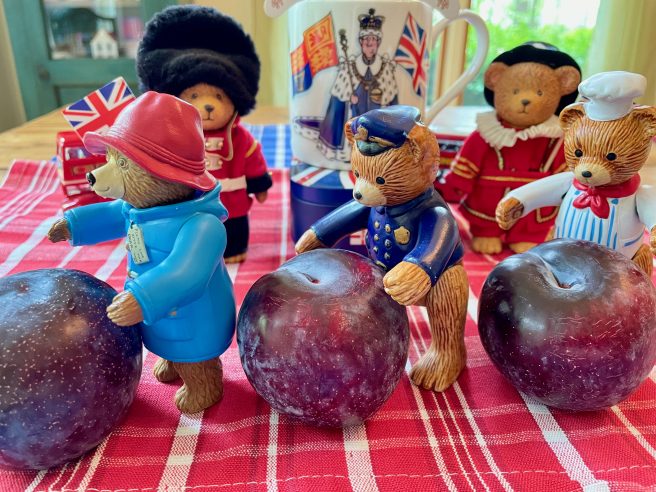
While you’re reading about these kingly books, help yourself to a plum (Charles’s favorite fruit), and egg soldiers (he eats a boiled egg every single day). Enjoy!

*

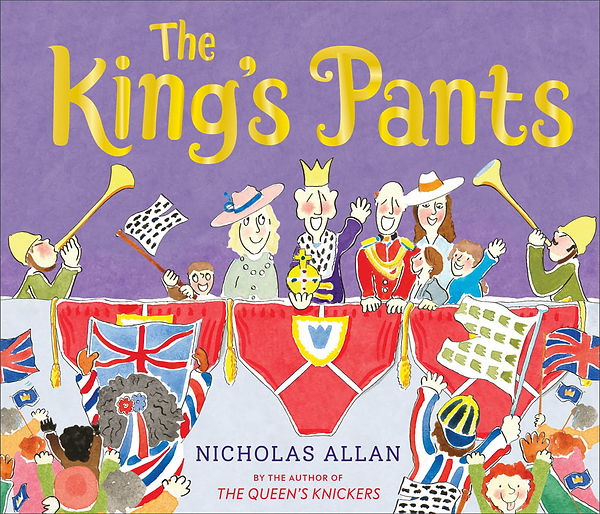
1. THE KING’S PANTS by Nicholas Allan (Andersen Press, 2023).

You know how kids giggle whenever the word ‘underwear’ or ‘underpants’ appears in a book? Well, British kids are similarly set off at the mere mention of ‘pants,’ since for them pants = underpants.

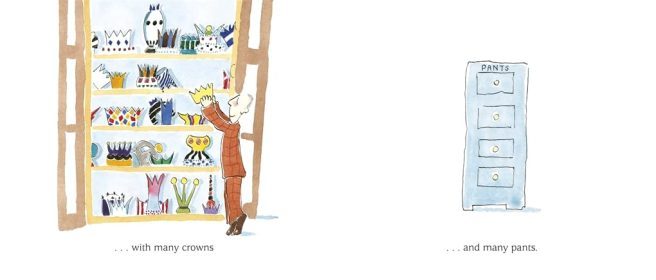
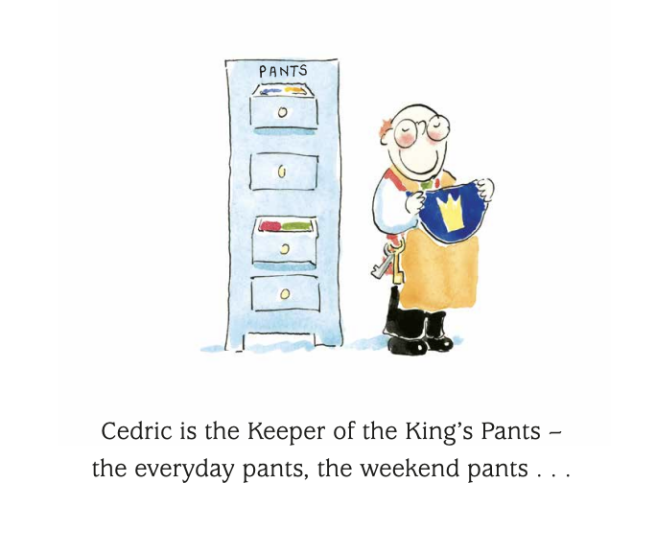
And there are a LOT of them in Nicholas Allan’s hilarious, irreverent yarn. The King, it seems, is quite a natty dresser. Not only does he own many crowns, he has drawers full of pants. One would, of course, need a pair of pants for every occasion: Everyday, Weekend, Coronation (he simply could NOT be crowned without those).

Well, one time when he goes on a trip, Cedric, the Keeper of the Pants, puts the King’s pants in a sack which gets mixed up with the Royal Mail sack. Chaos reigns when the following day the King’s subjects receive pants in their letter boxes instead of mail. Quelle surprise!

Undercover police were sent to uncover the underwear. Sniffer dogs were used to track them down!

After all the pants are recovered and laundered, the King decrees that many more pants should be made for him to avoid any future accidents. Among the additions: Peace and War pants, International, Posh Royal, Meeting the People. He even has Space Pants fitted with emergency air bags, and Organic Pants which are edible in emergencies. When he goes to Windsor or Balmoral, he wears his Castle Boxer Shorts (the working drawbridge in front is very useful).

Continue reading
[review + recipes] A Charlotte Brontë Birthday

“I am no bird; and no net ensnares me: I am a free human being with an independent will.” ~ Charlotte Brontë (Jane Eyre, 1847).

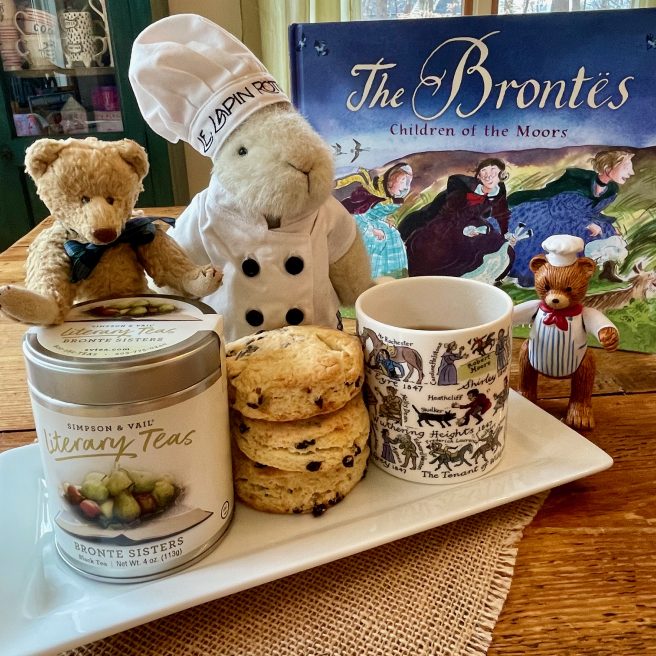
Today we’re celebrating Charlotte Brontë’s 207th birthday with a fabulous picture book and two versions of a scrummy Yorkshire treat. 🙂

Wonder if she could ever have imagined that over a century after publishing the first book of Brontë poems, generations of readers all over the world would still be studying, sharing and marveling at all she and her sisters had written?

As enjoyable and enduring as their books are, a large part of what continues to intrigue Brontë fans is the fascinating story of their all-too-brief lives in early 19th century Yorkshire. 

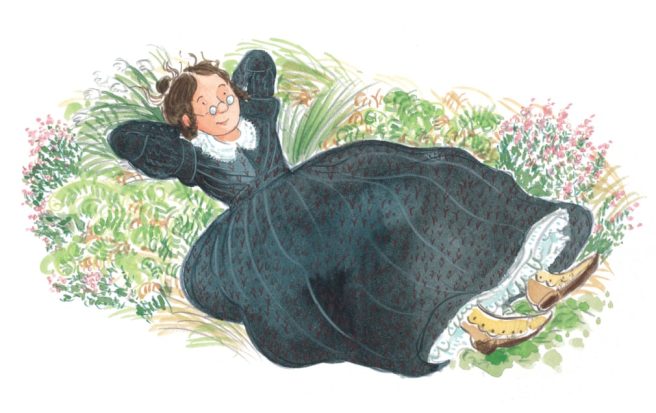
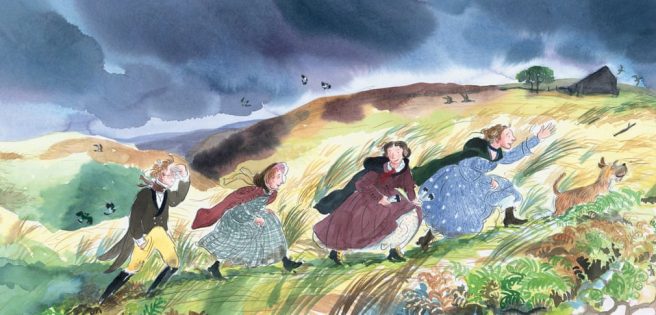
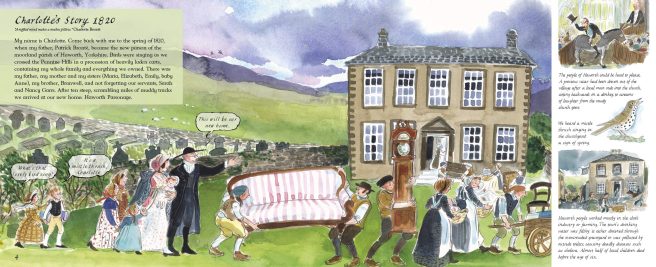
In The Brontës: Children of the Moors (Franklin Watts, 2016), award winning nonfiction picture book team Mick Manning and Brita Granström present an engaging, informative, charmingly illustrated account of Brontë family milestones from their early childhood days in Haworth, to their short stints as teachers and governesses, to their accomplishments as authors and poets.

Manning and Granström’s kid friendly format consists of three components: a main text narrated by Charlotte, scenes dramatized with characters conversing in speech bubbles, and Charlotte’s sidenotes brimming with interesting bits and bobs that expand on the main text.

This approach packs a lot of information into each double page spread; Charlotte’s voice is intimate and accessible and younger readers can opt to follow the story via the pictures.

There’s also a unique spin: Mick Manning actually grew up in the village of Haworth and played a shepherd in the 1967 BBC2 “Wuthering Heights” series when he was just 8. As the book opens, he recounts how he dozed off while waiting for his turn on camera, only to have a lady “in old fashioned clothes” tell him a story he’d never forget upon awakening. 

Continue reading
[review + recipe] Chef Edna: Queen of Southern Cooking, Edna Lewis by Melvina Noel and Cozbi A. Cabrera

“One of the greatest pleasures of my life has been that I have never stopped learning about good cooking and good food.” ~ Edna Lewis

Picture this:

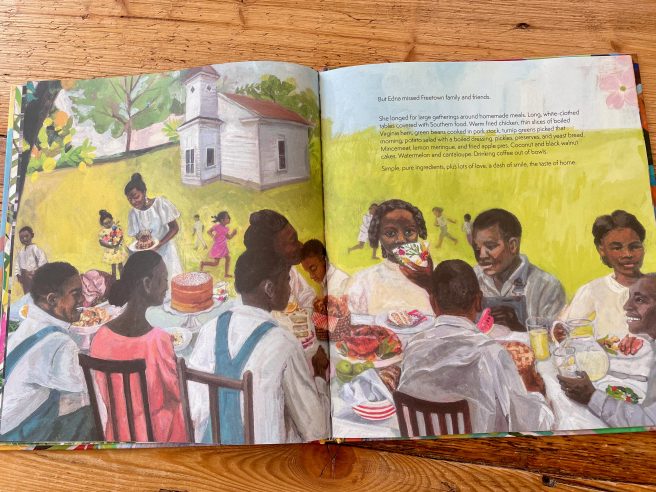
A group of African American family members and friends gathered outdoors around a long, white-clothed table covered with “warm fried chicken, thin slices of boiled Virginia ham, green beans cooked in pork stock, turnip greens picked that morning, potato salad with a boiled dressing, pickles, preserves, and yeast bread.” 

For dessert? Mincemeat, lemon meringue and fried apple pies, along with coconut and black walnut cakes. Don’t forget the watermelon and cantaloupe, the freshly ground coffee to be drunk out of bowls.

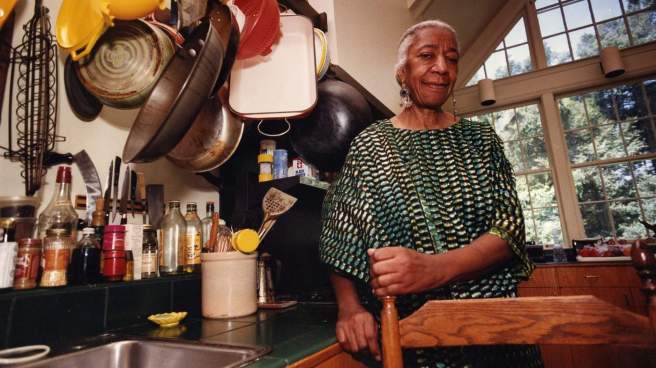
Miss Lewis, Culinary Ambassador and Grande Doyen of Southern Cooking.

This is the kind of homemade, homegrown food beloved chef and cookbook author Edna Lewis grew up with. Her advocacy of this simple style of cooking using only the freshest in-season ingredients anticipated the natural foods, slow food, and farm-to-table movements, essentially changing the way average Americans viewed Southern cuisine.

Beautiful painting of young Edna under the dust jacket!

In Chef Edna: Queen of Southern Cooking, Edna Lewis (Cameron Kids, 2032), Melvina Noel and Cozbi A. Cabrera trace Edna’s life from her childhood on a Virginia farm, to her early days as a working single, then finally to her prominence as a restaurant co-owner and chef-de-cuisine in NYC.

Essentially, what Edna first learned about cooking and everything associated with it – family, friends, love, community, cultural heritage – established her identity and defined her life’s work, as she remained committed to preserving traditional Southern foodways while showcasing the seminal role African Americans played in the origins of this regional cuisine.

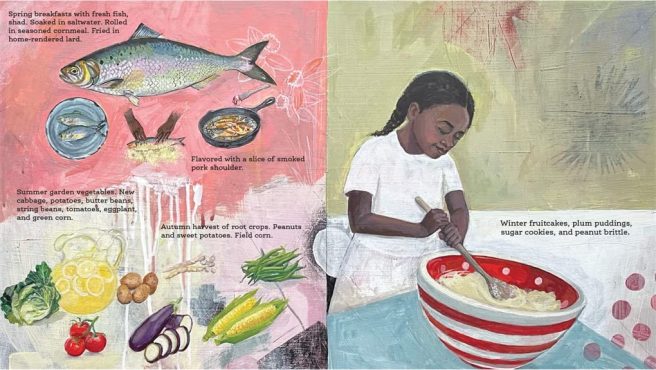
It all began on a farm in Freetown, Virginia, an African American community founded by Edna’s grandfather and two other freed slaves. From an early age, Edna participated in all aspects of farm life: milking cows, chasing chickens, picking wild greens and gathering berries. Edna especially loved cooking with her mother, Mama Daisy.

Continue reading

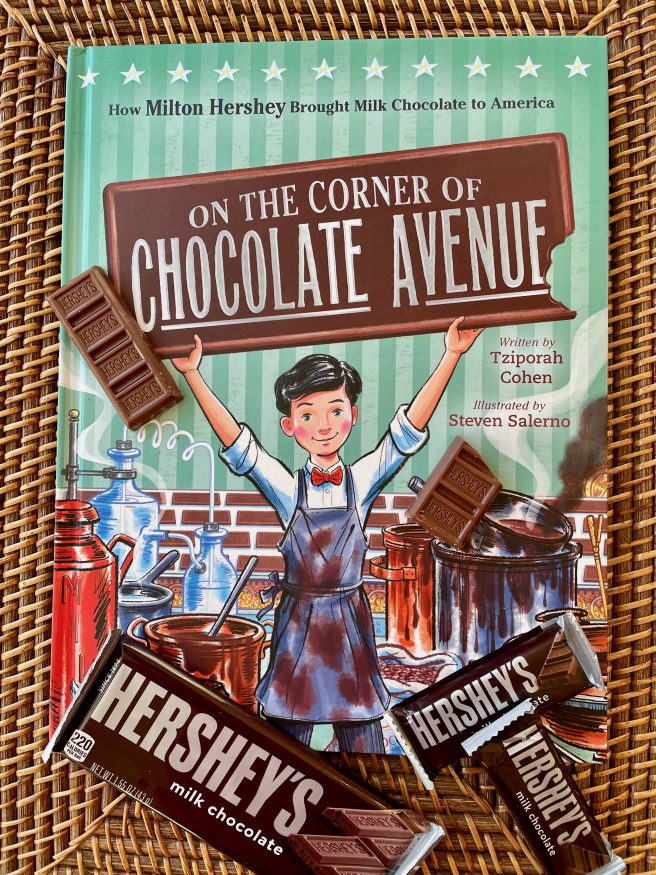
[sweet review] On the Corner of Chocolate Avenue by Tziporah Cohen and Steven Salerno

“One is only happy in proportion as he makes others feel happy.” ~ Milton Hershey

Go ahead: break off a piece of Hershey bar and savor its rich chocolaty goodness as it slowly melts in your mouth. Mmmmmm! Did you know those rectangular sections are called ‘pips’? 🙂

Hershey’s chocolate defined my childhood.

When I was growing up, I simply had to have a Hershey’s Milk Chocolate bar whenever I went to the movies or had extra money from my allowance. So much happiness for just a nickel!

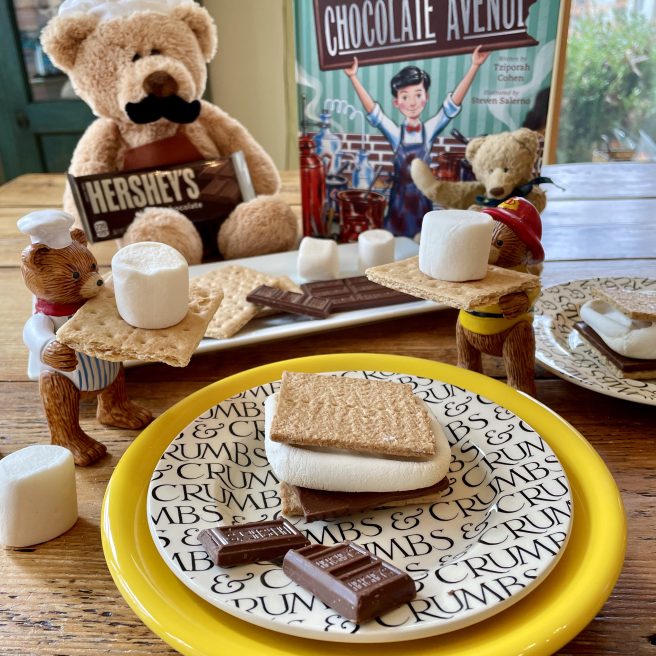
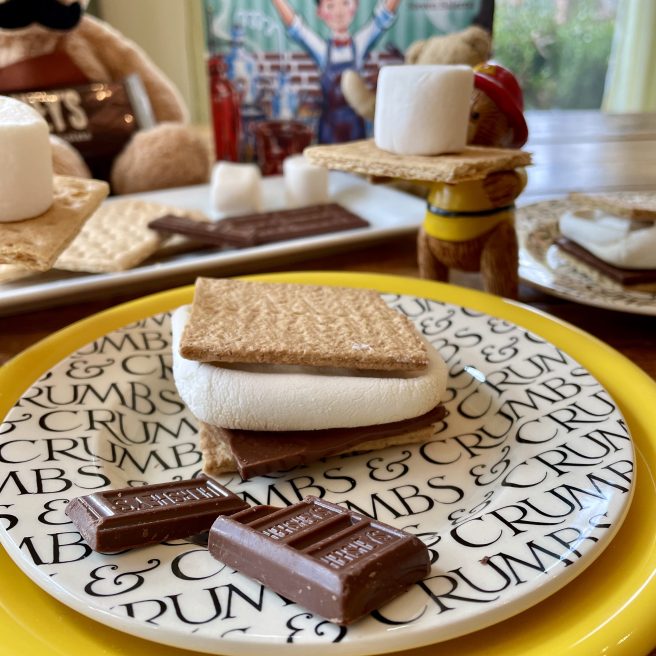
We poured Hershey’s syrup into cold milk and over vanilla ice cream, and I’ll always remember the first time I made and devoured my first S’more at Campfire Girls day camp. Marry me, please. And best of all, every Christmas, Grandma Yang would give a five pound box of Hershey’s Kisses to each of her eleven children and their families. The holidays wouldn’t have been the same without those sweet kisses.

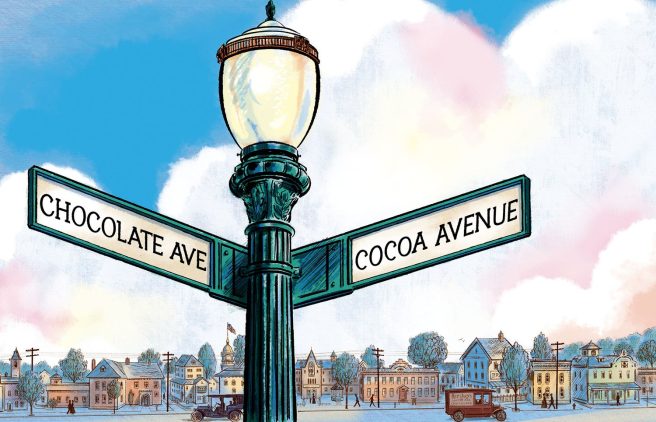
You can see why I was excited to see this brand new picture book biography, On the Corner of Chocolate Avenue: How Milton Hershey Brought Milk Chocolate to America by Tziporah Cohen and Steven Salerno (Clarion Books, 2022). Though a longtime Hershey’s fan, I actually knew very little about the life of America’s Chocolate King.

Through hard work and perseverance, a poor boy from Derry Township, Pennsylvania – one who probably never tasted chocolate as a child – grew up to create a chocolate empire as a pioneering confectioner, resilient businessman, and dedicated philanthropist. 

Hershey’s achievements in mass production and bulk export helped to popularize chocolate around the world, making it accessible and affordable for the average consumer.

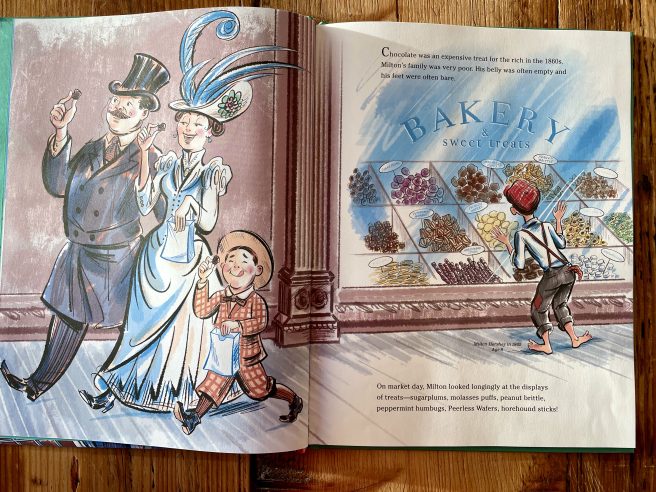
As the story opens, we see 8-year-old Milton gazing longingly at the sweets displayed in a shop window. Chocolate is a treat solely for the wealthy, and Milton was from a poor family. Since they moved around a lot, he attended six schools in seven years, barely learning how to read.

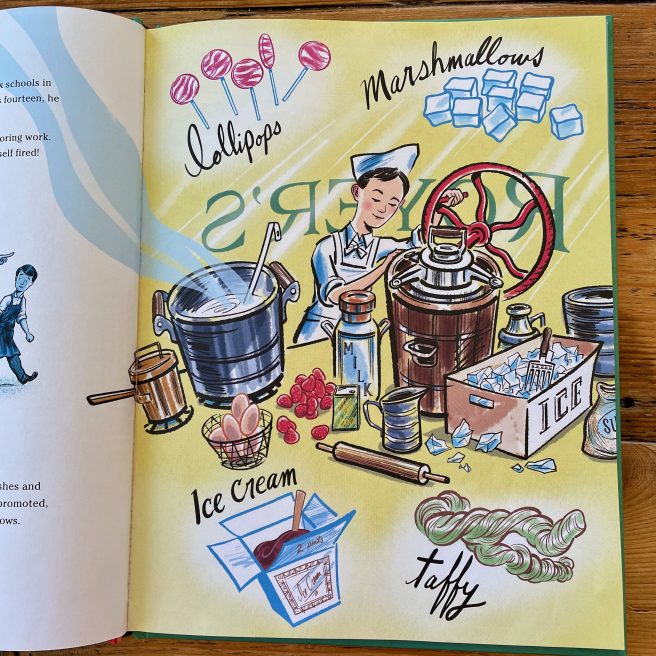
At age 14, he left school to help support his family. After a brief stint as a printer’s apprentice, he worked at Royer’s Ice Cream Parlor and Garden, where he learned the basics of candy making (ice cream, taffy, lollipops, marshmallows). Seeing candy’s power to make people happy, he decided it would be wonderful to build his own candy business.

Several years later, he borrowed money from his family to open the Spring Garden Confectionery Works in Philadelphia. Unfortunately, this business, as well as two others he started in Chicago and New York, failed.

Continue reading