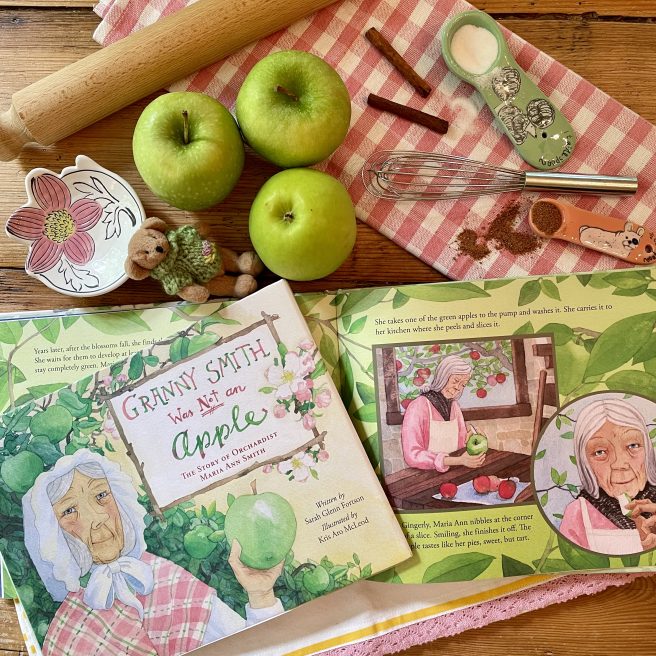
[review + recipe] Granny Smith Was Not An Apple by Sarah Glenn Fortson and Kris Aro McLeod

Happy National Apple Month!

Time to wrap your lips around apple pie, crumble, crisp, pandowdy, buckle, slump, cobbler and dumpling. Inhale the heavenly fragrance of cinnamon and nutmeg. Sip some warm cider. When it comes to apples, they can’t be beat for variety and versatility.

What’s your favorite type of apple? I’m partial to Red Delicious, Golden Delicious, and Granny Smith because they’re pretty much available year round. Have you ever wondered whether Granny Smith was a real person?

I recently found out in this crunchy picture book biography, Granny Smith Was Not An Apple: The Story of Orchardist Maria Ann Smith by Sarah Glenn Fortson and Kris Aro McLeod (Peter Pauper Press, 2023).
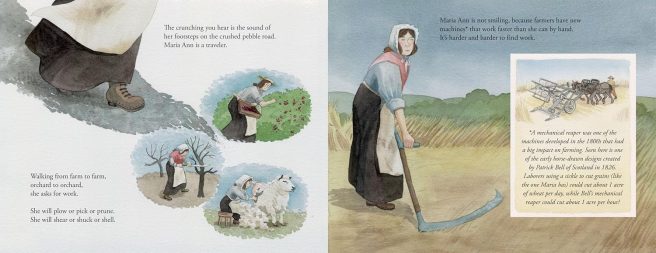
Back in the 1800’s, Maria Ann Smith, an English “tough to the core” itinerant worker and orchardist, struggled to find work when manual laborers were being replaced with faster, more efficient farm equipment.

Since she and her husband could barely support their family, Maria Ann helped deliver babies in her village (historically, midwives were called ‘Granny’). She received payment in the form of food and clothing, then eventually worked in an apple orchard, where she learned about grafting and harvesting.
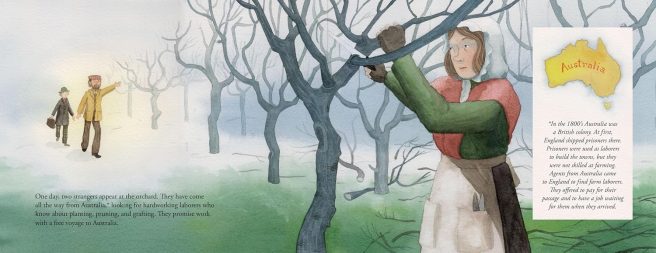
One day, two foreign agents arrived at the orchard looking for experienced laborers to work in Australia with a free voyage. Ignoring her neighbors’ warnings not to go, Maria and her family boarded the ship to Australia, enduring the arduous 4-month journey during which her five children fell ill. Maria kept her spirits up by thinking about a better life.

Continue reading
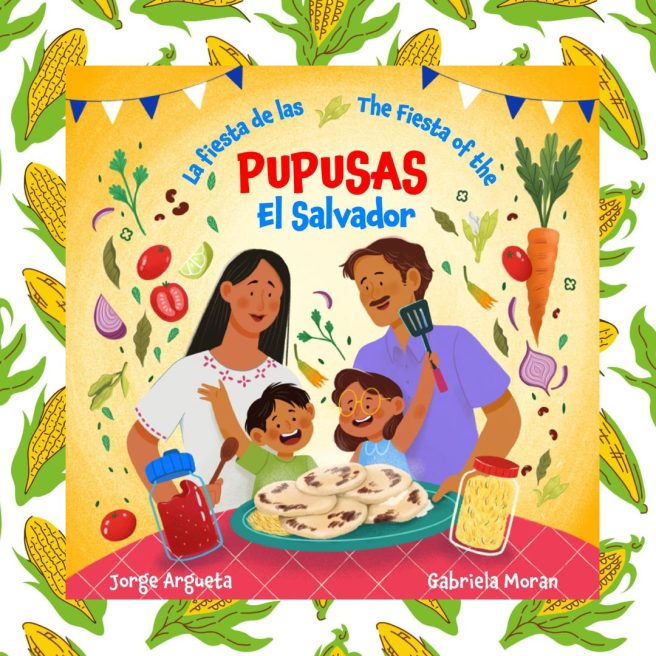
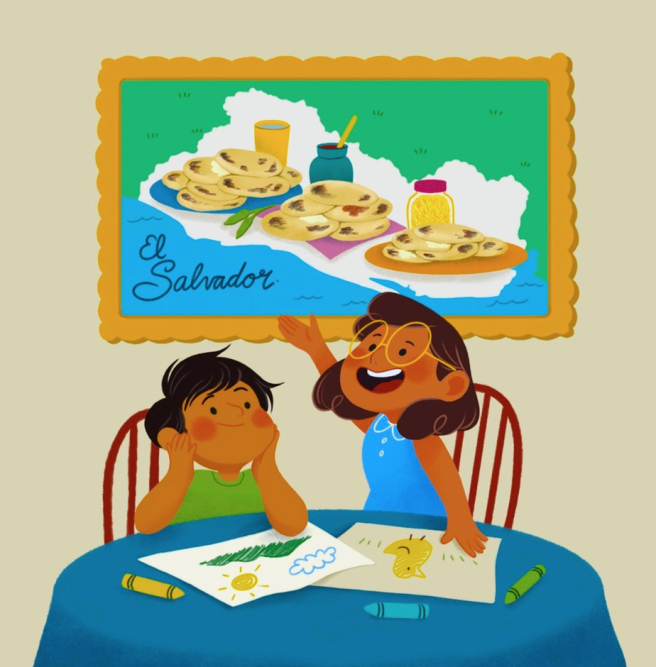
[yummy review] La fiesta de las pupusas/The Fiesta of the Pupusas: El Salvador by Jorge Argueta and Gabriela Morán

“In El Salvador the full moon is a celestial pupusa.” ~ Francisco X. Alarcón

Right about now, I’m hungry for a warm, savory pupusa. Filling of choice? Pork, beans and melty cheese. Don’t skimp on the salsa roja or curtido! Officially declared the national dish of El Salvador in 2005, pupusas are the ultimate happy-making comfort food and the delectable subject of Jorge Argueta’s new picture book.

As a big fan of his bilingual cooking poem series published by Groundwood Books (Sopa de frijoles/Bean Soup (2009)Arroz con leche/Rice Pudding (2010)Guacamole (2012)Tamalitos (2013), and Salsa (2015)), I was excited to see La fiesta de las pupusas/The Fiesta of the Pupusas: El Salvador (Luna’s Press Books, 2024), charmingly illustrated by Salvadoran artist and graphic designer Gabriela Morán.

This joyful celebration of El Salvador’s favorite food is also a love letter to Argueta’s home country, where his family once owned a restaurant and he grew up with the colors, smells, and sounds of traditional foods being lovingly prepared by his mother and aunts in his own kitchen.

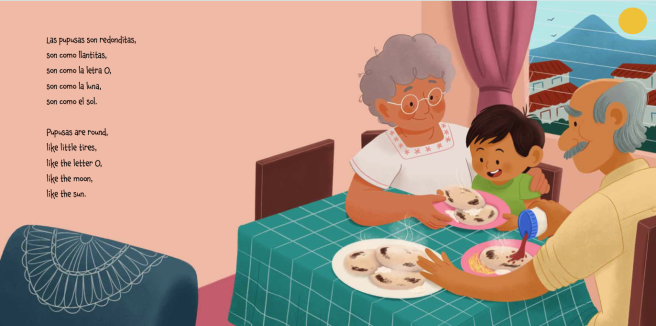
As the story opens, our friendly narrator explains that pupusas are a very popular, magical food in El Salvador, where it’s eaten morning, noon, and night. Pupusas are made from corn or rice flour, were once cooked in clay griddles, but are now made on big metal grills. And they’re round!

Las pupusas son redonditas, 
son como llantitas,
son como la letra O,
son como la luna,
son como el sol.

Pupusas are round,
like little tires,
like the letter O,
like the moon,
like the sun.

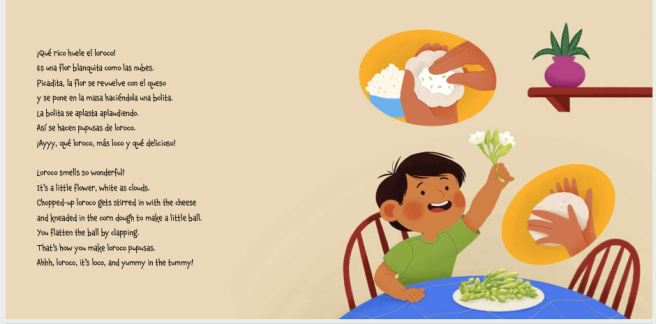
Though most pupusas are filled with beans and cheese, some are made with cheese and loroco, a tiny white fragrant flower:

 ¡Qué rico huele el loroco!
Es una flor blanquita como las nubes.
Picadita, la flor se revuelve con el queso
y se pone en la masa haciéndola una bolita.
La bolita se aplasta aplaudiendo.
Así se hacen pupusas de loroco.
¡Ayyy, qué loroco, más loco y qué delicioso!


Loroco smells so wonderful!
It’s a little flower, white as clouds.
Chopped-up loroco gets stirred in with the cheese
and kneaded in the corn dough to make a little ball.
You flatten the ball by clapping.
That’s how you make loroco pupusas.
Ahhh, loroco, it’s loco, and yummy in the tummy!
Continue reading

[review] Rumi: Poet of Joy and Love by Rashin Kheiriyeh

“Should you wish to be in heaven forever? Be a friend to everyone.” ~ Rumi

Can meeting the right friend change your life? Why is it important to share your story with others, and how is embracing everyone in love and friendship its own spiritual practice?

Whether through his relatable aphorisms or divine poetry, Rumi has touched us all. As one of the world’s most popular poets, this 13th century Persian scholar and Sufi mystic continues to teach, inspire, and open our hearts to humanity.

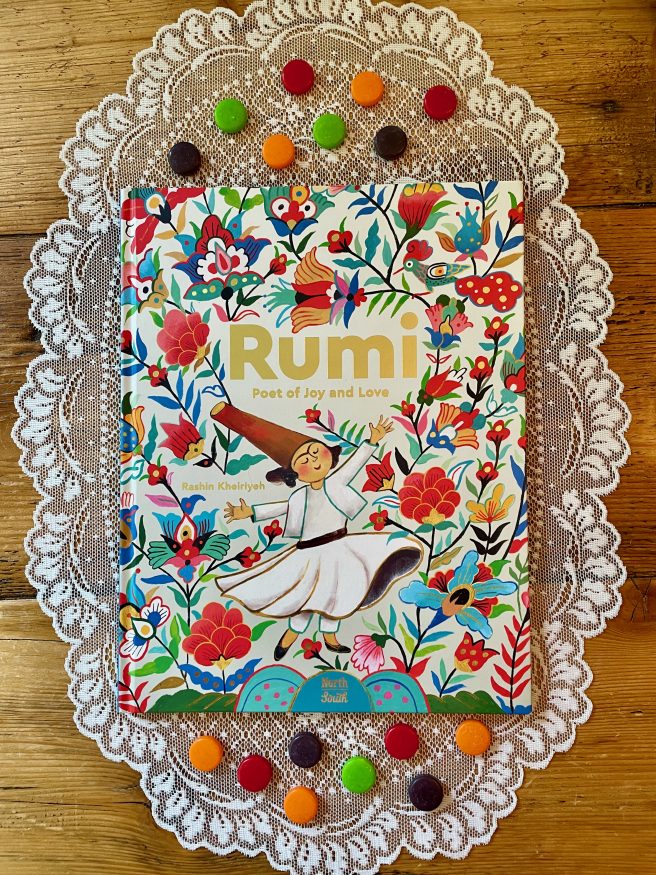
In her stunning picture book biography, Rumi: Poet of Joy and Love (NorthSouth Books, 2024), Iranian-American author-illustrator Rashin Kheiriyeh shows how a chance meeting with a stranger transformed an already revered scholar and theologian into a poet for the ages.

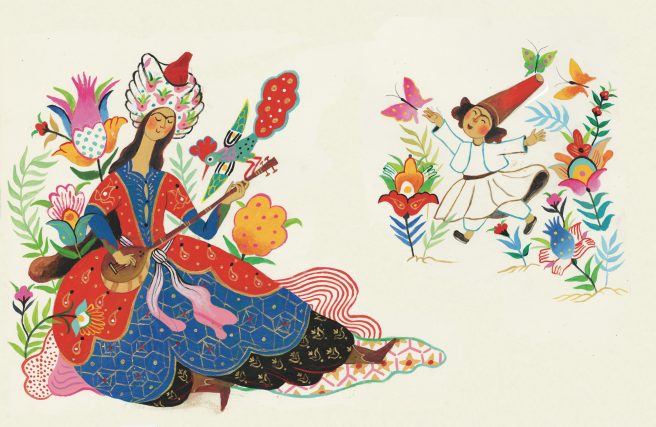
We first learn Rumi was born on “a crisp and colorful autumn day in Iran” (present day Afghanistan) on September 30, 1207. From the beginning he was a child of nature and reveled in the beautiful world around him. He chased butterflies and “delighted in the scent of roses and the songs of the birds.” Rumi especially loved to feed the birds; his favorite was the hoopoe, the symbol of wisdom.

Rumi’s father patiently answered his many questions, teaching his son all he knew. One day he shared these prescient words: “Learn generosity from the sun. It lights the world every day and asks for nothing in return.”

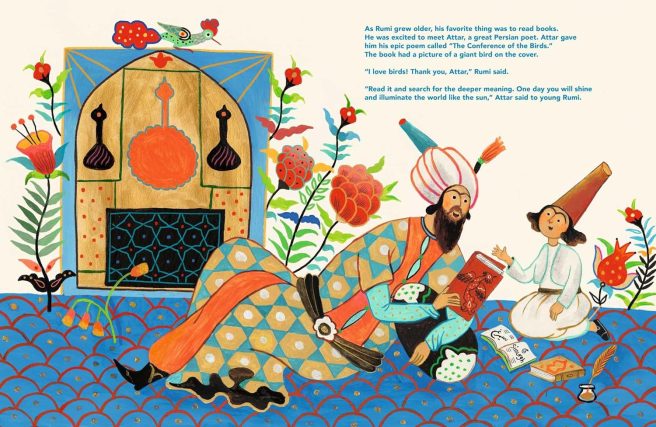
An avid reader, Rumi was excited one day to meet the great Persian poet Attar, who gifted him with a copy of his epic poem, “The Conference of the Birds.” Attar advised Rumi to “read it and search for the deeper meaning. One day you will shine and illuminate the world like the sun.”

In Attar’s poem, hundreds of birds (including the hoopoe) travel many miles in search of the mythical bird Sīmurgh to serve as their king. Only thirty birds survived this arduous journey, realizing when they reached their destination that they were actually the Sīmurgh. When together, they flew as one giant bird.

Years later, after Rumi had moved to Turkey with his family, he followed in the footsteps of his father and grandfather, with followers from near and far eager to study with him.

Continue reading

[artsy review] Gifts from Georgia’s Garden by Lisa Robinson and Hadley Hooper

American modernist painter Georgia O’Keeffe is best known for her meticulously rendered, large-scale depictions of flowers and stark desert landscapes — Oriental Poppies, serene Calla Lilies, fiery Red Canna, deer skulls and wildflowers floating above the horizon.

A fiercely independent nonconformist, O’Keeffe created abstract distillations of natural forms that gained international recognition and confirmed her stature as one of the most significant artists of the 20th century. O’Keeffe took a personal and provocative approach to art, seeking to create an equivalent of what she felt she was looking at, rather than merely copying it.

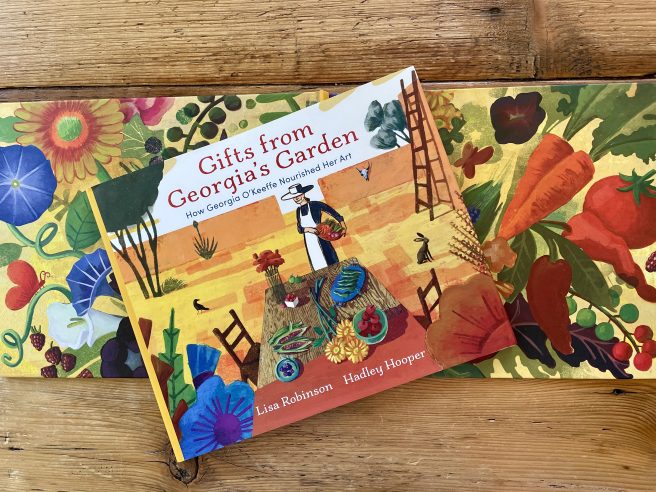
Beautiful front end papers.

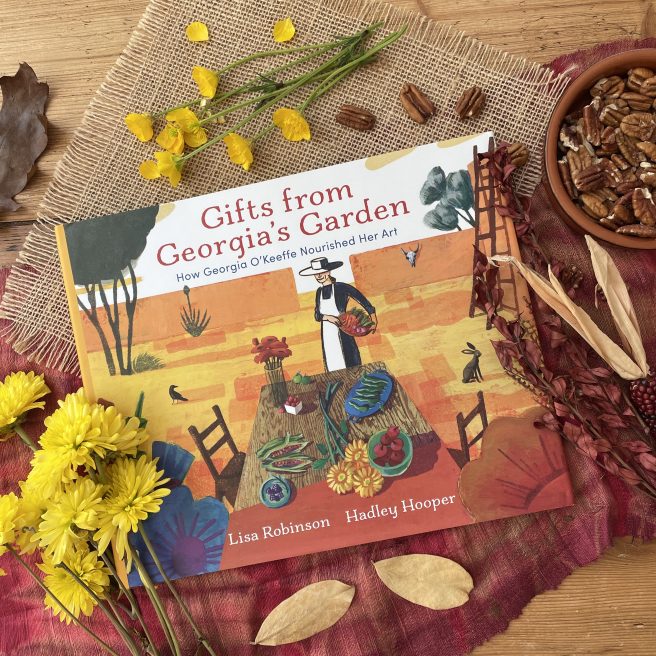
In their gorgeous new picture book, Gifts from Georgia’s Garden: How Georgia O’Keeffe Nourished Her Art (Neal Porter/Holiday House, 2024), Lisa Robinson and Hadley Hooper focus on how O’Keeffe’s art-centric lifestyle as a sustainable gardener fed her muse and enabled her to flourish as a painter. Deeply inspired by place and environment, Georgia believed everything was art, and art was everything.

The book opens with Georgia at her easel, painting “flowers so lush and large they filled the canvas.” This microscopic perspective enabled the viewer to appreciate a flower’s minute details. She hoped to make people in the city slow down and take the time to really see the beauty that she saw.

Love the stunning case cover under the dust jacket!

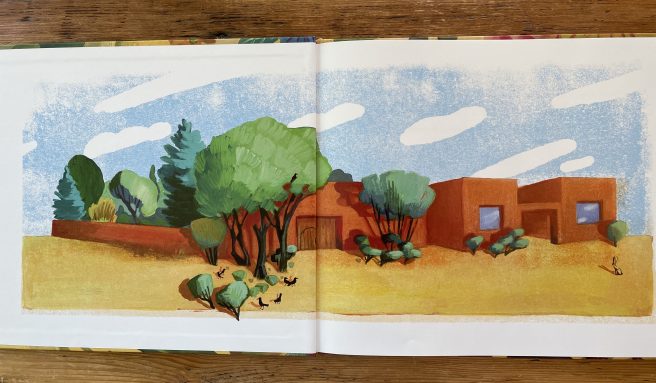
But Georgia grew tired of New York and fled to New Mexico, where she felt free amidst its canyons, mesas and skyscapes. The scent of the soil reminded her of growing up on a farm in Wisconsin, where she had developed her “love of wide skies and sweeping vistas.”

The golden shimmer of a field of wheat;
rectangular rocks, twisted sticks, oval leaves;
barns with haylofts, windows, and doors.

Early on, she knew she wanted to become an artist.

Continue reading

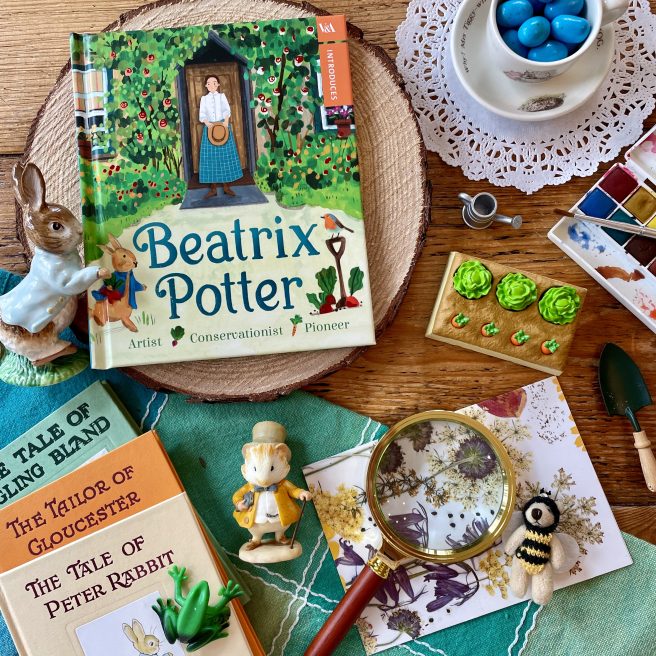
[review + recipes] V&A Introduces: Beatrix Potter by Katie Woolley and Ginnie Hsu

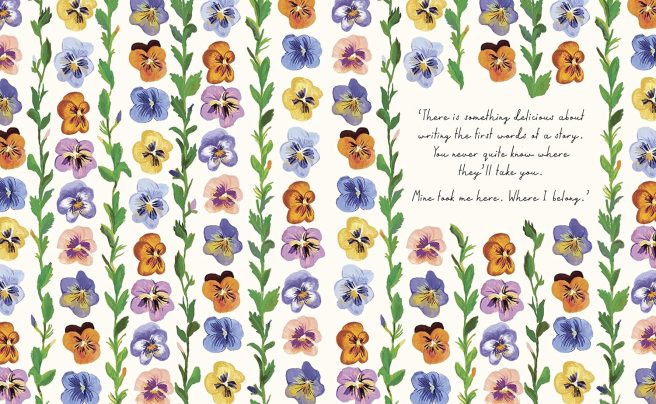
“There is something delicious about writing the first words of a story. You never quite know where they’ll take you. Mine took me here. Where I belong.” ~ Beatrix Potter

Spring is Beatrix Potter time.

Every year as Easter rolls around, I enjoy rereading some of her Peter Rabbit tales and looking for new Potter-related books to add to my growing collection. Happily, there’s always more to learn about this remarkable woman, the world she created via her imagination, and the beautiful countryside she worked so hard to preserve for future generations.

Recently I stumbled upon a charming mini book, the latest title in the popular “V&A Introduces” series that celebrates icons in the world of art and design in collaboration with the Victoria and Albert Museum in London.

Love the pansies endpaper!

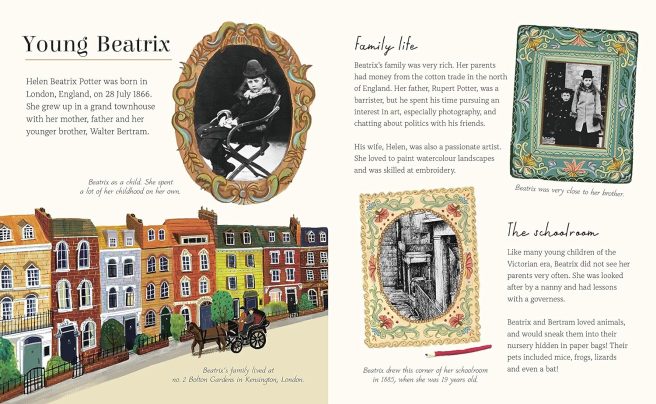
Beatrix Potter: Artist, Conservationist, Pioneer by Katie Woolley and Ginnie Hsu (Puffins Books, 2022), is a beautifully illustrated introduction to Potter’s life and accomplishments that includes original photographs and fascinating backstories to several of her most beloved tales.

Carefully curated facts are presented in twelve sections, giving readers a good sense of how unique Beatrix was as a fully self-realized creative who defied societal convention and attained financial independence:

  • Young Beatrice
  • Writing and Drawing
  • Escape to the Country
  • The Tale of Peter Rabbit
  • The Lake District
  • The Tailor of Gloucester
  • The Businesswoman
  • Hill Top Farm
  • Love & Marriage
  • The National Trust
  • Country Living
  • A Lasting Legacy

Peter Rabbit fans will enjoy learning how Beatrix became a master storyteller. As was typical for a girl from a wealthy Victorian family, she was looked after by a nanny and had lessons with a governess. She inherited a love of art from her parents, got lost in stories, and practiced drawing characters from the books she read.

Continue reading