“Nothing in the world is permanent, and we’re fools when we ask anything to last, but surely we’re still more fools not to take delight in it while we have it.” ~ W. Somerset Maugham/epigraph from Some Glad Morning
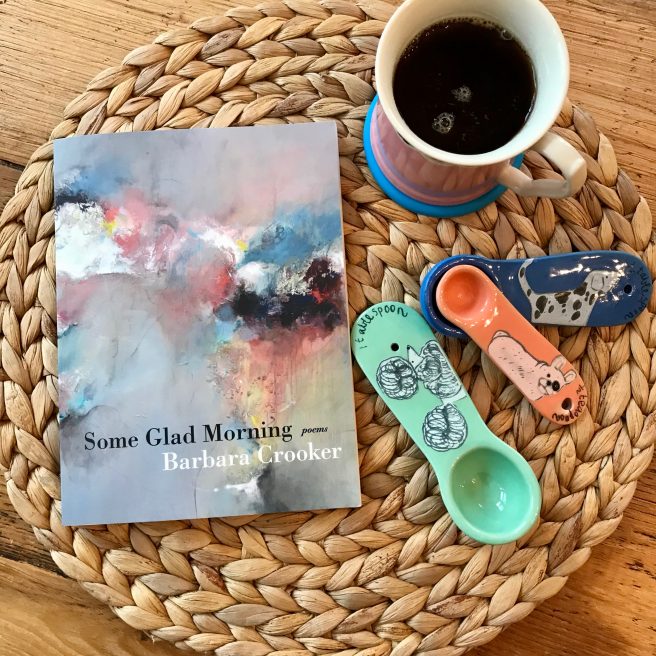
There’s nothing more restorative on a chilly winter’s day than a spot of Yorkshire Gold and reading the luminous poems in Barbara Crooker’s latest book, Some Glad Morning (University of Pittsburgh Press, 2019).
True to W. Somerset Maugham’s quote, Barbara’s ninth collection inspires us to take joy in everyday pleasures, hold fast to fleeting moments, and cherish the here and now.
Whether she is exalting in an explosion of spring flowers, mourning the loss of a friend, awestruck by an unexpected murmuration, ruminating on a Matisse painting, or celebrating food, glorious food (martinis, BLTs, cream puffs, summer peaches, fried eggs!), she is wholly present with verses that read like lyrical prayers, inviting us to a space of hope and light.
Over and over, she says, life is transient, ever-changing. Though loss, grief, and an acute awareness of mortality may be constant companions, these are the very things that make what we do have even more precious. We will always have the power to create our own realities.
Let the terrible politicians practice/their terrible politics. At my kitchen table, all will be fed. I turn
the radio to a classical station, maybe Vivaldi.
All we have are these moments: the golden trees,
the industrious bees, the falling light. Darkness
will not overtake us.
Speaking of food, glorious food, it’s time for soup and crackers. In these two poems, Barbara serves up delectable portions of memory, nostalgia, metaphor, slurp-worthy detail, and earnest praise. Put on your bibs and enjoy!
Don’t you love it when a poem takes you by surprise? If you’re really lucky, it might even take you to a whole new world.
POEM FOR ROSS GAY by Jeff Friedman
In the time it took me
to cut four Athena melons
Ross ate them.
Then he ate the entire container
of Mediterranean hummus
on a loaf of organic
sprouted spelt bread.
To distract him from his hunger,
I brought in
Larry Levis’s book Elegy,
and he said his favorite poem
was the one about the cook
growing lost in his village —
whatever that means.
He flipped through the pages
and read the poem aloud.
“That’s a great poem,” he said.
He stretched out his long legs
and arms and smiled.
Then he ate the book, too.
But he wouldn’t eat
the chocolate chip cookies
or the King Arthur chocolate
onyx wafers because his body
is a temple. Nor would he eat
the balsamic chicken, though
he scrambled all the eggs
over peppers and onions
and polished them off.
“Stay out of the kitchen,”
I ordered, “the fridge is empty.”
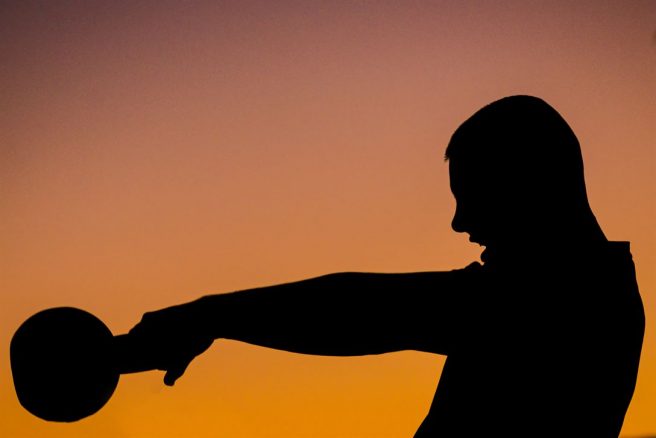
“Let’s do kettle bells,” he replied
and pulled out a twenty-five pound
iron ball with a handgrip.
When did you escape
from the chain gang, I asked.
He began swinging it
from between his legs up
over his head faster
and faster until he let it go.
The ball cracked open
the cathedral ceiling,
flying into the sky
like a bomb in reverse.
Tree branches fell.
Glass shattered. The phoebes
cleared out of town quick.
The kettle bell exploded
in a cloud, pieces
of gold nougat and caramel
falling on our table.
Then Ross ate the sun
and pretty soon, he was glowing.
Friedman had me at the opening lines. When someone eats four melons, I’m all in. I smiled at the hummus and spelt bread, delighted to know this voracious eater was also hungry for poetry.
When Ross ate the book (oh!), I happily stepped into Friedman’s world of altered reality. Curious and appreciative of his humor, I was game for anything from then on (yeah, my body is a temple too, but I wouldn’t turn down a chocolate chip cookie).
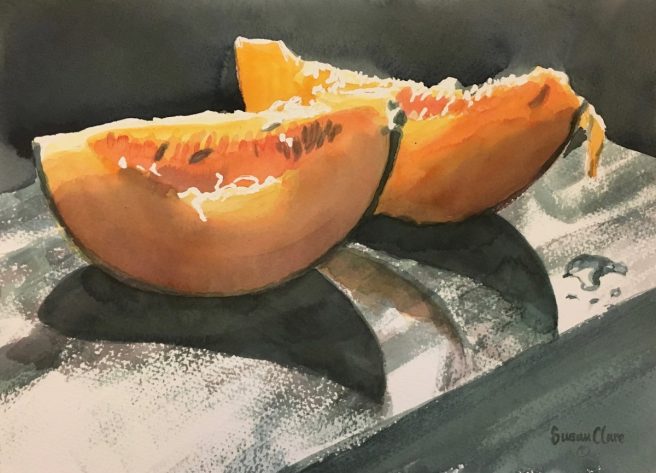
“Cantaloupe Slices” by Susan Clare”
As the narrative, fable, fantasy, tall tale (or whatever else you wish to call it) unfolded, I liked the sense of not knowing what would come next. It’s a good poet who can make you suspend disbelief and whet your appetite at the same time. 🙂
I didn’t know those weighted iron balls with the handles were called kettle bells. I also didn’t know Athena melons are actually cantaloupes. But I do know that the final image of the kettle bell shattering the ceiling, flying up into the sky and exploding in a cloud was one of those Emily Dickinson moments:
If I feel physically as if the top of my head were taken off, I know that is poetry.
Pieces of gold nougat and caramel falling on our table. Then Ross ate the sun and pretty soon, he was glowing.
Wow.
Didn’t see that coming at all. Loved the feeling of wonder, exhilaration, breaking free, imagination unleashed. Words can take us anywhere and whatever we consume gives us power.
The poem starts out in a matter of fact tone, grounded in reality. It slowly builds as the reader is transported.
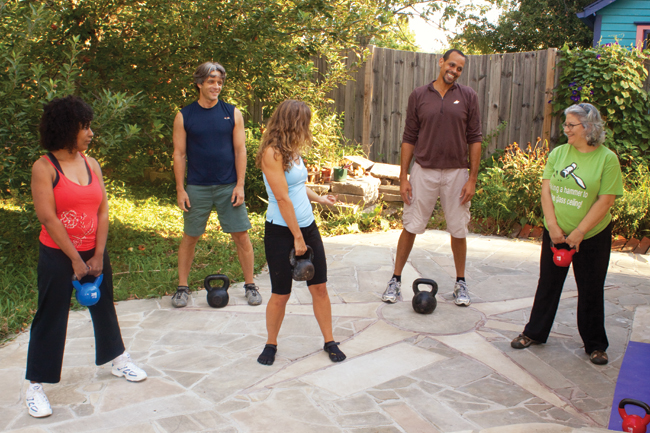
Ross is the tall one in the brown shirt.
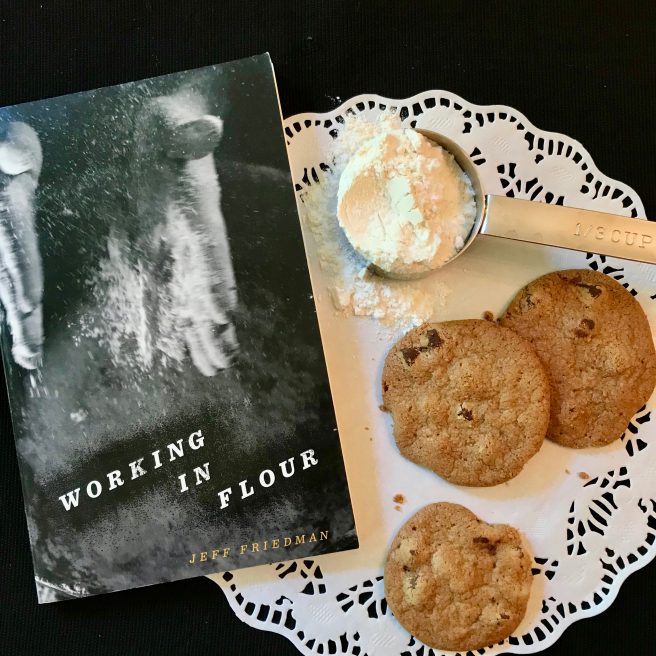
I found this poem in Friedman’s book Working in Flour, after reading his interview with Annelies Zijderveld, a.k.a. The Food Poet. I was doubly rewarded, as I wasn’t familiar before with poet and Indiana Professor Ross Gay, whose Catalog of Unabashed Gratitudewon the 2015 National Book Critics Circle Award and the 2016 Kingsley Tufts Poetry Award.
Apparently Gay is a founding board member of the Bloomington Community Orchard, a non-profit, free-fruit-for-all food justice and joy project. And he does work out with kettle bells. That explains it.
I also liked the round orb metaphor — melon to kettle bell to sun — each packed with its own brand of energy. Maybe Friedman was trying to say, “you are what you eat.” 🙂
What’s your biggest take away from the poem? All I know is cantaloupes will never be the same . . .
*
Jeff Friedman has published six poetry collections, five with Carnegie Mellon University Press, including Pretenders (2014), Working in Flour (2011) and Black Threads (2008). His poems, mini stories and translations have appeared in American Poetry Review, Poetry, New England Review, The Antioch Review, Poetry International, Hotel Amerika, Flash Fiction Funny, Plume, Agni Online, The New Bloomsbury Anthology of Contemporary Jewish Poets, Smokelong Quarterly, and The New Republic and many other literary magazines.
He has won numerous awards, including a National Endowment for the Arts Literature Translation Fellowship, and two individual artist grants from the New Hampshire State Arts Council. Dzvinia Orlowsky’s and his translation of Memorials by Polish Poet Mieczslaw Jastrun was published by Lavender Ink/Dialogos in August 2014. He also collaborated with Nati Zohar on a book of translations of Israeli poets: Two Gardens: Modern Hebrew Poems of the Bible, published by Singing Bone Press in 2016. Friedman’s seventh book, Floating Tales—a collection of prose poems, fables and mini tales—is forthcoming from Plume Editions/MadHat Press in fall 2017.
Jeff Friedman lives in West Lebanon, New Hampshire with artist Colleen Randall and their dog Ruby.
*
The beautiful and infinitely talented Tanita S. Davis is hosting the Roundup at fiction (instead of lies).Tippy toe over to check out the full menu of poetic goodness being served up in the blogosphere this week. Happy December!
“The Cup of Coffee” by Cuban artist Lorenzo Romero Arciaga (1940)
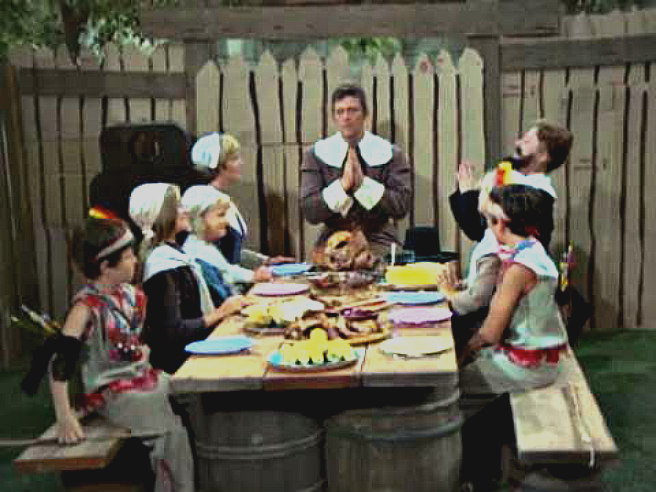
When Presidential Inaugural Poet, author and civil engineer Richard Blanco was growing up in Miami with his Cuban-exile family during the early 70’s, he longed to be a “true American” like one of the kids in “The Brady Bunch.”
He describes it as living between two imagined worlds:
One world was the 1950s and ’60s Cuba of my parents and grandparents — that paradise, that homeland so near and yet so foreign to where we might return any day, according to my parents. A homeland that I had never seen . . .
The other, less obvious world was America . . . Typical of a child, I contextualized America through food, commercials, G-rated versions of our history in textbooks and television shows, especially The Brady Bunch. More than a fiction or fantasy, I truly believed that, just north of the Miami-Dade County line, every house was like the Brady house, and every family was like them.
Much of Blanco’s poetry centers around his search for cultural identity. Over and over, he asks the questions, “Where is my home? Where am I from? Where do I belong?”
When he was a graduate student at Florida International University, he wrote the following poem, inspired by a childhood memory of wanting an “authentic” Thanksgiving meal.
*enters kitchen, eats three pieces of chocolate, then takes out the soup pot. . . *
Hello, Cutie Pies!
Yes, we’re finally back. 🙂
It’s so good to know I can type a few words, find you here, and share this small, safe space with you — cause things in this world seem to be getting scarier and more tumultuous with each passing day.
It’s heartbreaking to see what’s happening to our country with everyone fighting and on edge all the time.
We’re exhausted, frustrated, demoralized, fearful. We feel broken and powerless in the face of unmitigated hate, corruption, and greed.
And then there’s the profound sadness — three recent mass shootings, and the loss of Toni Morrison and Lee Bennett Hopkins last month.
What to do? How to cope?
Toni Morrison’s words inspire, ground, and uplift:
This is precisely the time when artists go to work. There is no time for despair, no place for self-pity, no need for silence, no room for fear. We speak, we write, we do language. That is how civilizations heal.
I know the world is bruised and bleeding, and though it is important not to ignore its pain, it is also critical to refuse to succumb to its malevolence. Like failure, chaos contains information that can lead to knowledge — even wisdom. Like art.
“Poetry allows us to cherish what we’re given. Whether it be a heartbreak, a second chance, a soft morning mist, a moment or . . . an onion, poetry, with its impossible-seeming combination of soft lens and precision, brings to our awareness that which might otherwise go unseen, unrecognized, un-cherished. Poetry opens us to life, to surprise, to shadow, to beauty, to insight.”
~ Naomi Shihab Nye
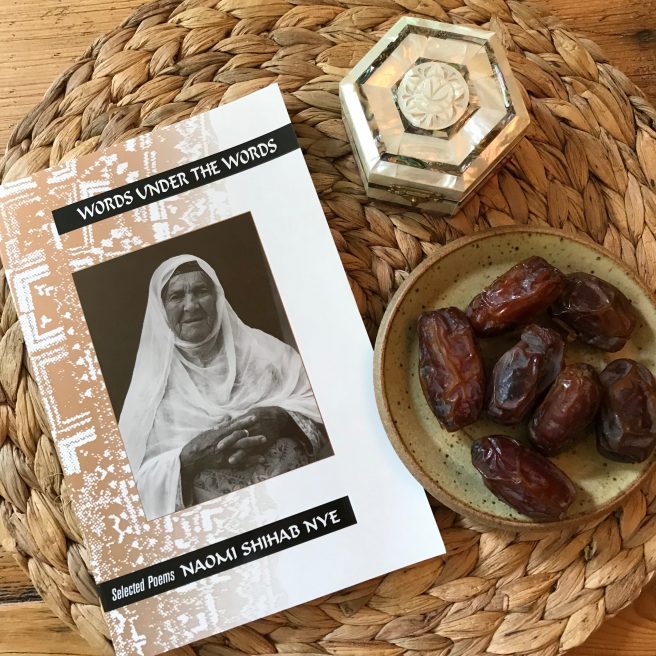
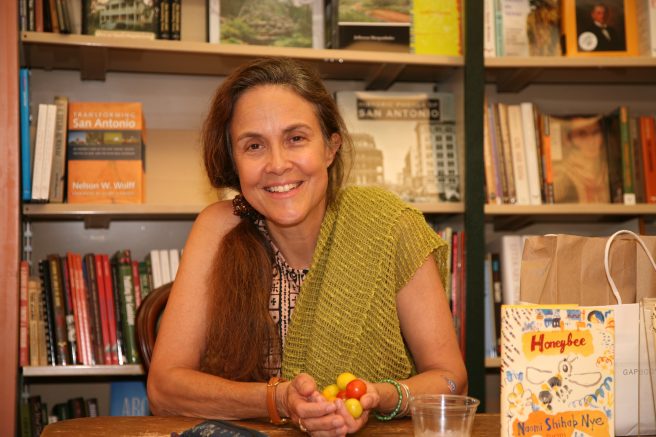
Happy to join my Poetry Friday friends today in celebrating Naomi Shihab Nye, who was just named the 2019-2021Young People’s Poet Laureate. An award winning poet, essayist, novelist, songwriter, educator, editor, and anthologist, Naomi calls herself “a wandering poet,” and is the first Arab American to earn this honor.
For the past 40+ years she’s traveled all over the country and the world leading workshops and inspiring students of all ages, using her own writing “to attest to our shared humanity.” She is currently Professor in Creative Writing-Poetry at Texas State University, and makes her home in San Antonio.
Naomi is a natural born poet; she wrote her first poem at age six. As Young People’s Poet Laureate, she will work to bring poetry to geographically underserved or rural communities. With her sensitivity, insight, cultural awareness, compassion and enormous heart, she is the seer and sage we need right now to show us how words can heal, unify, delight, and enlighten.


 The beautiful and infinitely talented Tanita S. Davis is hosting the Roundup at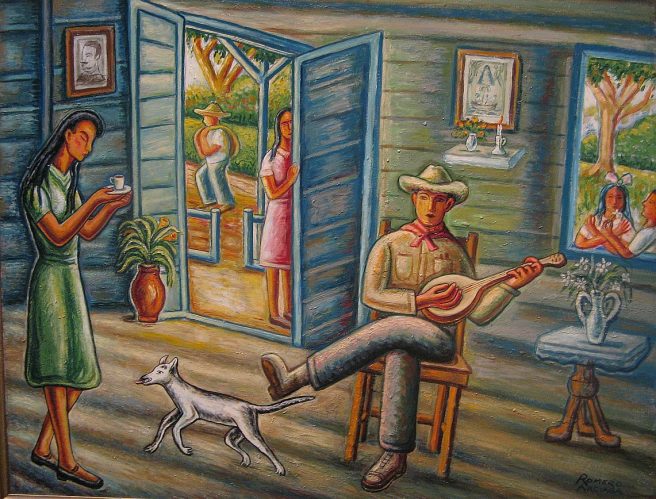
 Jama's Alphabet Soup