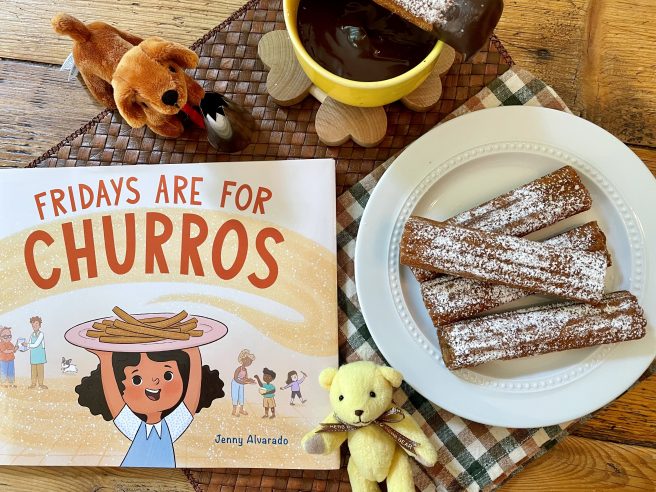
[yummy review] Fridays are for Churros by Jenny Alvarado

Hungry? Can you smell the heavenly aroma of fried sweet dough dipped in cinnamon sugar? Now that you’re here, please help yourself to some warm apple-filled churros — dip yours in chocolate if you wish, and enjoy!

These crisp-on-the-outside, airy-light-on-the-inside snacks are featured in the delectable new picture book, Fridays are for Churros by Jenny Alvarado (Holiday House, 2025). Celebrating food, family, and community, this fun story warms the heart, showing how good neighbors can help renew cherished traditions and strangers can become friends.

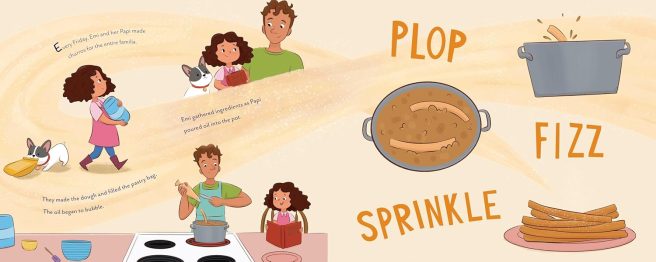
We first learn that Emi and her Papi make churros for their entire family every Friday. Emi gathers ingredients while Papi pours oil into the pot. Together, they make the dough and fill the pastry bag. Then with a Plop, Fizz, and Sprinkle, the churros are ready, its sweet scent swirling throughout the house as the familia arrive. How they chatter and laugh! Emi loves this feeling of ‘home.’
But then Emi and Papi must move to a big city for Papi’s new job. Such a busy place full of people, but no familiar faces, and on Fridays, no churros. Papi is usually too busy working.

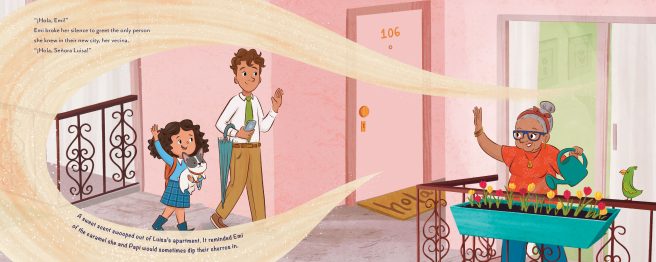
One day as they arrive at their apartment, Emi and Papi see and then greet their new neighbor Señora Luisa. A sweet scent swoops out from her open door, reminding Emi of the caramel she and Papi used to dip their churros in. This gives Emi an idea. She would make the churros herself!
After checking the recipe, Emi realizes she doesn’t have enough flour and sugar, and can’t find the piping tip. Could she borrow these things from Señora Luisa? Her neighbor is happy to help; she has farina but no sugar or piping tip. She suggests Emi ask Tomas in 212.

Continue reading
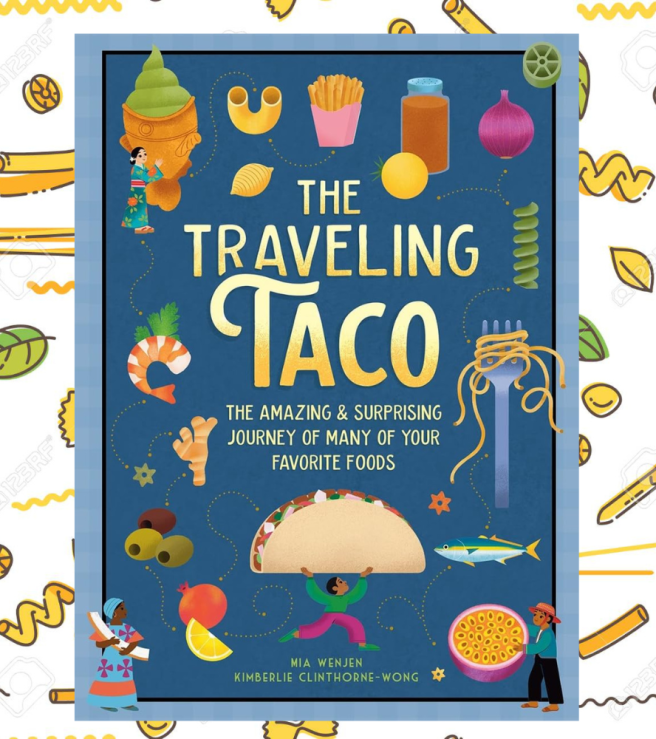
[mouthwatering review] The Traveling Taco by Mia Wenjen and Kimberlie Clinthorne-Wong

What’s on the menu today?

Hmmm . . . let’s see. I’ll start with a plate of refreshing ceviche, followed by spicy jerk chicken — and then for dessert, rice pudding. Sound good?

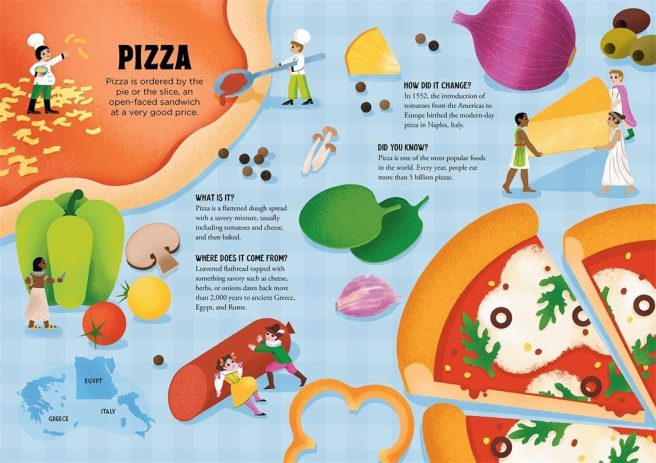
In Mia Wenjen’s delectable picture book The Traveling Taco: The Amazing & Surprising Journey of Many of Your Favorite Foods (Red Comet Press, 2025), hungry readers are invited to nibble from a scrumptious smorgasbord of twelve different dishes, everything from pizza and pasta to cheesecake and churros.

Whimsically illustrated by Kimberlie Clinthorne-Wong, the history of each of these popular foods is served up in a double page spread with an introductory rhyme + appetizing info bites answering four basic questions:

  • What is it?
  • Where does it come from?
  • How did it change?
  • Did you know?

Learning about food origin and evolution is fascinating as we travel across the globe and back through time. Do French Fries come from France or Belgium? Did you know people all over the world eat more than 5 billion pizzas every year, or that cheesecake can be traced back to Ancient Greece and the first Olympic Games?

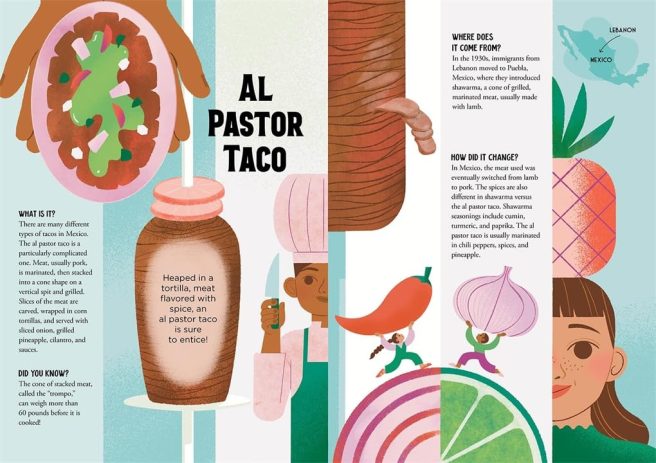
The feast begins with the tastebud tempting Al Pastor Taco; we learn that it actually traveled to Puebla, Mexico in the 1930s via Lebanese immigrants who “introduced shawarma, a cone of grilled meat, usually made with lamb.”

Heaped in a tortilla, meat flavored with spice, an al pastor taco is sure to entice!

Continue reading

[tasty review] Miso Magic by Moni Ritchie Hadley and Mizuho Fujisawa

What kind of food do you most like to eat when dining out? For me, it’s Japanese. Maybe it’s because I like fish and dishes that aren’t smothered in rich, heavy sauces. Perhaps it’s the artful plating of fresh, healthy ingredients that showcase their colors and textures (we eat first with our eyes). Or what about those lacquered bento boxes — just-right portions nestled in cute little compartments — so neat and organized! Moreover, after a Japanese meal I feel satisfied but not stuffed, and more often than not, the overall experience is calm and relaxing.

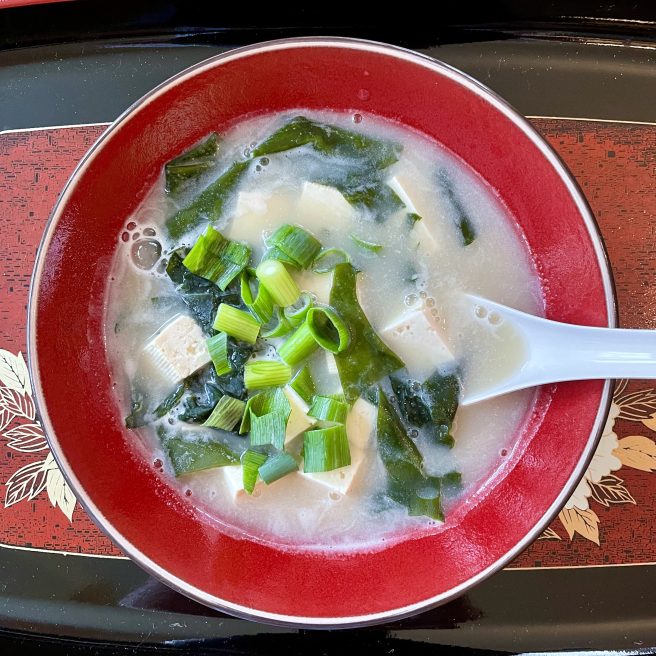
A bowl of warm, restorative miso soup is the perfect prelude to a delicious Japanese meal, priming the palate for the goodness to come. I enjoy nibbling on the little cubes of tofu and wakame strips while stirring the broth with my chopsticks, then savoring each sip (no matter the restaurant, it’s usually just the right temperature too!). Ahhhh . . . so good!

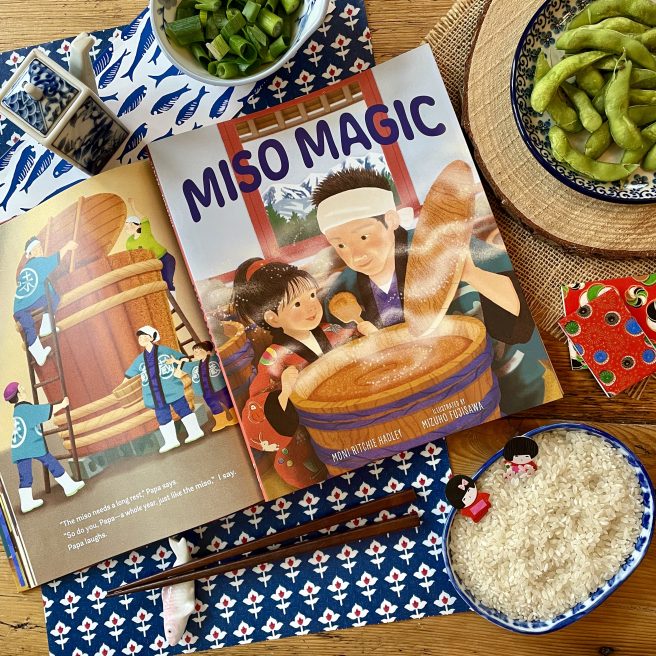
Much as I love Japanese food, I actually didn’t know how miso was made until I read Miso Magic by Moni Ritchie Hadley and Mizuho Fujisawa (Albert Whitman, 2024), a tender father-daughter story about family traditions and cultural heritage flavored with a gentle lesson in patience.

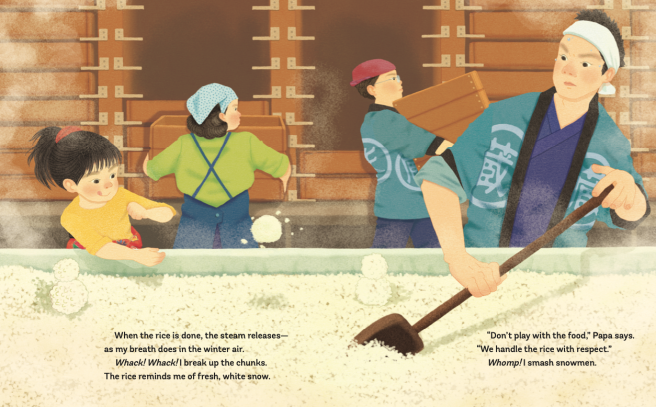
As the story opens, young Chiyoko is anxious to build a snowman with Papa to celebrate the first snowfall of the year, but Papa says it’s time for her to learn the family business of miso making. They head for the misogura (work barn), where she learns how to clean the tubs for making kōji, an edible mold that’s the secret to miso’s umami flavor.

Despite Papa’s enthusiasm, Chiyoko remains unimpressed with the prospect of tasting miso made with her own hands, and watches passively while Papa pours rice into a big tub of water. While the rice cooks, they shell soybeans, and once it’s done, Papa spreads the rice on a large tray to release the steam.

Since it reminds Chiyoko of fresh, white snow, she whacks at the rice to break up the chunks and to smash “snowmen.” Papa tells her not to play with the food: “We handle the rice with respect.” He sends her outside for a time out.

Continue reading

[review] Suka’s Farm by Ginger Park, Frances Park, and Tiffany Chen

My grandmother and I had a unique way of communicating. Our made-up language was a hodgepodge of Korean, Hawaiian Creole English (Pidgin), broken English and American slang. We stuck to simple subjects as we watched our favorite soaps or gossiped about other family members.

While in middle school, I sometimes greeted her with a simple “Ohayō” or “Kon’nichiwa,” and she would shush me, her face like thunder. Since many of my classmates were Japanese, I naturally echoed some of what they said. My mom finally explained why Grandma got upset: from 1910 to 1945 the Japanese had occupied her homeland; Koreans were assigned Japanese names and the Korean language had been banned.

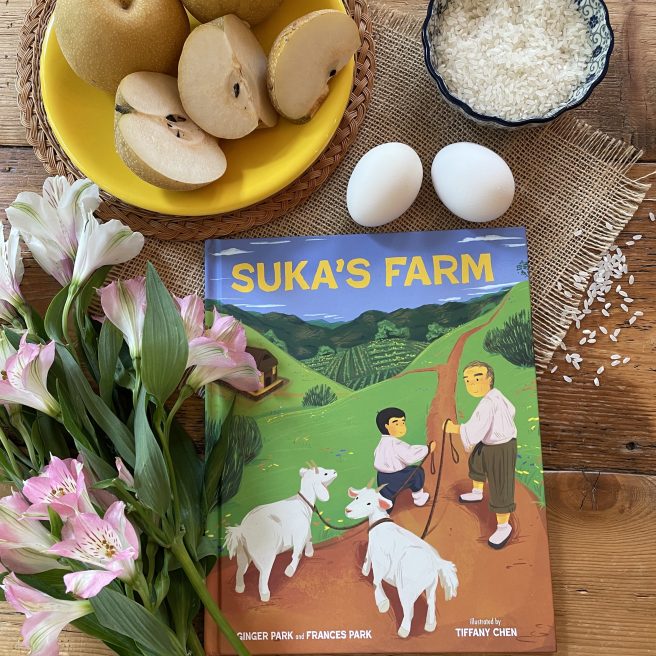
I thought of her while reading Suka’s Farm (Albert Whitman, 2025), a new picture book by Ginger Park and Frances Park, set in 1941 Korea. Illustrated by Tiffany Chen, this touching story of an unlikely friendship between an elderly Japanese farmer and a hungry Korean boy warms the heart and offers a much-needed glimmer of hope for humanity.

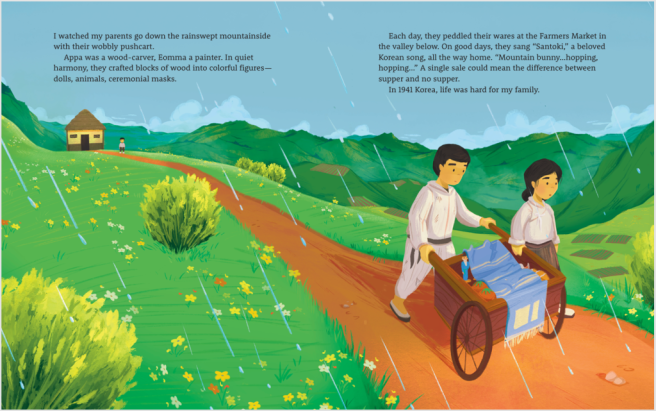
As the story opens, we learn Kwan lives on a quiet mountainside with his artisan parents, who eke out a living by selling their woodcarvings at the Farmers Market. Times are hard as they struggle to get by with meager bowls of rice porridge for supper. One night, Kwan overhears his worried parents say they only have a handful of rice left.

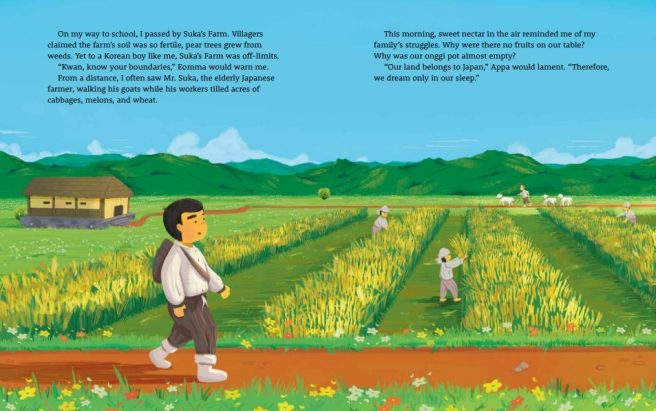
When Kwan passes Suka’s Farm on his way to school the next morning, he’s reminded of his family’s struggles. He sees pear trees growing from fertile soil, and acres of cabbages, melons and wheat — yet none of these foods ever appear on Kwan’s table. That’s because the land belongs to Japan, and Suka’s Farm is off-limits to Korean boys like him.

Still, Kwan is determined to help his family and, “as if in a dream without boundaries,” he steps onto the farm and musters up the courage to ask gruff Mr. Suka for a job. Kwan respectfully introduces himself as Aoki, the Japanese name he’d been assigned by law.

Mr. Suka is dismissive and rejects Kwan’s offer of work. How could a child help him? Kwan explains he could help with the goats, begging Mr. Suka because his family is hungry. Mr. Suka tells Kwan to go to school, but just as the boy is leaving the barn, he calls him back. He agrees to let Kwan work on a trial basis.

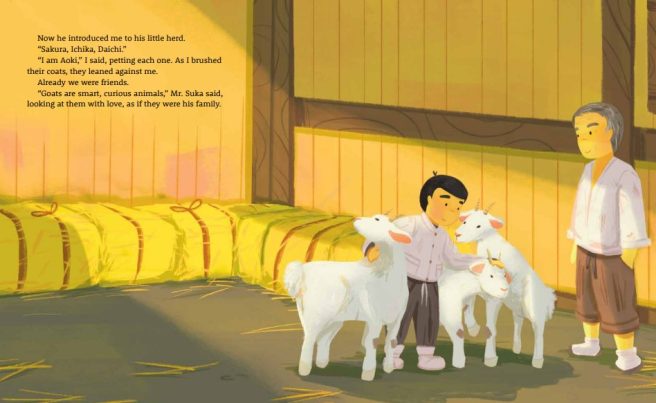
So, the next day, Kwan arrives before dawn, bearing a gift for Mr. Suka from his parents — a carved wooden goat. Though puzzled by the gift, he thanks Kwan, then introduces him to his little herd of goats, each of which has a name. Kwan and the goats, whom Mr. Suka loves like family, become fast friends.

Continue reading

[lickable review] Ice Cream Everywhere by Judy Campbell-Smith and Lucy Semple

Many of my fondest food memories revolve around ice cream:

Lining up for a Milk-Nickel in the school cafeteria. Frequenting Dairy Queen for Dilly Bars and chocolate sundaes. Savoring Frosty Malts while watching Elvis Presley movies at the neighborhood theatre. Visiting my first Baskin-Robbins (butter pecan!). Raiding our home freezer for Creamsicles, Fudgsicles and Drumsticks. Jumping up and scrounging for coins when hearing the ice cream truck on our street.

Ice cream has got to be the happiest of treats because it brings out the kid in everyone. No matter the form or flavor, where or when you eat it, ice cream is pure joy.

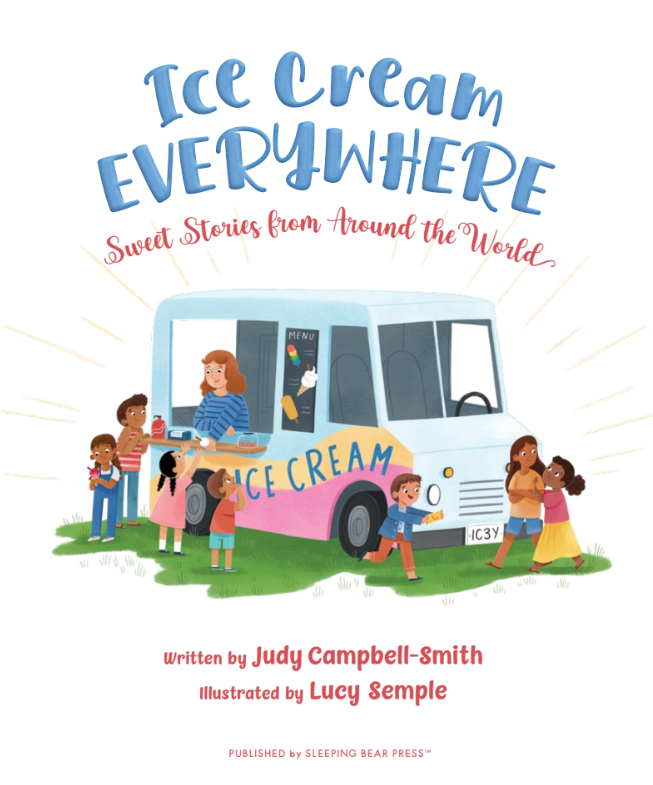
Joy is the unifying theme in Judy Campbell-Smith’s scrumptious new picture book, Ice Cream Everywhere: Sweet Stories from Around the World, illustrated by Lucy Semple (Sleeping Bear Press, 2024).

On Judy’s menu: twelve different kinds of ice cream — most of which were new to me — from faraway places like Cuba, Argentina, India, Japan and New Zealand. Did you know that in Germany, ice cream can look like noodles, or that there’s a Turkish ice cream with a chewy, stretchy texture that allows sellers to do tricks with it? Or how about the unique Libyan treat, baklava gelato, a product of Italian colonialism? Fascinating stuff!

Tasty ice cream facts go down easy thanks to Campbell-Smith’s appetizing blend of fiction and nonfiction. Each double page spread features an appealing vignette of a child eating the highlighted ice cream + a few sidebar tidbits (history, tradition, context). Each is introduced as a different kind of joy.

Continue reading