I’m loving Andrea’s family stories and the celebration of her Greek heritage. I appreciate the nod to domesticity and strong women — matriarchs who passed on their skills and knowledge to each succeeding generation.
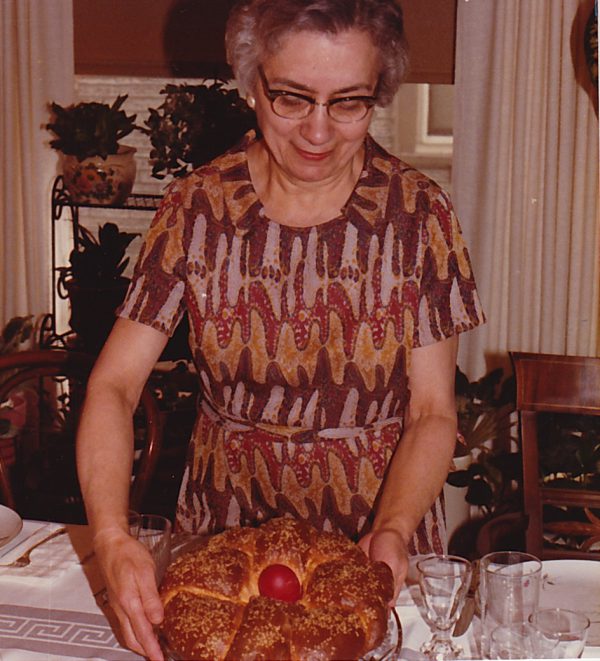
Yaya with her Greek Easter bread.
Andrea had a very special relationship with her grandmother (Yaya). As I read Andrea’s lyrical depictions of their time together, I can picture them baking, chatting, and laughing in floured aprons, bonding over loaves of bread and batches of cookies. It is easy to feel the love.
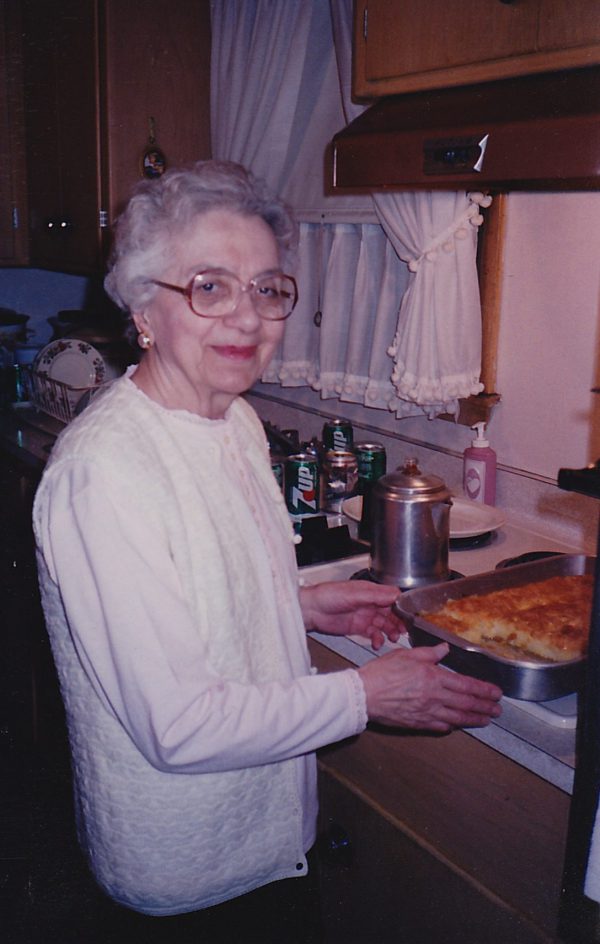
Yaya in her kitchen with a Greek dessert called galaktoboureko (semolina custard in filo).
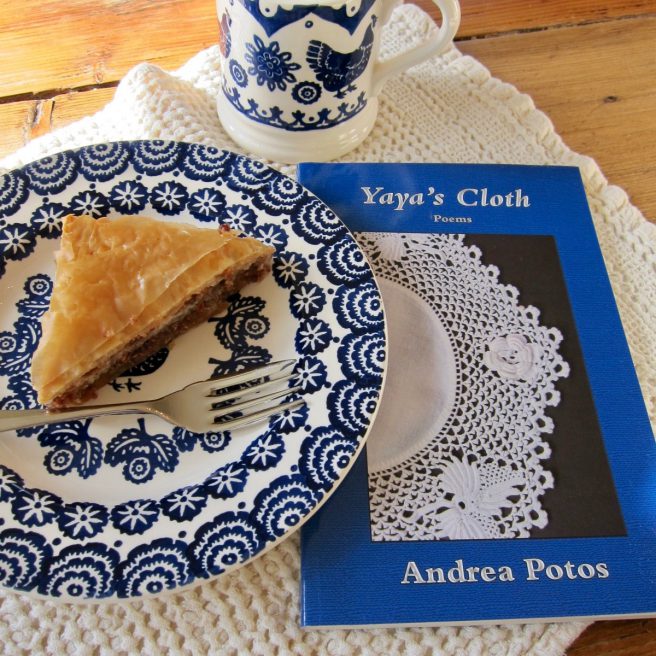
Today, I’m honored to feature a poem from Yaya’s Cloth that I’m sure will whet your appetite for more. Andrea has graciously shared a bit of backstory as well as Yaya’s recipe for baklava. And special thanks to her for the wonderful personal photos. Yum!
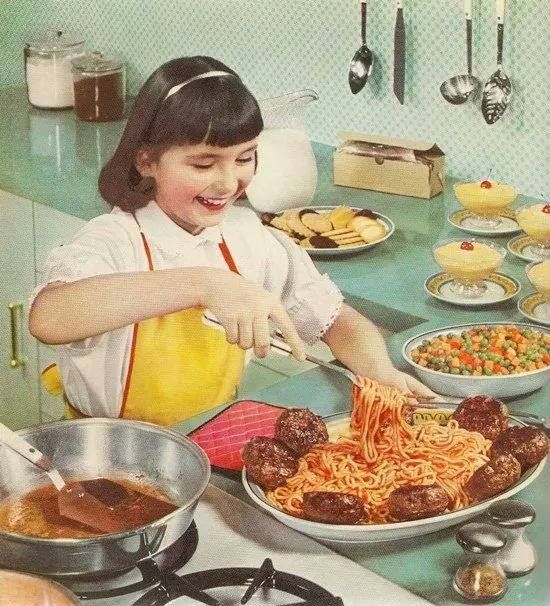
“This isn’t spaghetti,” my daughter says loudly to the waiter who is pouring the first taste of a fifty-dollar bottle of wine for our host.
And I have to agree. Take me back
to when I hadn’t discovered
sun-dried tomatoes, fresh basil
and angel-hair pasta.
Hadn’t begun to refine my pork roast past,
or stay cool within my nodding circle
of low cholesterol friends.
I’ve learned the best restaurants,
sigh at the price of saffron,
accept only thin buttery lettuce.
Why should I shun the diner’s stout coffee
and mashed potatoes from a box,
and frequent instead the new coffee bar
with raspberry flavour and mocha and Java,
those little brittle Italian breads,
so refined?
My mom made sauce
red and sweet from cans of Contadina
and spread it out, ladled it out
on thick, straight spaghetti noodles.
Not one of us said, “Pasta.”
She made meatloaf and potatoes,
used garlic salt in plastic shakers,
served fluffy, white bread,
the kind that stuck in wads
to the roof of my mouth.
Big meals in big pots
served over the counter,
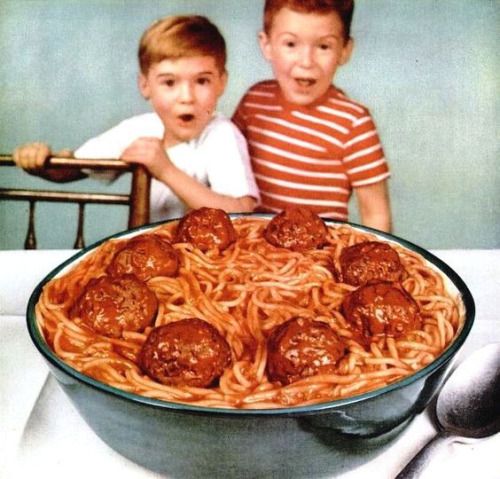
fat meatballs, mostly bread.
This was food, quick, filling,
not savored. Our due.
We held up our plates
for mom to fill once more
before we abandoned the table
for the urgent games of dusk,
hide and seek, and pick-up basketball
under the street light.
My daughter knows
the emperor has no clothes,
and for fifteen dollars an entree,
we should recognize the sauce.
The richness of our need,
the effortless nature of eating what could fill,
where is it?
I will listen to my daughter,
join her disdain for spaghetti
that is not spaghetti.
My life is a closed circle
traveling out,
the love of meatballs always on the periphery.
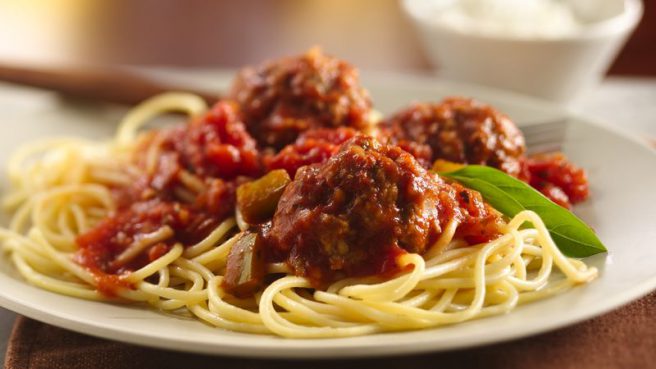
You want some now, don’t you? Well, here you go. Help yourself!
via Betty Crocker
This poem got me thinking about how complicated eating has become. We didn’t have “pasta” growing up, just good old spaghetti. Remember when it was either white bread or brown bread, instead of whole grain, multigrain, seven grain, cracked wheat, honey wheat, German dark wheat, oatmeal, fifteen grain, with or without seeds?
Just like designer clothes, there’s designer food. Cool people only eat eggs laid by liberated chickens, drink water bottled in France, and swear by “non-GMO,” “organic,” “grass-fed,” “sustainable,” “100% natural.”
Don’t get me wrong. I’m all on the side of healthy eating, being kind to the planet, and I know first hand about food allergies. I just wonder about people who go “gluten free” not from necessity, but fad. These days, it’s even hard to invite people over — everyone’s on some kind of “special diet”: lowfat, vegan, vegetarian, dairy-free, no artificial colors or preservatives, paleo, low carb, low calorie, low (or no) sugar. Sigh.
How I yearn for simpler times! I don’t want to worry about whether what I’m eating is politically correct, nor do I want to pay a fortune for three teensy but artfully arranged slices of tenderloin on a sleek white plate in a fancy restaurant. I don’t want to fall into the “food as status symbol” trap.
Just give me comfort food, plain and simple, preferably prepared by my mother. Her spaghetti rates pretty high on my list. She never used a recipe for her sauce, and it came out a little different each time. But it always tasted so good. After all, the best spice for any dish is love.
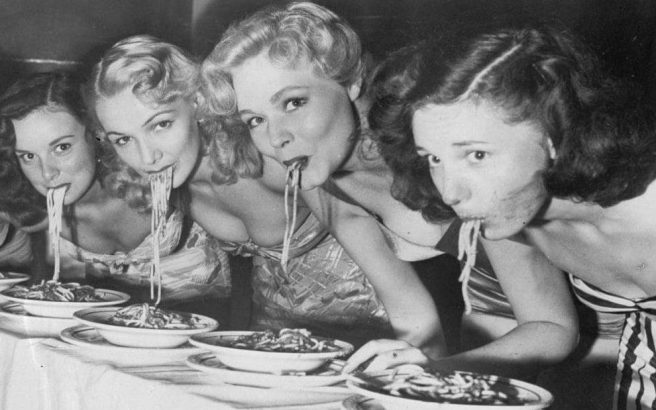
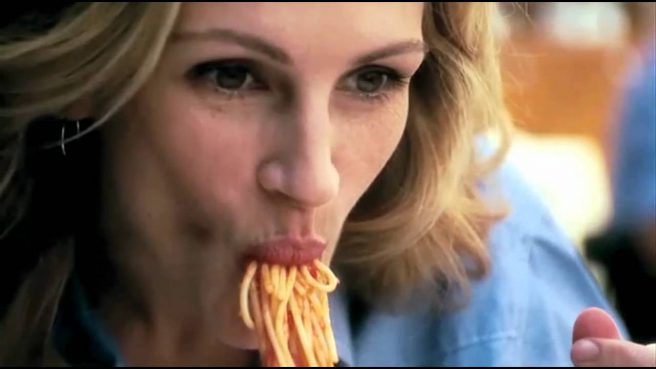
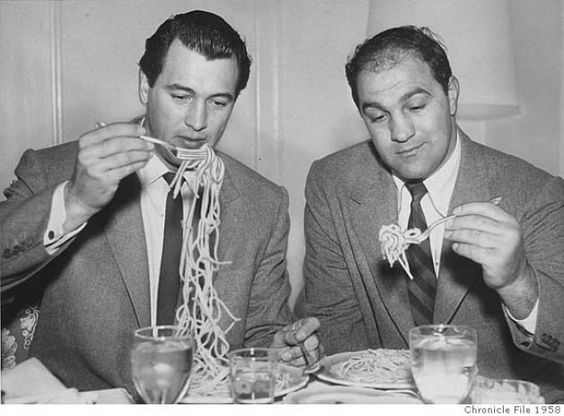
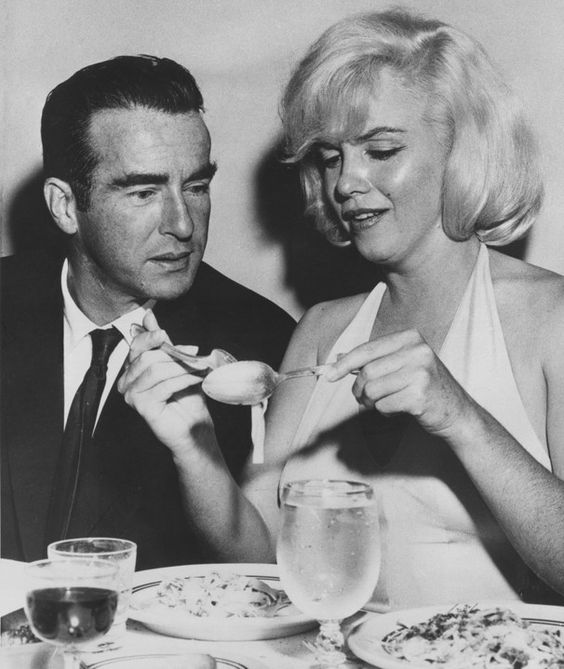
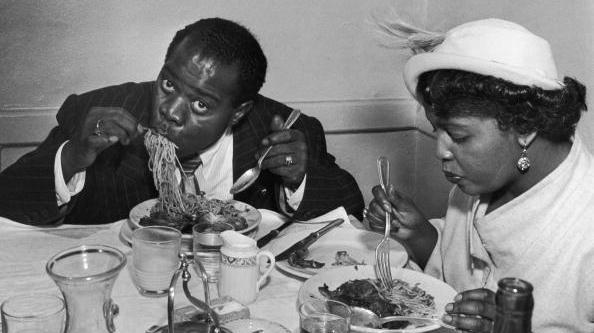
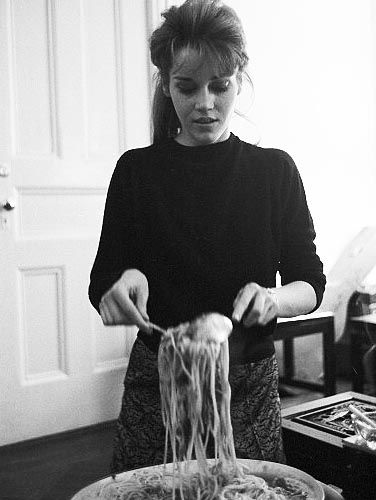
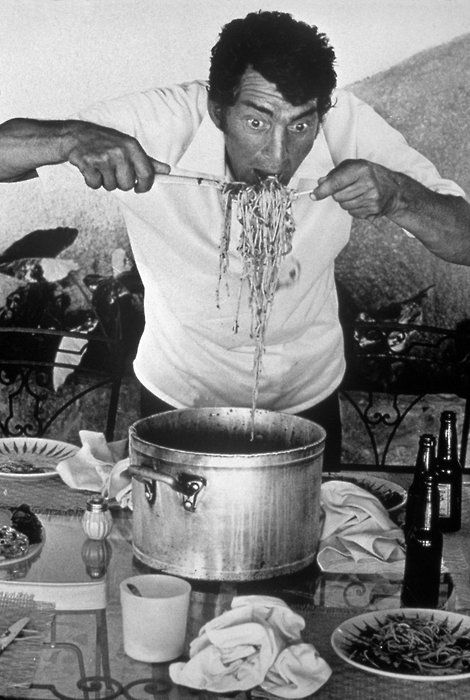
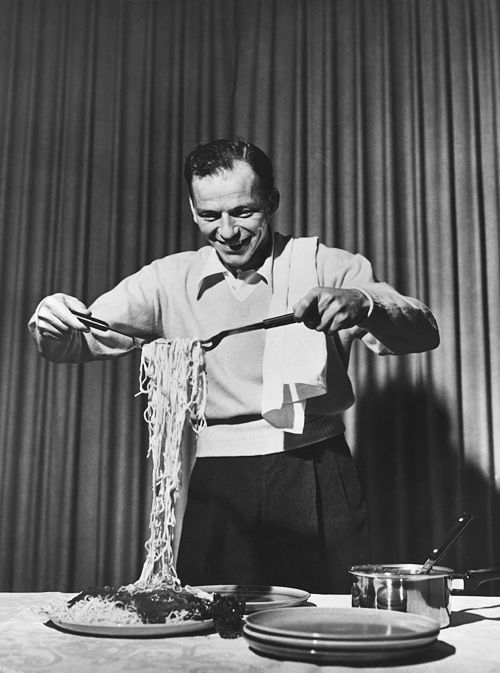
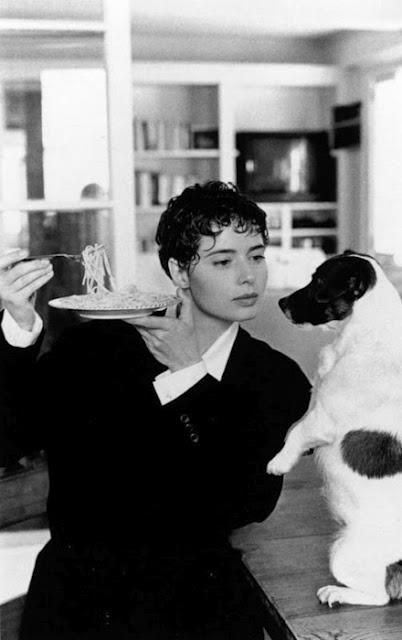
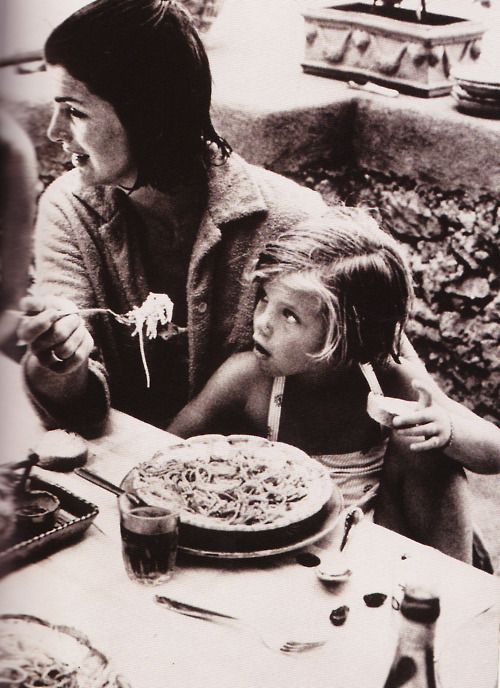
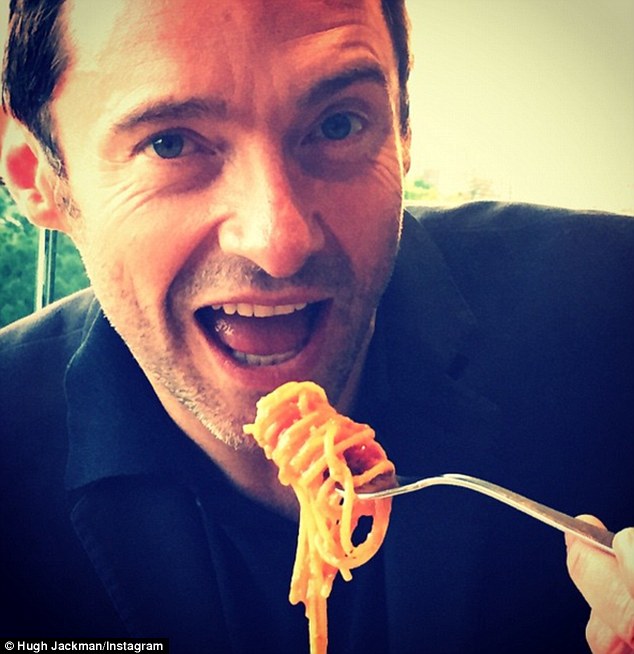
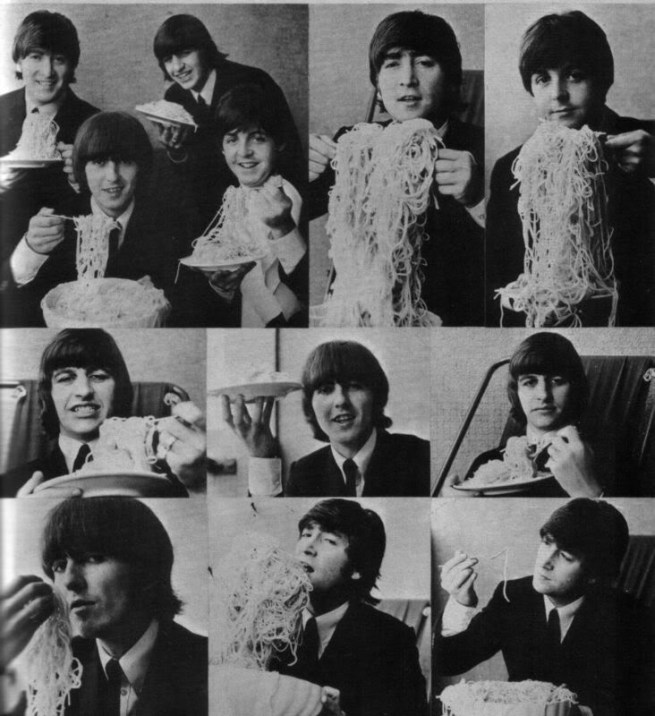
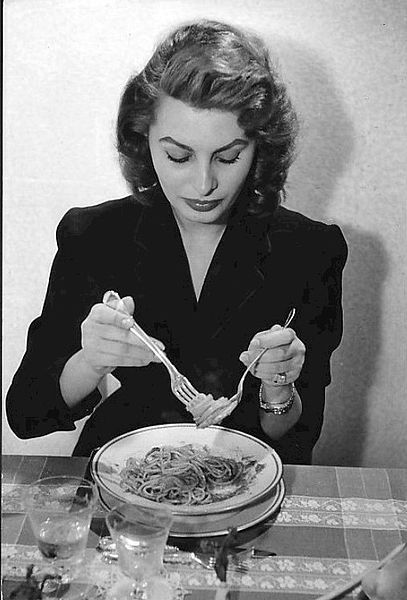
Speaking of spaghetti, I do believe it’s the great equalizer. Whether you’re young or old, rich or poor, spaghetti always hits the spot and takes you right back. Just ask these folks:
Louis Armstrong tucks into a plate of spaghetti in Rome with his wife Lucille in 1949.
What’s the best spaghetti you’ve ever had? 🙂
*
The wonderful and talented Jone MacCulloch is hosting the Roundup at Check It Out. Noodle on over to view the complete menu of poetic goodness being served up in the blogosphere this week. Are you eating spaghetti this weekend? 🙂
*
“Everything you see I owe to spaghetti.” ~ Sophia Loren
“To find inner peace, search deep inside yourself. Is there a donut there? If not, take corrective action.” ~ Anonymous
When the going gets tough, the tough eat donuts —
(and they read good poems). 🙂
Welcome to Poetry Friday at Alphabet Soup!
I was thinking the other day — as aging dessert maniacs conscientious bloggers are wont to do — about the guilt factor that comes with eating sweets.
With age and unceremoniously acquired girth, this guilt steadily increases. Bad for your health! Too much sugar! Put that cookie down. Now.
Sigh.
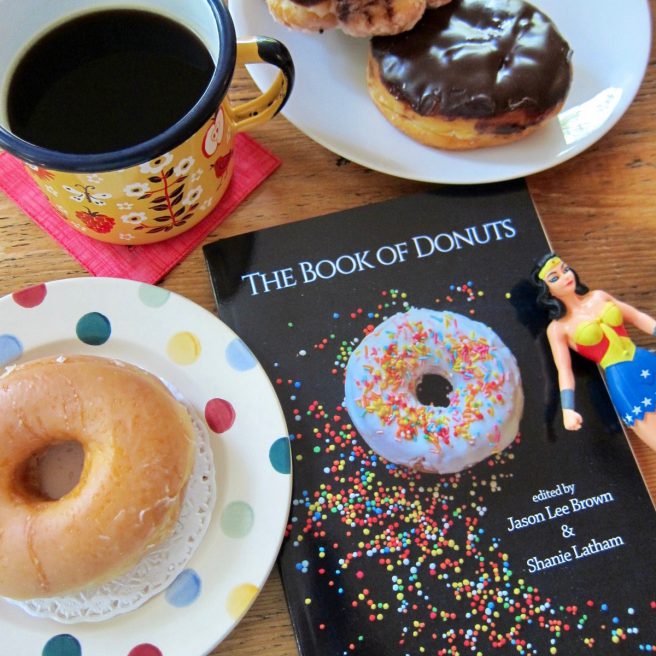
Times are tough. What’s a non-smoking teetotaler supposed to do? Why, pick up a copy of The Book of Donuts, of course! This delightfully sprinkled confection of a poetry anthology, edited by Jason Lee Brown and Shanie Latham, contains fifty-four poems by fifty-one poets for your nibbling, chewing, scarfing, and feasting pleasure.
And every single one of them is calorie free!
The poems do brim with emotion, insight, reflection, and candor, illuminating how this humble pastry figures in our everyday lives.
Today I’m happy to share a sample poem by Seattle-based poet Martha Silano, who so artfully describes that sense of deprivation many of us feel. I’m just glad I don’t live near a Voodoo Doughnutshop, or I’d be in BIG trouble.
*
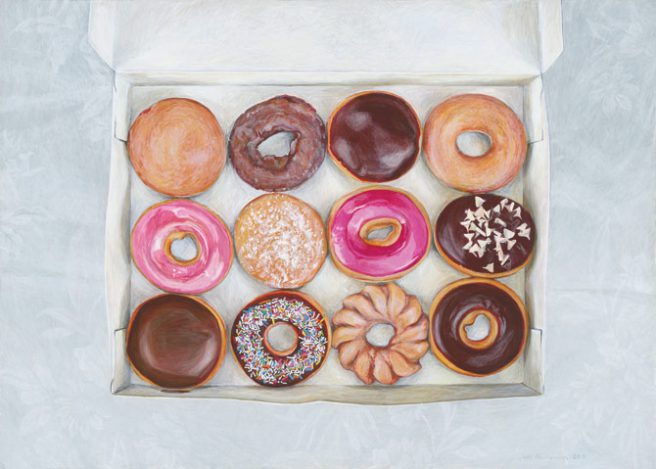
“Krispy Kreme Dozen” by Joel Penkman (2011)
What can I say that hasn’t been said
about the old-fashioned glazed, the buttermilk bar,
the feather boa, the maple blazer blunt? Truth is,
I eat them rarely, less than once a year. I hadn’t
considered my ascetic life till I sat opposite
a woman smiling and moaning as she licked
each spoonful of tiramisu. What’s become
of the kid who ate so much Rocky Road
she made herself sick? I want to be that girl,
oblivious of the connection between indulgence
and a thigh’s girth, between powder-sugared lips
and the needle on a scale, but I am so far gone,
so not a sensualist as I jog past Voodoo Donut
where the bearded and the tattooed, the pierced
and the ski-capped, wait for their Dirty Snowballs,
their Tangfastics, their Raspberry Romeos.
I’ve overdue for a Pot Hole, a Diablos Rex,
to down an entire bag of Sprinkle Cakes,
my mouth transformed to an icing rainbow.
Where is that me who raced to the front door
when her uncle showed up with the box
of Dunkin’ Donuts, eager to devour the goopiest
jelly, the most velvety Bavarian Kreme?
~ by Martha Silano, from The Book of Donuts, edited by Jason Lee Brown & Shanie Latham (Terrapin Books, 2017).
Voodoo Doughnuts photo by Anna Maybach/5280)
*
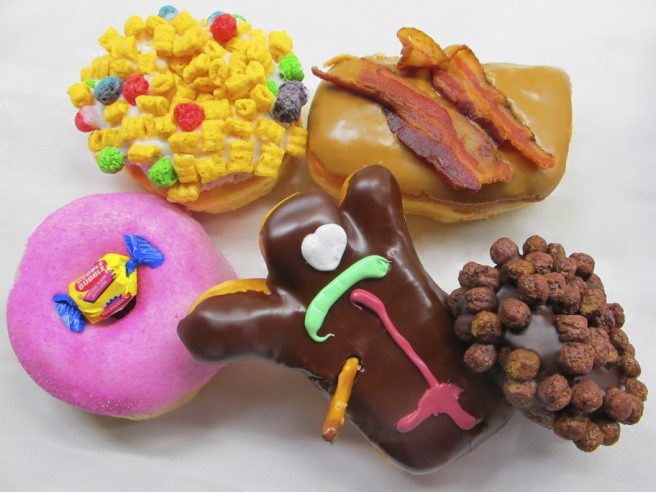
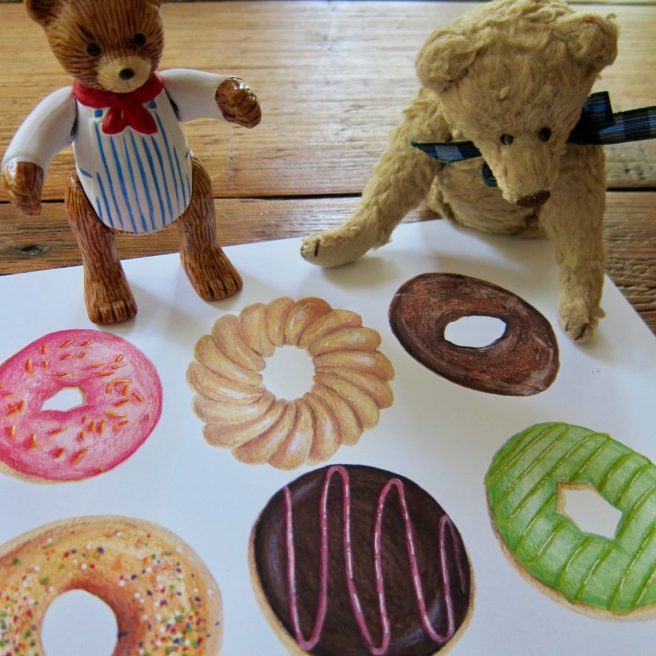
Like Martha, I might eat a donut at most once a year. Of all the treats out there, I feel guiltiest about donuts. Yes, I ate one of the donut props in the first photo. I dutifully made this great sacrifice on your behalf. 😀
What’s your relationship with donuts? What is your favorite kind?
After you’ve licked the glaze off your fingers, please add your links to Mr Linky below. Enjoy all the posts by your fellow poetry lovers. Thanks for joining us this week!
*
*
♥ BOOK GIVEAWAY WINNERS! ♥
Thanks to all who entered the last two book giveaways.
Here are the winners:
For PIZZA DAY, the winner is Candace at Beth Fish Reads!
For AGUA, AGÜITA/WATER, LITTLE WATER, the winner is Diane Mayr!!
Congratulations, Candace and Diane!! Please send along your snail mail addresses so we can dispatch your books.
Thanks again, everyone. Another giveaway coming up next Friday. 🙂
*
Hand-signed Donut print available from Kendyll Hillegas’s Etsy ShopAnother cup of coffee for the road?
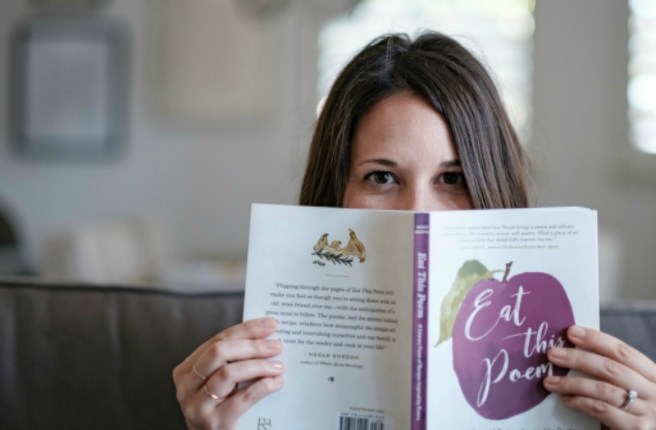
“Both the cook and the poet are makers. One holds a knife, the other a pen. One grinds fresh pepper over a mound of tender lettuce, while the other adds a period to the end of a sentence or a dash to the end of a line. With available ingredients — vegetables and herbs, rhymes and words — layers of flavor and meaning are infused in the pan and composed on the page.” ~ Nicole Gulotta (Eat This Poem, 2017)
Some of you may remember when Nicole Gulotta wrote a guest post for Alphabet Soup several years ago featuring an Apple Crumb Muffin recipe inspired by Amy Ludwig VanDerwater’s poem “Apple Pockets.”
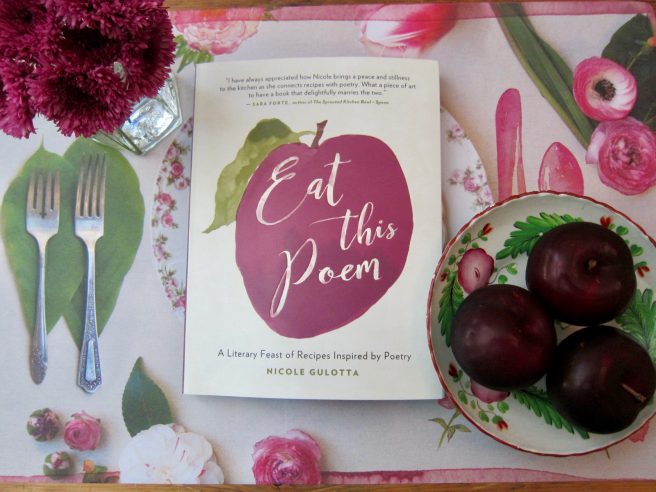
As a longtime fan of Nicole’s literary food blog, Eat This Poem, I was happy to see her first book come out earlier this year. This summer I finally had a nice chunk of time to give it a careful reading, savoring each word, each poem, each recipe.
Eat This Poem: A Literary Feast of Recipes Inspired by Poetry (Roost Books, 2017) features 75+ new recipes paired with poems by 25 of America’s most beloved poets (Billy Collins, Naomi Shihab Nye, Mark Strand, Mary Oliver, Wendell Berry). Just as she does at her blog, Nicole includes thoughtful commentary on each poem, followed by personal stories about the recipes.
All are presented thematically in five sections: On What Lingers, On Moments in Time, On Growth, On Gathering, and On Splendor. Recipe categories include Breakfasts, Salads, Soups, Snacks and Small Bites, Meat and Seafood, Vegetables/Vegetarian, Desserts and Drinks.
Enjoy Diane Lockward’s “Blueberry,” then read about Nicole’s Christmas morning family tradition of opening stockings by the fireplace while eating muffins (she then tempts us with a recipe for Blueberry Bran Muffins).
Contemplate Joy Harjo’s “Perhaps the World Ends Here” (one of the first food poems I ever shared at Alphabet Soup back in 2007), and then read about how Nicole’s great-grandmother used to slather a chicken in fresh oregano before roasting it for family dinners. Nicole’s recipe for Oregano Roast Chicken had me drooling (imagine the aroma of olive oil and savory spices wafting through your kitchen on a Sunday afternoon).
Do you know Sharon Olds’s bittersweet poem “First Thanksgiving” — about a mother anticipating her daughter’s return home after her first few months away at college? Nicole offers a recipe for Wild Rice with Chestnuts and Leeks, inspired by a semester abroad in London. In December, she took walks around the city the last week she was there to take it all in before returning home. She chanced upon a stall selling hot roasted chestnuts and tasted them for the first time, a wonderful moment that became an indelible memory.
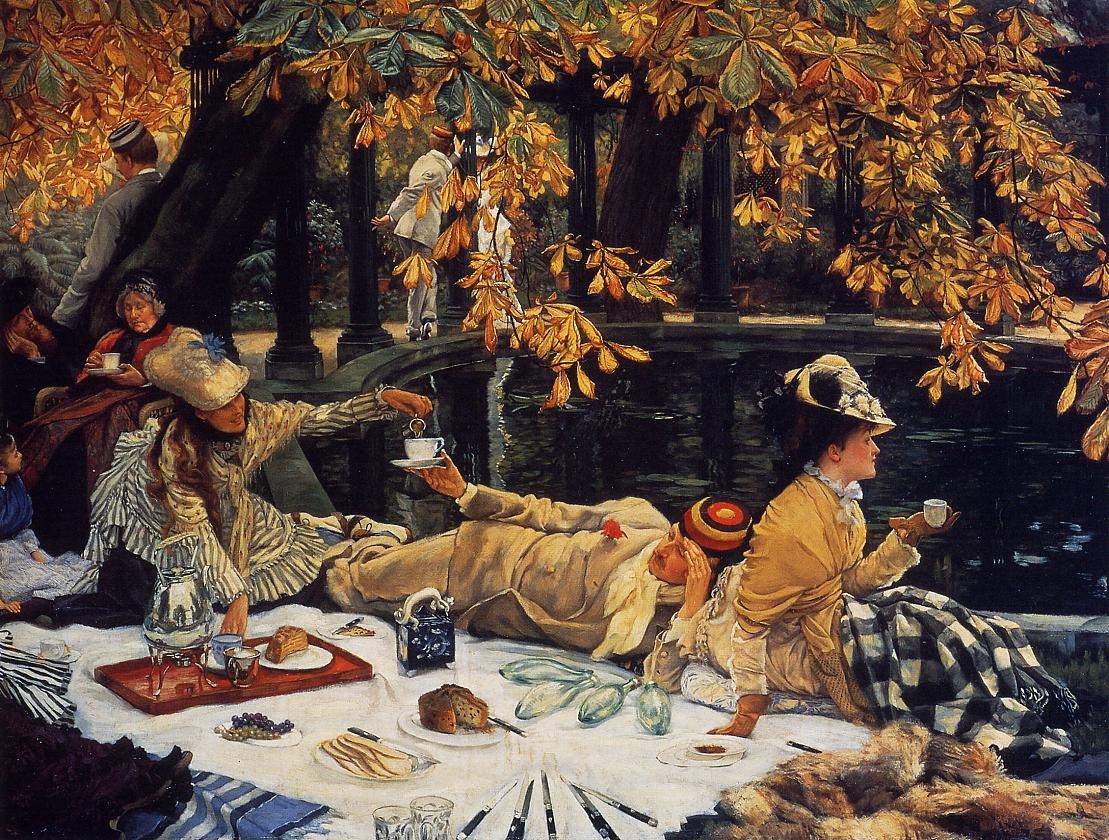
“If ants are such busy workers, how come they find time to go to all the picnics?” ~ Marie Dressler
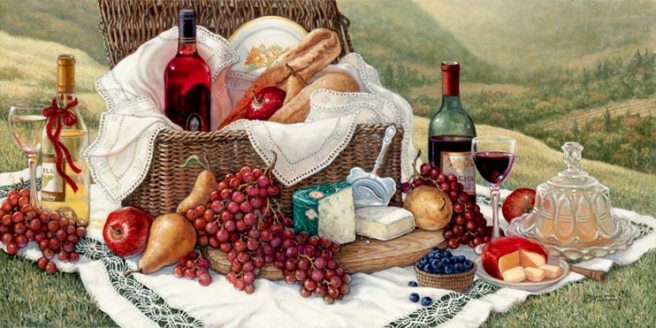
“Tuscan Picnic” by Janet Kruskamp”
What a nice day for a picnic! Let’s pack our hampers full of delectable goodies to eat and drink, drive out to the beautiful, unspoiled countryside, and have a grand time.
Or maybe not.
*
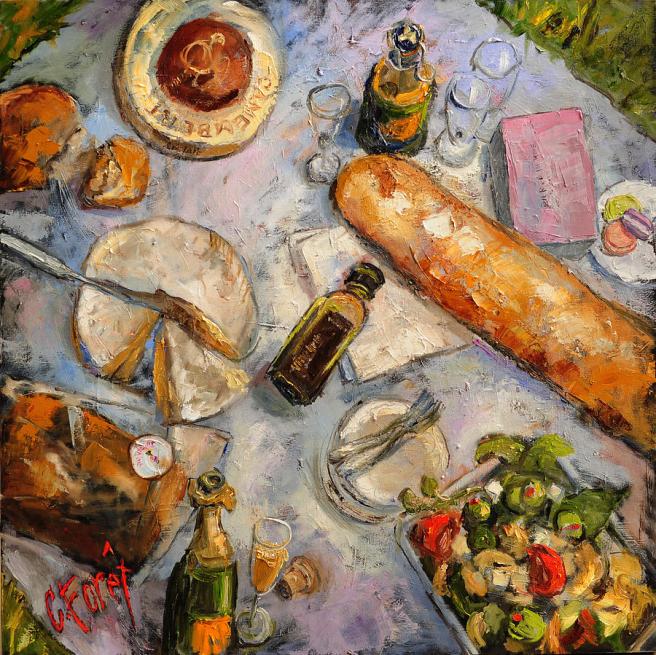
“Picnic at the Eiffel Tower” by Carole Foret
SO MANY THINGS CAN RUIN A PICNIC by Faith Shearin
So many things can ruin a picnic—
mosquitoes, for instance, arriving
in a gray hum or black flies or a wind
strong enough to blow napkins
over the lawn like white butterflies,
steaks stolen by dogs, unruly fire,
thunderstorms that come on suddenly,
clouds converging over a field,
where you have just unpacked
your basket. It’s amazing, really,
that people have picnics at all
considering how many plates
have fallen in the dirt and how many
hot dogs have erupted in black blisters,
how many children have climbed hills
alive with poison ivy and how much ice
has melted before the drinks
were ever poured. It’s amazing
how many people still want to eat
on a blanket anyway, are still willing
to take their chances, to endure
whatever may fall or bite. Either they
don’t consider the odds of success
or they don’t care. Some of them
must not mind the stains on their pants,
the heavy watermelon that isn’t sweet
once it’s carved. Some must understand
the way lightning is likely to strike
an open field. Even so—they wrap up
a few pieces of fried chicken, fold
a tablecloth until it is as small as hope.
They carry an umbrella or a jacket
that they accidentally drop on the ground
where it fills with bees. They leave
the houses they built to keep them safe
and eat uncovered, ignoring the thunder,
their egg salad growing dangerously hot.
 The wonderful and talented Jone MacCulloch is hosting the Roundup at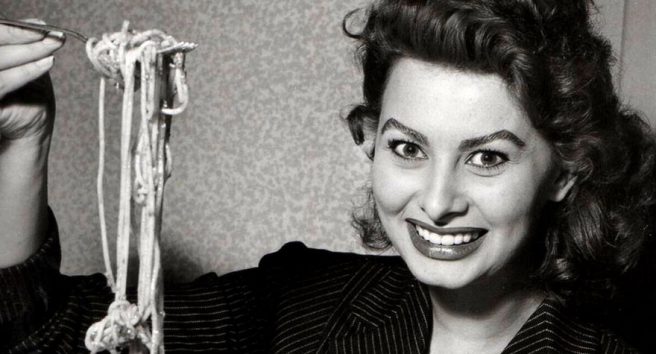
 Jama's Alphabet Soup