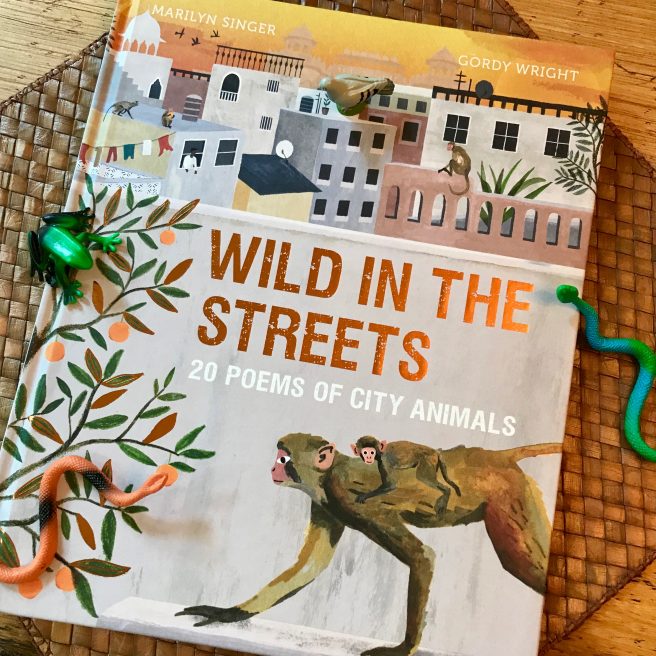
Imagine visiting New Delhi and seeing dozens of rhesus monkeys scampering down the street, climbing atop walls and buildings, even having them steal your food. People who live there are used to such monkey business, which is especially problematic when the animals break into and destroy homes and offices.
Monkeys are considered sacred in India, so it’s illegal to kill them. Though rhesus macaques have traditionally been cared for in temples around the country, many have been displaced due to a variety of factors. Today, there are an estimated 30,000 rhesus macaques running wild in New Delhi, and persistent efforts to chase them away remain futile.
This is just one of the interesting scenarios described in Marilyn Singer’s new poetry picture book, Wild in the Streets: 20 Poems of City Animals (words & pictures, 2019). Illustrated by British artist Gordy Wright, this unique collection introduces readers to creatures around the world who have adapted well to urban life, citing why they may have left their natural habitats.
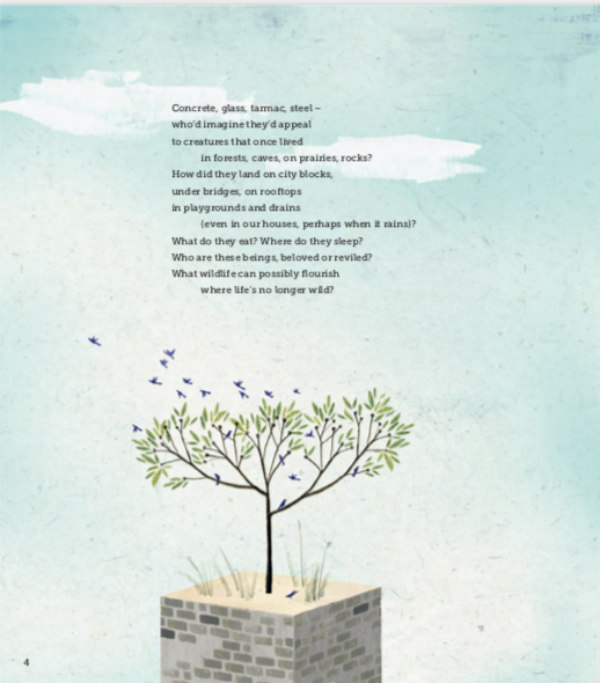
We meet each animal through a poem and nonfiction note, sometimes hearing their voices and candid observations about being city dwellers.
From the monkeys saying, “Give us/give us/what we want, what we need;” to the wily Chicago coyotes demanding the kind of respect afforded their domestic canine cousins, “We came on foot,/crossing dangerous terrains . . . give us welcome to rid you of your mice and rats;” to the wild boars in Berlin expressing their gratitude, “Thanks for knocking down that wall./Thanks for your delicious corn./We declare a free-for-all;” we can better appreciate their amazing ability to trade “forests, caves, prairies, rocks,” for “bridges, rooftops, city blocks” — and thrive!
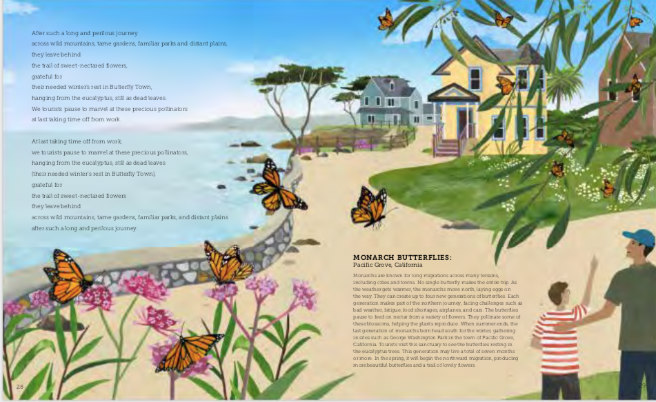
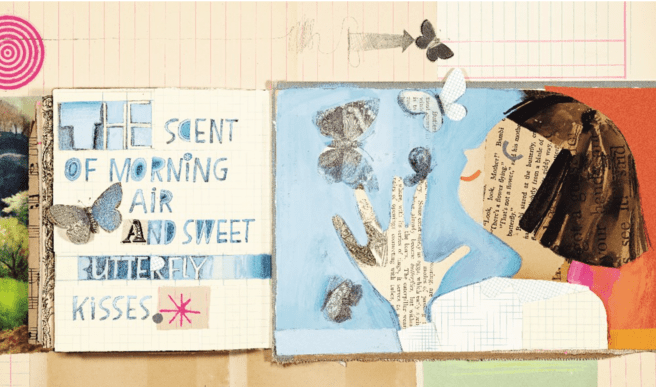
Using a variety of poetic forms, including haiku, villanelle, acrostic, sonnet, free verse, and her famous reverso, Marilyn captures the essence of each animal’s reality, sometimes creating an emotional context or painting a striking lyrical image. We can easily picture beautiful monarch butterflies traveling long distances “across wild mountains, tame gardens, familiar parks and distant plains.”
Continue reading →



 Jama's Alphabet Soup