[review + recipes] A Charlotte Brontë Birthday

“I am no bird; and no net ensnares me: I am a free human being with an independent will.” ~ Charlotte Brontë (Jane Eyre, 1847).
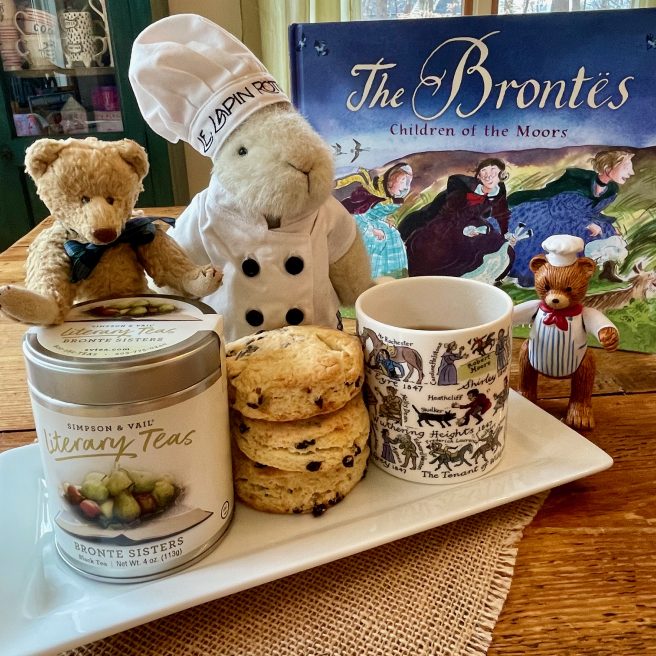
Today we’re celebrating Charlotte Brontë’s 207th birthday with a fabulous picture book and two versions of a scrummy Yorkshire treat. 🙂

Wonder if she could ever have imagined that over a century after publishing the first book of Brontë poems, generations of readers all over the world would still be studying, sharing and marveling at all she and her sisters had written?
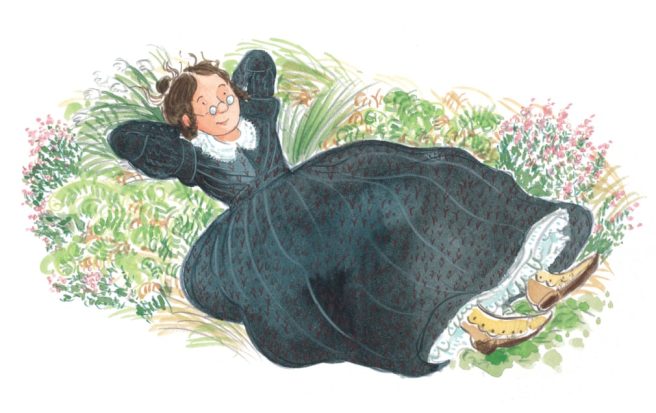
As enjoyable and enduring as their books are, a large part of what continues to intrigue Brontë fans is the fascinating story of their all-too-brief lives in early 19th century Yorkshire. 

In The Brontës: Children of the Moors (Franklin Watts, 2016), award winning nonfiction picture book team Mick Manning and Brita Granström present an engaging, informative, charmingly illustrated account of Brontë family milestones from their early childhood days in Haworth, to their short stints as teachers and governesses, to their accomplishments as authors and poets.
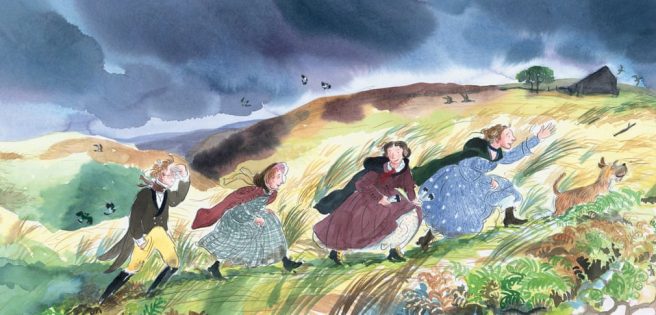
Manning and Granström’s kid friendly format consists of three components: a main text narrated by Charlotte, scenes dramatized with characters conversing in speech bubbles, and Charlotte’s sidenotes brimming with interesting bits and bobs that expand on the main text.

This approach packs a lot of information into each double page spread; Charlotte’s voice is intimate and accessible and younger readers can opt to follow the story via the pictures.
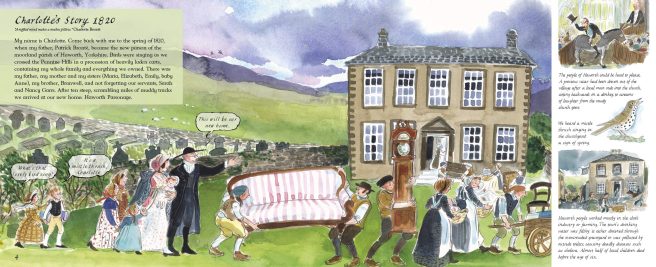
There’s also a unique spin: Mick Manning actually grew up in the village of Haworth and played a shepherd in the 1967 BBC2 “Wuthering Heights” series when he was just 8. As the book opens, he recounts how he dozed off while waiting for his turn on camera, only to have a lady “in old fashioned clothes” tell him a story he’d never forget upon awakening. 

Continue reading
[review + recipe] Chef Edna: Queen of Southern Cooking, Edna Lewis by Melvina Noel and Cozbi A. Cabrera

“One of the greatest pleasures of my life has been that I have never stopped learning about good cooking and good food.” ~ Edna Lewis

Picture this:

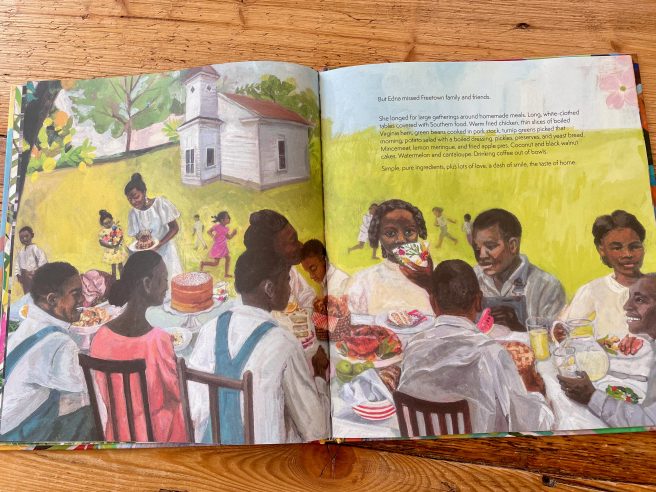
A group of African American family members and friends gathered outdoors around a long, white-clothed table covered with “warm fried chicken, thin slices of boiled Virginia ham, green beans cooked in pork stock, turnip greens picked that morning, potato salad with a boiled dressing, pickles, preserves, and yeast bread.” 

For dessert? Mincemeat, lemon meringue and fried apple pies, along with coconut and black walnut cakes. Don’t forget the watermelon and cantaloupe, the freshly ground coffee to be drunk out of bowls.

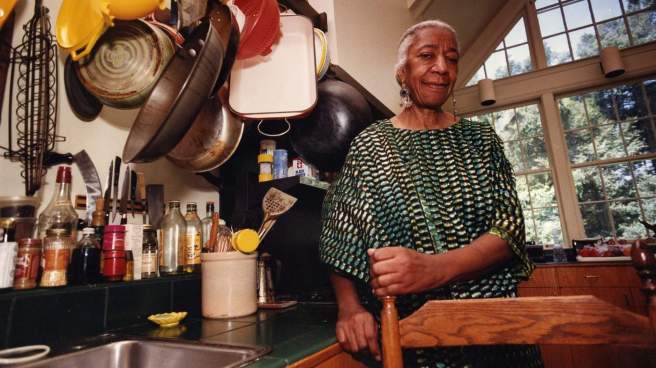
Miss Lewis, Culinary Ambassador and Grande Doyen of Southern Cooking.

This is the kind of homemade, homegrown food beloved chef and cookbook author Edna Lewis grew up with. Her advocacy of this simple style of cooking using only the freshest in-season ingredients anticipated the natural foods, slow food, and farm-to-table movements, essentially changing the way average Americans viewed Southern cuisine.

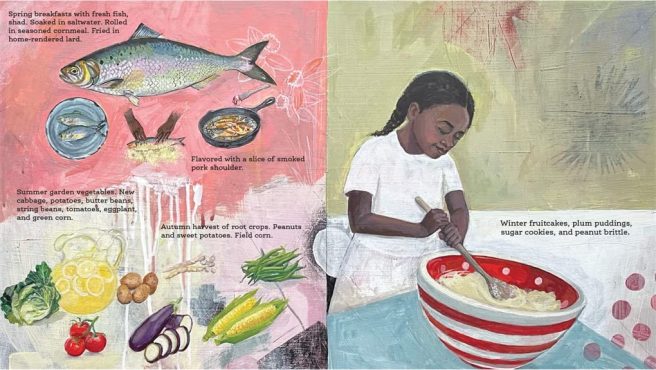
Beautiful painting of young Edna under the dust jacket!

In Chef Edna: Queen of Southern Cooking, Edna Lewis (Cameron Kids, 2032), Melvina Noel and Cozbi A. Cabrera trace Edna’s life from her childhood on a Virginia farm, to her early days as a working single, then finally to her prominence as a restaurant co-owner and chef-de-cuisine in NYC.

Essentially, what Edna first learned about cooking and everything associated with it – family, friends, love, community, cultural heritage – established her identity and defined her life’s work, as she remained committed to preserving traditional Southern foodways while showcasing the seminal role African Americans played in the origins of this regional cuisine.

It all began on a farm in Freetown, Virginia, an African American community founded by Edna’s grandfather and two other freed slaves. From an early age, Edna participated in all aspects of farm life: milking cows, chasing chickens, picking wild greens and gathering berries. Edna especially loved cooking with her mother, Mama Daisy.

Continue reading

[leggy review] Animals in Pants by Suzy Levinson and Kristen & Kevin Howdeshell

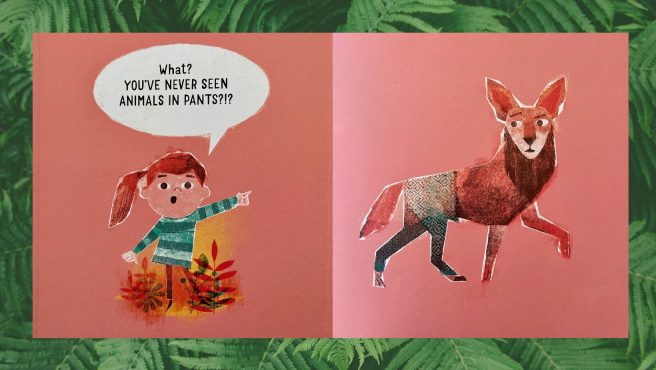
What? You’ve never seen animals in pants?!? 

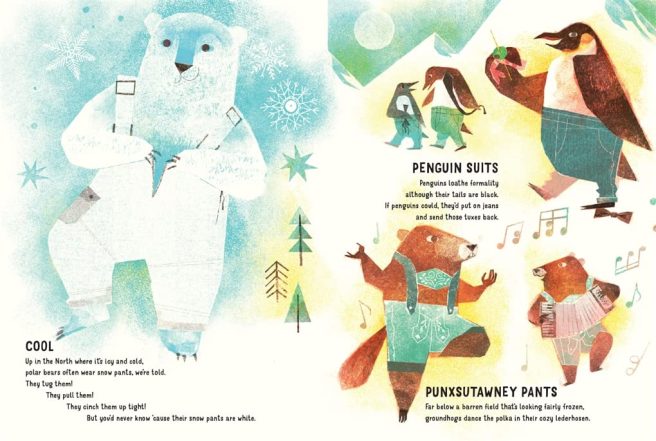
Slip into your sweats and get ready for a good giggle with the likes of pelicans in pedal pushers, polar bears in snow pants, and yaks in slacks. 🙂

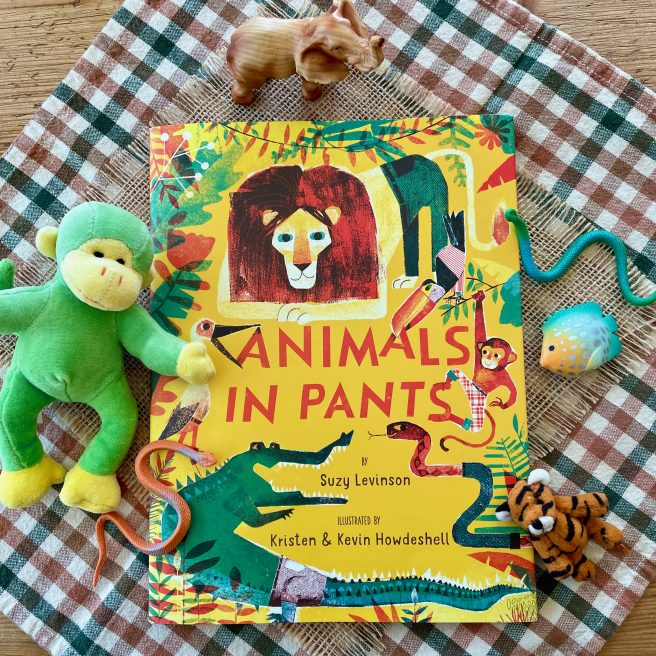
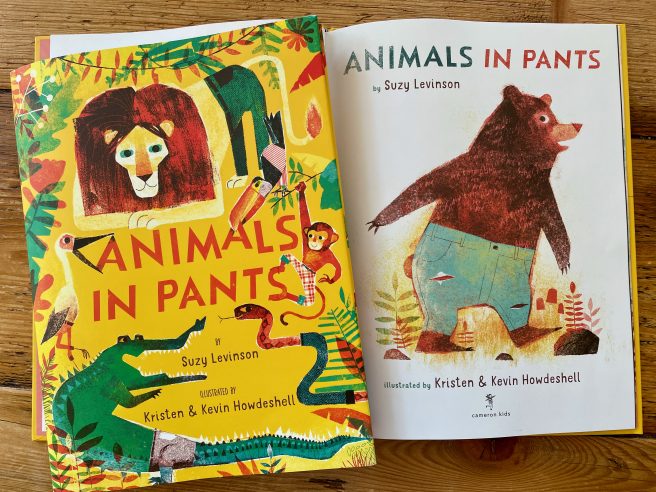
These are just a few of the curiously clad critters in this hilarious new picture book, Animals in Pants by Suzy Levinson and Kristen & Kevin Howdeshell (Cameron Kids, 2023). 

Debut author Levinson has fashioned 23 pithy, playfully perky poems, tailor-made for discerning munchkins who like their animals tastefully trousered. After all, there’s nothing like a rollicking pants parade to get a leg up on the latest trends. 

Levinson’s menagerie includes both domestic and wild animals thriving in a variety of habitats (farm, suburb, range, ocean, jungle, North and South Poles). It’s uncanny how she’s able to capture each animal’s essence in such a short rhyme, delighting the reader with an element of surprise and brilliant comic timing. 

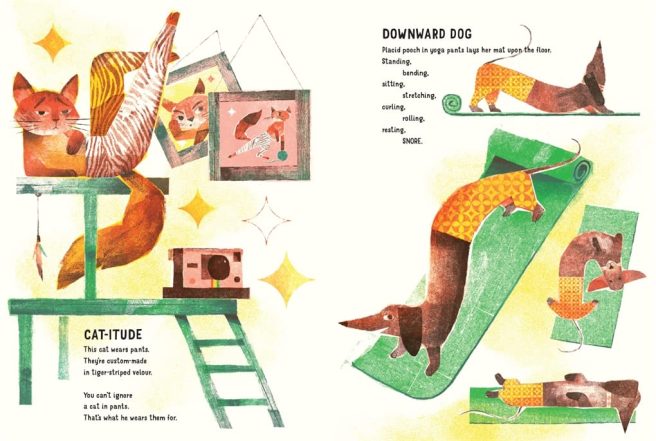
Of course a cat with an attitude would wear custom-made tiger-striped velour pants, a tracksuit would be the attire of choice for squirrels showing off their acrobatic skills, and monkeys would prefer cargo pants (gotta have those pockets to carry bananas). 🙂

Continue reading

[guest post] Roxanne Troup on My Grandpa, My Tree, and Me

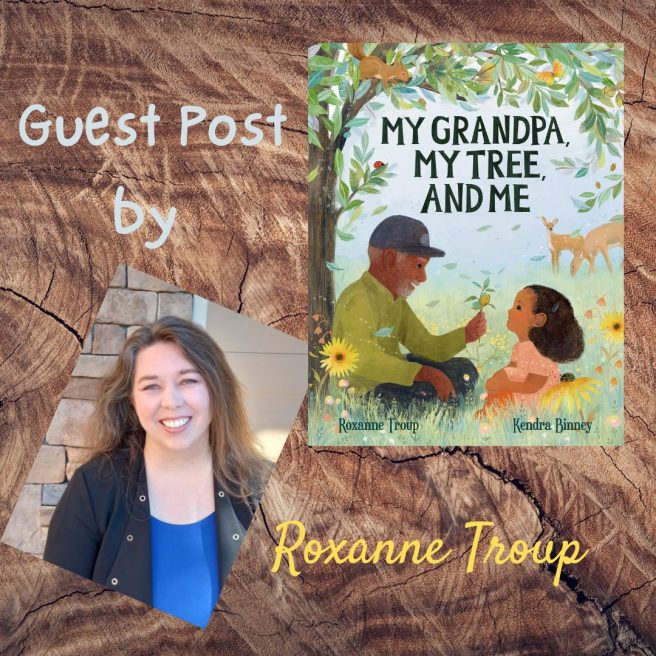
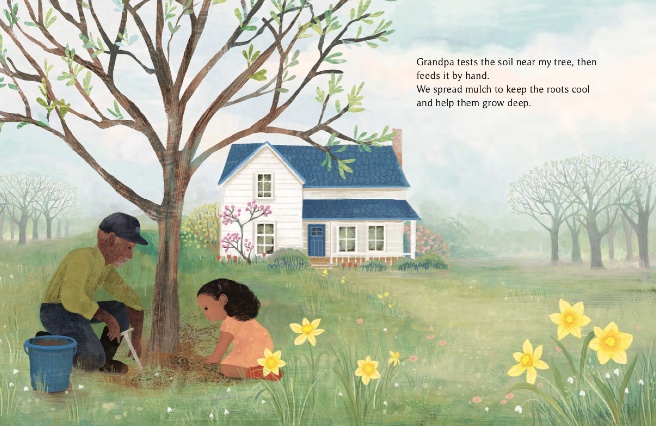
Like many stories, the final product of MY GRANDPA, MY TREE, AND ME is much more than the sum of its parts. And while I don’t know that I set out to write an intergenerational story, it became that through the process of revision.

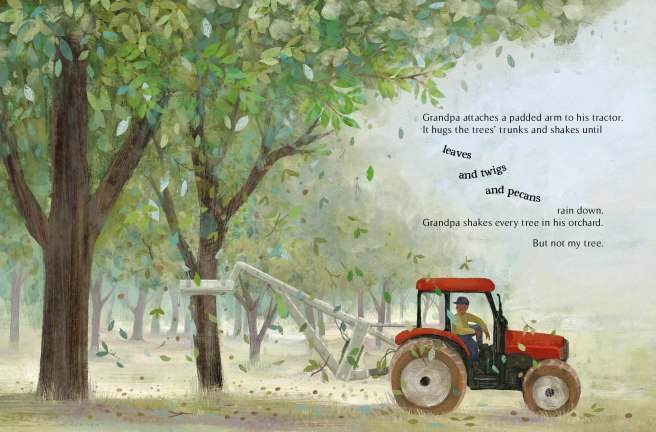
The first spark of an idea for this story came about when I encountered a YouTube video of a commercial pecan harvest. I watched as a tractor with a padded arm grabbed hold of a tree and shook. Thousands of pecans thundered to the ground like torrential rain!

Though I’d grown up around farming, and knew a bit about mechanized harvesting, I was in awe. I’d never seen pecans harvested by tractor. I didn’t even know they made attachments for that! When we harvested pecans in Missouri, we gathered them by hand like the wild products they were. I was fascinated with the dichotomy of commercial harvesting versus home-harvesting and knew kids would find the process curious as well. But I needed an organic way to highlight both processes. When the phrase, “But not my tree,” came to me, I knew I’d found a story mechanism that could work.

My pre-draft (Yep, I just made that up. It’s the “draft” where all your ideas go—in no particular order.) was messy. It focused on the care and harvesting of pecans but wasn’t really a story. As a matter of fact, I never even finished it. But I also didn’t throw it away. I’d been reading, writing, and critiquing long enough to know it had elements I could work with. It included the refrain—“But not my tree”—that would stay with the story throughout each iteration. It hinted at a seasonal structure. And it had a nice child-like voice. I also never finished my first…or second…or third draft. When something isn’t working, I have a tendency to just stop and start again, taking what I learned in that partial draft to the next one (which I don’t recommend to anyone, but it is part of my process). 

Continue reading

[sweet review] On the Corner of Chocolate Avenue by Tziporah Cohen and Steven Salerno

“One is only happy in proportion as he makes others feel happy.” ~ Milton Hershey

Go ahead: break off a piece of Hershey bar and savor its rich chocolaty goodness as it slowly melts in your mouth. Mmmmmm! Did you know those rectangular sections are called ‘pips’? 🙂

Hershey’s chocolate defined my childhood.

When I was growing up, I simply had to have a Hershey’s Milk Chocolate bar whenever I went to the movies or had extra money from my allowance. So much happiness for just a nickel!

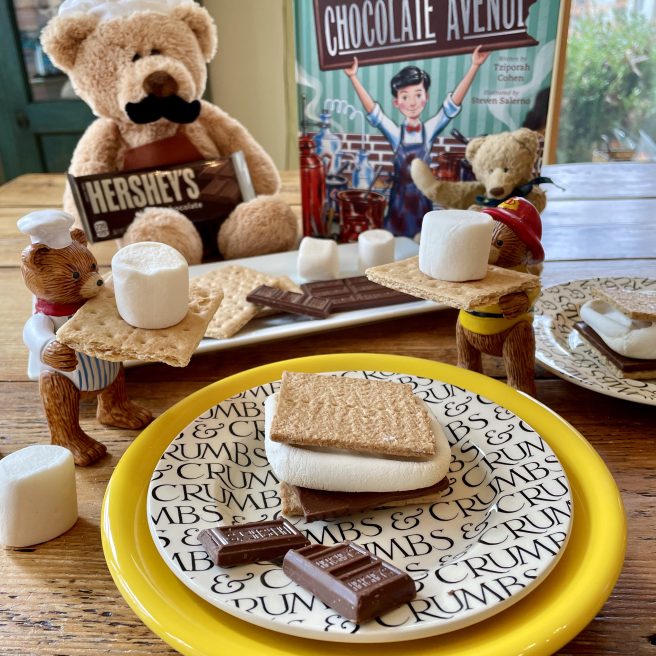
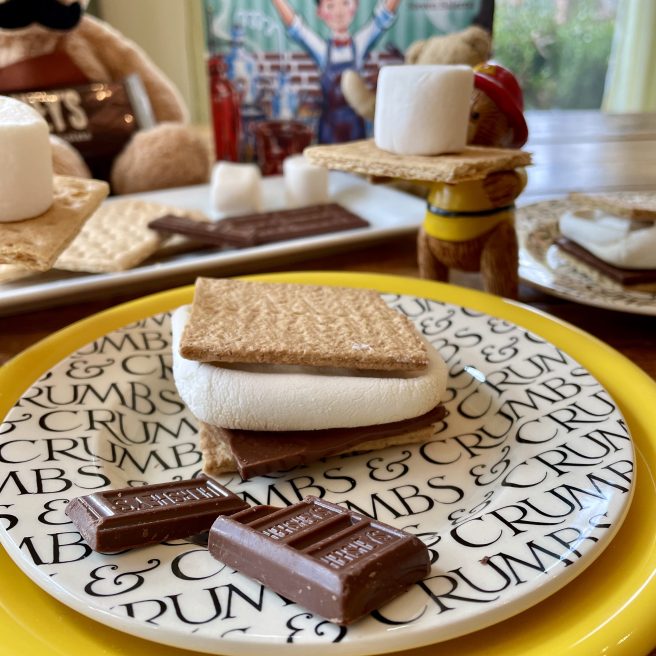
We poured Hershey’s syrup into cold milk and over vanilla ice cream, and I’ll always remember the first time I made and devoured my first S’more at Campfire Girls day camp. Marry me, please. And best of all, every Christmas, Grandma Yang would give a five pound box of Hershey’s Kisses to each of her eleven children and their families. The holidays wouldn’t have been the same without those sweet kisses.

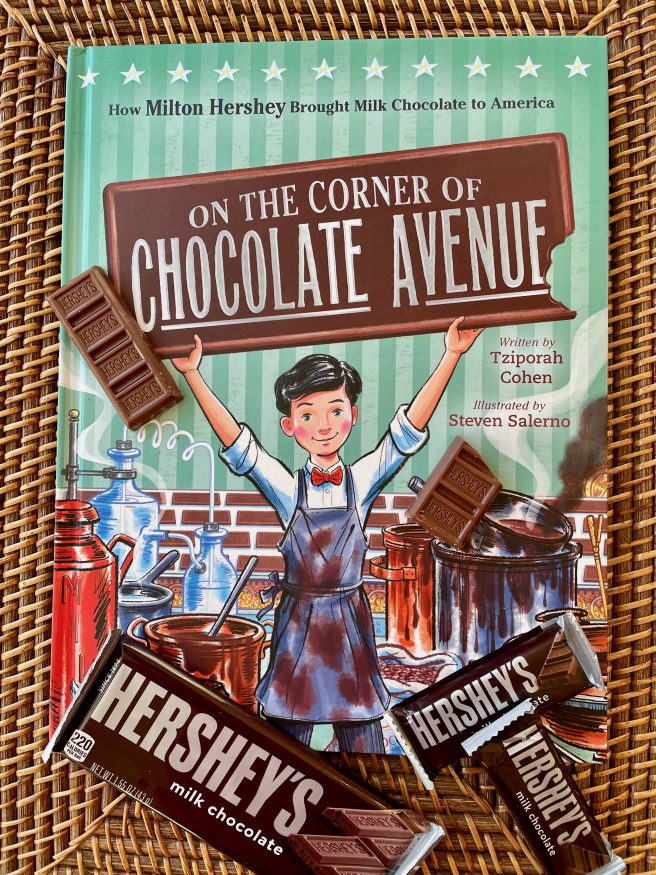
You can see why I was excited to see this brand new picture book biography, On the Corner of Chocolate Avenue: How Milton Hershey Brought Milk Chocolate to America by Tziporah Cohen and Steven Salerno (Clarion Books, 2022). Though a longtime Hershey’s fan, I actually knew very little about the life of America’s Chocolate King.

Through hard work and perseverance, a poor boy from Derry Township, Pennsylvania – one who probably never tasted chocolate as a child – grew up to create a chocolate empire as a pioneering confectioner, resilient businessman, and dedicated philanthropist. 

Hershey’s achievements in mass production and bulk export helped to popularize chocolate around the world, making it accessible and affordable for the average consumer.

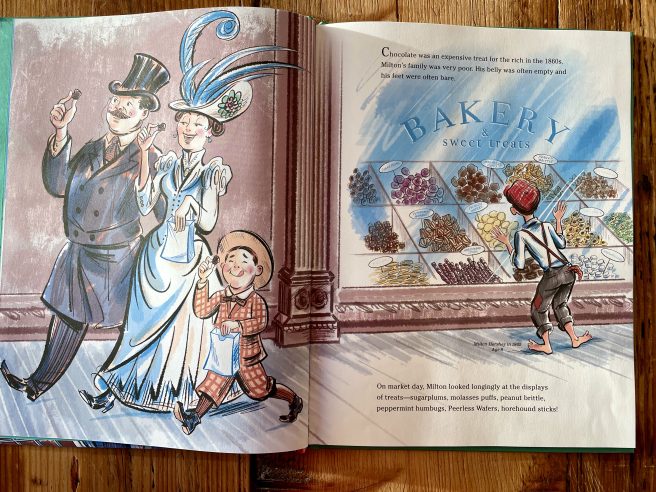
As the story opens, we see 8-year-old Milton gazing longingly at the sweets displayed in a shop window. Chocolate is a treat solely for the wealthy, and Milton was from a poor family. Since they moved around a lot, he attended six schools in seven years, barely learning how to read.

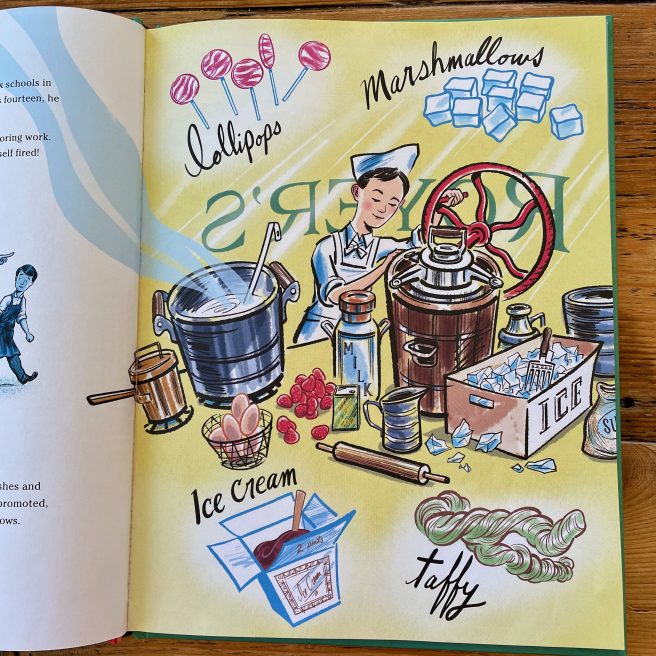
At age 14, he left school to help support his family. After a brief stint as a printer’s apprentice, he worked at Royer’s Ice Cream Parlor and Garden, where he learned the basics of candy making (ice cream, taffy, lollipops, marshmallows). Seeing candy’s power to make people happy, he decided it would be wonderful to build his own candy business.

Several years later, he borrowed money from his family to open the Spring Garden Confectionery Works in Philadelphia. Unfortunately, this business, as well as two others he started in Chicago and New York, failed.

Continue reading