Everyone can’t seem to get enough. Don’t worry, when your belly’s full, you can rest between platefuls by feasting on these warm, crispy, fluffy, savory, salty, lip-smacking picture books, and then you can fry up some more!
Today I’m serving up 8 of my favorites, one for each night of Hanukkah. There’s a little bit of everything in the mix — family and friends, folklore, legend, magic, humor, and miracles! Enjoy these heartwarming, satisfying stories and pass the applesauce!
Okay. I admit it. It’s entirely impossible for me to be objective about this book.
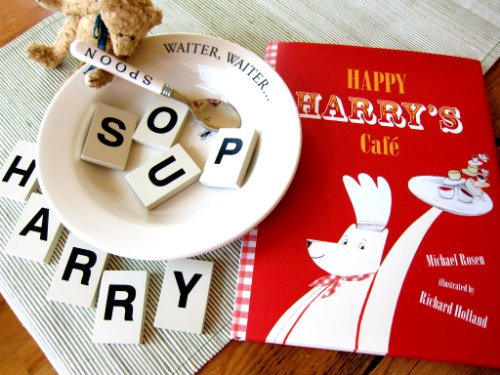
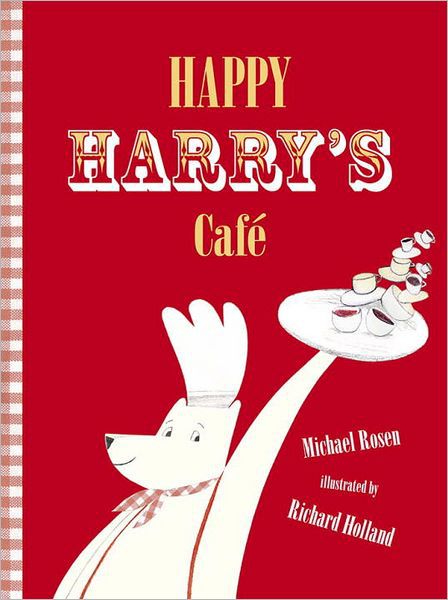
Look at the cover forcryingoutloud. See the rotund bearish guy with impish eyebrows wielding tiny cups and saucers on a tray? Well, if you think he’s cute there, wait till you see what he does in this story. His name is Harry and he makes SOUP! !
*dies*
Now, it would be one thing if Harry’s soup was merely good, the kind that makes people politely smile and nod their heads and say things like, “Mmmm, how tasty, I’d love another bowl.” But this Harry, red suspenders red-and-white checked kerchief I don’t need to wear a shirt in my own café Harry, makes EXTRAORDINARY soup — soup so unbelievably delicious people are always run run running to the café before the soup runs out.
“Picture yourself in a boat on a river, with tangerine trees and marmalade skies . . . “
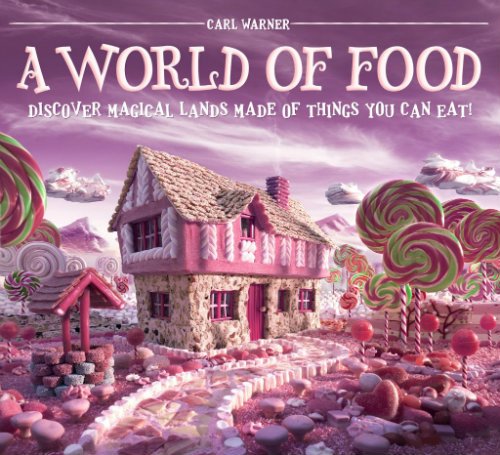
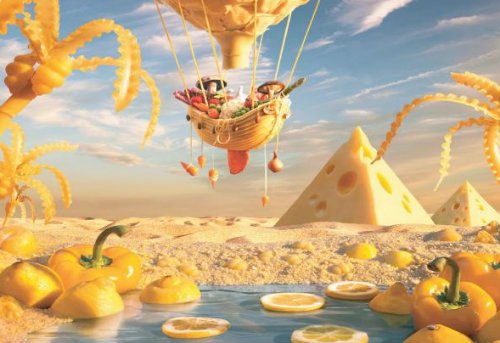
When I first heard these lyrics, little did I realize one day I’d actually be able to see and practically taste an alternate universe where everything is made of food. Thanks to London-based photographer Carl Warner, I can hula ‘neath pasta palm trees, tiptoe across cucumber bridges, climb cocoa-dusted mountains, skinny dip in a lemonade pool, and practice my backstroke in a sea of mushroom soup. Naturally I’d live in a nougat house and lick my lollipop trees every hour on the hour. Does this man know me or what?
Open Mr. Warner’s new children’s book, A World of Food (Abrams, 2012), and just see if you don’t want to climb into every page and eat your way to oblivion. Featuring twelve wondrous, magical, incredibly edible color-themed foodscapes, this tasty tome will tempt and delight kids ages 1 to 100.
I grew up on school cafeteria lunches. For just 25 cents, we got a hot entrée like so-so creole macaroni, Spanish rice or mac and cheese, brown bread and butter, a forgettable veggie, a yummy, to-this-day-coveted shortbread cookie, and a carton of milk.
That the cookie was the best part of lunch says a lot. But 25 cents is 25 cents, an amazing bargain by today’s standards. At least our bellies were full, and we were not tempted by sugary soft drinks or high caloric snacks from vending machines.
It was not a perfect world by any means; there were no discussions about good nutrition either at home or at school. But there was also no “obesity epidemic,” rampant junk food advertising, or a discernible impact on the environment from the vast amounts of packaging waste produced by our global fast food culture. And it simply never occurred to us that we had the right to a healthy school lunch.
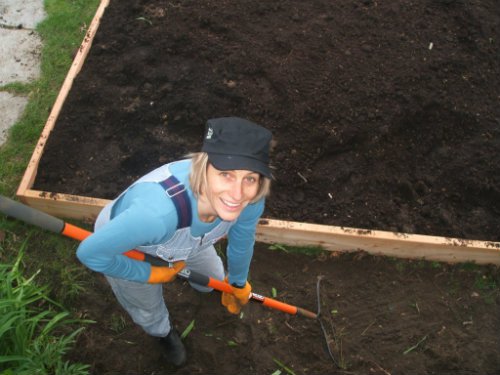
Andrea preparing her small urban backyard veggie patch.
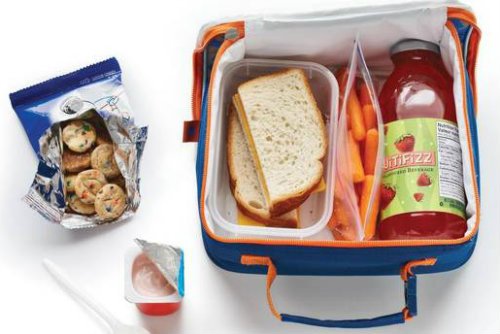
Because it was a constant challenge making school lunches for her two sons every single morning, Toronto-based writer and editor Andrea Curtis became curious about what kids in other countries were eating. In Canada, 90% of kids bring a home-packed lunch and they’re only given about 10 minutes to eat it! There’s no special lunchroom, so they eat in a crowded gymnasium or at their desks. Even when she packed healthy food her sons really liked, often they didn’t have enough time to finish everything.
“In Canada, one out of four kids is overweight or obese . . . Canadian school boards make hundreds of thousands of dollars a year through vending machine contracts with drink and snack companies.” (Photo by Yvonne Duivenvoorden)
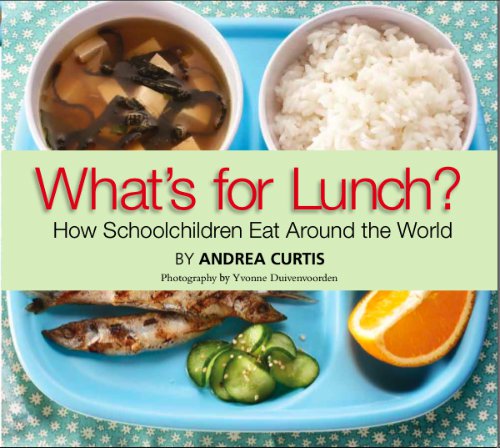
In What’s for Lunch?: How Schoolchildren Eat Around theWorld (Red Deer Press, 2012), Andrea serves up a fascinating smorgasbord of typical school lunches from 13 different countries. Peering into the lunch trays, bags, bowls and cups of kids from places like Japan, France, Mexico, Brazil, Russia, China and Peru reveals that it’s always about more than just the food itself.
No matter where we live or what we eat, our food is part of a huge, complex global system, with issues connecting and affecting us all, everything from climate change, social justice, inequalities and the plight of farmers to world hunger and diet-related illnesses like diabetes and heart disease.
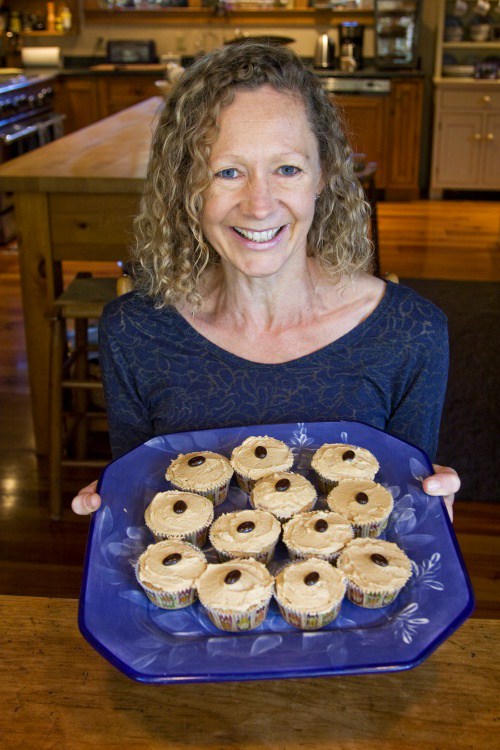
What could be sweeter than having a lovely lady bring you a tray of freshly baked cupcakes?
Please help me welcome debut author Natasha Lowe, who’s just published an indescribably delicious middle grade novel that I absolutely adore!
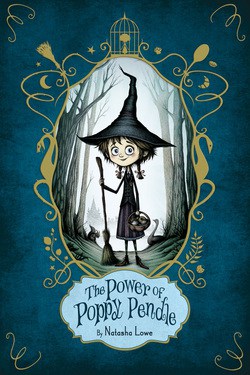
The Power of Poppy Pendle (Paula Wiseman/S&S, 2012) is about a girl with a passion for baking who inherits an extraordinary gift of magic. Poppy’s parents enroll her in Ruthersfield Academy, an exclusive school for witchcraft, with high hopes she’ll follow in the footsteps of her famous Great-Granny Mabel.
But Poppy is miserable. She’s teased mercilessly in school because she’d rather create new recipes than cast spells. She repeatedly tells her parents she doesn’t like magic but they just won’t listen. Frustrated and angry at being misunderstood, and unwilling to give up her dreams of becoming a master baker someday, Poppy takes matters into her own hands, misusing her magic powers to disastrous results.
 Please help me welcome debut author
  Jama's Alphabet Soup