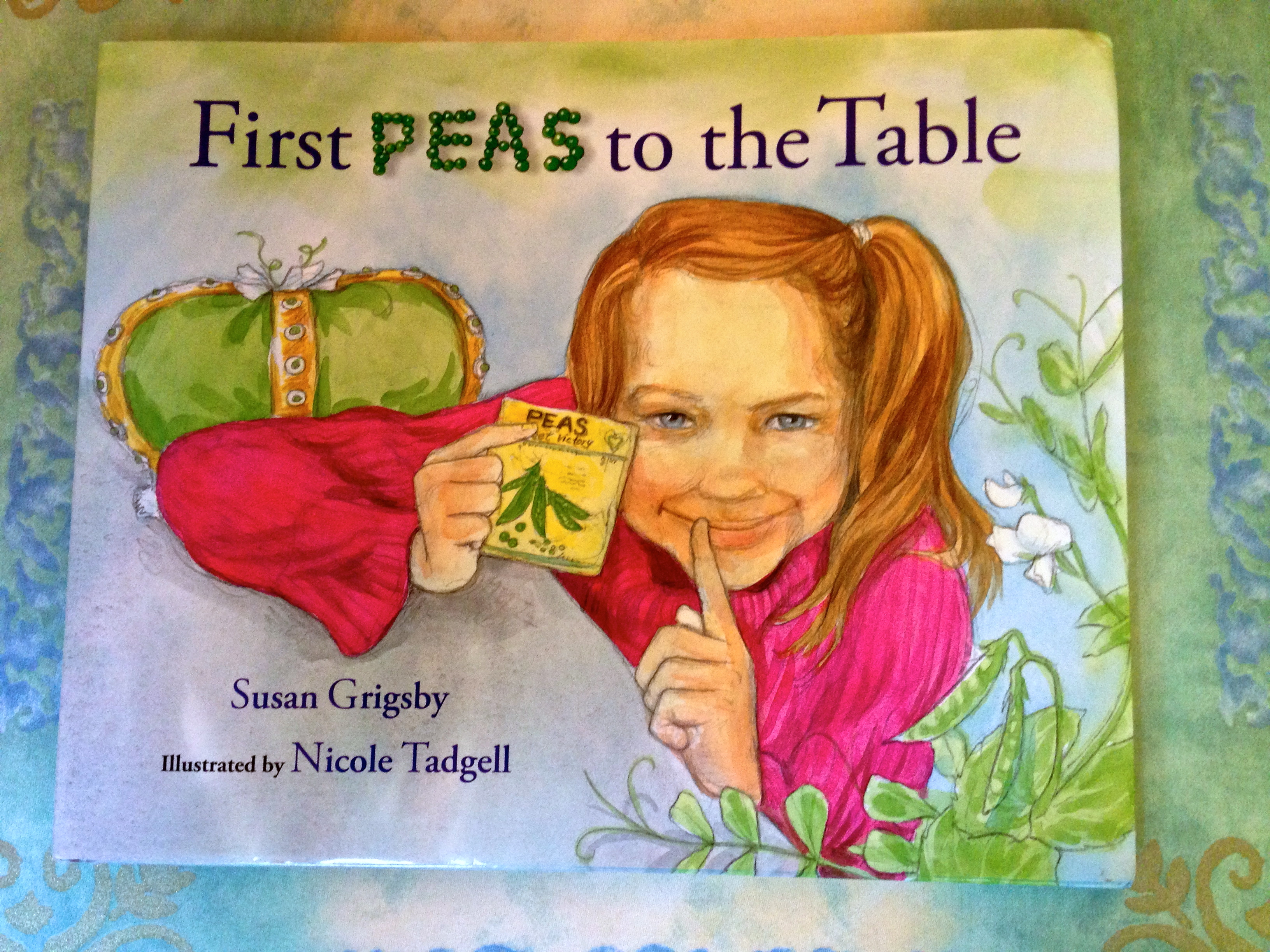
tasting first peas to the table by susan grigsby and nicole tadgell

IMG_0812

Peas, please!

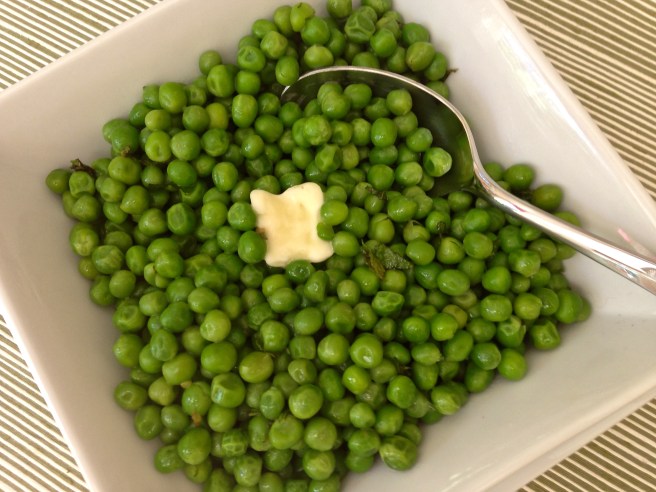
Surely they’re the most social of all vegetables — you rarely see or eat just one and they’re happiest out of their shells — canoodling in congenial groups, basking in their perfect orbed greenness, even more resplendent adorned with a buttery sheen.

Thomas Jefferson was certainly onto them. The English or Garden Pea is considered his favorite vegetable, judging by the sheer quantity of pea plantings and number of harvests at Monticello, as well as the amount of garden space regularly allotted to it.
IMG_0816
(Click for Mary Randolph’s Fresh Peas with Mint recipe)

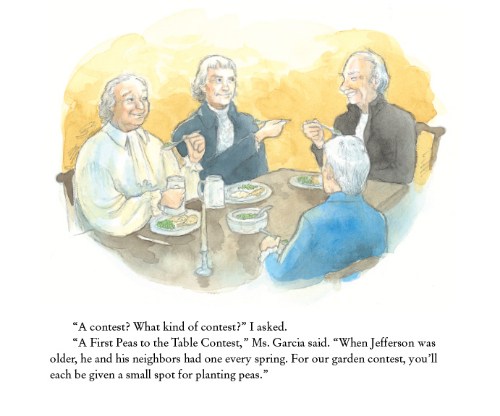
Every Spring, Jefferson and his neighbors had a “First Peas to the Table” contest, a race to see whose peas would be ready first. The winner would host a dinner party, proudly serving his peas to the other contestants. Apparently, Jefferson rarely won, but like his eager friends, fully appreciated the greater prize — honoring a beloved tradition where all could celebrate the joys of gardening and the power of the pea to bring people together.

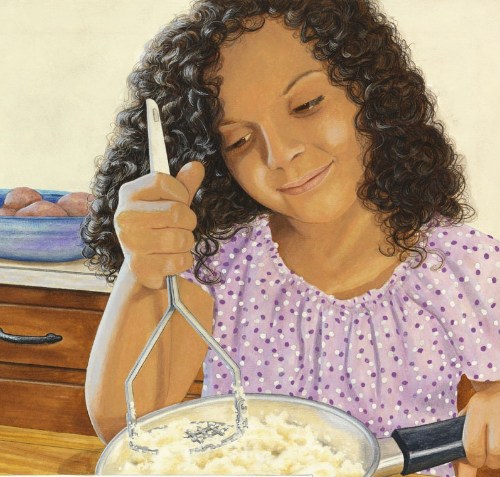
Since I’ve always been interested in Jefferson’s gardening and gourmandizing, I was happy to see First Peas to the Table by Susan Grigsby and Nicole Tadgell (Albert Whitman, 2012), a lovely story where school children plant a kitchen garden like Jefferson’s and have a pea growing contest of their own.
 

Continue reading

friday feast: are your tomatoes laughing?

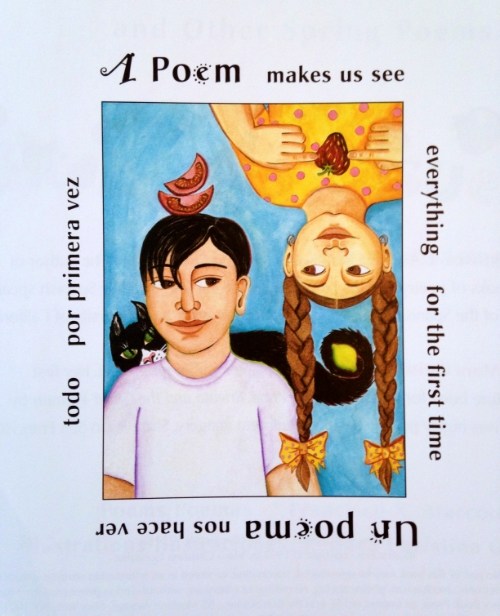
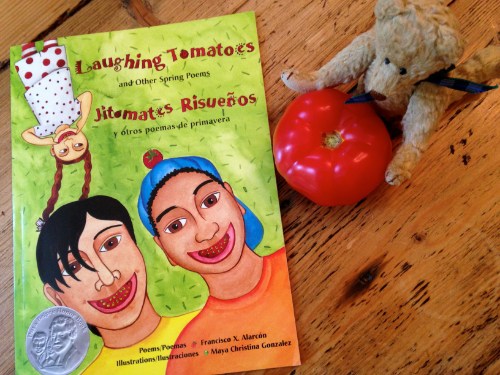
Seriously, who could resist a poetry book called Laughing Tomatoes?

Well, I certainly couldn’t, but I shamefully admit I didn’t actually know about this fabuloso feast of pure delight until just a few months ago.

This Pura Belpré Honor Award-winning bilingual 20-poem collection by Chicano poet Francisco X. Alarcón and Maya Christina Gonzalez was first published by Children’s Book Press back in 1997. Where was I?!

Likely staring at grumpy, aloof tomatoes and not appreciating strawberries for the “sweet tender hearts” they are, living a bland life full of ho-hum edibles, certainly not hearing the warm morning sun calling to me through my window, and — *shakes head* — totally oblivious to dew, “the fresh taste of the night.”

But now, having read this glorious, jubilant celebration of Spring and its earthly delights, family, culture and community, my life is complete!

I’m happy to say Laughing Tomatoes and Other Spring Poems/Jitomates Risueños y otros poemas de primavera is one of my favorite children’s poetry books ever. 🙂

Continue reading

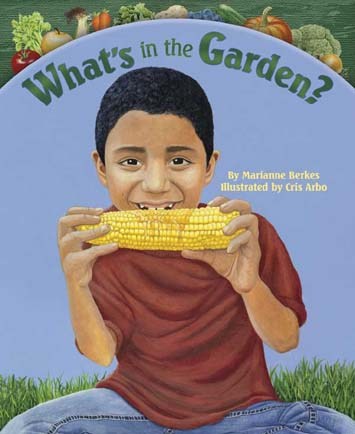
friday feast: what’s in the garden? by marianne berkes and cris arbo

What could be better than a book brimming with delicious rhyming verse?

A book of taste-tempting riddle poems with gorgeous art, yummy recipes, food for thought, and gardening tips, of course!

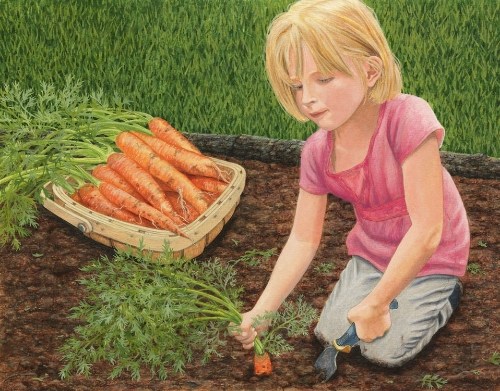
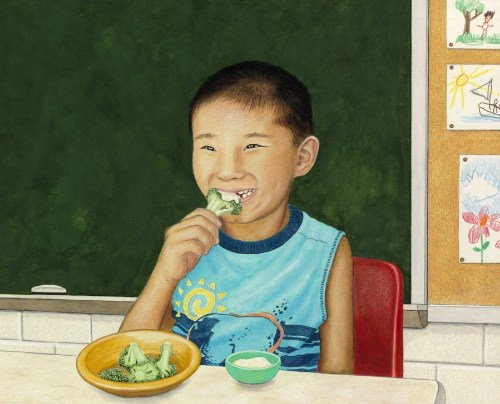
In What’s in the Garden? (Dawn Publications, 2013), Marianne Berkes and Cris Arbo celebrate the joys of growing and eating twelve familiar fruits and veggies with a cast of adorable, happily-engaged multiethnic kids.

This delightfully fun, interactive feast is served up in a clever format: children are asked to guess which fruit or vegetable is described in each of the catchy four-line poems, then turn the page for the answer, where they’ll find an easy recipe featuring the produce to stimulate their appetites.

Continue reading

[cookbook review] the secret lives of baked goods by jessie oleson moore

“Sometimes a person needs a story more than food to stay alive.” ~ Barry Lopez, Crow and Weasel

IMG_0604

Call my name, brand new cookbook! I’ve dallied between your covers and I’m under your spell. You speak my language: Animal Crackers, German Chocolate Cake, Alice B. Toklas Brownies, New York Cheesecake, Lemon Meringue Pie.

Yes, I’ll marry you. 🙂

IMG_0616
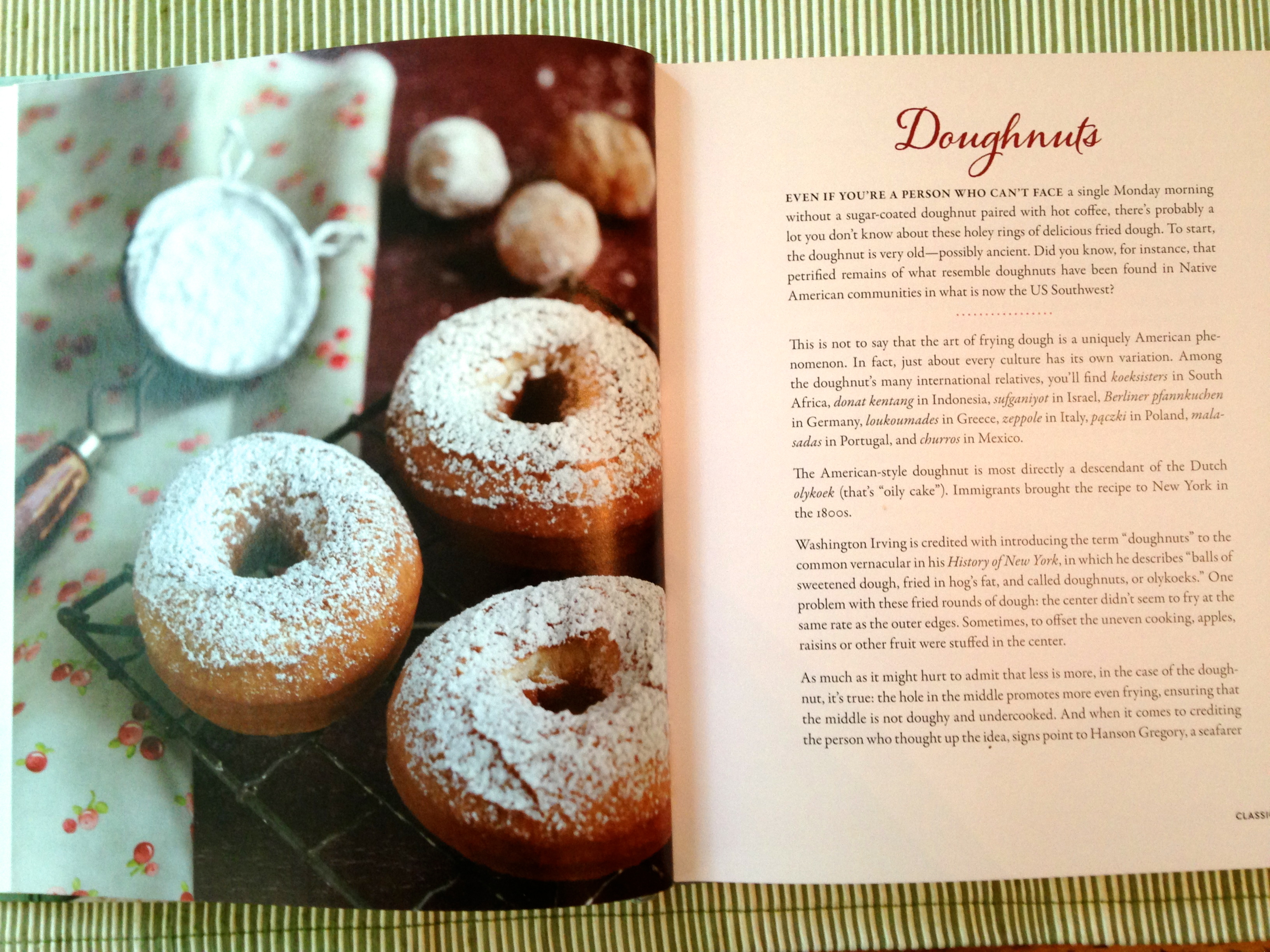
Recipe for Old Fashioned Doughnuts included.

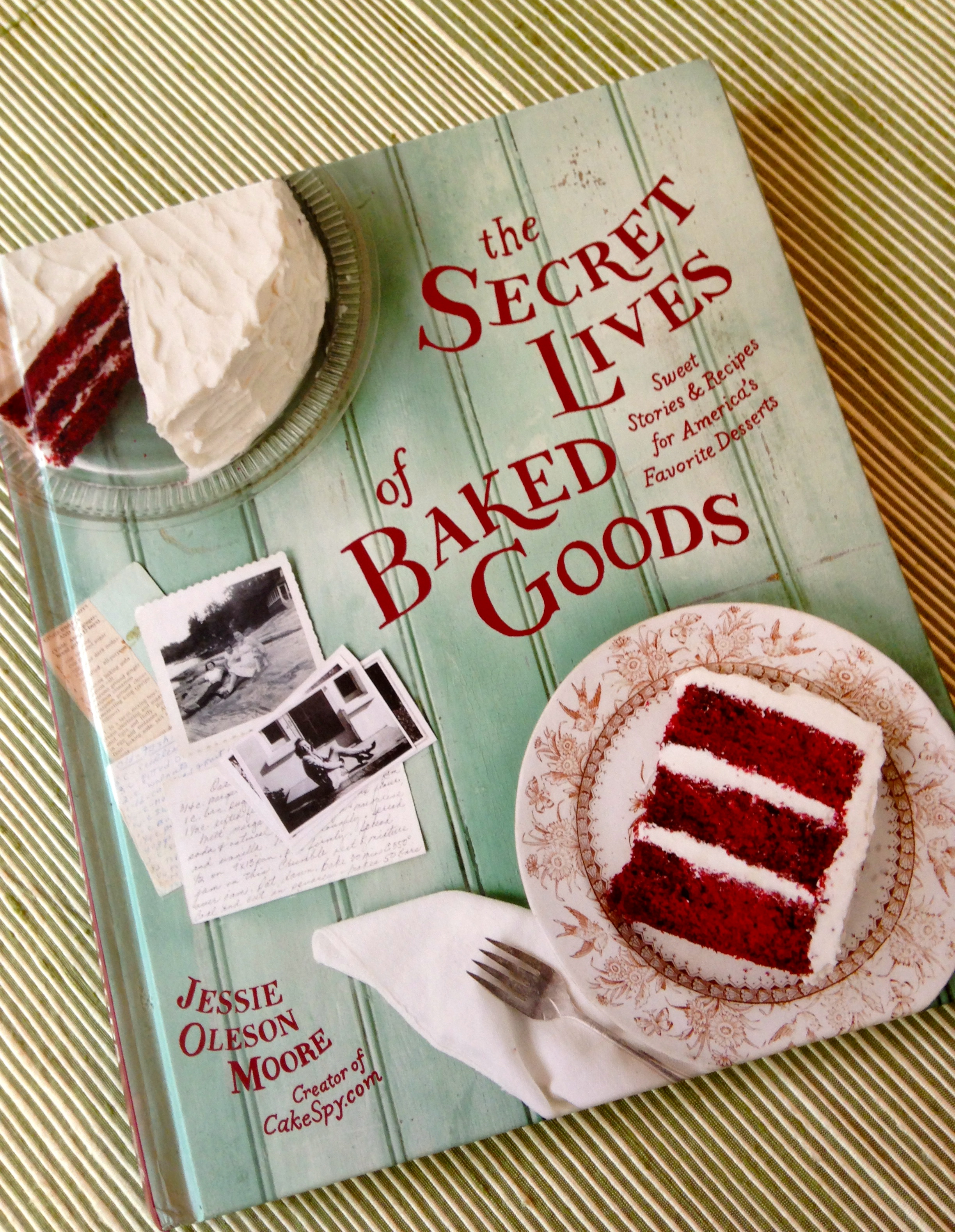
I’ve just had the best time devouring Jessie Oleson Moore’s, The Secret Lives of Baked Goods: Sweet Stories & Recipes for America’s Favorite Desserts (Sasquatch Books, 2013).

Like she says: “everything tastes better with a backstory.”

Think about the hundreds (okay, thousands) of doughnuts you’ve eaten in your lifetime. Who invented the holes? And did you know “the hole is so the calories can fall out”? (I feel so much better now.)

You probably already know that Ruth Wakefield invented the chocolate chip cookie at Massachusetts’ Toll House Inn, even that Nestlé gave her free chocolate for life in exchange for permission to print her recipe on the back of their semi-sweet chocolate bars. But did you know it wasn’t until after the cookie became a national superstar (featured on a Betty Crocker radio show), that Nestlé invented chocolate chips?

Continue reading

moon mangoes by lindy shapiro and kathleen peterson

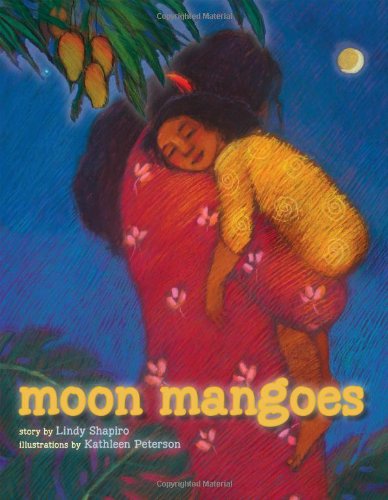
moon mangoes cover

Imagine a magical Hawaiian night with a fat, round moon streaming its silvery light on ocean and shore, illuminating a mango tree drooping “with heavy, ripe fruit.”

A mother and daughter sit on the lanai of a tiny blue house that is “tucked under the tree’s broad branches,” engaging in a fanciful dialog of “what if” questions and answers. There’s no limit to little Ānuenue’s* curiosity and wild imaginings, no boundaries to her mother’s love.

What if I ate up all those mangoes one by one, and I got so full of them that I turned into a mango tree?

Then I would bring you fresh, cool water to drink every morning. I’d gently pull out any weeds that block the sun and keep the soil healthy for your roots to grow deep and strong. And I would spend my days resting in your shade so that I could tell you about the fantastic adventures of your great-great-grandparents.

Moon Mangoes, a warmhearted, stunningly illustrated picture book that Papertigers reviewer Aline Pereira calls, “an ode to children’s imagination and a meditation on parental love,” has all the makings of a modern classic alongside such perennial favorites as Mama, Do You Love Me? and The Runaway Bunny.

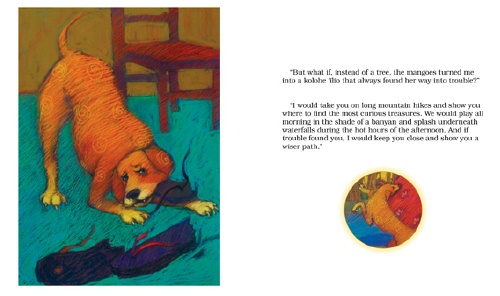
moon mangoes two

I love the pairing of Lindy Shapiro’s lyrical, poetic narrative with Kathleen Peterson’s highly evocative, color saturated spreads rendered in rich jewel tones. Here is a universal theme presented with a distinct Hawaiian flavor, illuminating the lush, natural beauty of the islands and the spirituality and animism characterizing the native peoples.

Continue reading