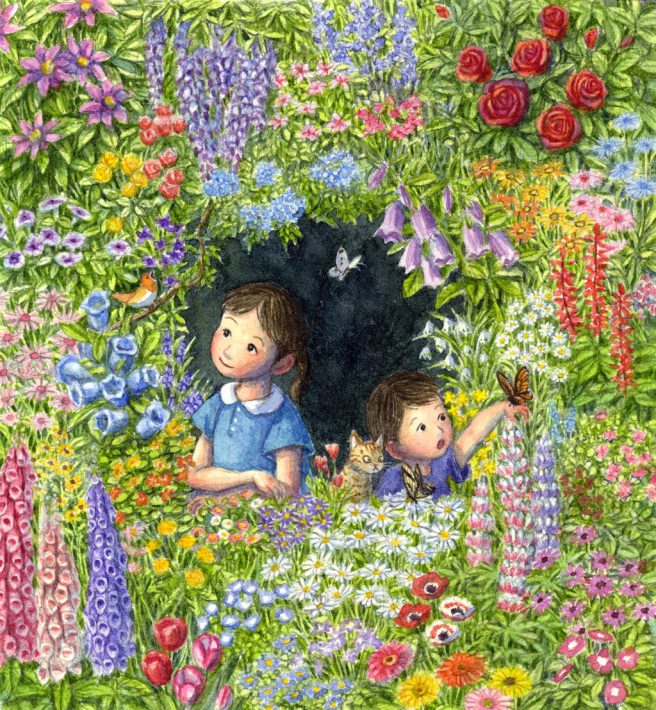
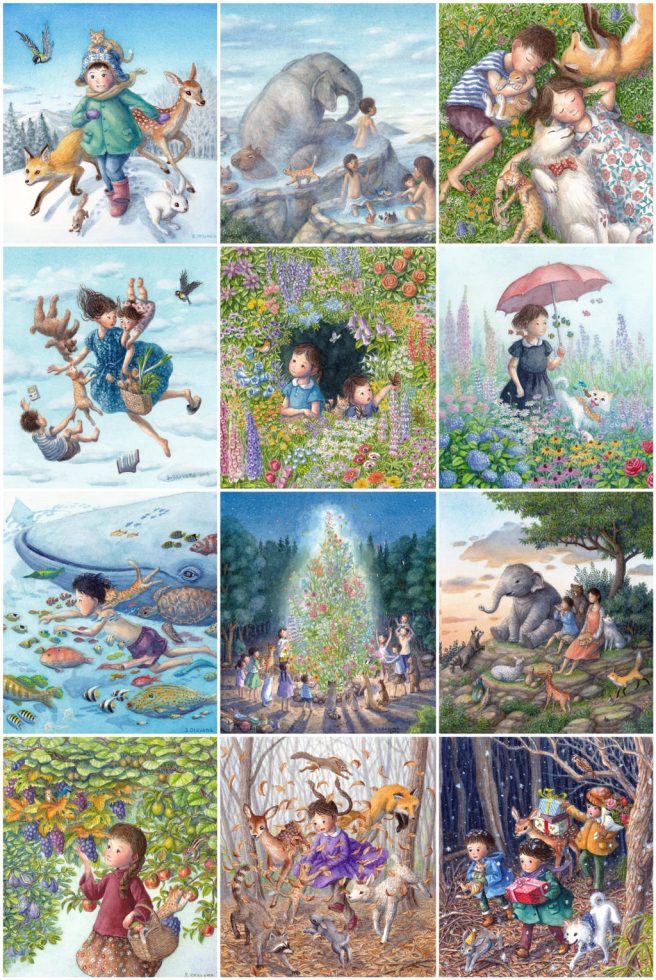
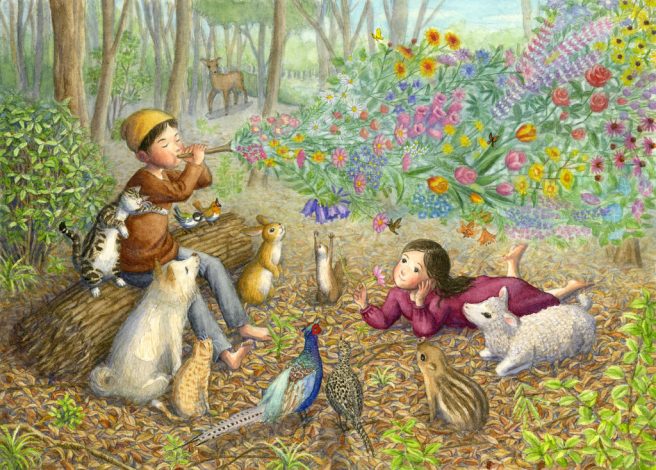
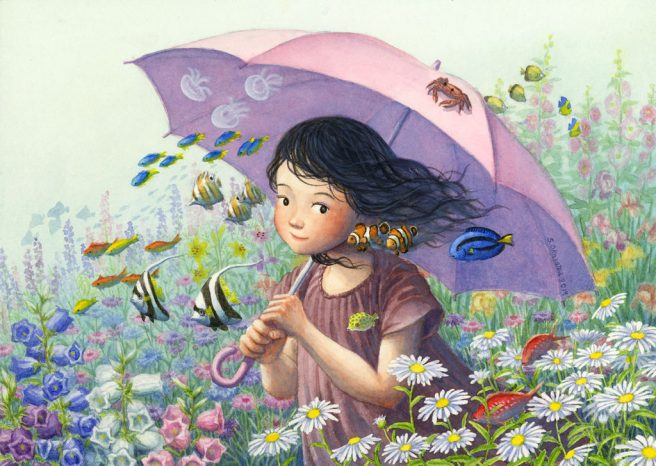
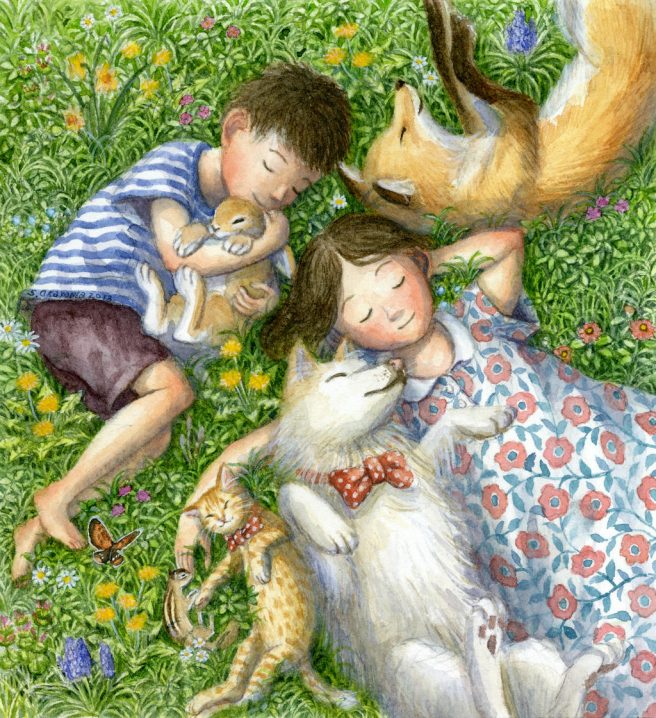
1.April showers bring May flowers! We’re celebrating the merriest of months with stunning images by Japanese artist Shinya Okayama.
I wasn’t able to find much biographical information about him online in English. Wish I could read Japanese so I could have done additional detective work. 🙂
But we do know Okayama was born in Ibaraki Prefecture in 1982 and that he studied at Sokei Academy of Fine Art and Design (2003-2007).
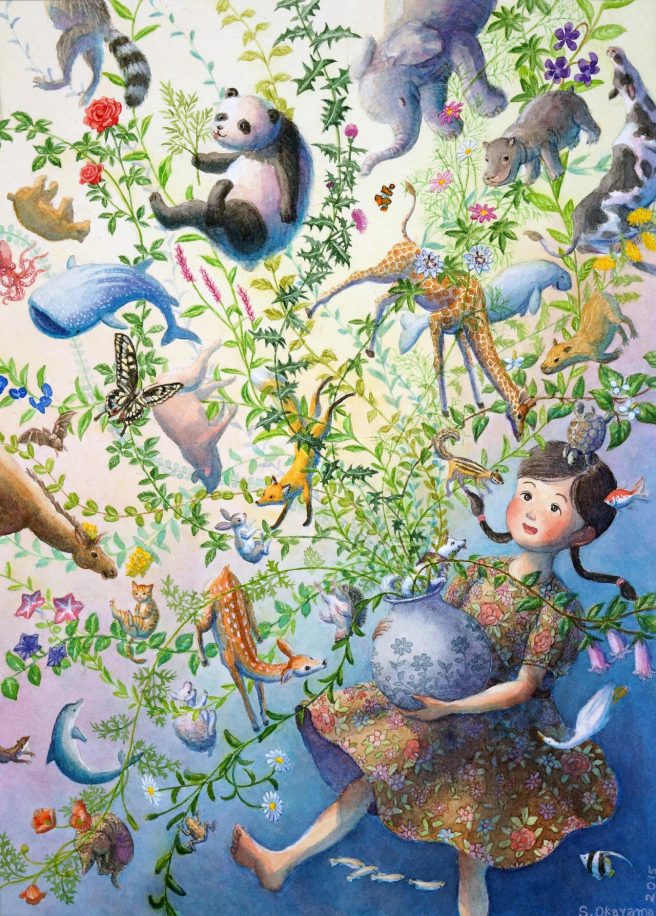
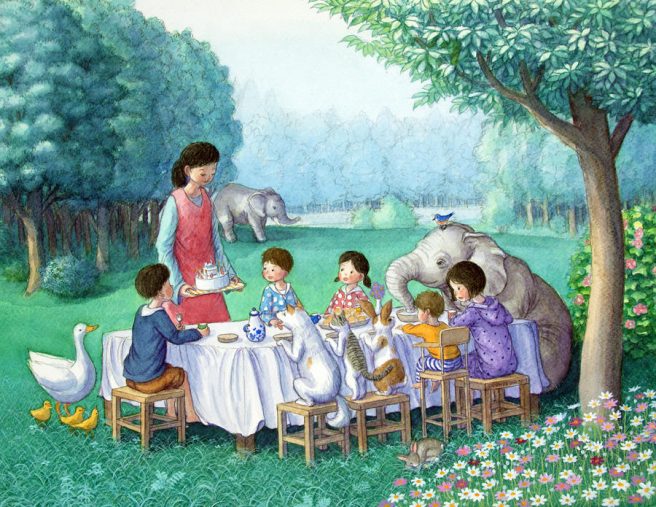
I stumbled upon his work on Pinterest and was immediately taken with his beautiful colors, extraordinary level of detail, and gentle depictions of children and animals, who are portrayed on equal footing and living in total harmony.
He paints an idyllic world, where children are free to explore their surroundings and enjoy wonderful adventures with many wild creatures on land and from the sea. He injects elements of the surreal in some of his pictures, as boundaries between earth and ocean disappear.
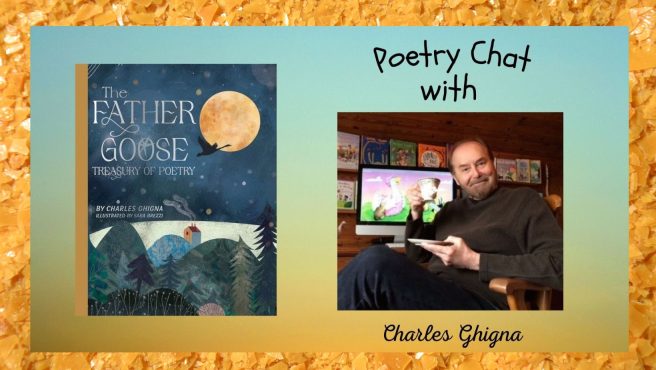
We’re excited and honored that beloved Alabama poet, author, and intrepid tree house dweller Charles Ghigna is here to tell us all about The Father Goose Treasury of Poetry (Schiffer Kids, 2023), which is officially out today!!!
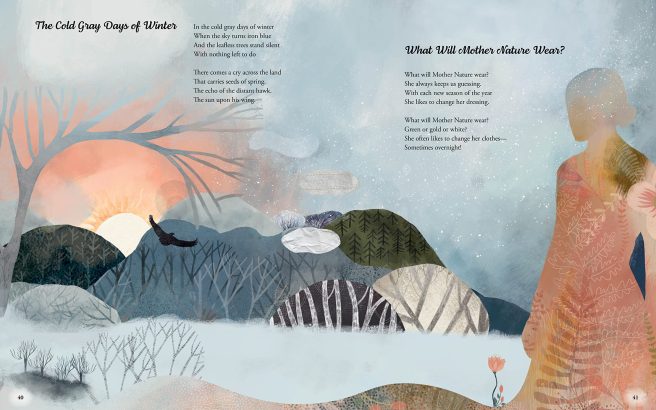
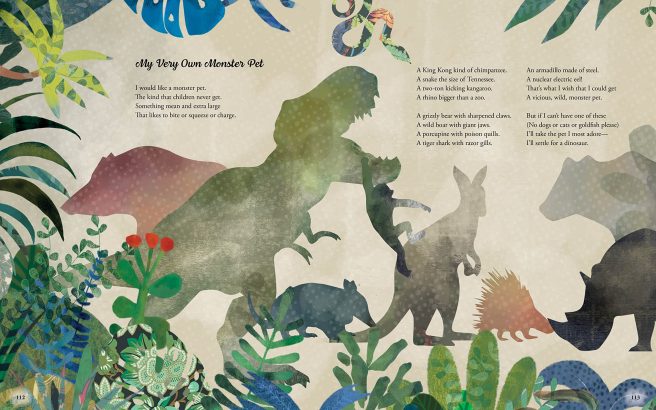
This 101-poem anthology is a thing of inimitable beauty, magic and wonder. Poems are presented in seven sections: Home, Winter, Spring, Summer, Fall, Animals, and Poetry. All are graced with Sara Brezzi’s evocative, sometimes whimsical mixed media illustrations – a perfect complement to Ghigna’s lovingly crafted verses.
The treasury has a classic feel and belongs on all library, classroom, and home shelves to be savored and shared again and again. It showcases Ghigna’s love of the natural world, his astute powers of observation, and his uncanny ability to capture small fleeting moments that might otherwise be missed.
Kids will delight in the stunning images, wide range of emotions, effortless lyricism and gentle humor. We’re reminded of fresh ways to see the world through a child’s eyes, even learning how chickens really feel about chicken soup, and whether pigs resent barbecue. Irresistible, right?
Let’s find out more from Father Goose himself. Honk!
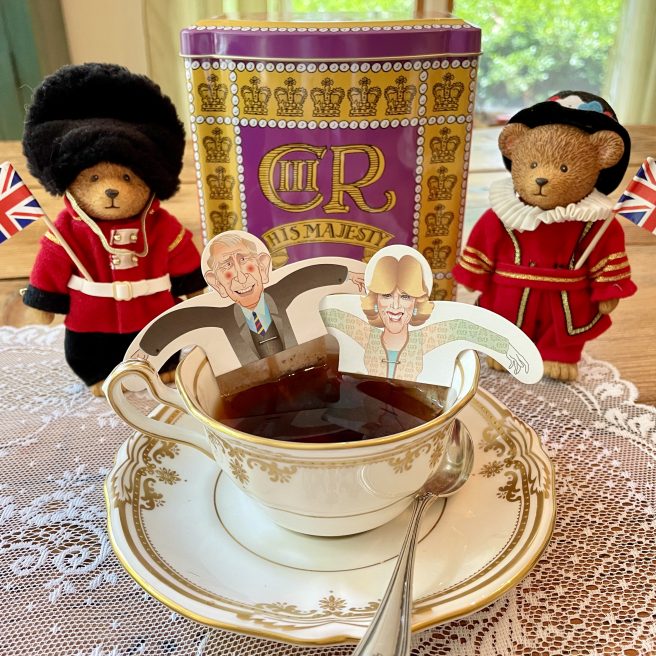
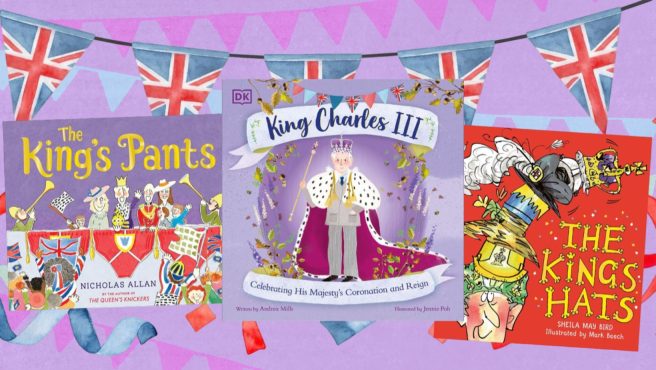
Don your sparkly tiaras and ermine robes! Today we’re celebrating the upcoming coronation of King Charles III with three recently published picture books about the green-planet-loving, lunch-skipping, kilt-wearing, cheesy baked eggs aficionado Charles Philip Arthur George.
Our “sovereign sandwich” consists of one meaty nonfiction title nestled between two light hearted tales, sure to satisfy kids’ curiosity about just who this man is and why his coronation is such an important moment in history.
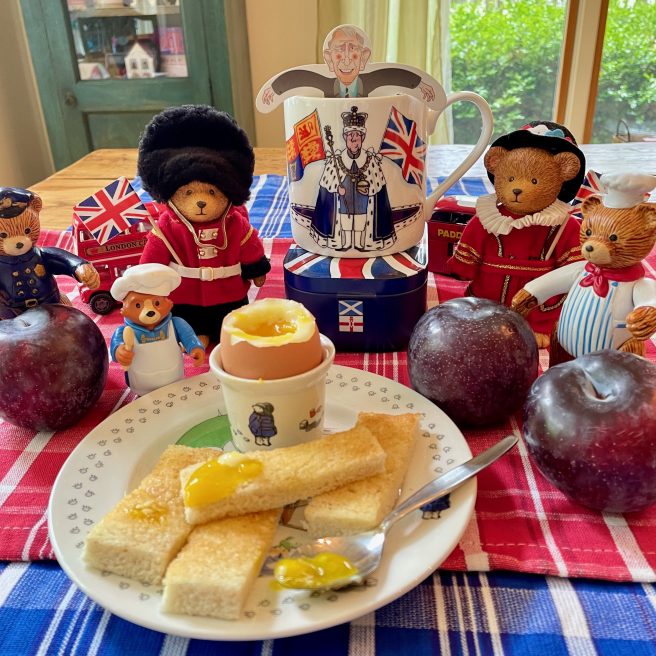
While you’re reading about these kingly books, help yourself to a plum (Charles’s favorite fruit), and egg soldiers (he eats a boiled egg every single day). Enjoy!
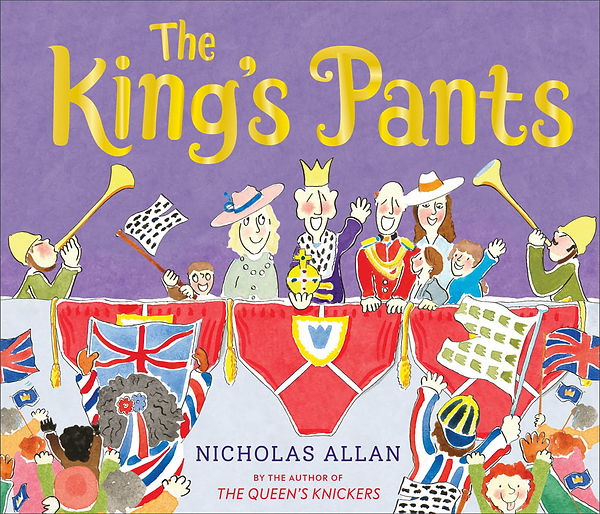
You know how kids giggle whenever the word ‘underwear’ or ‘underpants’ appears in a book? Well, British kids are similarly set off at the mere mention of ‘pants,’ since for them pants = underpants.
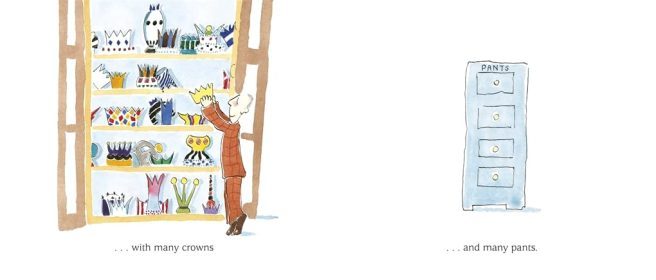
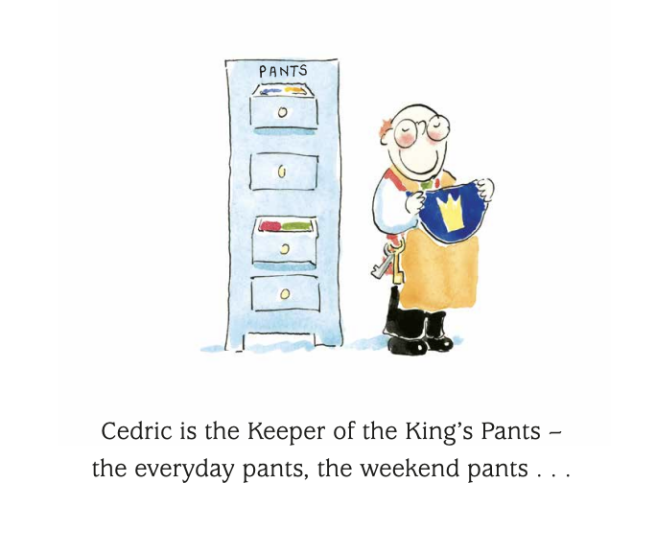
And there are a LOT of them in Nicholas Allan’s hilarious, irreverent yarn. The King, it seems, is quite a natty dresser. Not only does he own many crowns, he has drawers full of pants. One would, of course, need a pair of pants for every occasion: Everyday, Weekend, Coronation (he simply could NOT be crowned without those).
Well, one time when he goes on a trip, Cedric, the Keeper of the Pants, puts the King’s pants in a sack which gets mixed up with the Royal Mail sack. Chaos reigns when the following day the King’s subjects receive pants in their letter boxes instead of mail. Quelle surprise!
Undercover police were sent to uncover the underwear. Sniffer dogs were used to track them down!
After all the pants are recovered and laundered, the King decrees that many more pants should be made for him to avoid any future accidents. Among the additions: Peace and War pants, International, Posh Royal, Meeting the People. He even has Space Pants fitted with emergency air bags, and Organic Pants which are edible in emergencies. When he goes to Windsor or Balmoral, he wears his Castle Boxer Shorts (the working drawbridge in front is very useful).
“I am no bird; and no net ensnares me: I am a free human being with an independent will.” ~ Charlotte Brontë (Jane Eyre, 1847).
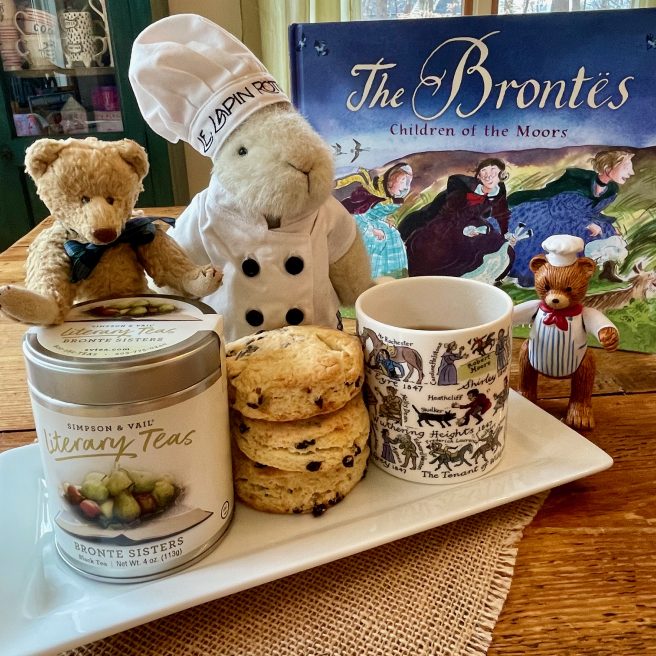
Today we’re celebrating Charlotte Brontë’s 207th birthday with a fabulous picture book and two versions of a scrummy Yorkshire treat. 🙂
Wonder if she could ever have imagined that over a century after publishing the first book of Brontë poems, generations of readers all over the world would still be studying, sharing and marveling at all she and her sisters had written?
As enjoyable and enduring as their books are, a large part of what continues to intrigue Brontë fans is the fascinating story of their all-too-brief lives in early 19th century Yorkshire.
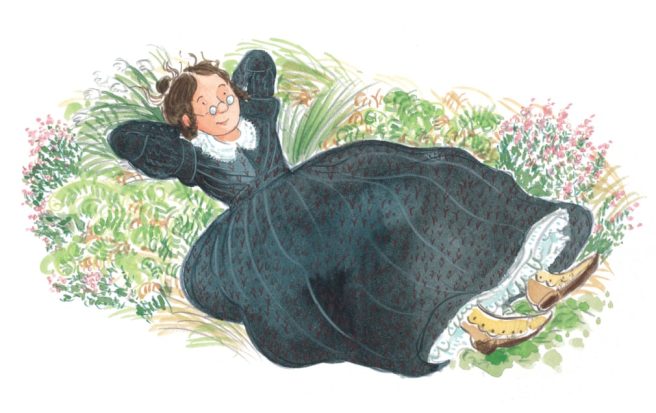
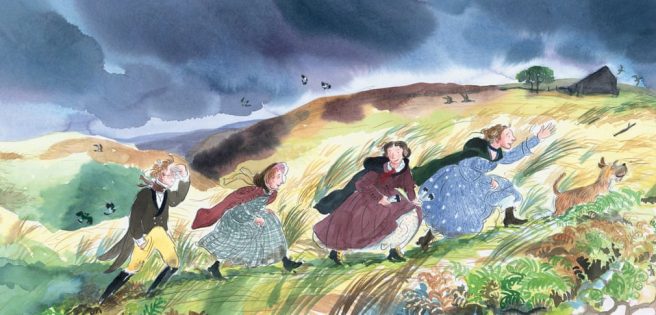
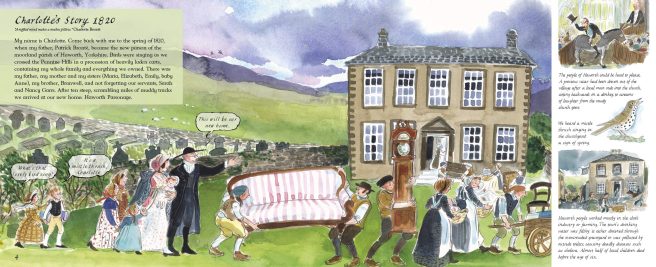
In The Brontës: Children of the Moors (Franklin Watts, 2016), award winning nonfiction picture book team Mick Manning and Brita Granström present an engaging, informative, charmingly illustrated account of Brontë family milestones from their early childhood days in Haworth, to their short stints as teachers and governesses, to their accomplishments as authors and poets.
Manning and Granström’s kid friendly format consists of three components: a main text narrated by Charlotte, scenes dramatized with characters conversing in speech bubbles, and Charlotte’s sidenotes brimming with interesting bits and bobs that expand on the main text.
This approach packs a lot of information into each double page spread; Charlotte’s voice is intimate and accessible and younger readers can opt to follow the story via the pictures.
There’s also a unique spin: Mick Manning actually grew up in the village of Haworth and played a shepherd in the 1967 BBC2 “Wuthering Heights” series when he was just 8. As the book opens, he recounts how he dozed off while waiting for his turn on camera, only to have a lady “in old fashioned clothes” tell him a story he’d never forget upon awakening.
“One of the greatest pleasures of my life has been that I have never stopped learning about good cooking and good food.” ~ Edna Lewis
Picture this:
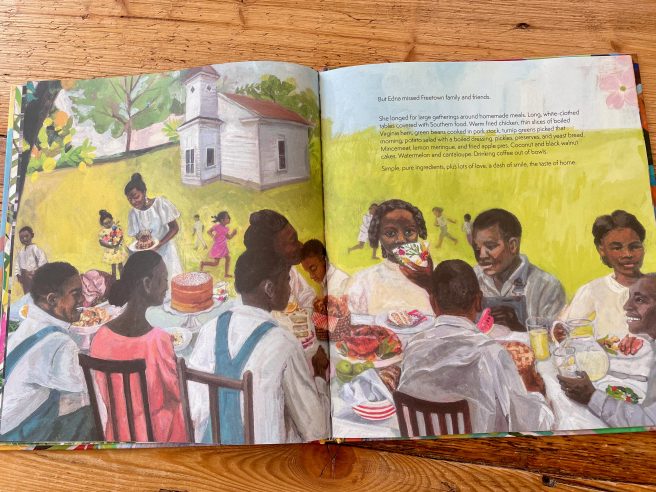
A group of African American family members and friends gathered outdoors around a long, white-clothed table covered with “warm fried chicken, thin slices of boiled Virginia ham, green beans cooked in pork stock, turnip greens picked that morning, potato salad with a boiled dressing, pickles, preserves, and yeast bread.”
For dessert? Mincemeat, lemon meringue and fried apple pies, along with coconut and black walnut cakes. Don’t forget the watermelon and cantaloupe, the freshly ground coffee to be drunk out of bowls.
Miss Lewis, Culinary Ambassador and Grande Doyen of Southern Cooking.
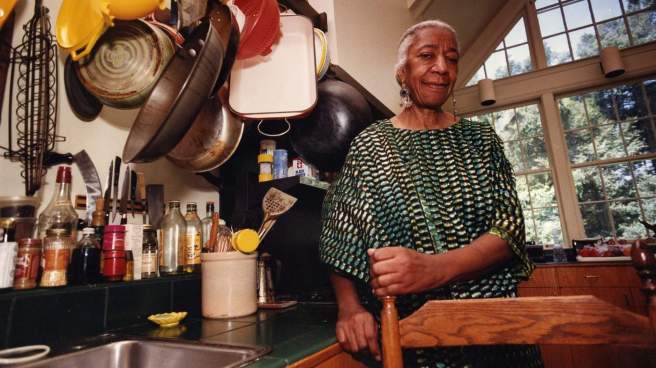
This is the kind of homemade, homegrown food beloved chef and cookbook author Edna Lewis grew up with. Her advocacy of this simple style of cooking using only the freshest in-season ingredients anticipated the natural foods, slow food, and farm-to-table movements, essentially changing the way average Americans viewed Southern cuisine.
Beautiful painting of young Edna under the dust jacket!
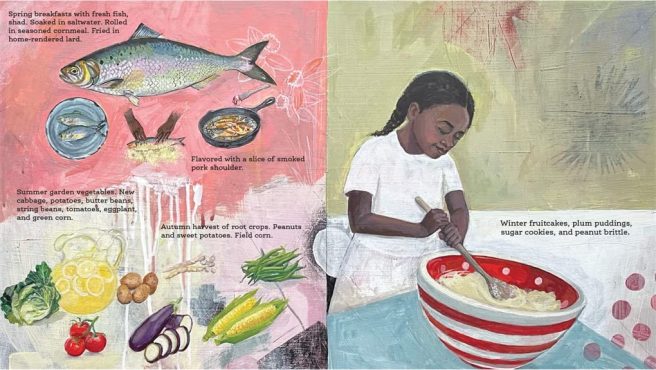
In Chef Edna: Queen of Southern Cooking, Edna Lewis (Cameron Kids, 2032),Melvina Noel and Cozbi A. Cabrera trace Edna’s life from her childhood on a Virginia farm, to her early days as a working single, then finally to her prominence as a restaurant co-owner and chef-de-cuisine in NYC.
Essentially, what Edna first learned about cooking and everything associated with it – family, friends, love, community, cultural heritage – established her identity and defined her life’s work, as she remained committed to preserving traditional Southern foodways while showcasing the seminal role African Americans played in the origins of this regional cuisine.
It all began on a farm in Freetown, Virginia, an African American community founded by Edna’s grandfather and two other freed slaves. From an early age, Edna participated in all aspects of farm life: milking cows, chasing chickens, picking wild greens and gathering berries. Edna especially loved cooking with her mother, Mama Daisy.


 Jama's Alphabet Soup