you say orange juice, i say eggplant (let’s call it love)

NOT A HOLLYWOOD MOVIE
by Lori Levy


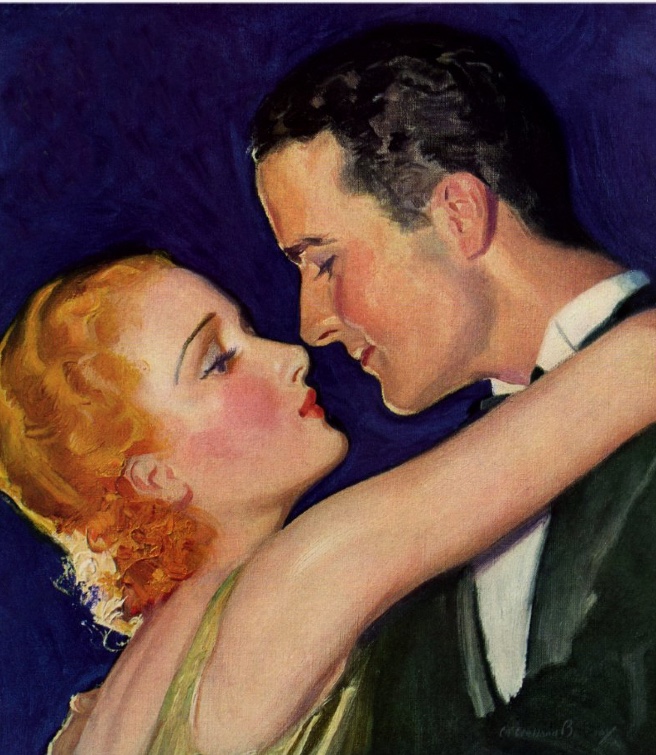
We talk about love.
Sometimes I love you more, sometimes less, he says.
I feel the same way.
Think spectrum, range, hot warm cold
as in water from a faucet, the flow increasing, decreasing,
the temperature not always perfect, but good enough.
Or we could say it's a matter of orange juice, eggplant . . .

He is groggy in the morning. I wake up renewed and ready for the day.
Ready, first thing, to squeeze oranges for him.
He can't begin, doesn't want to begin,
without a glass of fresh juice
brought to him in bed. A simple act for me.
For him, a big ahh, quenching, invigorating.

I don't have patience to fry eggplants for dinner.
He does. He stands by the stove, tender with the slices,
spicing them exactly right, turning them exactly on time.
I devour the eggplant, stuff the browned slices into pita bread
with cheese or eggs, tomatoes, hummus. With anything, everything.

Some moments we meld --- grateful
to be living this life together.
Other times we argue like kids.
I tell him his way is mood-based, head in the sand, slow.
He says I have no priorities:
everything is important, demands attention.
Sometimes you can't stand me, right? he asks.
We laugh. This, too, is true.

Still, he craves my orange juice, I could die for his eggplant.
Hunger, Thirst. We could call it love.

~ as published by Young Ravens Literary Review (2020)
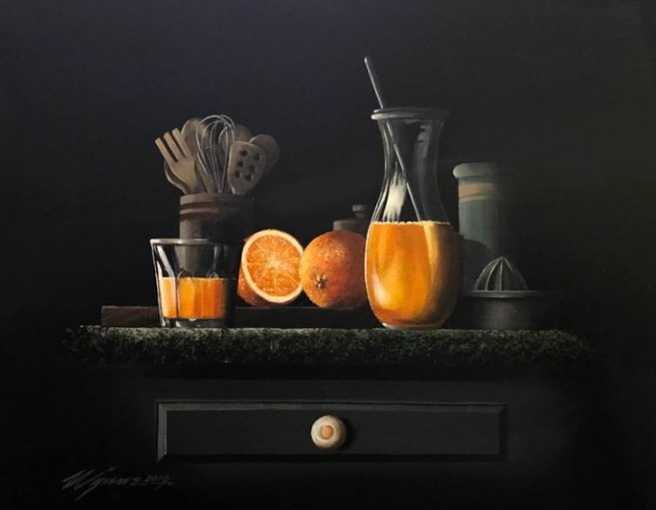
“Morning Juice” by Robert Wynne

*

Continue reading

serving up a pair of cool picture books about josé andrés and world central kitchen

“Chefs like me feed the few, but our destiny is to feed the many. To be an army of goodness where a plate of food becomes a plate of hope…a light in dark times. Together, we can change the world through the power of food.” ~ Chef José Andrés

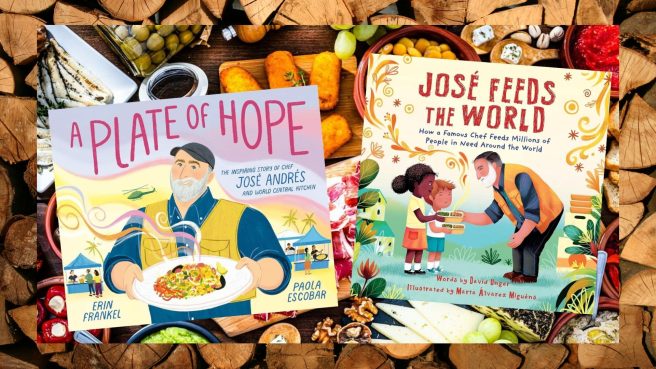
Since I’m a big fan of chef, restaurateur, and humanitarian José Andrés, I was happy to see both of these recently published picture books about his interesting life and amazing accomplishments.

Chef Andrés’s World Central Kitchen is truly a beacon of hope during tumultuous times of untold trauma, displacement and uncertainty due to natural and man-made disasters. Whether earthquake, hurricane, war, wildfire or pandemic, WCK is right there on the frontlines offering food, comfort, and a helping hand to local communities.

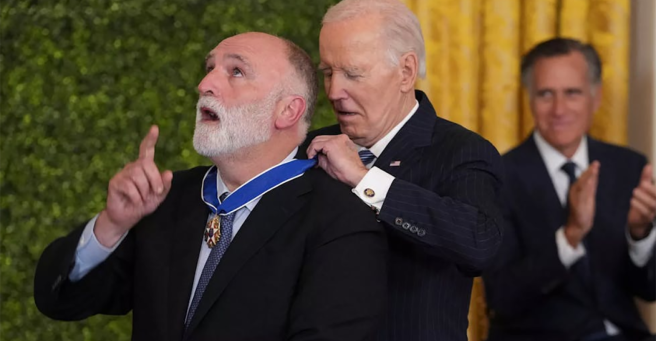
Chef Andrés received the Presidential Medal of Freedom on January 4, 2025. To date, WCK has served 450 million meals worldwide (photo via WCK.org).

You may know that in early January, Andrés received the Presidential Medal of Freedom, and that 2025 marks WCK’s 15th anniversary. Just recently, WCK provided free meals to firefighters, first responders and evacuees of the catastrophic wildfires in Los Angeles via food distribution centers as well as local restaurant and food truck partners.

So how did this incredible food aid/disaster relief nonprofit get started? What first inspired Andrés to become a chef, what continues to motivate him, and what are some of his core beliefs when it comes to food?

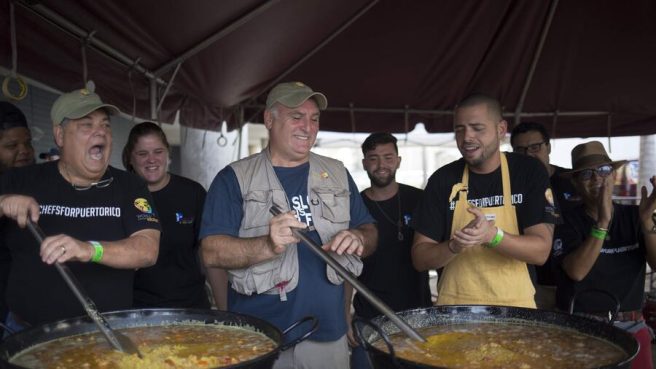
Chef Andrés and WCK volunteers cook paella in San Juan, Puerto Rico, October 2017 (photo by Eric Rojas/NYT).

Both books, A Plate of Hope and José Feeds the World trace José’s life from his childhood interest in cooking, to attending cooking school in Barcelona, to becoming an assistant chef at El Bulli, opening a tapas restaurant called Jaleo in Washington, D.C. (where he also volunteered at the DC Central Kitchen), to the 2010 Haiti earthquake, which motivated him to create World Central Kitchen.

When Hurricane Maria hit Puerto Rico in 2017, José and his WCK team got local people to volunteer after realizing they couldn’t do the work alone and there weren’t any other nonprofit organizations planning to feed the millions of people affected by the catastrophe.

As time passed, each new disaster presented different challenges requiring different solutions, and José found himself wanting to do more and more — establishing food distribution systems, flying in equipment to set up field kitchens, offering Meals Ready to Eat, etc. He also empowered local communities to use their skills and resources to help others as they had helped themselves.

Continue reading

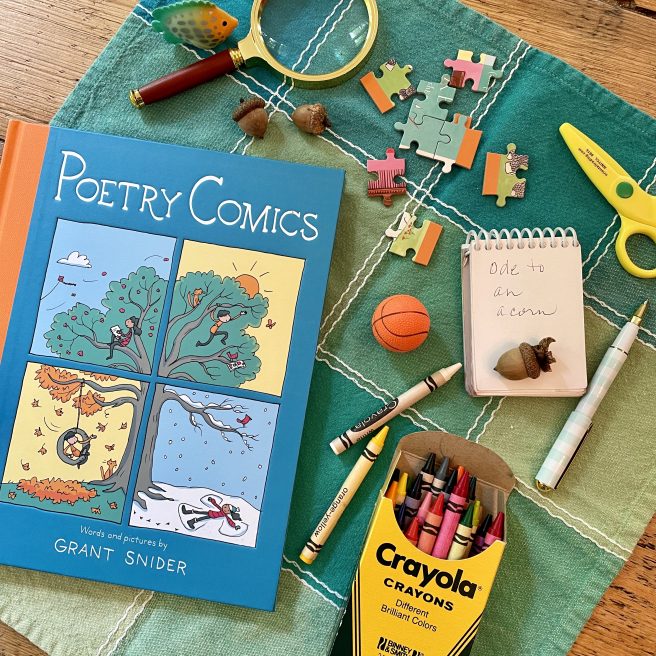
reveling in Grant Snider’s Poetry Comics

We don’t usually speak of poetry and comics in the same breath. We may like and enjoy both, but tend to approach each separately on its own terms. Purists may even consider poetry and comics to be on opposite ends of the literary spectrum (gasp!).

Yet Grant Snider sees things differently. The popular “Incidental Comics” creator was keen on finding a closer connection between poetry and comics, as both “contain condensed language, strong imagery, and ideally leave the reader with a new insight.”

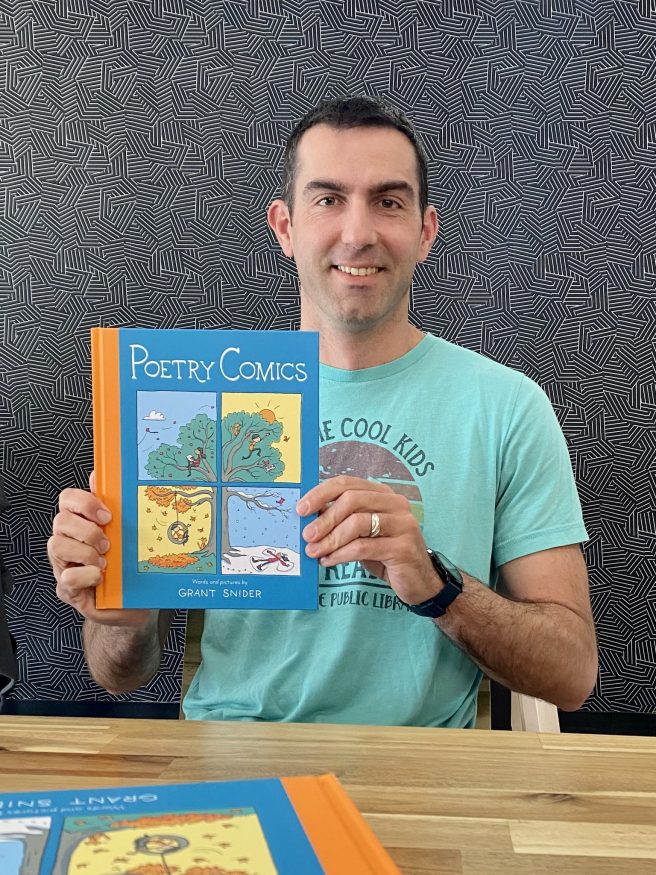
Author-illustrator, cartoonist, comic strip writer and orthodontist Grant Snider lives with his wife and five children in Wichita, Kansas.

Targeted for middle grade readers, Snider’s fun and inventive collection demonstrates this perfectly with an entirely new way of approaching and appreciating poetry. Did you ever think it would be possible to read a poem in a series of comic panels? Me neither. 🙂

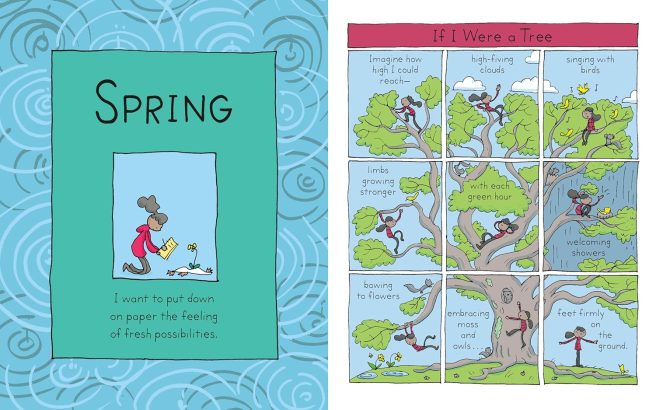
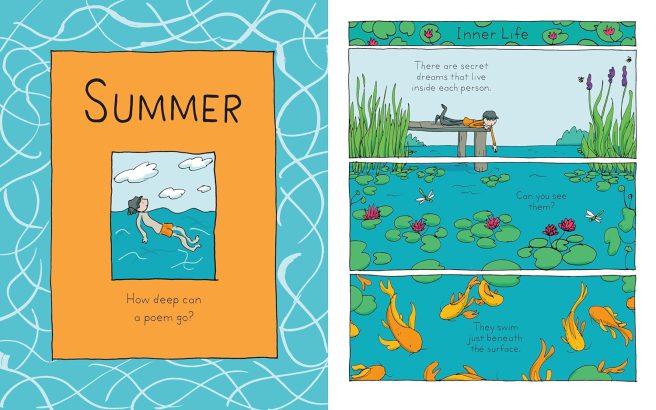
The poems in Poetry Comics (Chronicle Books, 2024) are organized by season, with each section offering insights into the poetry writing process. Title pages inspire and direct:

Spring: “I want to put down on paper the feeling of fresh possibilities.”

Summer: “How deep can a poem go?”

Fall: “I will wait for a poem to fall into my open arms.”

Winter: “A new page — my words huddle close to keep warm.”

Each season then ends with a variation of “How to Write a Poem.”

HOW TO WRITE A POEM #1

Find a quiet place.
A sharp pencil.
A blank page.
Sit still.
Keep quiet.
Wait.
A poem will rush in to fill the space.

Many of the poems are about nature (snails, tadpoles, butterflies, trees), while others examine universal human emotions and observations via kid-centric activities like running through sprinklers, waiting for the school bus, playing basketball, riding on roller coasters, climbing trees, reading good books, picking the perfect pumpkin, playing in the snow. Each poem is a sensorial impression of the here and now.

Continue reading

nine cool things on a tuesday

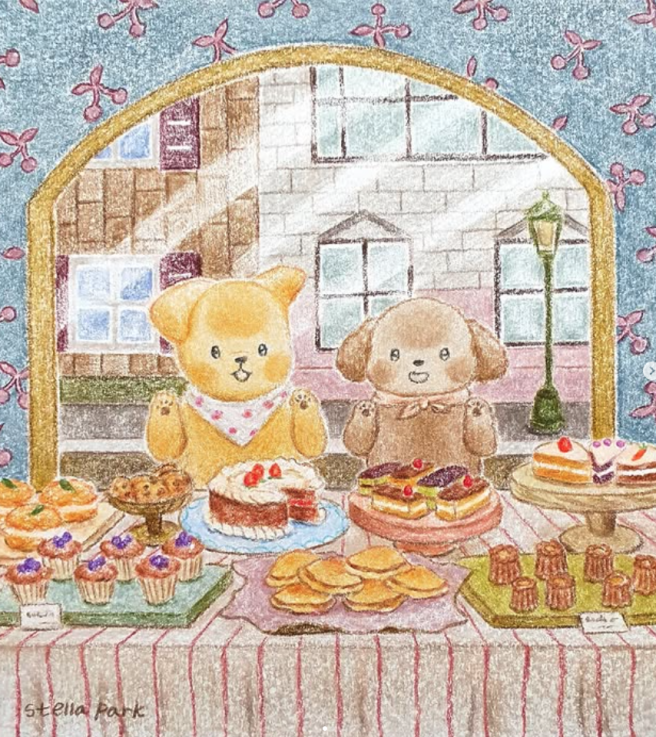
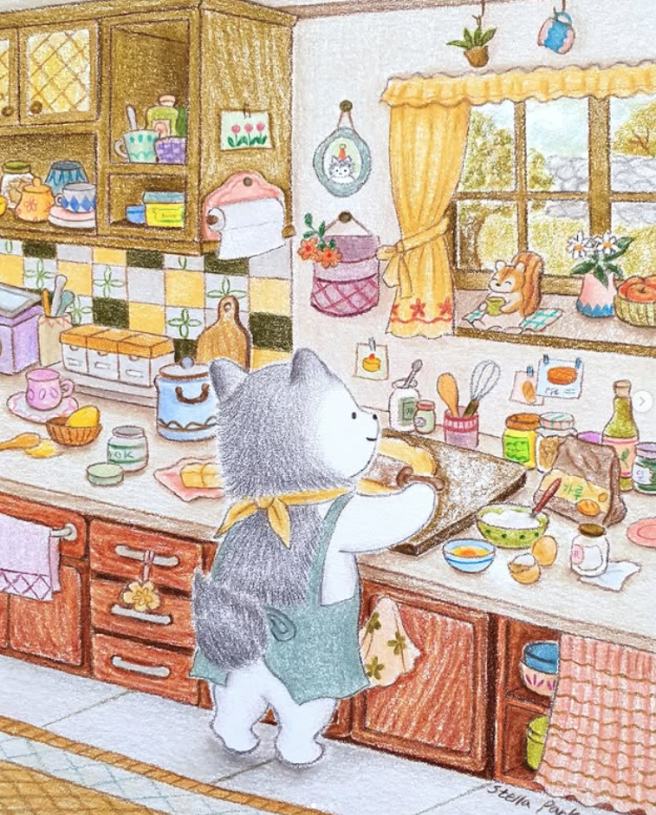
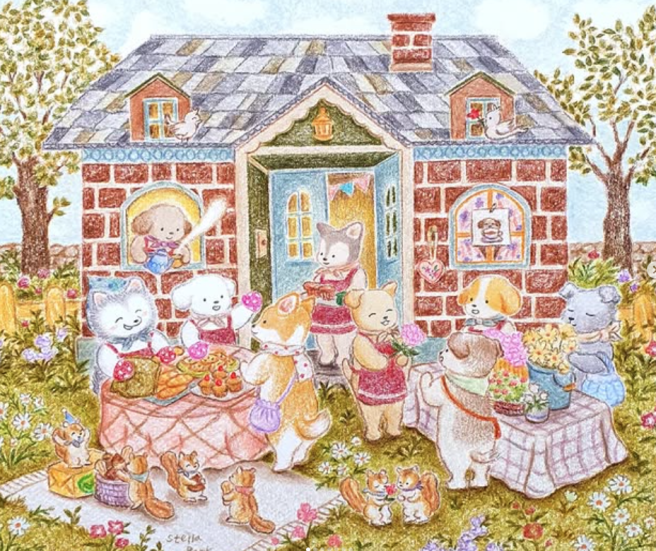
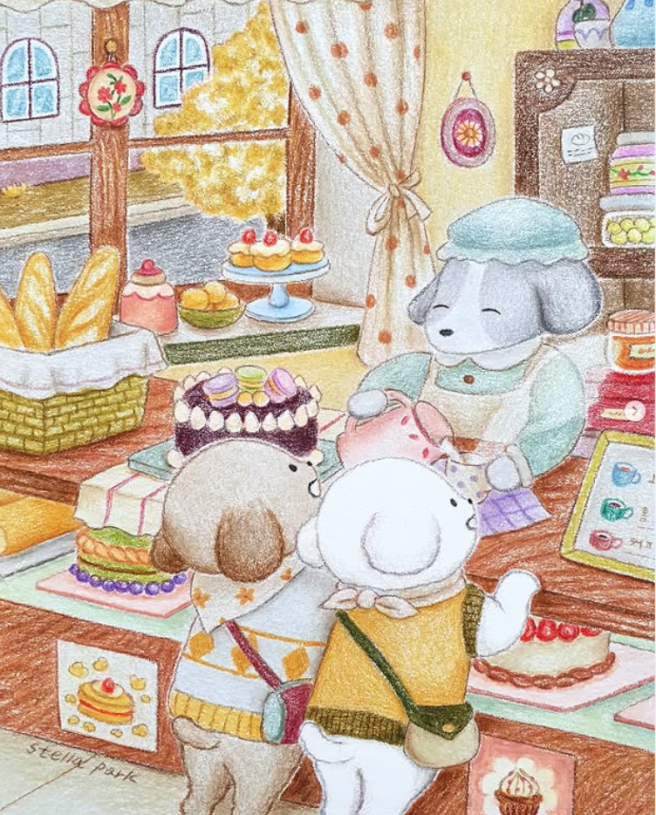
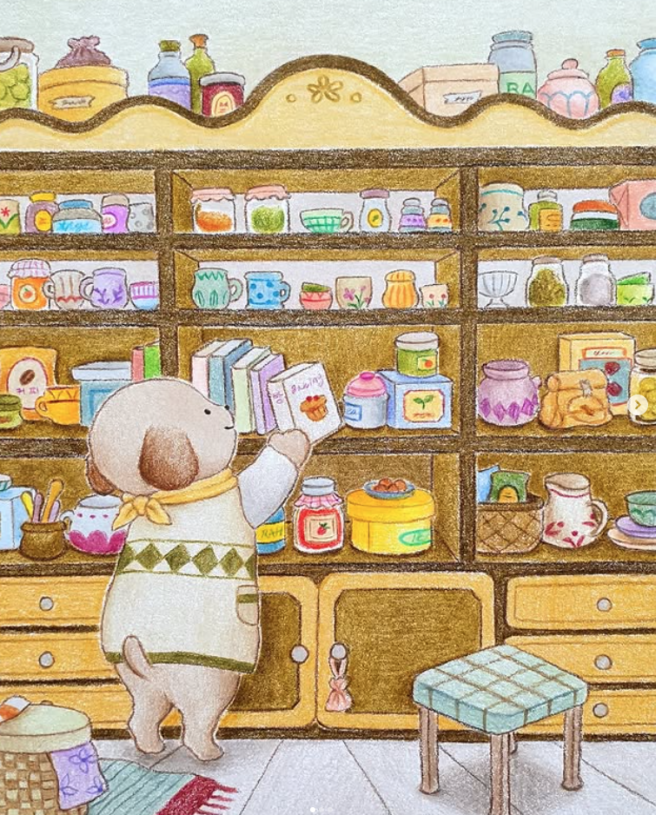
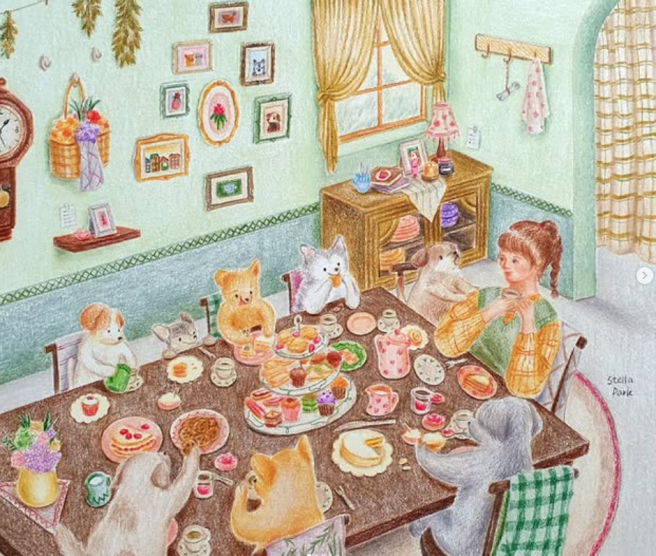
1. Happy February! What sweet treat do you fancy today? It may be cold and wintry outside, but Stella Park’s adorable animal pictures will warm you right up. 🙂

Based in Seoul, South Korea, Stella studied media design at Dongduk Women’s University, and then worked as a children’s art teacher before becoming a full-time freelance illustrator.

Her medium of choice is colored pencils. The slower pace of hand rather than digital drawing allows her more time to reflect and enjoy the process. She’s confident in her ability to draw subjects close to her heart and finds much fulfillment doing so. She loves sharing happiness and positivity through her art via soft fuzzy textures and heartwarming details.

Earlier in her freelance career she was mainly inspired by daily life and memorable scenes from her travels. Recently, however, she’s been depicting animal characters in cozy domestic scenes — mainly dogs and cats baking, shopping, sharing meals and playing together. She’s already published a couple of books in Korea, and I hope her work finds its way into the U.S. children’s picture book market sometime soon. Isn’t her artistic sensibility perfect for it? 🙂

For lots more, visit Stella’s Website and Instagram.

*

Continue reading

stepping into alberto ríos’s “A House Called Tomorrow”

“At the end of the day, we must go forward with hope and not backward by fear and division.” ~ Jesse Jackson

“The Way to Eternity” by Bruce Rolff.
A HOUSE CALLED TOMORROW 
by Alberto Ríos


You are not fifteen, or twelve, or seventeen—
You are a hundred wild centuries

And fifteen, bringing with you
In every breath and in every step

Everyone who has come before you,
All the yous that you have been,

The mothers of your mother,
The fathers of your father.

If someone in your family tree was trouble,
A hundred were not:

The bad do not win—not finally,
No matter how loud they are.

We simply would not be here
If that were so.

You are made, fundamentally, from the good.
With this knowledge, you never march alone.

You are the breaking news of the century.
You are the good who has come forward

Through it all, even if so many days
Feel otherwise. But think:

When you as a child learned to speak,
It’s not that you didn’t know words—

It’s that, from the centuries, you knew so many,
And it’s hard to choose the words that will be your own.

From those centuries we human beings bring with us
The simple solutions and songs,

The river bridges and star charts and song harmonies
All in service to a simple idea:

That we can make a house called tomorrow.
What we bring, finally, into the new day, every day,

Is ourselves. And that’s all we need
To start. That’s everything we require to keep going.

Look back only for as long as you must,
Then go forward into the history you will make.

Be good, then better. Write books. Cure disease.
Make us proud. Make yourself proud.

And those who came before you? When you hear thunder,
Hear it as their applause.

~ from Not Go Away Is My Name (Copper Canyon Press, 2020).
“The Magic Bridge” by Nelson L.
Continue reading