tea break with a.s. byatt


               “Afternoon Tea,” by Clement Micarelli

(Mrs. Jesse) poured tea. The oil-lamps cast a warm light on the tea tray. The teapot was china, with little roses painted all over it, crimson and blush-pink and celestial blue, and the cups were garlanded with the same flowers. There were sugared biscuits, each with a flower made out of piped icing, creamy, violet and snow-white. Sophy Sheekhy watched the stream of topaz-coloured liquid fall from the spout, steaming and aromatic. This too was a miracle, that gold-skinned persons in China and bronze-skinned persons in India should gather leaves which should come across the seas safely in white-winged ships, encased in lead, encased in wood, surviving storms and whirlwinds, sailing on under hot sun and cold moon, and come here, and be poured from bone china, made from fine clay, moulded by clever fingers, in the Pottery Towns, baked in kilns, glazed with slippery shiny clay, baked again, painted with rosebuds by artist-hands holding fine, fine brushes, delicately turning the potter’s wheel and implanting, with a kiss of sable-hairs, floating buds on an azure ground, or a dead white ground, and that sugar should be fetched where black men and women slaved and died terribly to make these delicate flowers that melted on the tongue like the scrolls in the mouth of the Prophet Isaiah, that flour should be milled, and milk shaken into butter, and both worked together into these momentary delights, baked in Mrs. Jesse’s oven and piled elegantly onto a plate to be offered to Captain Jesse with his wool-white head and smiling eyes, to Mrs. Papagay, flushed and agitated, to her sick self, and the black bird and the dribbling Pug, in front of the hot coals of fire, in the benign lamplight. Any of them might so easily have not been there to drink the tea, or eat the sweetmeats. Storms and ice-floes might have taken Captain Jesse, grief or childbearing might have destroyed his wife, Mrs. Papagay might have lapsed into penury, and she herself have died as an overworked servant, but here they were and their eyes were bright and their tongues tasted goodness. 
                                   ~ from “The Conjugal Angel,” by A.S. Byatt
 

an unexpected party


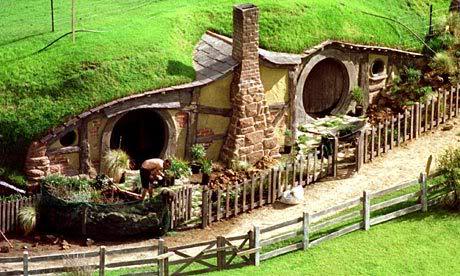
“In a hole in the ground there lived a hobbit.”

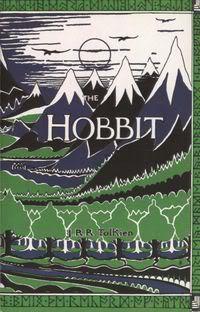
So begins one of the greatest fantasies ever written. The Hobbit, by J.R.R. Tolkien, is deliciousness in itself, and this prelude to Tolkien’s masterwork trilogy, Lord of the Rings, begins with a tea party!

In Chapter One, “The Unexpected Party,” we are introduced to the diminutive Bilbo Baggins. In the bucolic world of Middle-earth, an entire race of people under four feet tall practice farming, eat at least six meals a day, never have to wear shoes, and prize socializing and comfort above all.

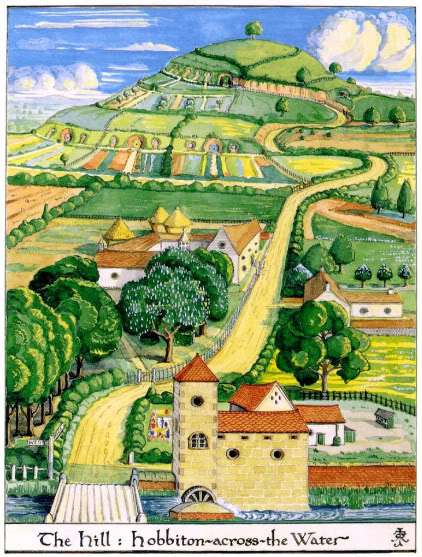
Bilbo is middle-aged and fairly well-to-do, and when the story begins, he is perfectly happy with his life just the way it is. He has two breakfasts, elevenses, lunch, afternoon tea, supper and an after-supper snack — and several pantries in the cellar full of provisions. The first time I read this story back in high school, I immediately wanted to live in The Hill with Bilbo and his friends.  They lived their lives with a certain gentle nobility and simple joy. I could identify with their shyness of the Big People, and found their charm irresistible.


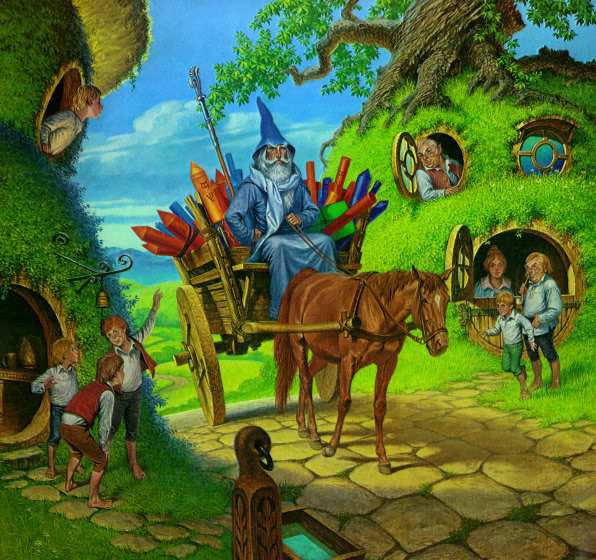
“By some curious chance one morning long ago in the quiet of the world, when there was far less noise and more green,” Bilbo was standing at his round, green front door smoking a pipe after breakfast when Gandalf the Wizard comes by.  He was taken with Gandalf because of his reputation for wonderful tales of goblins and wizards and dragons, and for making excellent fireworks. But he politely declines when Gandalf mentions he is seeking someone for an excellent adventure. Before hurrying back inside, he invites Gandalf to tea the following day, regretting it as soon as he shuts the door.

Relieved that he has avoided an unwanted adventure, Bilbo is flummoxed the next day when he is visited by not one or two, but a throng of dwarves — 13 to be exact, who act like they had been expected all along. Bilbo, the good host, invites them to tea, for “what would you do, if an uninvited dwarf came and hung his things up in your hall without a word of explanation?”

Gandalf finally arrives, and all this unexpected company keeps Bilbo hopping. Not only are they devouring all the seed-cakes he had baked especially for his after supper snack, but they keep asking for everything under the sun, except tea:

Some called for ale, and some for porter, and one for coffee, and all of them for cakes . . . A big jug of coffee had just been set in the hearth, the seed-cakes were gone, and the dwarves were starting on a round of buttered scones . . .

After the great Thorin Oakenshield arrives (a very important dwarf), he and Gandalf ask for red wine (no tea, thank you)! And the others, who haven’t stopped eating since they arrived, chime in:

‘And raspberry jam and apple-tart,’ said Bifur.
‘And mince-pies and cheese,’ said Bofur.
‘And pork-pie and salad,’ said Bombur.
‘And more cakes — and ale — and coffee, if you don’t mind,’ called the other dwarves through the door.
‘Put on a few eggs, there’s a good fellow!’ Gandalf called after him, as the hobbit stumped off to the pantries. ‘And just bring out the cold chicken and pickles!’

Feeling more and more put out, Bilbo feels obligated to invite them to supper, and they end up staying overnight (and ordering big breakfasts before retiring). After supper, the dwarves play beautiful music and sing about reclaiming the Lonely Mountain and its treasure, guarded by the dragon, Smaug:

Far over the misty mountains grim
To dungeons deep and caverns dim
We must away, ere break of day,
To win our harps and gold from him!

As they sang the hobbit felt the love of beautiful things made by hands and by cunning and by magic moving through him, a fierce and jealous love, the desire of the hearts of dwarves. Then something Tookish woke up inside him, and he wished to go and see the great mountains, and hear the pine-trees and the waterfalls, and explore the caves, and wear a sword instead of a walking-stick.

And so a somewhat reluctant, home-loving hobbit sets out on a grand adventure, which all began when unexpected guests arrived for tea.

Since one never knows when an opportunity like this will present itself, it is always best to have some seed-cakes on hand. This is an authentic recipe from 16-17th century England adapted for the modern kitchen. This type of sweet, almost bread-like round cake was very common during the Middle Ages, and is also described in Chaucer’s Canterbury Tales.

I think your dwarves will like it!

SEED CAKE

1-1/2 cups unbleached flour
1 cup cracked wheat flour
1 pkg. yeast
1/8 cup warm ale
1/8 tsp salt
4 oz (1 stick) sweet butter
3/4 cup sugar
2 eggs, beaten
1 T seed (crushed anise, caraway, coriander, cardamon, etc.)
1/2 – 1 cup milk

Sift together the flours and salt; set aside in large bowl. Dissolve yeast in warm ale, along with 1/8 tsp of the flour mixture. Cream together the butter and sugar. Beat in eggs and seeds. Make a well in the flour and add the dissolved yeast. Fold flour into yeast mixture, then fold in the butter. Slowly beat in enough milk to make a smooth, thick batter. Pour batter in an 8″ round greased cake pan. Bake in middle of oven at 350 degrees for 45 minutes, or until a toothpick inserted in the center comes out clean. Let cool slightly before turning onto a cake rack.
*

a teaspoon of tea and a few crumbs

“My greatest adventure was undoubtedly Proust.
What is there left to write after that?” ~ Virginia Woolf
 

Bonjour, Mon Amis!

Today I feel a certain je ne sais quoi.

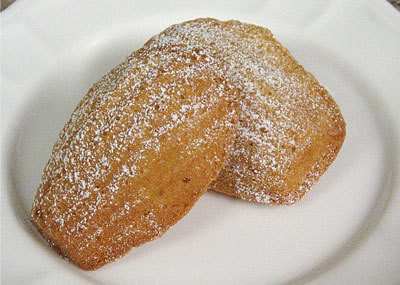
It began right after I dipped my madeleine into a cup of linden tea.

This is dangerous, I know.

A certain Valentin Louis Georges Eugene Marcel Proust once did this, and he ended up writing 3200 pages.

That’s right. A few crumbs soaked in tea provoked a flood of memories, which became seven volumes* entitled, A La Recherche du Temps Perdu (Remembrance of Things Past, or, more recently translated as, In Search of Lost Time). Published between 1913-1927, this semi-autobiographical novel is the longest ever written. Ever.

Have you read any of it?

I’m feeling guilty that I haven’t. Especially since Graham Greene called Proust, “the greatest novelist of the twentieth century,” and most scholars seem to agree. But am I ready for four million words, and 2,000 literary characters?
Still, I like the tea and madeleine part. I also think that involuntary memory is a pretty cool thing. If you just happen to encounter the right inanimate object, it may provoke a complete memory, pure and untainted, just ripe for your creative powers to turn into art:

She sent for one of those squat, plump cakes called petites madeleines that look as though they have been molded in the grooved valve of a scallop shell . . . I carried to my lips a spoonful of the tea in which I had let soften a bit of madeleine. But at the very instant when the mouthful of tea mixed with cake crumbs touched my palate, I quivered, attentive to the extraordinary thing that was happening inside me. A delicious pleasure had invaded me, isolated me, without my having any notion as to its cause . . .

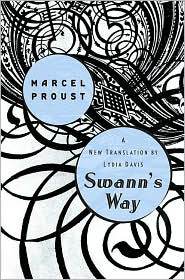
And suddenly the memory appeared. That taste was the taste of the little piece of madeleine which on Sunday mornings at Combray . . . when I went to say good morning to her in her bedroom, my aunt Leonie would give me after dipping it in her infusion of tea or lime blossom . . . as in that game in which the Japanese amuse themselves by filling a porcelain bowl with water and steeping it in little pieces of paper until then undifferentiated which, the moment they are immersed in it, stretch and bend, take color and distinctive shape, turn into flowers, houses, human figures, firm and recognizable, so now all the flowers in our garden and in M. Swann’s park, and the water lilies on the Vivonne, and the good people of the village and their little dwellings and the church and all of Combray and its surroundings, all of this, acquiring form and solidity, emerged, town and gardens alike, from my cup of tea.  ~ from SWANN’S WAY, by Marcel Proust, translated by Lydia Davis (Viking, 2002). 

A great disparity exists between Proust’s real life and his art. He was a sickly, asthmatic child with an unnatural attachment to his mother — a spoiled sycophant, a poseur, a snob and a hypocrite who squandered his youth trying to gain favor with the idle rich. He wasted his father’s money, suffered a series of unhappy affairs (he was a closet homosexual), and berated himself for not being born into the aristocracy. 
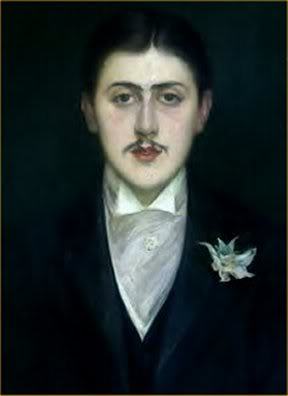
His mother had a huge influence on his imagination and use of memory in writing, but he was not able to effectively bring this retrospective aspect into his work until after she died. While the presence of a person, object, or location provides sensory stimulation, it is the absence of the same that actually catalyzes the imagination — enabling it to sift, enlarge, and shape experience into a form resembling art.

Because of his severe asthma, Proust lived in forced confinement for over a decade, sometimes never leaving his cork-lined bedroom for weeks at a time. There, he transformed a wasted life into a masterwork that explored the many dimensions, layers, and textures possible of his chosen genre. His international reputation as the most influential novelist of the 20th century remains undiminished.

With today’s renewed interest in the memoir, Proust is as popular as ever. Hardcore devotees, such as the members of the Proust Society, meet regularly to discuss the novel in manageable pieces, often devoting years to reach completion. Ultimately, Proust has something for everyone. A 25-year-old reader once called his Remembrance “the ultimate blog.”

MADELEINES
(12 servings)

2 eggs
3/4 tsp vanilla extract
1/8 tsp salt
1/3 cup white sugar
1/2 cup all purpose flour
1 T lemon zest
1/4 cup butter
powdered sugar for decoration

1. Preheat oven to 375 degrees. Butter and flour 12 madeleine molds; set aside.

2. Melt butter and let cool to room temperature.

3. In a small mixing bowl, beat eggs, vanilla and salt at high speed until light.

4. Beating constantly, gradually add sugar, and continue beating at high speed until mixture is thick and pale and ribbons form in bowl when beaters are lifted, 5 to 10 minutes.

5. Sift flour into egg mixture 1/3 at a time, gently folding after each addition.

6. Add lemon zest and pour melted butter around edge of batter. Quickly but gently fold butter into batter. Spoon batter into molds; it will mound slightly above tops.

7. Bake 14 to 17 minutes, or until cakes are golden and the tops spring back when gently pressed with your fingertip.

8. Use the tip of the knife to loosen madeleines from pan; invert onto rack. Immediately sprinkle warm cookies with powdered sugar. Madeleines are best eaten the day they’re baked.

9. Variation: Chocolate Madeleines: Omit lemon zest. Increase sugar to 1/2 cup. Substitute 1/4 cup unsweetened cocoa powder for 2 T of the flour; sift into batter with flour.

TIPS: Lemon-butter flavor is enhanced when madeleine is dipped into lime-flower (linden) tea, aka tilleul. Savor the experience, and record your memories!

***SSHHHH! Don’t tell! There is evidence to suggest that Proust did not eat a madeleine, but a soggy piece of toast instead. Tant pis!

 * In Search of Lost Time – Volume Titles:

Swann’s Way
Within a Budding Grove
The Guermantes Way
Sodom and Gomorrah
The Captive
The Fugitive
Time Regained

tea cakes with tanita s. davis


Happy Monday, Everyone!

Look who just strolled into our tea party!

The lovely Tanita S. Davis, known in blogland as TadMack!

Hey, she walked all the way from Scotland, so we’re very honored to have her with us today. No, she’s not a bit tired after that long trek. This girl has got it goin’ on — a brand new YA novel coming out June 10th, called A La Carte (Knopf, 2008)! Friends, I am ready to devour this book — yes, that’s right — tear into it without my napkin, fork or spoon.


A La Carte (appetizer excerpt here), is about 17-year-old Lainey, who wants more than anything to become a world famous celebrity chef. Her mom and partner, Pia, own a very cool French-Asian-Californian-Fusion restaurant, called La Salle Rouge. Lainey loves making low-calorie desserts, and dreams of having her own cooking show — she knows exactly what she wants to do with her life, but she has to finish high school first, and deal with the departure of her best friend and secret crush. Praying to St. Julia (Child) for guidance, Lainey “finds solace in her cooking, as she comes to terms with the past, and finds a new recipe for the future.”

It’s safe to say that Tanita knows her way around the kitchen. She and her husband (best baker in the world), have a sumptuous feast of a blog, called Wish I Were Baking. Lots of recipes and beautiful photographs document their culinary adventures, and make you want to lick your computer screen. If that wasn’t enough, Tanita also blogs at Finding Wonderland: The Writing YA Weblog (news, events, fun stuff) and Readers’ Rants (YA book reviews). She’s also sold another novel, working on her third, and all I can say is, whatever she’s eating, gimme some!

Lucky for us, Tanita has brought something very special to the tea party. Here’s what she says about it:
My dad was an Army chef, and he was, after his eldest brother died, the Big Boy who took care of all of the Little Boys, including one baby sister.

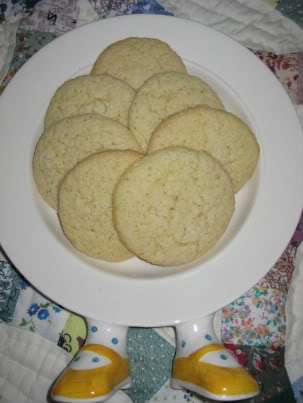
These tea cakes always have struck me as so strange. I wonder how my father learned to bake them. He only made them once or twice when I was a child, because the sweetness and delicacy of tea cakes were out of place in our disciplined, regimented and sugarless household, so they were SO special. On the random days he chose to make them, I was awed. We must have all done something very, very good (though we never knew what).They were rich and sweet with a tinge of bitterness from the soda (I do think once Dad added too much). They’re not something I’ve attempted with this exact recipe myself (I always fiddle with it and add things), and he already has gotten that baker’s amnesia and claims he doesn’t know if this is the exact recipe, but this is as close as I can figure it — and they go beautifully with fruited teas.

On Saturday I put Tanita’s recipe to the test, using half the butter specified (one stick). They are yum yum yummy, even though they think they are soft cookies rather than cakes. Tanita herself uses even less butter — so I suppose one could adjust this amount according to taste. I’m guessing less butter would allow for more rising. It all depends on how high you want to go!

DAD’S TEA CAKES
from Tanita S. Davis

3-1/2 cups all purpose flour
1 tsp baking soda
2 tsp baking powder
1-3/4 cups sugar
1/2 tsp salt
2 eggs
1/2 cup buttermilk
1/2 pound butter (2 sticks, softened)
1 tsp vanilla

Preheat oven to 350 degrees F.

Sift together your dry ingredients — this is a suspension cake, don’t forget! Add remaining ingredients and blend well. Dough will be soft, as only a buttery dough can be. Roll dough out onto a floured surface until approximately 1/4-inch thick (no thicker, or they’ll take longer and not be as tender). Dad used to cut them into plain round shapes like biscuits, but you can do them in funny shapes, too. Place them on a lightly oiled baking sheet for 10 to 12 minutes. They will rise and have a beautiful golden color.

NOTE: Instead of buttermilk, you could try coconut milk, plain yogurt, or regular milk. For variety, try adding lemon zest or shredded fresh ginger.

Zip on over here for some great flavored teas to sip with your tea cakes!

For more juicy details about Tanita, including a triple deluxe sugar britches punkin head puddin’ baby pic, read this great interview served up by Jules and Eisha over at 7-Imp.

And, even though April is racing to a fast finish, there’s still time to party! We’re keeping the teapot nice and warm just so you can join us! Post your favorite go-with-tea recipe on your blog and leave the link in the comments, or email your recipe to: readermail (at) jamakimrattigan (dot com). It’s the friendly thing to do!


tea break: sweet summer with henry james


                     “The Cup of Tea,” by Mary Cassatt (1879)

Need a break? You’ve come to the right place.

Whether it’s morning or afternoon where you are, take a few moments to read this lovely opening from Henry James’ The Portrait of a Lady. I haven’t read this novel since college, but now I want to read it again. The Portrait is one of James’ transatlantic novels — he liked to contrast the decadence of Europeans with the brash energy of Americans.

Sit back and relax. I’ve poured you the perfect cup of Lady Grey in a fine bone china cup and saucer. Let James’ unhurried prose quiet your mind and transport you to the 19th century:


Under certain circumstances there are few hours in life more agreeable than the hour dedicated to the ceremony known as afternoon tea. There are circumstances in which, whether you partake of the tea or not — some people of course never do — the situation is in itself delightful. Those that I have in mind in beginning to unfold this simple history offered an admirable setting to an innocent pastime. The implements of the little feast had been disposed upon the lawn of an old English country house in what I should call the perfect middle of a splendid summer afternoon. Part of the afternoon had waned, but much of it was left, and what was left was of the finest and rarest quality. Real dusk would not arrive for many hours; but the flood of summer light had begun to ebb, the air had grown mellow, the shadows were long upon the smooth, dense turf. They lengthened slowly, however, and the scene expressed that sense of leisure still to come which is perhaps the chief source of one’s enjoyment of such a scene at such an hour. From five o’clock to eight is on certain occasions a little eternity; but on such an occasion as this the interval could be only an eternity of pleasure. ~ Opening from The Portrait of a Lady, by Henry James (1881)

Speaking of afternoon tea, we owe its invention to Anna, 7th Duchess of Bedford (1783-1857). Seems she experienced that sinking feeling in late afternoon; only two meals were served then — a breakfast of ale, bread and beef, and a long, massive dinner at around 9 p.m. One afternoon in 1840, she plucked up the courage to send for a tray of tea, bread and butter, and cake, which was secretly consumed in her boudoir behind a screen. She soon became addicted to this indulgence, but rather than give it up, she invited her friends to join her for tea at Belvoir Castle.

In no time at all, anyone who was anyone in high society was hosting afternoon tea in the drawing rooms of stately homes, with the practice becoming more and more elaborate —  ladies wearing long tea gowns, and every manner of tea accoutrement (caddies, muffineers, cake stands, bone china tea services) being wheeled out with a vast array of little cakes, thin sandwiches, and dazzling sweets for the sweet. By Edwardian times, afternoon tea had become a full-blown social occasion with musicians, hot dishes, and footmen handing round the teacups and pouring from ornately carved silver teapots. The conversation was kept ever so polite; the fashionable hour was set at 5 p.m.

I imagine Mr. James was grateful to the Duchess. If she hadn’t gotten the munchies at 4 p.m., how would he have written his opening scene?

                                                
A FEW MORE BISCUITS:
 
The Portrait of a Lady first appeared in serial form in The Atlantic Monthly and Macmillan’s Magazine, between 1880-81. 

This realistic novel remains the most popular of James’ longer works, a prime example of his “beautiful prose,” and imaginary use of interior monologue, unrealiable narrator, and point of view. 

In this novel, Isabel Archer, a young American woman who suddenly inherits a fortune, is victimized by two American expatriates. 

The Portrait of a Lady (Thrift Edition)Henry James: A Life

Leon Edel is considered THE Henry James biographer, having received a Pulitzer Prize and National Book Award in 1963 for Volumes 2 and 3 of his five-volume masterpiece, Henry James: A Biography (not pictured here.) This work is a seminal example of the great American literary biography. I had the distinct honor of taking a seminar in research methods from Professor Edel at the University of Hawai’i. He was beyond awesome!


“The British have an umbilical cord which has never been cut and through which tea flows constantly. It is curious to watch them in times of sudden horror, tragedy or disaster. The pulse stops apparently, and nothing can be done, and no move made, until a ‘nice cup of tea’ is quickly made. There is no question that it brings solace and does steady the mind. What a pity all countries are not so tea-conscious. World peace conferences would run more smoothly if a ‘nice cup of tea’, or indeed, a samovar were available at the proper time.” ~ Marlene Dietrich