You decide to take a break after writing all morning. When you step outside, instead of your ho-hum suburban neighborhood, you find yourself in one of the most beautiful villages in southern France.
Breathe that bracing air! What a gorgeous, deep blue cloudless sky! Love the quaint cobblestone streets, ivy climbing up ancient brick walls, morning glories spilling out of flower boxes. And crusty baguettes in bicycle baskets!
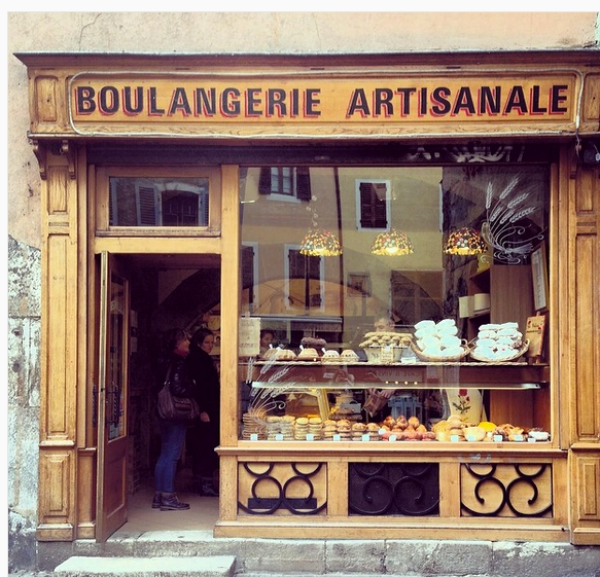
Mmmmm — what’s that heavenly aroma? Following your nose, you spy a charming boulangerie just around the corner. Your prayers have been answered! Give us this day our daily bread — and we would not object in the least if you’d like to throw in a few French pastries. Mais, oui!
Thanks to the inimitable Barbara Crooker, we can visit the boulangerie of our dreams at this very moment. You have to love a country where food is an art form and bakers are revered, where the universal language of deliciousness brings people closer together. There is no finer way to feed the soul than to savor each bite with passion and gratitude.
Once upon a time there were four little Rabbits —
and their names were Flopsy, Mopsy, Cotton-tail and Peter.
They lived with their Mother in a sand-bank, underneath the root of a very big fir-tree.
‘Now my dears,’ said old Mrs. Rabbit one morning, ‘you may go into the fields or down the lane, but don’t go into Mr. McGregor’s garden: your Father had an accident there; he was put in a pie by Mrs. McGregor.’
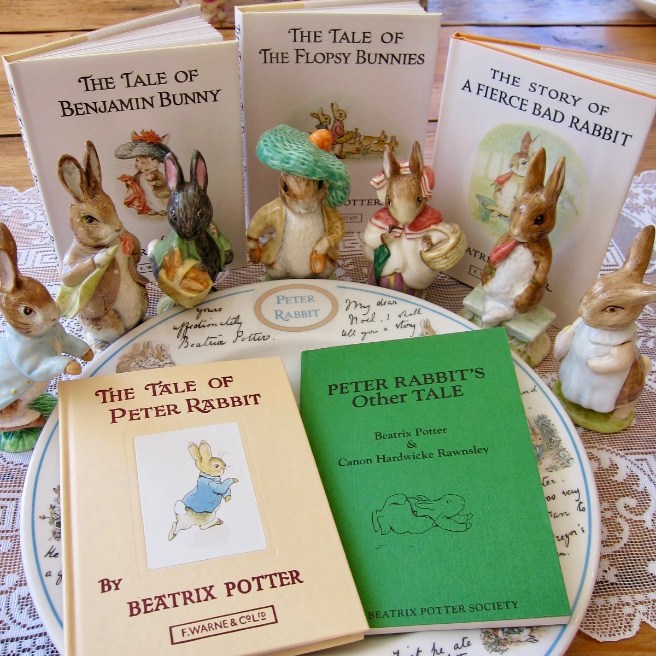
So begins the story of Peter Rabbit, the most beloved bunny in children’s literature. It’s likely this charming tale will be enjoyed during family Easter celebrations on both sides of the pond this weekend.
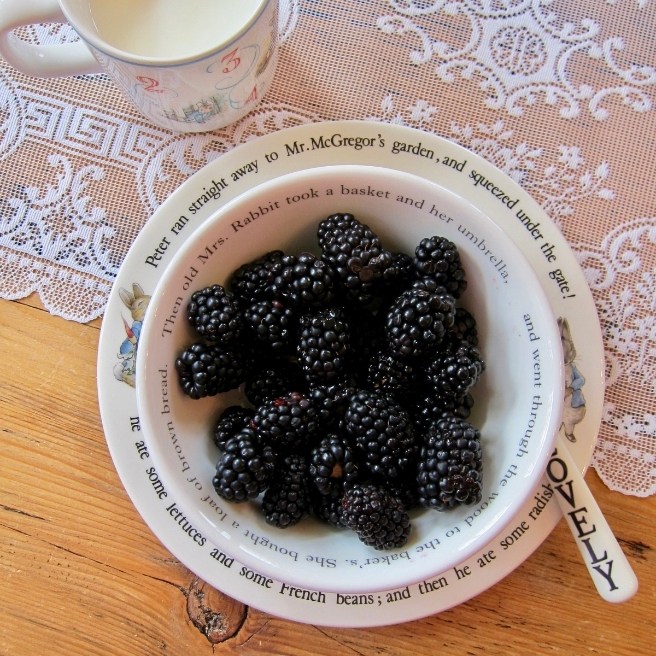
Refreshments may include blackberries and milk, currant buns, lettuces, radishes, parsley and camomile tea. Other favorite Potter characters such as Benjamin Bunny, Tom Kitten, Jemima Puddle-duck, and Mrs. Tiggy-winkle may also get their fair share of attention, but what about Canon Hardwicke Rawnsley?
Who?
Well, it’s time you knew (if you don’t already). 🙂
Rawnsley wrote the “other” Tale of Peter Rabbit. Yes, there actually was another version. And it was written in verse!
In just about a month, the farmers’ markets in our area will open for the season. Hooray! 🙂
Can’t wait to wrap my lips around a juicy ripe strawberry, fix myself a crisp garden salad with baby lettuces, cucumber, radishes, green peppers, carrots, and cherry tomatoes, and dribble some local golden honey on a warm biscuit. I can just about smell the sweet, rejuvenating scent of ripe peaches and the aroma of freshly baked breads, cookies and muffins, and I can picture the colorful bouquets of Spring blooms.
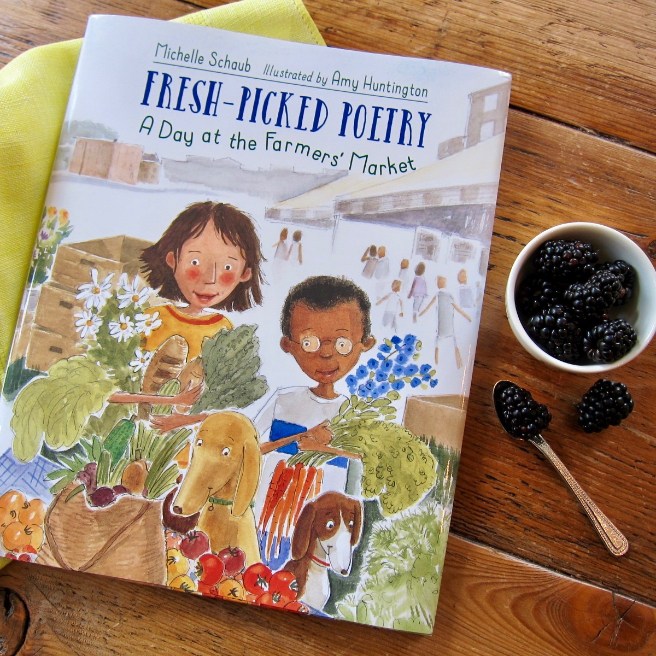
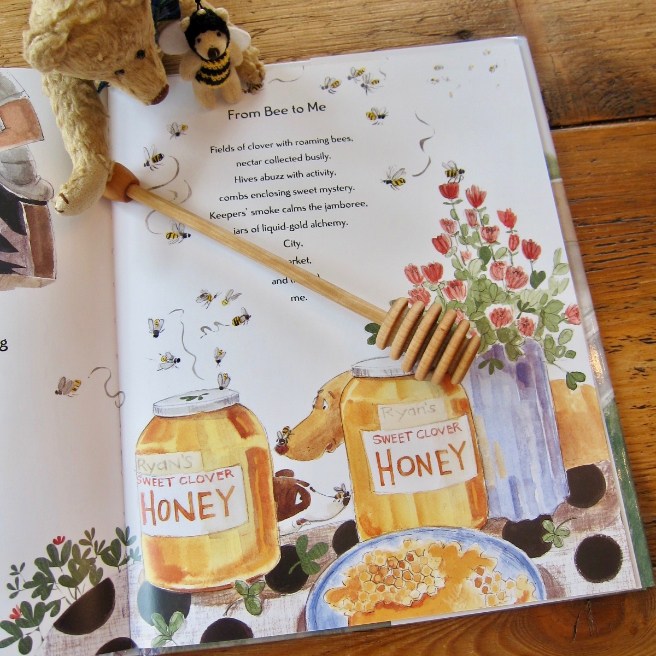
Fresh-Picked Poetry: A Day at the Farmers’ Market by Michelle Schaub and Amy Huntington, is just what we need to get us in the mood for the delicious bounty that awaits us. Michelle and Amy capture all the tantalizing sights, smells, sounds, and flavors of a bustling farmers’ market with 18 sprightly, sensory-rich poems and delightful, animated pictures packed with charming details.
Did you know that National Poetry Month is “the largest literary celebration in the world, with tens of millions of readers, students, K-12 teachers, librarians, booksellers, literary events curators, publishers, bloggers, and, of course, poets marking poetry’s important place in our culture and our lives every April”? And 2017 marks the 21st Anniversary of NPM!
Now, here’s a list of what some kidlit bloggers are doing. If you’re also celebrating Poetry Month with a special project or blog event, or know of anyone else who is, please leave a comment here or email me: readermail (at) jamakimrattigan (dot) com, so I can add the information to this Roundup. Thanks!
* * *
*
🌺 Hooray, it’s Progressive Poem time again! Irene Latham at Live Your Poem has recruited 30 poets for her sixth annual Kidlitosphere Progressive Poem. This is a wonderful community writing project where a poem travels daily from blog to blog, with each host adding a new line. Heidi Mordhorst at My Juicy Little Universe is kicking things off on April 1. This year’s goal is to create a poem for children. Here’s the full schedule of participating bloggers:
🌼 Irene Latham at Live Your Poem will also be featuring ARTSPEAK!, the poem-a-day project she started during 2015 in which she responds to images found in the online collection at the National Gallery of Art. This year she will focus on PORTRAITS, also accessing the Google Arts and Culture site for some of her subjects.
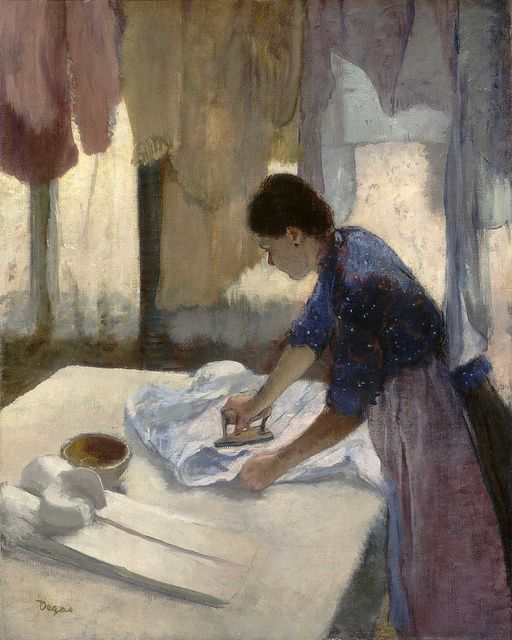
“For most of history Anonymous was a woman.” ~ Virginia Woolf
“Woman Ironing” by Edgar Degas (1887)
And for most of history, Anonymous was doing all the housework.
Can you think of any unpaid activity as tedious, thankless or relentless? You know how the saying goes — nobody notices when you clean your house, they only notice when you don’t. There are so many things I’d rather do than dust, scrub, wash or vacuum.
And yet, I see how the routine of doing household chores is reassuring and makes me feel secure (at least I have a house to take care of!!). With so much in this life out of my control, polishing my favorite tea table, putting books away on their shelves, cleaning out the fridge — these are ways of making order out of chaos. These are things I can control.
Tasks like ironing can even be meditative, giving my brain a chance to rest, my mind the freedom to wander, reflect, imagine. And I have to admit that unloading the dishwasher can be pleasurable, because I love my dishes — I handpicked each plate, cup, bowl and platter. I love seeing the beauty in practical objects.:)
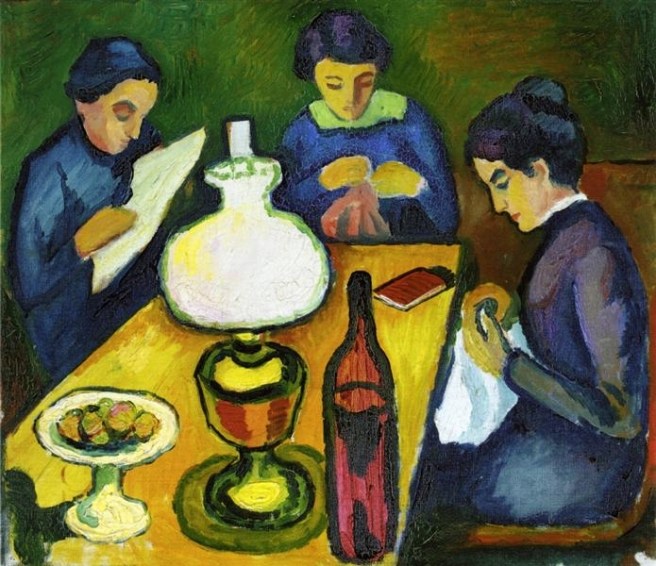
When I first read Kimberly Blaeser’s poem, I was reminded of the debt we owe to those women who came before us, who steadfastly kept the home fires burning while their spouses went out to be SOMEBODY. For those women who didn’t — or couldn’t aspire to careers outside the home, or whose lives were measured by how many towels were folded on any given day, or how many mouths they had to feed and feed and feed — I have renewed respect and admiration.
For in the midst of seeming drudgery, these women found ways to be creative while being productive. Blaeser’s cool concrete poem is also a list poem — a list of ways these women practiced patience and forbearance, displayed ingenuity, resourcefulness and versatility, and embraced the domestic sphere over which they alone reigned supreme. Even though they remain Anonymous to us, for the ones they took care of, the ones who loved them, they were truly SOMEBODY.
“Three Women at the Table by the Lamp” by August Macke (1912)
WHAT THEY DID BY LAMPLIGHT by Kimberly Blaeser
Clean rice, handstitch
make pies, roll jingles
patch jeans, shake dice
clean fish, roll cigarettes
read from The Farmer
Braid rugs, mend nets, tell stories
write letters, bead, cut quilt squares
boil swamp tea, deliver their babies.
Darn socks, peel potatoes, drink coffee
shuffle cards, cut hair, can tomatoes
sift flour, bead, sing church songs.
Scrub socks, gossip.
sing country songs
make tobacco ties
braid sweet grass
prepare their dead.
Beat frosting
laugh
embroider
crack nuts
depill sweaters
wipe their tears.
Search penny jar for old coins
shell peas, cut birchbark patterns
thread matching buttons together.
Build fire, make soap, join their hands
knead bread, read seed catalogues, smoke
slice apples, squeeze color into margarine.
Change diapers, shuck corn, soak beans
rock their children, boil water, crochet doilies
clean sunflower seeds, can dill pickles.
Sharpen knives, eat, iron
dance together
nurse their babies
remember their dead.
The lovely and talented Catherine Flynn is hosting the Roundup at Reading to the Core. Tap dance on over and check out the full menu of poetic goodness being served up in the blogosphere this week.
Note: I’m collecting links for a Kidlitosphere Poetry Month Roundup again, so if you’re doing something special on your blog, please submit your information by the end of next week via a comment on this blog or by sending me an email: readermail (at) jamakimrattigan (dot) com. Appreciate your helping to spread the word, too. Thanks!
*
“There is, I suppose, no occupation in the world which has an influence on the efficiency and happiness of the members of nearly all other occupations so continuous and so permeating as that of the working housewife and mother.” ~ Eleanor Rathbone





 Jama's Alphabet Soup