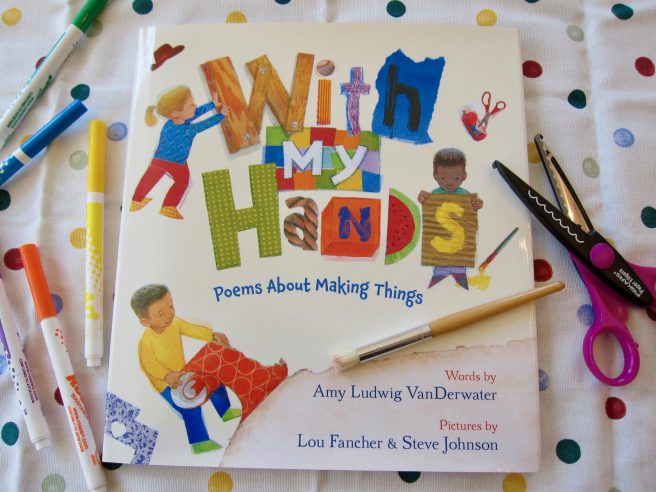
Whether you like to draw, paint, write, sculpt, bake or carve, there’s nothing as magical, empowering, or satisfying as creating “something new that never was before.”
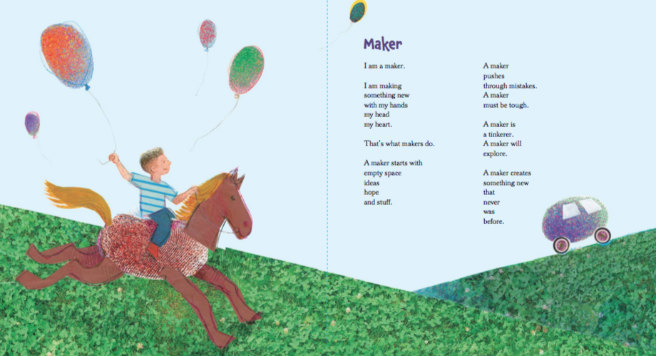
The 26 mostly rhyming poems cover everything from soap carving, knot-tying and origami, to making birdhouses, pinatas, toy parachutes, tie-dye shirts, leaf pictures and collages. The opening poem reveals the unique power and province of the maker (love the thumbprint art!):
MAKER
I am making
something new
with my hands
my head
my heart.
That’s what makers do.
A maker starts with
an empty space
ideas
hope
and stuff.
A maker
pushes
through mistakes.
A maker
must be tough.
A maker is
a tinkerer.
A maker will
explore.
A maker creates
something new
that
never
was
before.
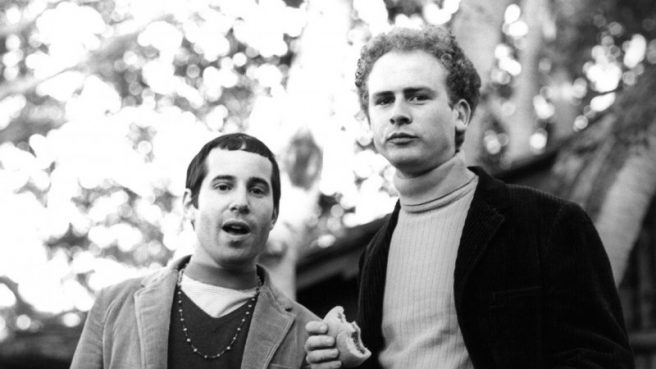
When it comes to Simon and Garfunkel, three things stand out in my memory: hearing “Homeward Bound” for the first time in a soundproof studio, waiting hours for them to arrive at the airport, and attending their 1968 concert in Honolulu.
I was a big S&G fan back in the day, belonged to a fan club whose sole purpose was to meet every rock group that performed in Hawai’i. We haunted airports and hotel lobbies, camped out overnight to score concert tickets, and sometimes got to meet our idols up close and personal at special events.
The Simon and Garfunkel concert remains in the top 5 of all shows attended in my lifetime. It still stands up against today’s large-venue extravaganzas with the big screens, sophisticated sound systems and light shows. There was just something pure, pristine and utterly transformative about those two voices and acoustic guitar. No need for any high tech razzle dazzle when you have good songs and soul-stirring, transcendent harmony.
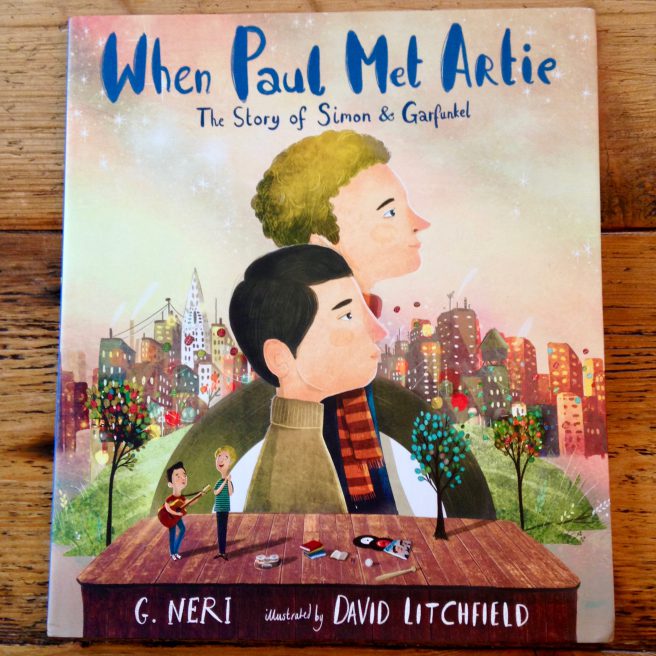
When Paul Met Artie: The Story of Simon and Garfunkel, a fab new picture book biography for middle grade readers by G. Neri and David Litchfield (Candlewick, 2018), opens with the famous Central Park reunion concert in September 1981.
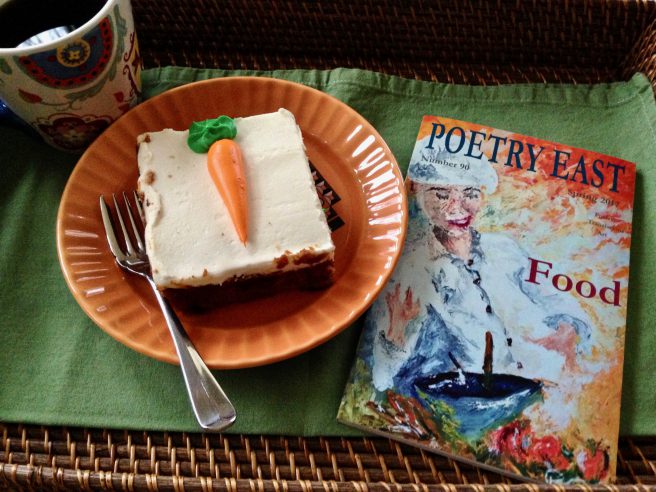
Lucky me, poet friend and kindred spirit Andrea Potos had the Poetry East Spring 2017 Food Issue sent to me shortly after it came out last year. You can bet I’ve been savoring and feasting on it ever since (thanks again, Andrea!).
This special issue, published by DePaul University, contains 49 poems presented in seven courses (truly the perfect meal), along with seven delectable recipes and a bevy of beautiful fine art paintings.
In the Main Course section, I was especially taken with Faith Shearin’s poem, “A Few Things I Ate.” The conversational style drew me in immediately, and I love how Faith built a captivating narrative with an embellished list of telling details, how she subtly wove in deeper regrets as well as fond memories. It’s wonderful how carefully chosen specifics can be so universally relatable.
Are we not all a product of what we’ve eaten throughout our lives? The countless foods, with their why’s and whens and wherefores, reveal our unique, personal stories.
I thank Faith for permission to share her poem, for answering my questions about it, and for her yummy recipe. Enjoy!
*
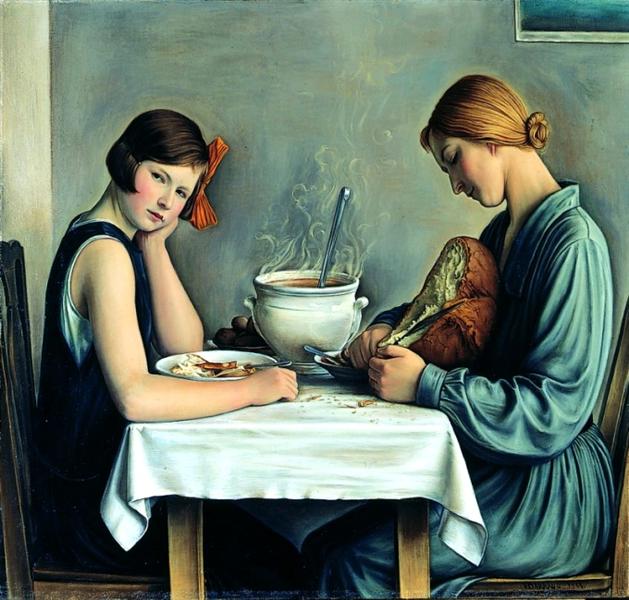
Tailleuses de soupe by François Barraud (1933)
A FEW THINGS I ATE by Faith Shearin
There are a few things I’m sorry I ate: a piece of fried chicken
in an all-night diner that bled when I cut into it,
a soup in an elegant French restaurant where I encountered
a mysterious ring of plastic. Also: a bowl of spaghetti served
with so many long strands of hair I wondered who,
in the kitchen, had gone bald. I’m sorry I ate the fast food
cookies that tasted like paper the same way I am sorry
I let certain men kiss me or hold my hand. I’m especially sorry
I ate a certain hot dog on a train that had been twirling for days
on a lukewarm display. Forgive me for all that cafeteria food
in college: packaged, bland, frozen so long it could not
remember flavor. And, hungry in my dorm, I ate bags
of stale lies from vending machines, once even a pair
of expired Twinkies filled with a terrible chemical cream
I am still digesting. After my daughter was born I bought
so much organic baby food my husband found the jars
everywhere: little glass wishes. One winter I ate exotic fruits
from upscale stores so expensive I might have flown instead
to a distant tropical island. Then, careless, I ate
from containers only my microwave understood. I know
what food is supposed to be but often isn’t; I know
who I might have been if I ate whatever I should have eaten.
Remember the time we ate Ethiopian food and spent
a week dreaming so vividly our real life grew pale?
Or the day we ate so much spice in our Thai food
that our mouths were softer? I’m not sorry I ate
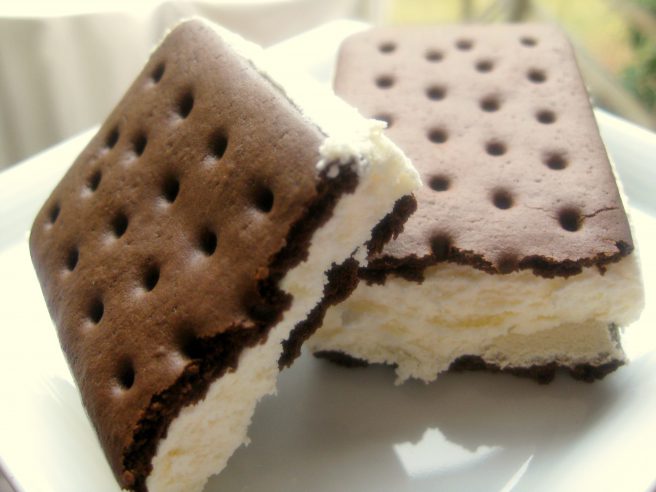
all those ice cream sandwiches from my grandmother’s
freezer and drank those Pepsis with her on the way
to Kmart to buy more pink, plastic toys. She liked
the way sugar made me lively, and anyway,
she was suggesting the possibility of pleasure.
She made a vegetable soup that simmered all day
on the stove: growing deeper, more convincing,
and a carrot cake with cream cheese icing that floated
on my tongue like love. Now I am middle-aged. I am fat
and eating salads or, before bed, talking myself
into rice cakes that taste like despair. My father
is diabetic and must have everything whole wheat
and lean and my sister can’t have any salt. I’m sorry
I ate all that cereal when we first got married,
by myself in the kitchen, the milk pale and worried.
Remember how I covered my fruit with cheese
and mayonnaise? I’m not sorry, whatever
you might say. Then there were the lunches
we ate on the beach, watching the seals
sun themselves: thick chicken sandwiches wrapped
in a foil so silver they must have been valuable.
Freight train, freight train run so fast Freight train, freight train run so fast Please don’t tell what train I’m on They won’t know what route I’ve gone.
So begins one of the most famous folk songs of the twentieth century. Here in America, many of us grew up hearing it on the radio or at music festivals, or maybe even in the classroom.
Though I was familiar with the popular renditions of “Freight Train” by Peter, Paul and Mary, Pete Seeger, and Joan Baez, I never really knew who wrote the song, nor had I heard of African American folk musician, singer and songwriter Elizabeth Cotten before reading this fabulous new picture book.
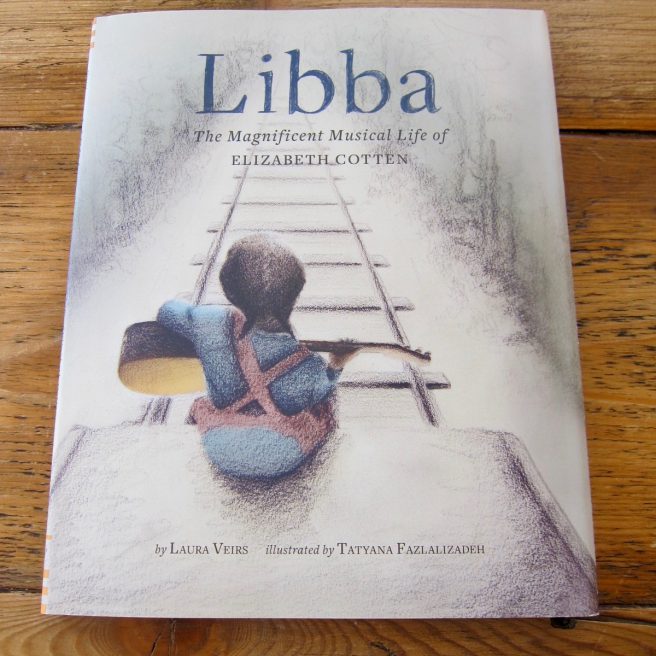
In Libba: The Magnificent Musical Life of Elizabeth Cotten by singer-songwriter Laura Veirs and debut illustrator Tatyana Fazlalizadeh (Chronicle Books, 2018), we see how Libba ultimately accomplished “what she was born to do” despite the many ups and downs in her life.
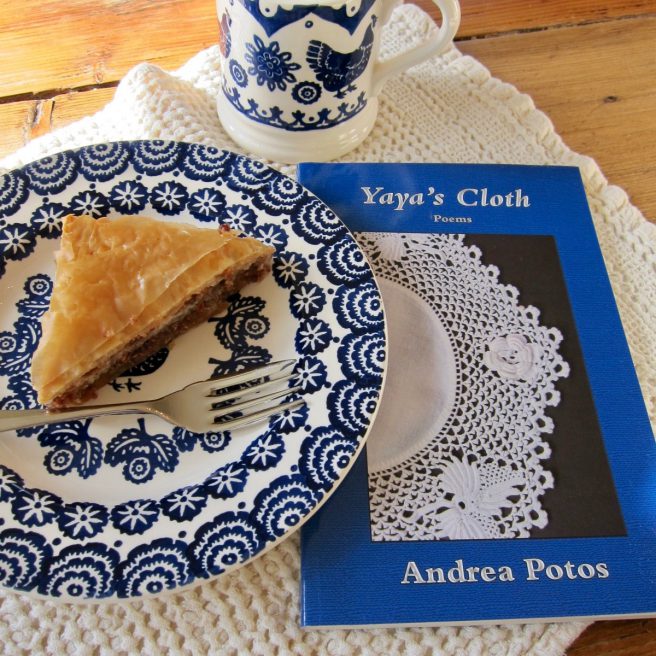
I’m loving Andrea’s family stories and the celebration of her Greek heritage. I appreciate the nod to domesticity and strong women — matriarchs who passed on their skills and knowledge to each succeeding generation.
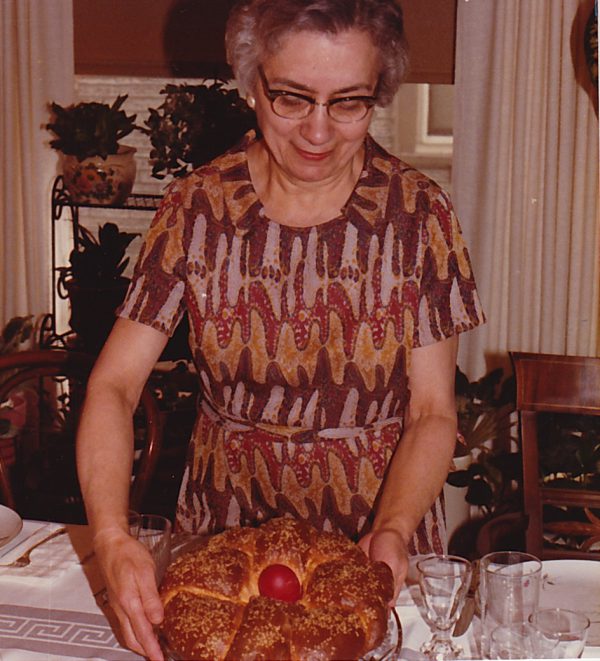
Yaya with her Greek Easter bread.
Andrea had a very special relationship with her grandmother (Yaya). As I read Andrea’s lyrical depictions of their time together, I can picture them baking, chatting, and laughing in floured aprons, bonding over loaves of bread and batches of cookies. It is easy to feel the love.
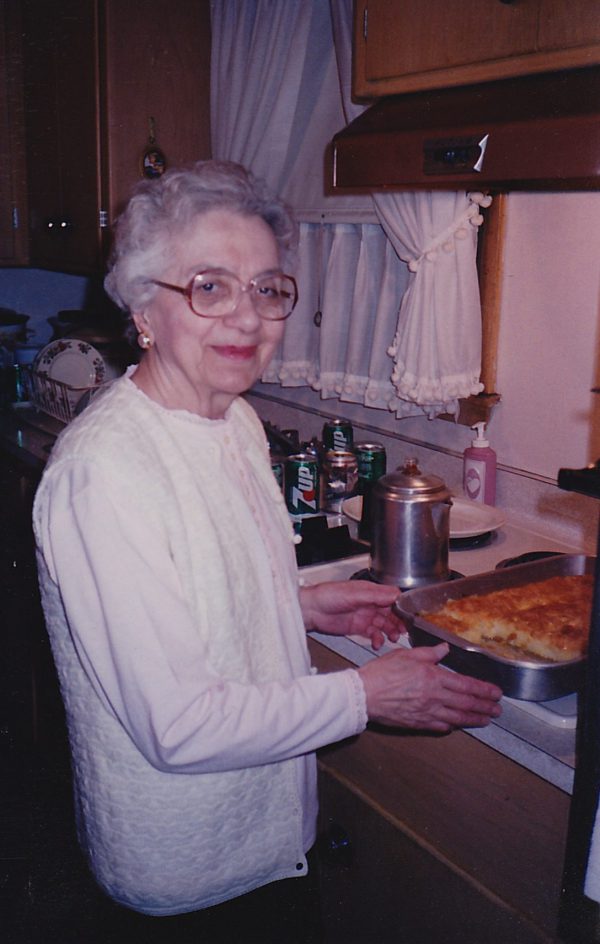
Yaya in her kitchen with a Greek dessert called galaktoboureko (semolina custard in filo).
Today, I’m honored to feature a poem from Yaya’s Cloth that I’m sure will whet your appetite for more. Andrea has graciously shared a bit of backstory as well as Yaya’s recipe for baklava. And special thanks to her for the wonderful personal photos. Yum!
 Jama's Alphabet Soup