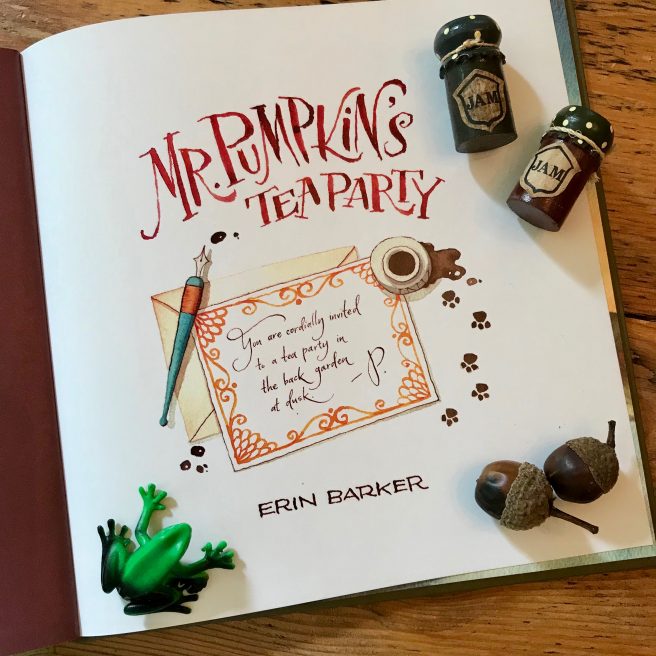
On a fine autumn day, what could be better than finding this lovely handwritten note in your mailbox?
You are cordially invited to a tea party in the back garden at dusk. ~ P
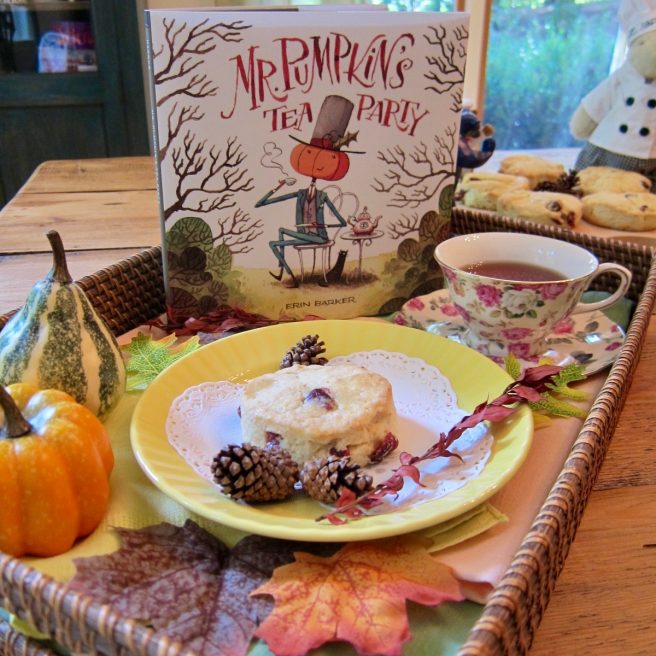
You probably know I’m always up for a tea party, and this one just happens to be doubly delightful. It’s being hosted by none other than the ever dapper Mr. Pumpkin, who really knows how to rock a waistcoat and top hat (I could never resist a top hat). Besides, taking tea at twilight is just too tempting. 🙂
Mr. Pumpkin’s Tea Party,a seasonally spooky story and counting book in one, was written and illustrated by Cincinnati-based author and illustrator Erin Barker, who first sketched a “pumpkin-head guy” having tea with a “skeleton person” for Inktober back in 2016.
They weren’t your average run-of-the-mill pumpkin and skeleton, though. They were dressed up as proper English gentlemen, and were saying things like, “I dare say,” and “Indeed.” Erin’s Instagram followers loved the sketch, and months later her editor suggested the characters should have their own book. So Erin developed a charming storyline inspired by her own love of hosting get-togethers with friends and good food.
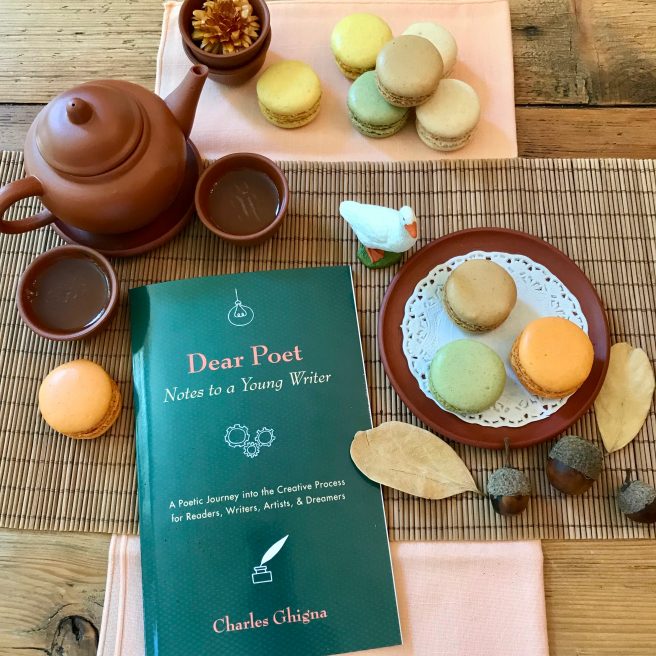
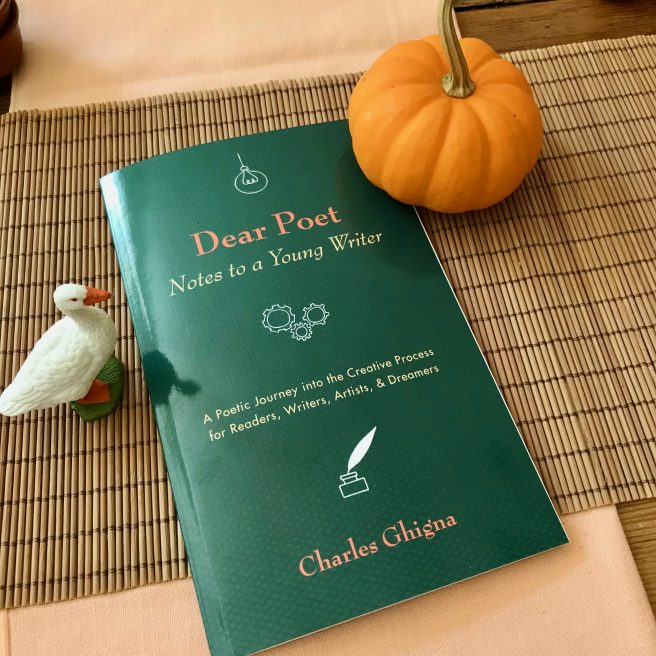
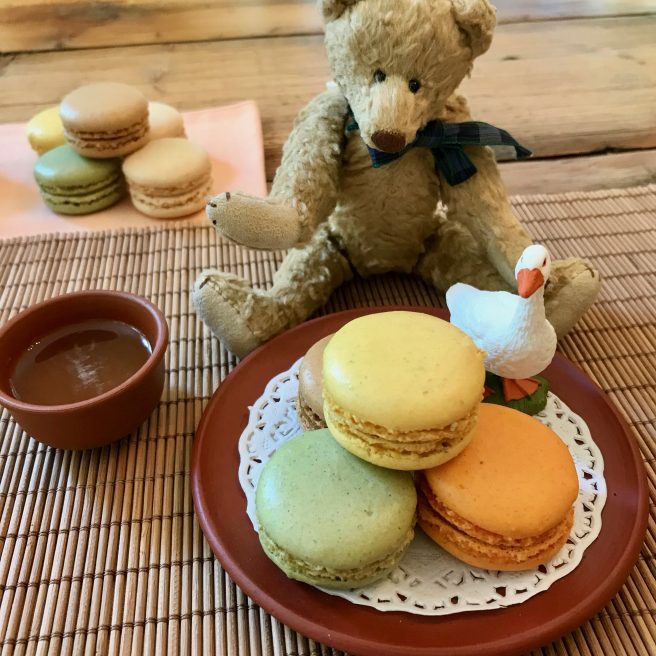
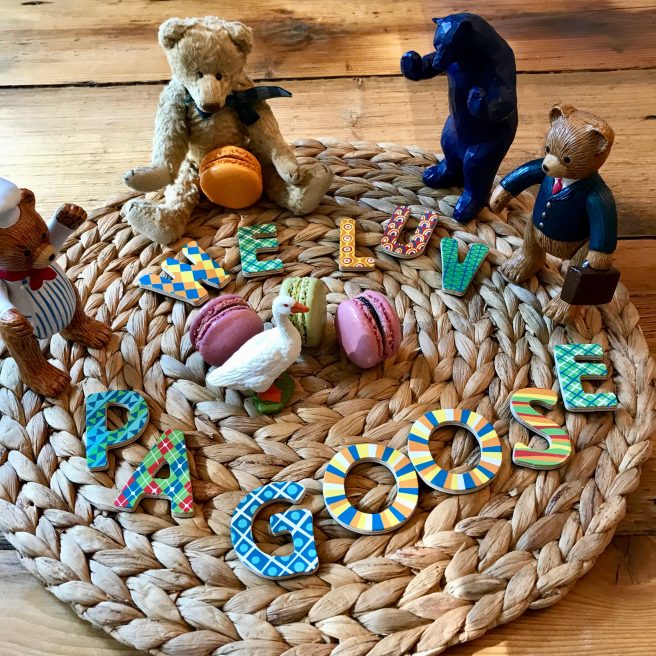
Today, just for you — sip some tea, nibble on a macaron, and gently savor Charles Ghigna’s heartening and beautifully crafted reflections on creativity.
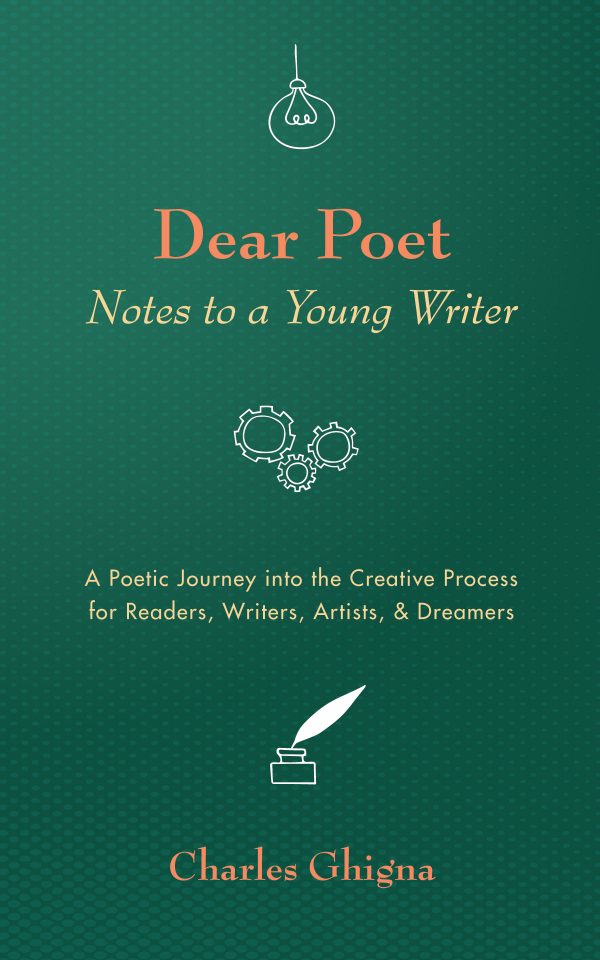
Described as, “A Poetic Journey into the Creative Process for Readers, Writers, Artists & Dreamers,” this collection of twenty-four spare, unadorned “word-gems” is an insightful gift to all creatives, offering both invaluable advice and spiritual nourishment.
As I enter my seventh decade on this planet, I wonder what words of wisdom I might have written to the younger me. What treasured tidbits have I learned along the way? What could I leave in a letter to young artists and poets searching the world for advice, guidance, and inspiration.
The creative process is a mysterious one, muses can be fickle, and in endeavors where one’s reach almost always exceeds one’s grasp, the life of the artist can be daunting and lonely.
I have always believed that in a sense, you cannot actually “teach” someone how to write, just as you cannot teach someone how to think or how to feel. And while there are many helpful books about honing your craft with suggestions about form, structure, voice, etc., detailing the more technical aspects of writing, sometimes what a writer needs, or craves . . . are simple, enduring truths gleaned from years of experience.
As I read the short yet profound poems, I silently cheered in affirmation. Yes, trust your instincts, speak the truth in your heart, find your authentic voice, get out of your own way and let the work speak for itself. Only write if you must.
Dear Poet is like having a trusted friend nearby, reminding you of what is most important. Though the subtitle is, “Notes to a Young Writer,” these words are for everyone, no matter where you are on your creative journey. Aren’t all artists and writers eternally young (in a constant state of beginning)?
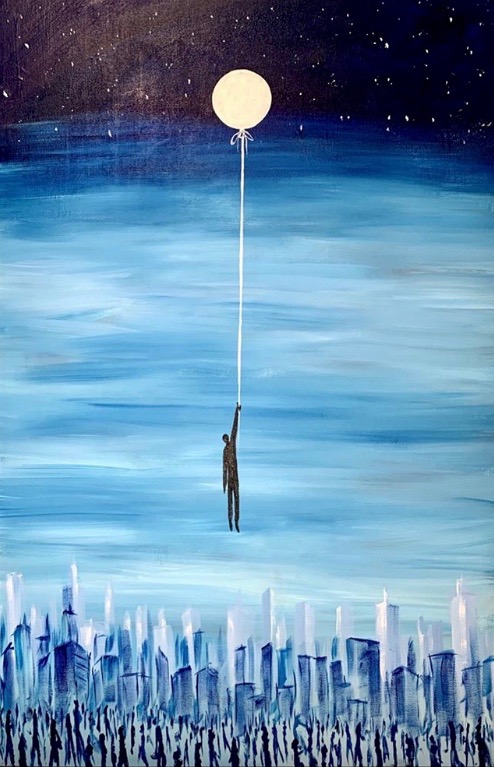
I’m pairing today’s poems with art created by Charles’s son Chip, who also lives and works in Homewood, Alabama. As you can see, artistic talent runs deep in this family (Charles’s wife Debra is also a poet).
Good things do come in small packages. Read these delectable nuggets slowly and ponder . . . 🙂
*
“Hang Onto Your Dreams” (acrylic on canvas)
XII.
A silent rhyme upon the page is what the poet gives,
gentle words whispered in trust to see if memory lives.
*
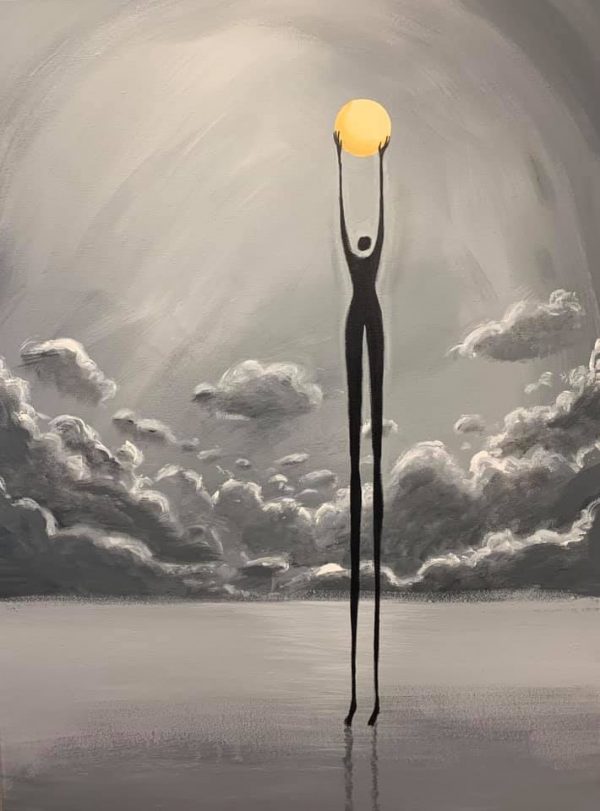
“Raising the Moon” (acrylic on canvas)
XVII.
A poem is a rising moon shining on the sea,
an afterglow of all you know, of all your dreams set free.
*
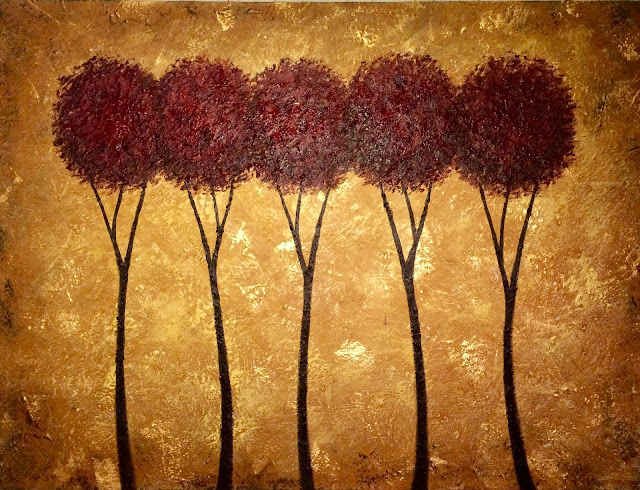
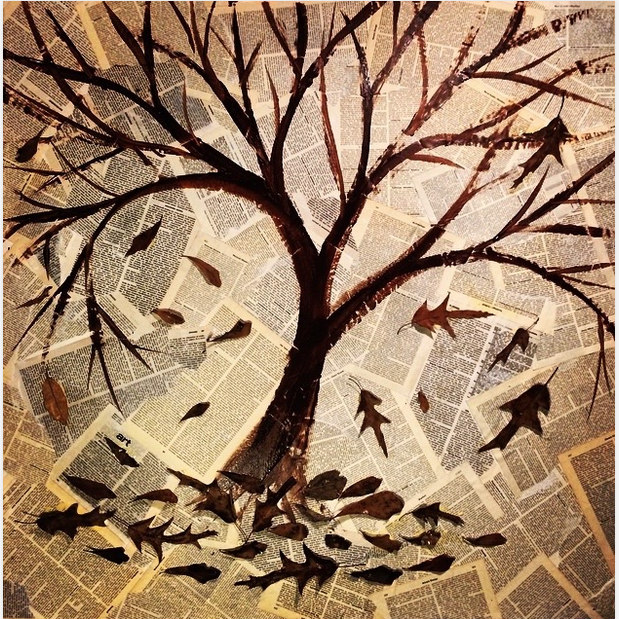
“Crimson Forest” (acrylic and gold leaf on canvas)
XXIV.
The answer to the artist comes quicker than a blink,
though the spark of inspiration is not what you might think.
The muse is full of magic, though her vision may be dim.
The artist does not choose the work. It is the work that chooses him.
*
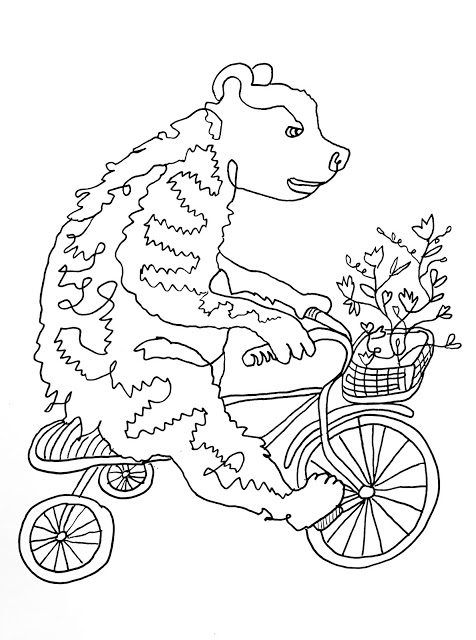
“Bear on a Bicycle”
Now, please leave your links with the dashing Mr. Linky below. Have fun visiting all the blogs serving up delectable poetic goodness this week!
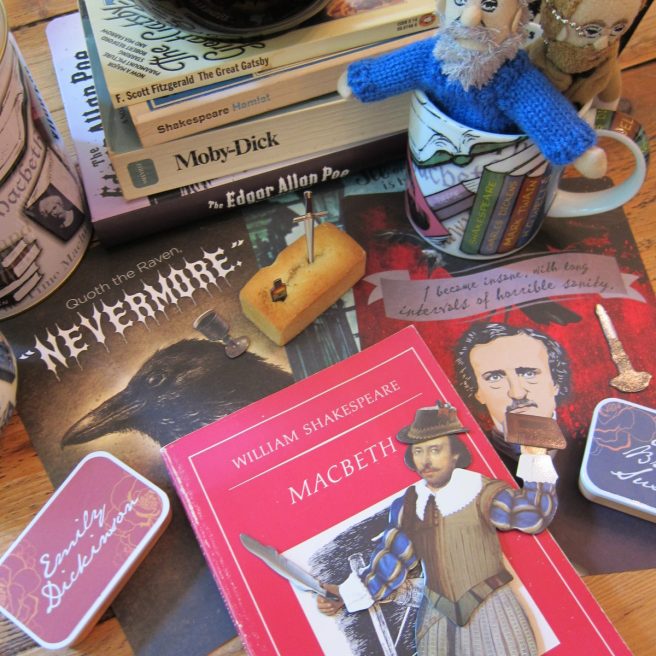
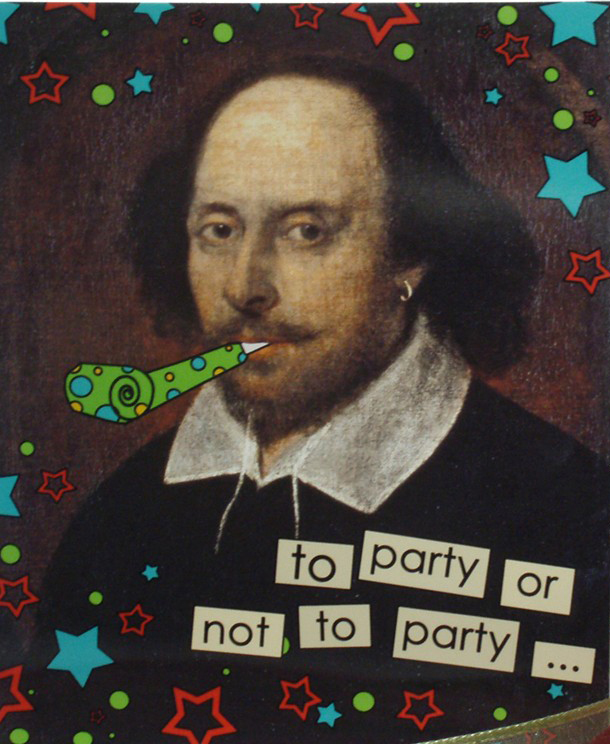
The best things happen at night while we’re asleep. Toys come alive and book characters escape from their pages so they can party. I know this definitely happens at our house because most mornings I smell mint juleps and have this strange compulsion to change my name to “Stella.”
AT NIGHT THE CHARACTERS ON MY CLASSROOM SHELVES COME OUT TO PARTY
by Edwin Romond
Captain Ahab peers in his telescope and yells, “All clear!”
and the rest unpage from the bindings of shelf life.
Gatsby’s first in his golden Rolls, screeching around,
nearly hitting Laura Wingfield, who’s with Stanley Kowalski,
her latest hope from the Literary Computer Dating Service.
And there’s Macbeth lecherously proclaiming, “Tonight
and tonight and tonight!” as he watusis with the witches,
which irritates Jonathan Edwards who’s mingling
and telling everyone to go to hell. The Duke and the King
try to sell Mississippi time shares to Hester, but she’s busy
with my grade book changing all the marks to “A’s.”
And there’s Old Rip scribbling on my desks, “This class
puts me to sleep,” but Blanche DuBois is really in trouble
depending on the kindness of strange Edgar Allan Poe
who’s moaning how lovely she’d look in a casket.
Then “Better Late Than Never” Reverend Dimmesdale
preaches from Planned Parenthood Journal to Oscar Wilde,
who is not interested. The party’s getting hot now
which makes Lady Macbeth tell the fur-coated Jack London,
“Off, off, damned coat!” just as the cast of “The Lottery”
arrives to suggest that everyone get stoned. They all go wild
till poet Emily, who never left the shelf to begin with,
peeks out to whisper, “Homeroom!” and they all scurry back
like illegal aliens. But poor Hamlet can’t find Hamlet
so he jumps into “The Lady or the Tiger?” where he stares
at both doors before turning to the crowd to warn,
“You’d better get comfortable. This might take a while.”
As some of you may have guessed, “Collector” is my middle name. I’m what you’d call a born collector — it’s part of my DNA. It began with Japanese rice candy sponge animals, Crackerjack toys and Golden books during childhood, and has continued throughout my life: character wristwatches, hearts, rubber stamps, stationery, fountain pens, finger puppets, salt and pepper shakers, pigs (a passing phase), tea and tea paraphernalia, Coach leather bags, doll furniture, music in various formats, Beatrix Potter everything.
And then, of course, my most enduring obsessions: foodie picture books, poetry, literary cookbooks, china and crockery (mostly English), and teddy bears (especially Paddington!). Indeed, we had to move into a larger house just to accommodate the bears. 😀
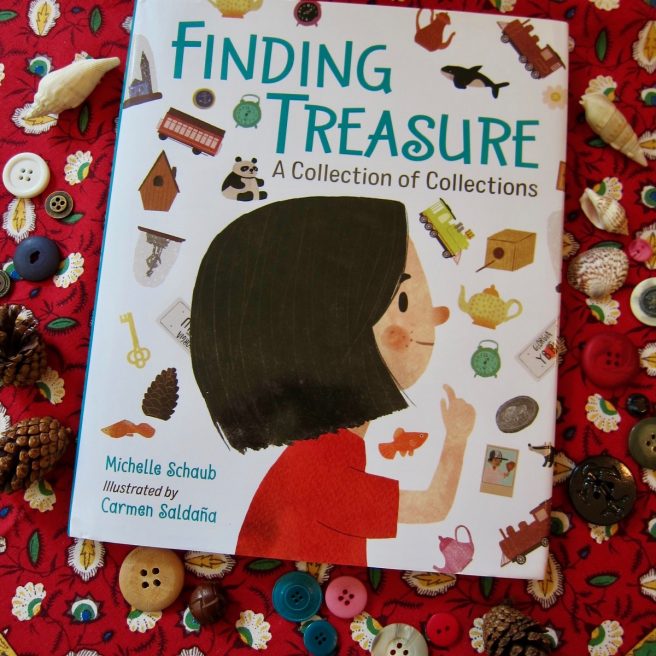
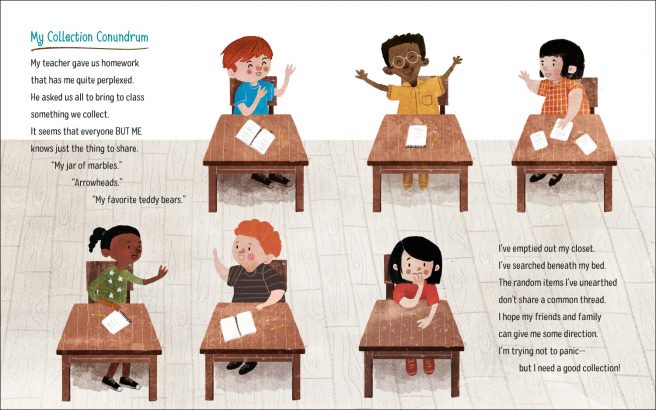
In Finding Treasure, a delightful story told in 18 fetching poems, our young narrator is feeling a little panicky about a school assignment:
My teacher gave us homework
that has me quite perplexed.
He asked us all to bring to class
something we collect.
All her classmates have things to share — marbles, arrowheads, teddy bears — but the girl doesn’t have a collection, so she studies the collections of family and friends for ideas and inspiration.
Imagine visiting New Delhi and seeing dozens of rhesus monkeys scampering down the street, climbing atop walls and buildings, even having them steal your food. People who live there are used to such monkey business, which is especially problematic when the animals break into and destroy homes and offices.
Monkeys are considered sacred in India, so it’s illegal to kill them. Though rhesus macaques have traditionally been cared for in temples around the country, many have been displaced due to a variety of factors. Today, there are an estimated 30,000 rhesus macaques running wild in New Delhi, and persistent efforts to chase them away remain futile.
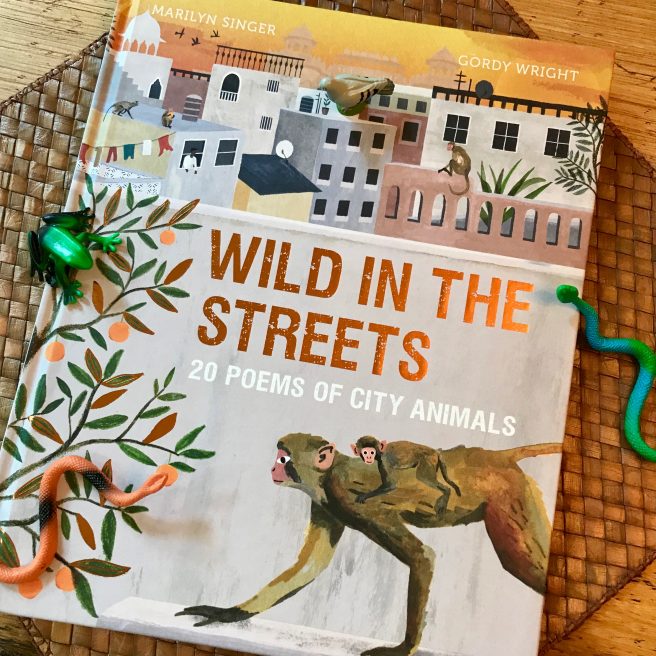
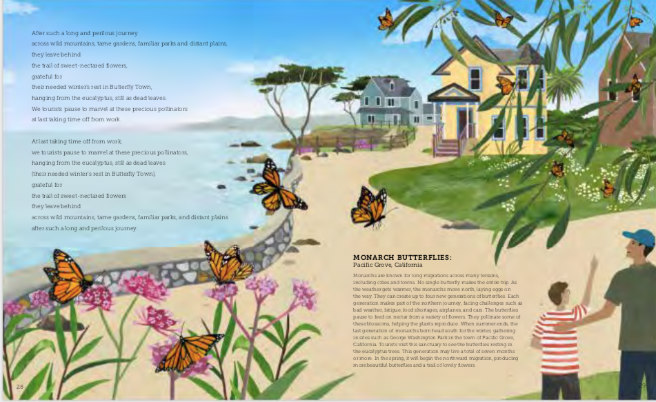
This is just one of the interesting scenarios described in Marilyn Singer’s new poetry picture book, Wild in the Streets: 20 Poems of City Animals (words & pictures, 2019). Illustrated by British artist Gordy Wright, this unique collection introduces readers to creatures around the world who have adapted well to urban life, citing why they may have left their natural habitats.
We meet each animal through a poem and nonfiction note, sometimes hearing their voices and candid observations about being city dwellers.
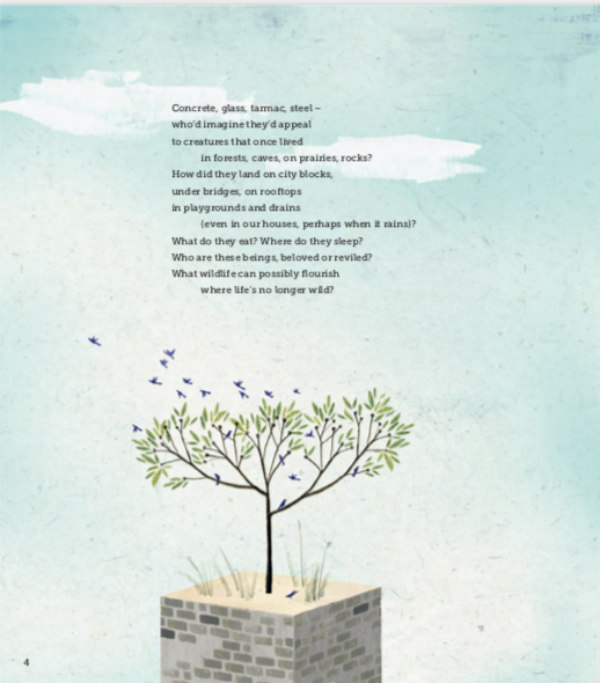
From the monkeys saying, “Give us/give us/what we want, what we need;” to the wily Chicago coyotes demanding the kind of respect afforded their domestic canine cousins, “We came on foot,/crossing dangerous terrains . . . give us welcome to rid you of your mice and rats;” to the wild boars in Berlin expressing their gratitude, “Thanks for knocking down that wall./Thanks for your delicious corn./We declare a free-for-all;” we can better appreciate their amazing ability to trade “forests, caves, prairies, rocks,” for “bridges, rooftops, city blocks” — and thrive!
Using a variety of poetic forms, including haiku, villanelle, acrostic, sonnet, free verse, and her famous reverso, Marilyn captures the essence of each animal’s reality, sometimes creating an emotional context or painting a striking lyrical image. We can easily picture beautiful monarch butterflies traveling long distances “across wild mountains, tame gardens, familiar parks and distant plains.”

 Jama's Alphabet Soup