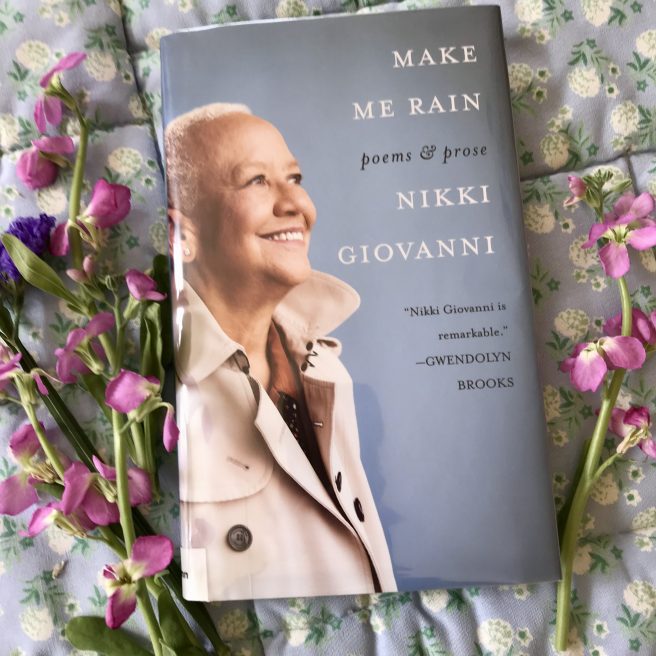
Three Poems from Nikki Giovanni’s Make Me Rain

It’s always a good day when poet, activist, and professor Nikki Giovanni showers us with the power and wisdom of her words.

I love her latest book, Make Me Rain: Poems and Prose (William Morrow, 2020), which is by turns celebratory, conversational, tender, soul nourishing, and ablaze with fierce conviction. Her heart and refreshing honesty are on display whether the subject is deeply personal or politically controversial. She begins with this lyrical restorative gem:
MAKE ME RAIN

make me rain
turn me into a snowflake

let me rest
on your tongue

make me a piece of ice
so I can cool you

let me be the cloud
that embraces you

or the quilt
that gets you dry

snuggle close
listen to me sing

on the windowsill

make me rain
on you

What a beautiful way to invite us into this collection! As a poet and person, she is wholeheartedly in service of language and its critical role in the healing and nurturing of humanity. Water, which sustains every living thing, is a recurring theme in the book.
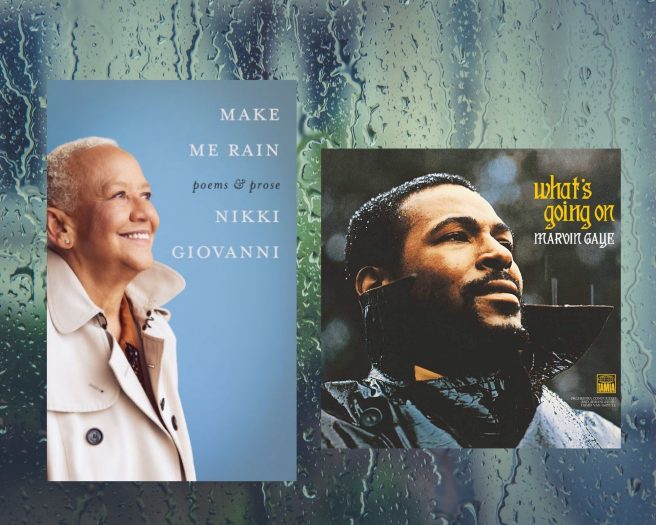
The book’s cover is an homage to Marvin Gaye’s 1971 album, recently ranked #1 on Rolling Stone’s list of the 500 Greatest Albums of All Time.

There are other joyous and life affirming poems about family, friends, mentors, and dreams to soothe the spirit. She often uses the quilt metaphor not only as a symbol of comfort and safety, but as a way of stitching together precious memories and illuminating the uncommon strength that comes from unifying diverse elements.
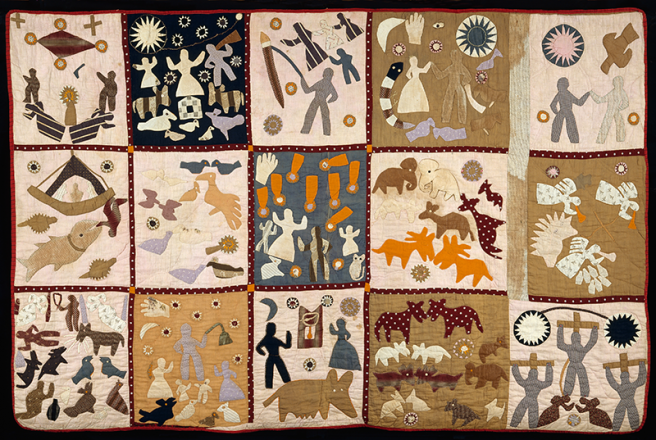
“Pictorial Quilt” by Harriet Powers (1898)
(From Nikki's poem, “Quilts”):

Some folk think
a quilt is leftover
clothes
but we know
it is made up
of loved pieces
we have saved
then sewn
together . . . 

America is a quilt
made up of different
folk
we came together to build
something warm
and good

Continue reading
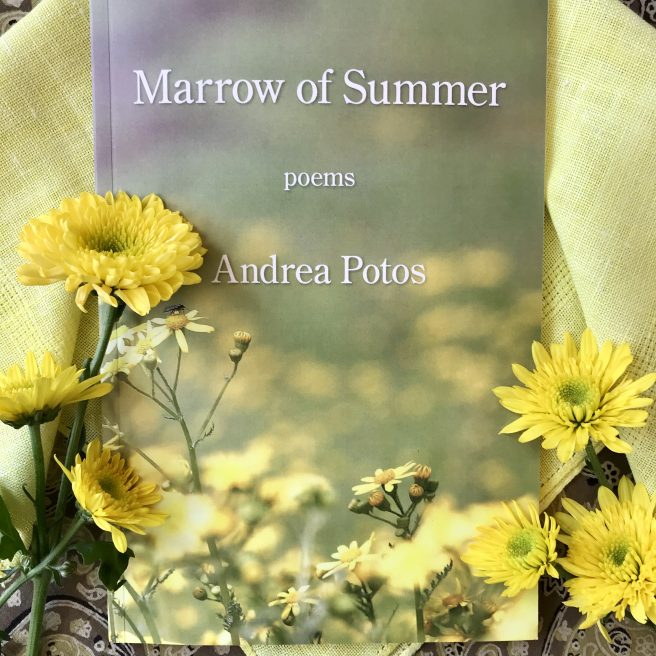
a sampler of poems from Marrow of Summer by Andrea Potos

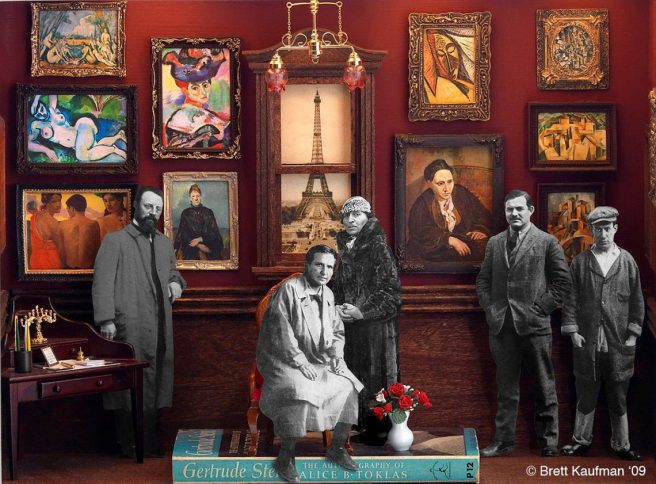
Imagine spending a stimulating Saturday evening visiting Gertrude Stein’s famous Paris salon at 27 rue de Fleurus. You’d wile away the hours hobnobbing with the likes of Picasso, Hemingway, Matisse, Fitzgerald, and other artistes et écrivains d’avant-garde célèbre.

Gertrude Stein and Alice B. Toklas with Matisse, Hemingway, and Picasso (Brett Kaufman/bkbiography)

Alice B. Toklas might serve her famous Mushroom Sandwiches with Clear Turtle Soup, a lovely Violet Soufflé, and A Fine Fat Pullet, followed by a Tender Tart or even Custard Josephine Baker (what, you were hoping for Haschich Fudge?). 🙂

Wisconsin poet Andrea Potos revels in a similar scenario with her whimsical poem, “Imagining Heaven,” just one of the many finely crafted gems from her latest poetry collection, Marrow of Summer (Kelsay Books, 2021).

In some ways a companion to Mothershell (Kelsay Books, 2019), where Andrea lovingly distills fond memories of her mother Penny, Marrow of Summer is written “For all the beloveds, gone on,” honoring not only Penny, but her grandmother, father, and lost friends.

With intuitive insight, Andrea captures small revelatory moments, where gratitude, joy and hope eclipse the weight of loss and longing. It could be the whirring of hummingbird’s wings, the somber sound of the cello, or the startling flame of cardinal feathers: she is always fully present to wonder and willing to embrace the miraculous. 

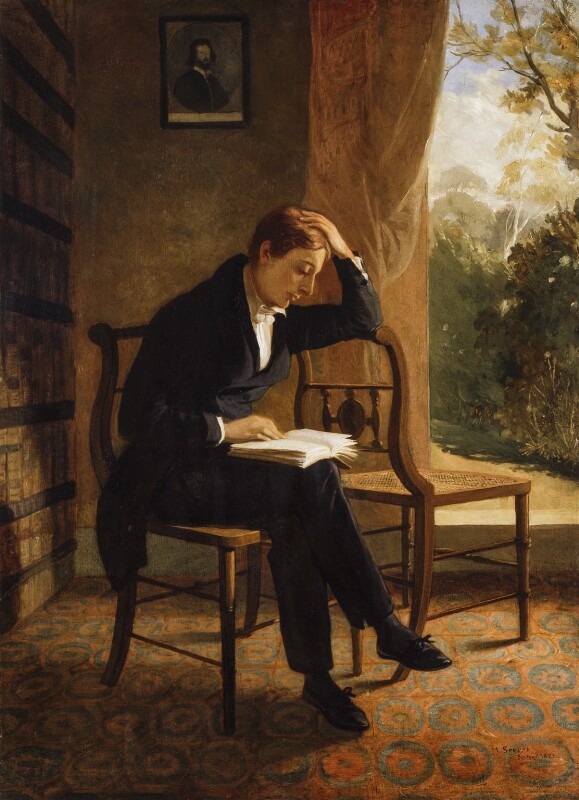
John Keats portrait by Joseph Severn (1821-23)

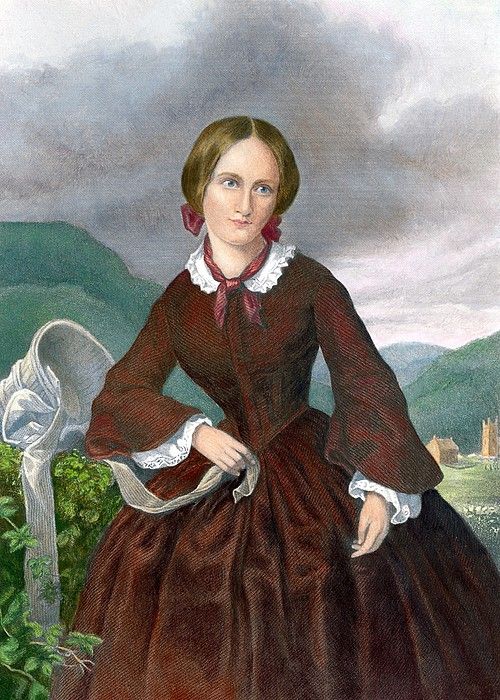
A fascinating aspect of Andrea’s work is how she cultivates a romantic, ever blossoming interior landscape — fertile ground where art, music, history, travel, and literature happily commingle to inform her poetic process. Her affinity for John Keats, the Brontës, Emily Dickinson and Renoir makes it easy to picture her thriving in a century gone by.

19th century colorized engraving of Charlotte Brontë by William Jackman

I thought it would be fun to share several poems from Marrow of Summer that speak to her writing and the beloved creatives who inspire her. I thank Andrea for sharing a little backstory for each poem along with personal photos. I must admit, her idea of heaven is pretty close to mine. 🙂

*

Continue reading

poetry friday roundup is here!

“Poets sing our human music for us.” ~ Carol Ann Duffy

Welcome to Poetry Friday at Alphabet Soup!

Hope you’re having a good April and enjoying National Poetry Month, whether you’re reading, writing, listening to, or discovering new poets (or all of the above). 🙂

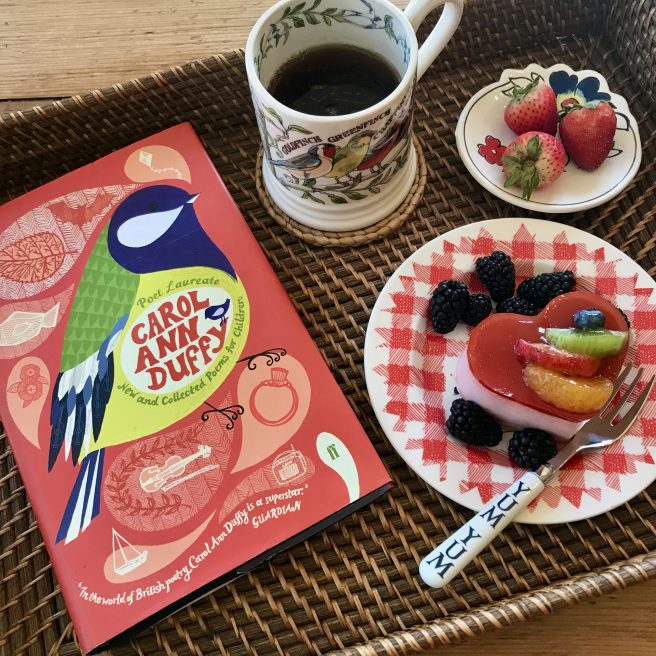
I do love poems about poetry, and can’t think of a better time to share this favorite by former UK Poet Laureate Carol Ann Duffy.

I found it in her New and Collected Poems for Children (Faber & Faber, 2014), which includes some new verses along with work from four of her award-winning collections. It’s simply chock full of goodness — there’s even an alphabet poem which I should share some time.

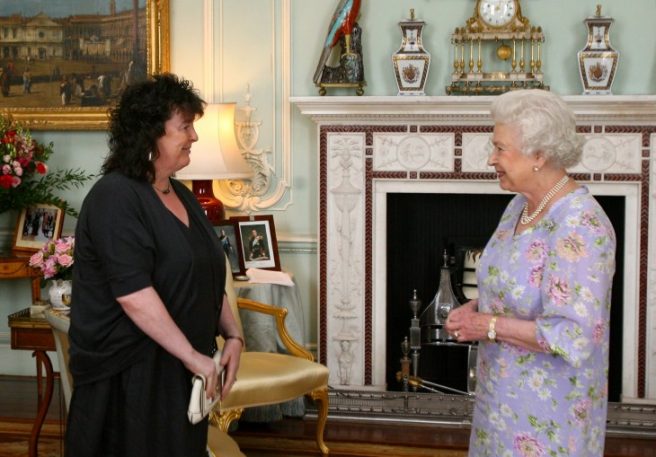
The Queen receives incoming Poet Laureate Carol Ann Duffy (July 2009).

I find it interesting that UK Poet Laureates serve for such long terms. Although they’re now appointed to 10-year fixed terms, prior to 1999, they served for life (upon recommendation from the prime minister and approval of the sovereign). 

Carol Ann’s tenure was from 2009-2019. She was the first female, the first Scot, and the first openly gay and bisexual poet to be so honored, breaking a longstanding tradition of almost 400 years! UK Poet Laureates receive an annual honorarium and a barrel of sherry. 🙂

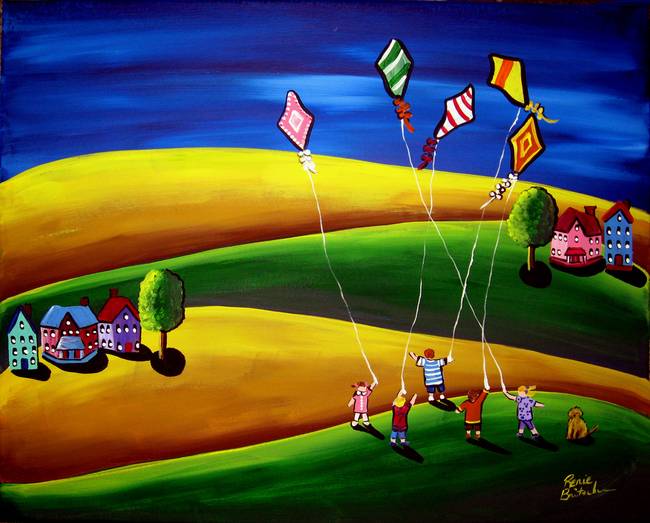
“Flying Kites” by Renie Britenbucher (2011)
THE WORDS OF POEMS
by Carol Ann Duffy

The words of poems are nails
which tack the wind to a page,
so that the gone hour 
when your kite pulled you over the field
blows in your hair.

They’re hand-mirrors, a poem’s words,
holding the wept tears on your face,
like a purse holds small change, or the breath
that said things.

                                   They’re fishing-nets,
scooping sprats and tiddlers out of a stream
or the gleaming trout that startled the air
when you threw it back. The words of poems

are stars, dot-to-dots of the Great Bear,
the Milky Way your telescope caught; or breves
filled with the light of the full moon you saw
from your bedroom window; or little flames
like the tongues of Hallowe’en candles.

The words of poems are spells, dropping
like pennies into a wishing-well, remember
the far splash? They’re sparklers,
scrawling their silver loops and hoops
on the night, again in your gloved fist
on November the Fifth.

They’re goldfish
in their sad plastic bags at the fair,
you stood there. The words of poems
are coins in a poor man’s hat; the claws of a lost cat.
The words of poems are who you were.
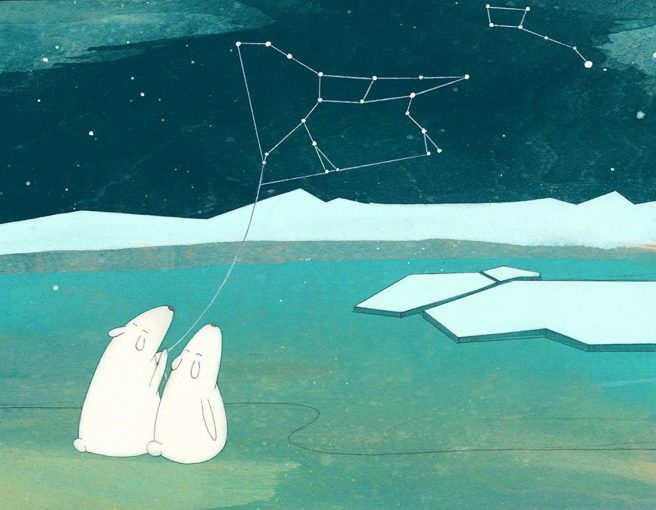
“Ursa Major” by Kristiana Parn

*

Now, please leave your links with the dashing Mr. Linky below. Enjoy gallivanting from blog to blog, reading the many words of poems being shared this week. Thank you for joining us and have a nice weekend. You can find the NPM Kidlitosphere Roundup at Susan Bruck’s Soul Blossom Living.

*

*

Another bite for the road.

*Copyright © 2021 Jama Rattigan of Jama’s Alphabet Soup. All rights reserved.

the promise of spring, the joy in your heart

“My Little Guardian” by Cristine Mihailescu

Hello, dear friends — Olá queridos amigos!

Let’s celebrate spring with a song. How about some jazzy bossa nova?

You’re probably familiar with Antonio Carlos Jobim’s iconic, “The Girl from Ipanema,” which won a Record of the Year Grammy in 1965, but do you know “Águas de Março” (“Waters of March”)?

In addition to composing the music, Jobim wrote both the Portuguese and English lyrics. With its comely central metaphor, these lyrics could also be considered the coolest stream of consciousness list poem ever.

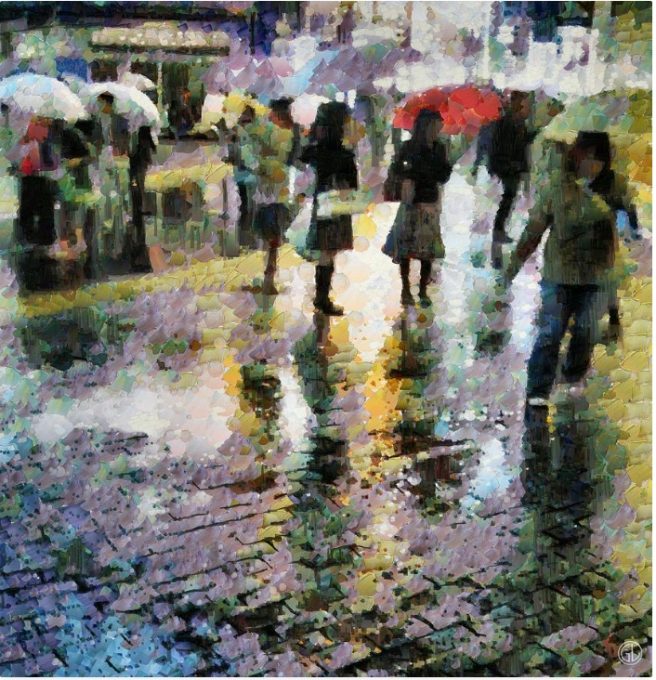
“At Last Spring Rain” by Gun Legler

It was inspired by Rio de Janeiro’s rainiest month, when sudden storms and heavy winds cause flooding in some parts of the city.

“The lyrics and music have a constant downward progression much like the water torrent from those rains flowing in the gutters, which typically would carry sticks, stones, bits of glass, and almost everything and anything.”

Let the “Waters of March” wash over you with its refreshing, relentless stream of cleverly juxtaposed images, upbeat tempo, and playful spirit. There’s no stopping the river of life.

Continue reading

e. e. cummings o’clock (kisskiss)

“A clock is a little machine that shuts us out from the wonder of time.” ~ Susan Glaspell

The sunlight claps the earth, and the moonbeams kiss the sea: what are all these kissings worth, if thou kiss not me?” ~ Percy Bysshe Shelley

Spring is practically here and love is in the air. Why not count the minutes with kisses? 🙂

9.

there are so many tictoc
clocks everywhere telling people
what toctic time it is for
tictic instance five toc minutes toc
past six tic

Spring is not regulated and does
not get out of order nor do
its hands a little jerking move
over numbers slowly

                                      we do not
wind it up it has no weights
springs wheels inside of
its slender self no indeed dear
nothing of the kind.

(So,when kiss Spring comes
we'll kiss each kiss other on kiss the kiss
lips because tic clocks toc don't make
a toctic difference
to kisskiss you and to
kiss me)

~ from erotic poems by E.E. Cummings (W.W. Norton & Co., 2010)

*

How’s that for sweet seduction? 🙂

Indeed, Cummings makes a great case for unbridled passion — no regulated constraints, no measured monotony. Just bring on the sensuous delights, surprising, even sudden. For something this delicious, toss your clocks out the window. After all, love has a way of making time stand still.

As you probably know, Cummings wrote many poems celebrating spring and love, often defining one in terms of the other. I think of “O sweet spontaneous earth . . . thou answerst them only with spring,” “we’re alive,dear:it’s(kiss me now)spring!,” “springtime is lovetime and viva sweet love,” or stanzas like this one:

spring!may--
everywhere's here
(with a low high low
and the bird on the bough)
how?why
--we never we know
(so kiss me) shy sweet eagerly
my
most dear

*

Continue reading