[poem + giveaway] the aunts go marching one by one

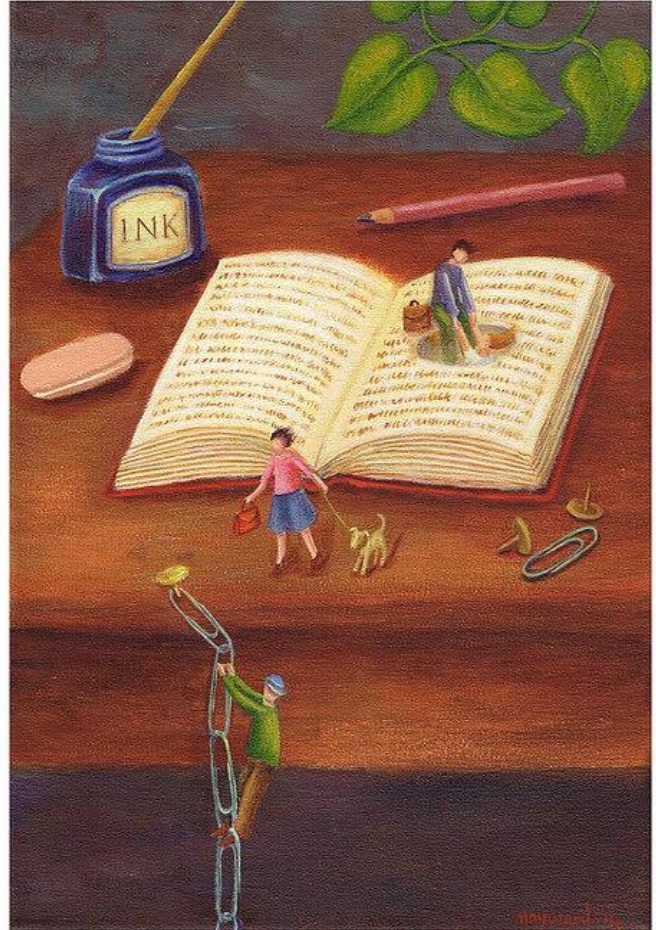
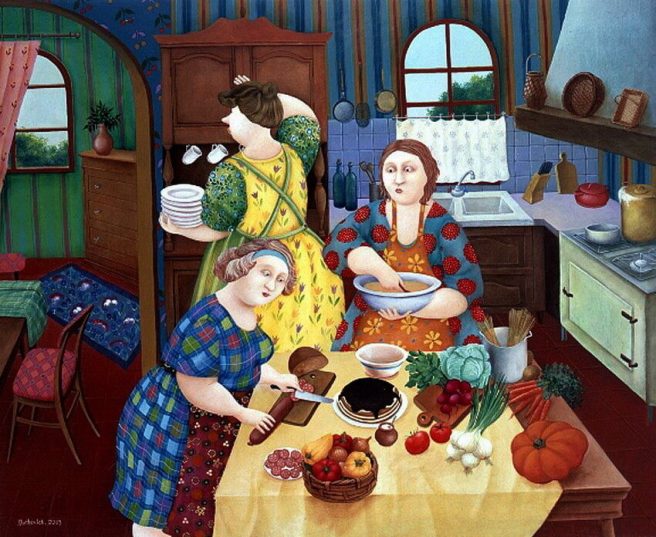
Art by Elena Narkevich.
THE AUNTS
by Linda Lee (Konichek)

Mom had seven sisters. We cousins have always
called them, "The Aunts." They were at each of
our births, wonder women, who encircled us with
a golden lasso of love that kept us safe.

No matter what we needed, "The Aunts" were there;
they came to coo and fuss over new babies, bring
food and hugs to funerals, attended every milestone.

"The Aunts" made each family event a noisy, happy
party, shared jokes, gave lots and lots of advice and --
best of all -- brought special presents, wrapped in hugs.

"The Aunts" grew up washing dishes and waiting tables
in Grandma's restaurant; they were bound to help,
took over the work, even in someone else's kitchen.

"The Aunts'" potluck dishes could win awards at any
county fair; they always brought extra, always helped
serve, and left a spotless kitchen and recipes behind.

As carpenter's daughters, "The Aunts" could pound a nail,
paint a wall, build a shelf. Working right alongside the men, they
rebuilt the lake cottage, then taught us to swim and bait a hook.

"The Aunts" were always good sports, never too proud or too old to
wear the craziest home-made Halloween costumes or to dance the
fastest dance with little kids, or each other, at wedding receptions.

There was no money for "The Aunts" to go to college, so they read
great books, attended seminars, plays, symphonies, honed fine minds,
always asked, "Why?", searched for truth, lived their creeds.

"The Aunts" eagerly shared whatever we brought to them -- a wriggly
face-licking puppy, a fistful of wildflowers, a neat rock with fossils,
our best report card, new friends, fresh-picked berries, a fat toad.

Now we've become parents, aunts, uncles. Some of "The Aunts" have 
passed on, but the golden lasso remains, has expanded to encircle
all those we love. How can we ever live up to their heroic deeds?
They would always expect us to try, so we will . . . try!

~ from Celebrating the Heart-land (Jericho Productions, 2010).
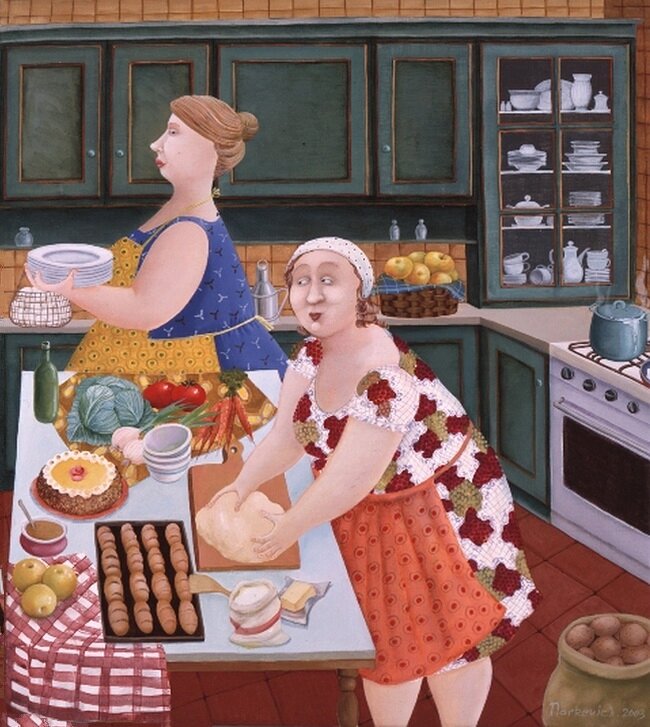
Art by Elena Narkevich.

*

Continue reading

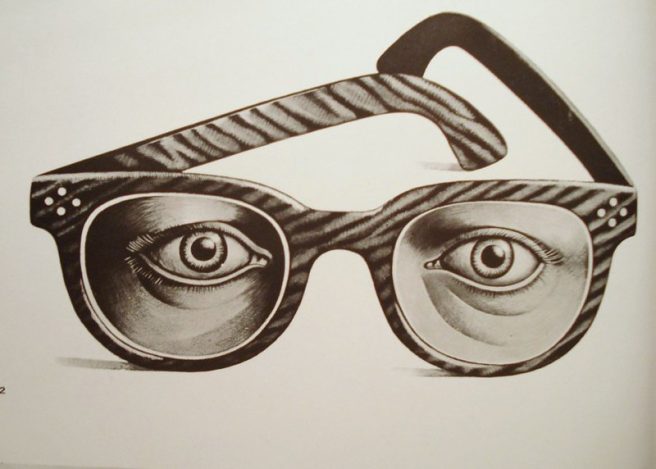
how do you see it?

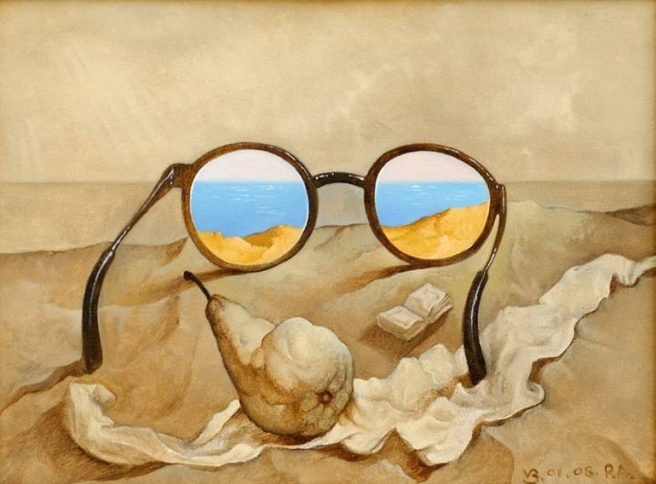
“Glasses” by Roman K
SPECIAL GLASSES
by Billy Collins

I had to send away for them
because they are not available in any store.

They look the same as any sunglasses
with a light tint and silvery frames,
but instead of filtering out the harmful
rays of the sun,

they filter out the harmful sight of you --
you on the approach,
you waiting at my bus stop,
you, face in the evening window.

Every morning I put them on
and step out the side door
whistling a melody of thanks to my nose
and my ears for holding them in place, just so,

singing a song of gratitude
to the lens grinder at his heavy bench
and to the very lenses themselves
because they allow it all to come in, all but you.

How they know the difference
between the green hedges, the stone walls,
and you is beyond me,

yet the schoolbuses flashing in the rain
do come in, as well as the postman waving
and the mother and daughter dogs next door,

and then there is the tea kettle
about to play its chord --
everything sailing right in but you, girl.

Yes, just as the night air passes through the screen,
but not the mosquito,
and as water swirls down the drain,
but not the eggshell,
so the flowering trellis and the moon
pass through my special glasses, but not you.

Let us keep it that way, I say to myself,
as I lay my special glasses on the night table,
pull the chain on the lamp,
and say a prayer -- unlike the song --
that I will not see you in my dreams.

~ from The Trouble With Poetry: And Other Poems (Random House, 2005).

*

The way I see it, there are two ways of reading this poem.

1. With standard glasses, for a general impression.

Perhaps the speaker is trying his darndest to get over a break-up, or to avoid falling in love with someone. His lighthearted, carefree tone, as he whistles “a melody of thanks” to his nose and ears, and sings “a song of gratitude” to the lens grinder and even the lenses themselves, is novel and amusing. Yet we sense his vulnerability, his determination to protect himself. He seems to be in denial.

Continue reading

Jail Break with Roger McGough and Banksy

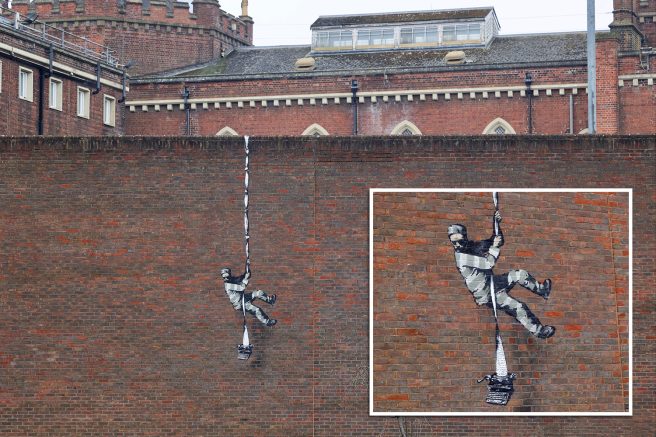
“Create Escape” by Banksy
HOW TO ESCAPE FROM PRISON
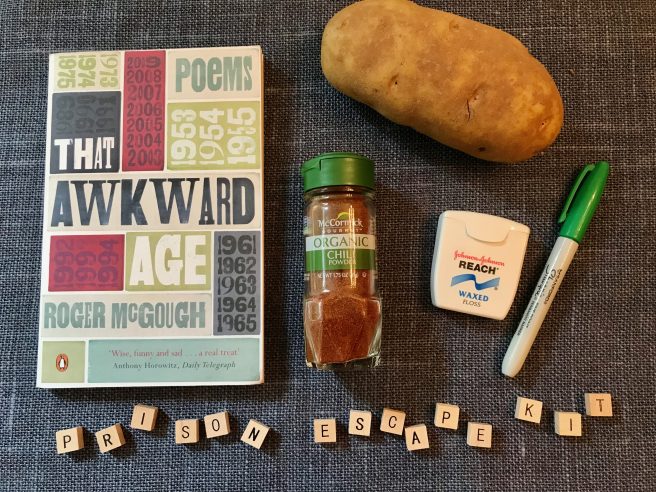
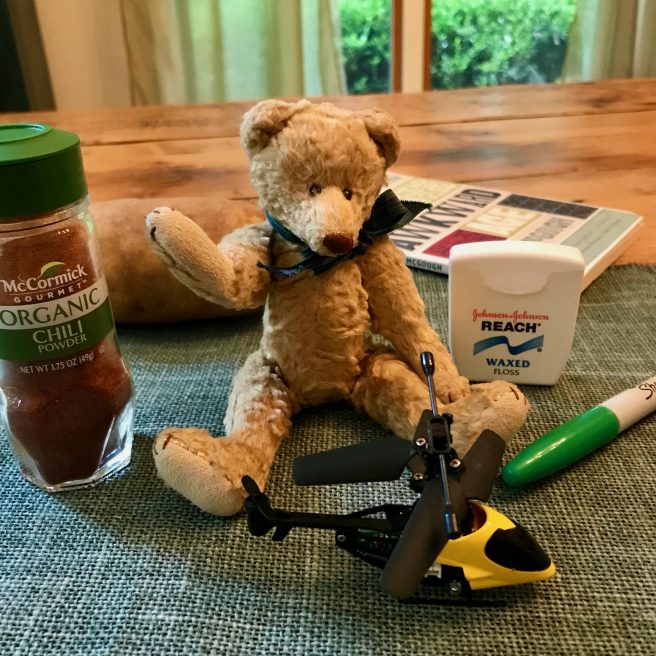
(using only dental floss, a large potato,
chilli powder and a green felt-tip pen)

by Roger McGough

Rise from your bunk nice and early
because today will be your Big Day.
Remove the dental floss from its handy container
and tie one end around the bars of your cell window.
Leave the rest dangling.

Peel the potato. As you are unlikely to own
a potato peeler or a Swiss Army knife
you must bite into it and break off
little pieces. Spread the mulch around
the floor of your cell nearest to the door.

I bet you know what to do with the felt-tip?
Correct. Draw green spots all over your face,
mess up your hair, then lie down on the bed
and like plague victims do in the films,
make loud wailing noises. You hear footsteps.

Having observed you through the spy hole,
the warder, moved by your pitiful state,
will unlock the door and rush in. Whoosh.
He will slip on the peelings, fall clumsily,
and skid across the length of the floor.

While he lies helpless on his back
like a giant cockroach, throw the chilli powder
into his eyes, and during the confusion,
leap off the bed and tie the loose end
of the floss to the inside handle of the door.

Jump back on the bed and continue to wail.
But be warned, he will be really angry now,
and threatening you with terrible revenge
he will stagger to his feet and storm out,
slamming the heavy metal door behind him.

Magic! The dental floss, suddenly strengthened
and made taut, will tug the bars out of the window,
leaving enough space for you to squeeze through
and drop into the yard below where the helicopter,
engine running, is ready to whisk you off to freedom.

(Helicopter?
Oh yes, I forgot to mention the helicopter.)

~ from That Awkward Age (Penguin Books, 2009)

*

So fun! One never knows when these tips might come in handy. 🙂

It seemed a good idea to pair McGough with graffiti artist Banksy, as both are British creatives beloved by the general public. They’ve made poetry and art accessible to the average person with their unconventional ideas, inventive skills, and a lack of pretension.

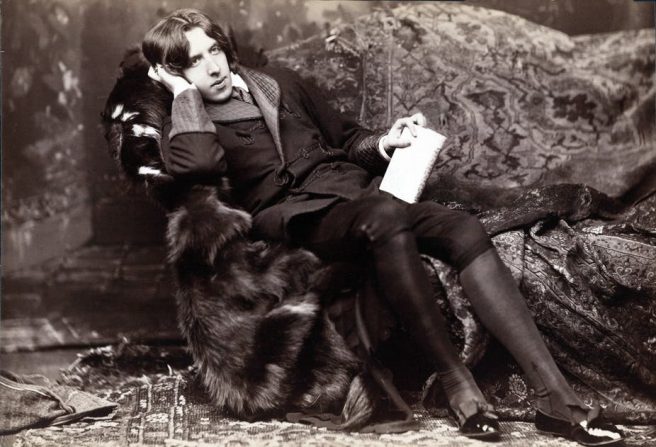
Banksy painted “Create Escape” on the outside wall of Reading Prison last year. The inmate, shown escaping via a knotted spool of paper from a typewriter, is thought to be Irish poet and playwright Oscar Wilde, who served two years’ hard labor for committing “gross indecency with other men.”

Wilde was sent to the jail in 1895 following a retrial and later wrote his final published work, The Ballad of Reading Gaol, highlighting the need for reform of inhumane conditions.

Banksy confirmed the work was his in a video first shared on Instagram, in which he shows himself spray painting stencils at night. In a cheeky twist, he spoofs TV art instructor Bob Ross by overlaying his narration with the night footage.

Fascinating to watch the elusive Banksy creating one of his masterpieces:

Note: In case you do need to break out of prison sometime, Mr Cornelius would be more than happy to lend you his helicopter. 🙂

*

Master punster Bridget Magee is hosting the roundup at wee words for wee ones. Take her some dental floss in case she needs to plan her next escape, and while you’re there, check out the full menu of poetic goodness being shared around the blogosphere this week. Have a fun weekend!


*Copyright © 2022 Jama Rattigan of Jama’s Alphabet Soup. All rights reserved.

stepping into a book

Why, hello. Come right in!

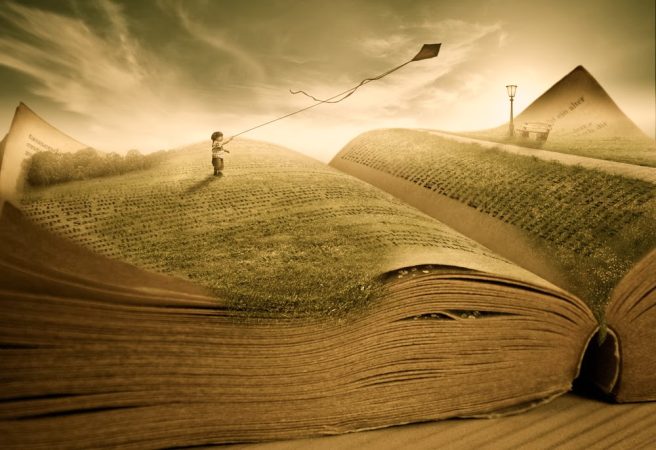
I OPENED A BOOK
by Julia Donaldson

I opened a book and in I strode
Now nobody can find me.
I’ve left my chair, my house, my road,
My town and my world behind me.

I’m wearing the cloak, I’ve slipped on the ring,
I’ve swallowed the magic potion.
I’ve fought with a dragon, dined with a king
And dived in a bottomless ocean.

I opened a book and made some friends.
I shared their tears and laughter
And followed their road with its bumps and bends
To the happily ever after.

I finished my book and out I came.
The cloak can no longer hide me.
My chair and my house are just the same,
But I have a book inside me.

~ from Crazy Mayonnaisy Mum (Macmillan, 2004).
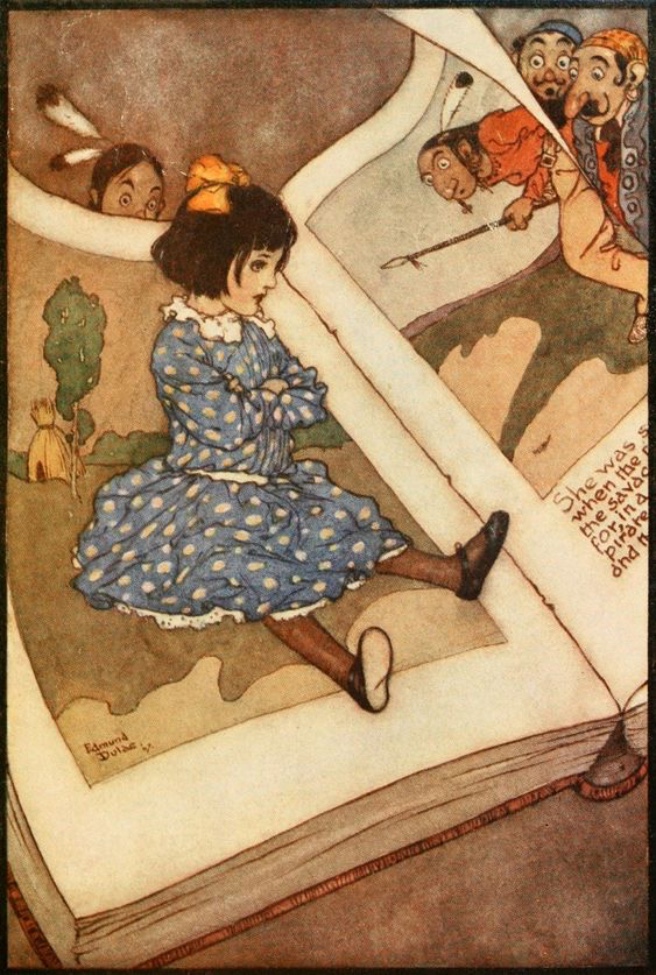
Edmund Dulac (Fairies I Have Met, written by Mrs. Rodolph Stawell, 1907).

*

Now I’m wondering just how many books I’ve actually read in my life so far. I wish I had somehow kept track!

I do like thinking about all the books inside me, after years and years and years of happy reading – books that have widened my world and shaped who I am.

Continue reading

star polisher or mustache twirler: what would I choose?

Brian Doyle’s prose poem got me thinking and sparked some interesting flights of fancy.

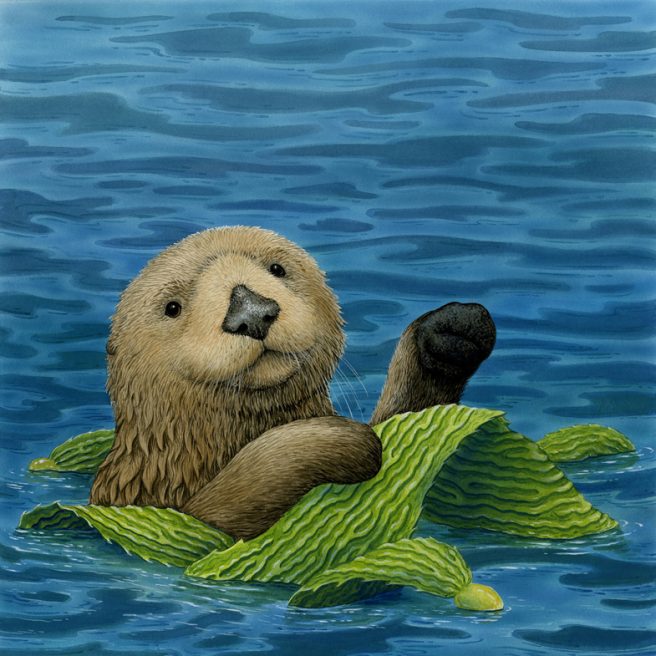
Carol Schwartz (What If There Were No Sea Otters?, 2010).
IF YOU COULD DO ANYTHING ELSE, WHAT WOULD YOU CHOOSE?
by Brian Doyle

Given another interest, or absorption, in life, asks a student
In the high school, what is it you would choose? And don't
Think about it -- just blurt out whatever leaps to your mouth.
Otter observer! I say, and perhaps half the students laugh,
But the others look puzzled. Bear expert! Bassoon maestro!
Cartoonist! Trumpeter in a ska band playing the early stuff!
Professional badger herder! The guy who brings radio back
As the coolest media ever! Editor of a magazine about jays!
He who banishes despair with a touch of his left forefinger!
He who miraculously hears yes again every afternoon when
He sends his request to be married through the holy ether to
One woman in particular! And there I pause, just as startled
As the kids at what has jumped out, and then, unforgettably,
A few kids start to applaud, and then a few more. Afterward
One shy girl says to me I sure hope I meet a boy who thinks
Like that about the woman he thinks about, and I said I hope
So too and he thinks about you, and we shook hands and she
Slipped away, and the next kid says to me, sir, really, otters?

~ from How the Light Gets In: And Other Epiphanies (Orbis, 2019).
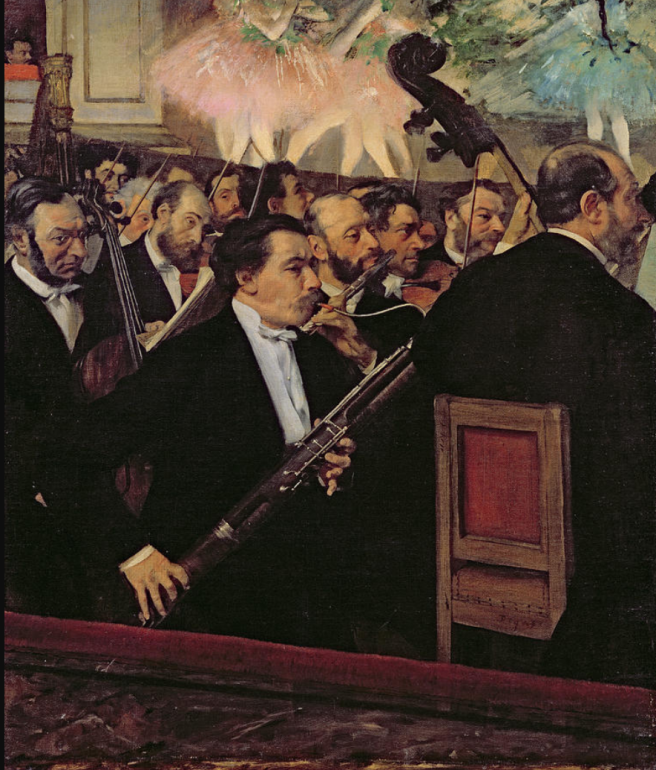
“The Orchestra at the Opera” by Edgar Degas (1870)

*

Continue reading