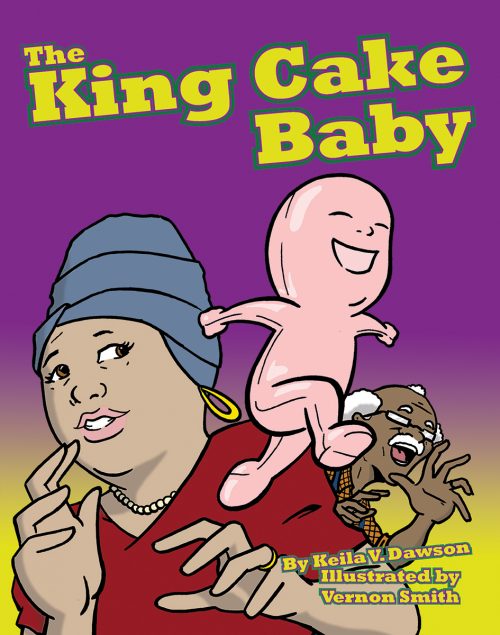
As a New Orleans native, I enjoy sharing my culture with others, especially our food and traditions. When I wrote THE KING CAKE BABY, a story about eating King Cake throughout the Carnival season, I wanted to share a taste of Louisiana with kids. That tradition has a sweet spot in my heart.
Carnival has been celebrated for hundreds of years in Louisiana and historians have traced the custom that became the modern King Cake to the pre-Christian ancient Roman rituals. During the winter solstice Saturnalia festival ordinary citizens joined in the celebration to give thanks to Saturnus, the god of sowing or seed. Partying, feasting, merrymaking, role-reversals, and making mischief were all part of the festivities. And yes, there was cake!
A fava bean was hidden in that cake and the person who found it in their piece became ruler of the day or the “Lord of Misrule.” It’s believed the festival allowed those among the lowest levels of society temporary relief from societal pressures imposed by the ruling class.
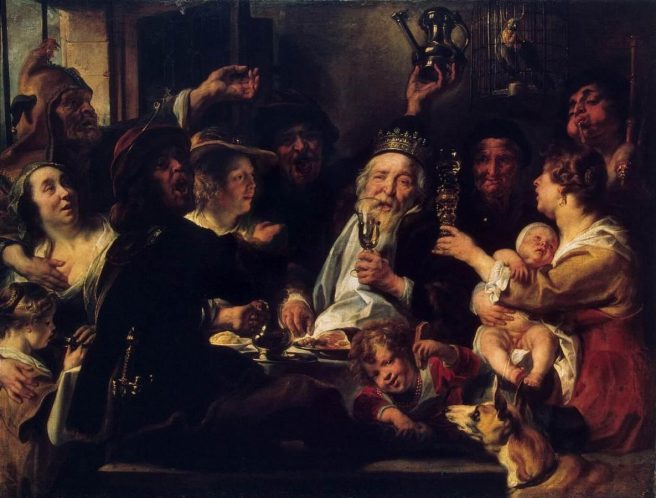
During the Middle Ages Europeans continued to celebrate the return of the sun during the winter solstice and worshipped numerous non-Christian gods. Although the church prohibited the pagan festival, the fun and festivities remained popular. Evidence suggests the church replaced the winter solstice celebration with the feast of the Epiphany on January 6, twelve days after Christmas. This date coincided with the winter solstice and the church intended to secure the worship of only one god –Jesus Christ. Also known as Kings’ Day, this feast honors the three wise men bearing gifts and recognizing the divinity of the baby Jesus. And yes, there was cake!
If you’re wondering how the good times had by all centuries ago translated into Let the good times roll and eating King Cake in Louisiana today, it’s because La Louisiane territory was once ruled by the French and the Spanish. And many customs, even laws, from Latin Louisiana are still practiced today.
Over centuries, serving kings’ cake on the Epiphany remained popular in France. Bakers in boulangeries (a bakery specializing in bread) and pastry chefs in patisseries (a bakery specializing in pastries) each wanted the sole right to sell the cake. When the king granted pastry chefs the monopoly, they made the gâteau des rois shaped into a ring. The gâteau is made of a brioche, a dough using yeast, and topped with jewel-colored candied fruit. This variety is also eaten in Spain but is known as a Tortell De Reis.
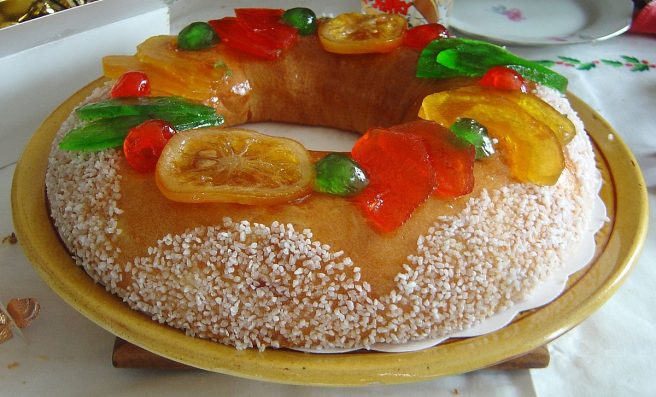
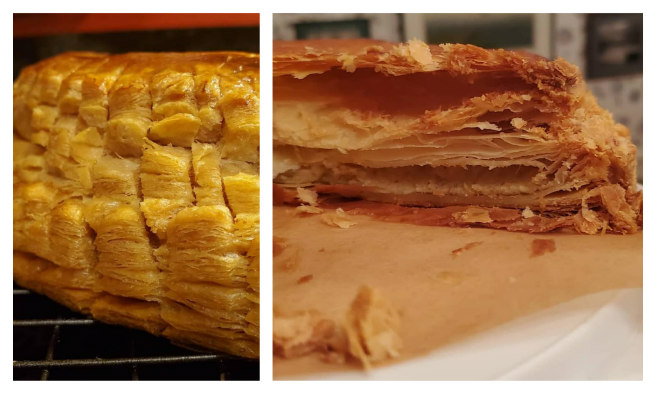
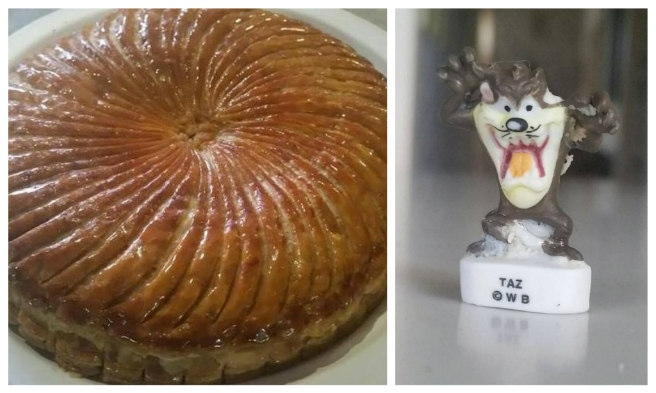
Not to be outdone, the bakers made galette des rois with a puff pastry in the shape of a pie. The names translate into “cake of kings.” Eventually small porcelain figures replaced the fève (bean) hidden in the cake. The name and the tradition of becoming king or queen when found, continued. My son is a baker and as you can see, this cake has multiple thin layers and filled with frangipane. A friend who trained as a pastry chef in Paris made the other pictured below. And I got the porcelain fève she hid inside it!
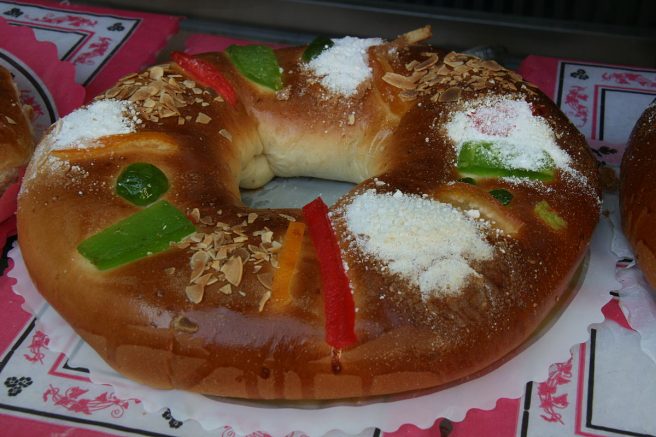
In Spain and throughout Latin America, Roscón de Reyes is eaten to celebrate the Fiesta de Los tres Reyes Mages or festival of the Three Magi on January 6. This cake is a sweet bread, garnished with dried and candied fruits.
During the early colonial period, the cakes baked in Louisiana varied depending on what areas of Europe colonizers were from. The Epiphany or Twelfth Night on January 6th marked the end of Christmas. However as the interest in celebrating a Christmas season shifted to one day, December 25, King Cake began to symbolize the beginning of the Carnival season. And today, the cake is eaten from January 6 until Mardi Gras Day.
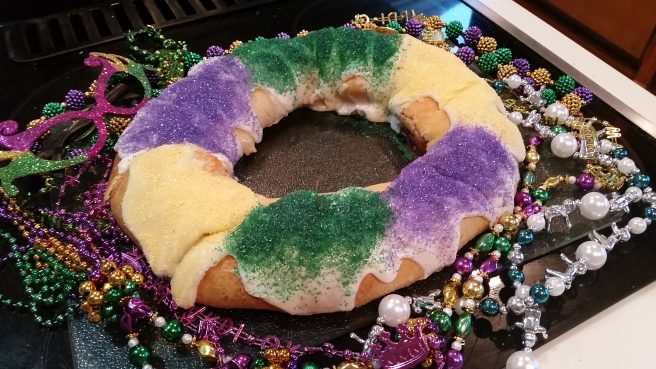
Social clubs called krewes were established and in 1872 the Krewe of Rex gave us the King of Carnival and the official colors – purple, green, and gold symbolizing justice, faith, and power. Louisiana King Cakes are decorated accordingly.
I made this traditional King Cake below filled with a cinnamon-sugar mixture using the recipe from my book.
A local bakery in New Orleans named McKenzie supplied these krewes with King Cakes and as the popularity grew, either because of expense and/or availability, the owner substituted the porcelain trinket with a small plastic baby. And today, the King Cake babies come in all shapes, sizes, and colors.
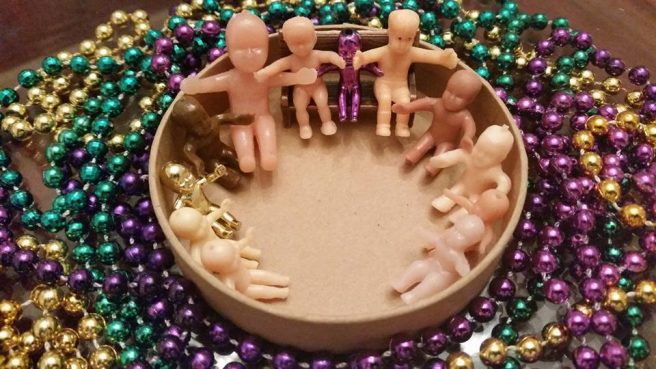
In Catholic tradition, the small plastic baby signifies the baby Jesus. And anyone who finds it is blessed and will have good luck. Another widely practiced custom is to crown whoever “gets the baby” king or queen for the day. But they are also obligated to buy the next cake.
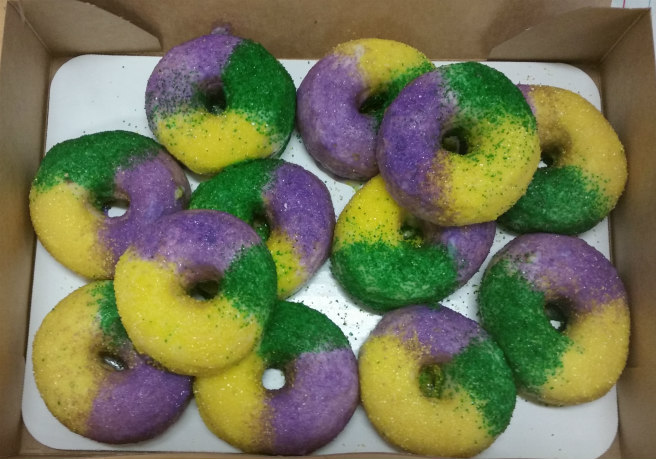
Every year bakeries and chefs get more and more creative with the King Cakes, using different variety of doughs, and fruit fillings. And you can enjoy King Cake donuts, King Cake coffee, King Cake ice cream, King Cake liquor and . . .
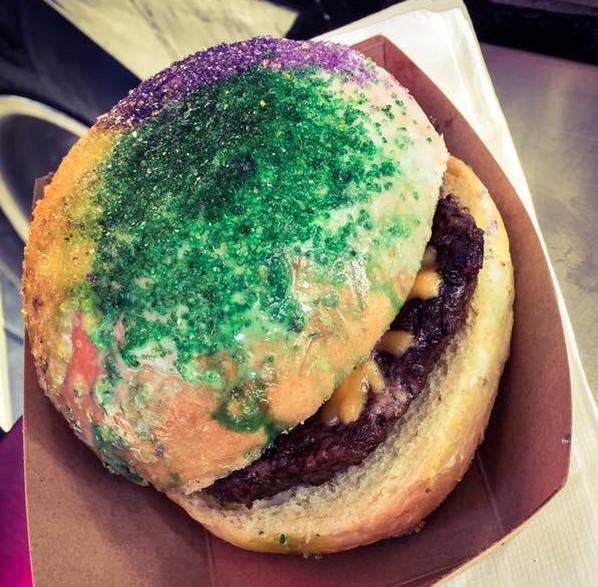
. . . King Cake Burgers!
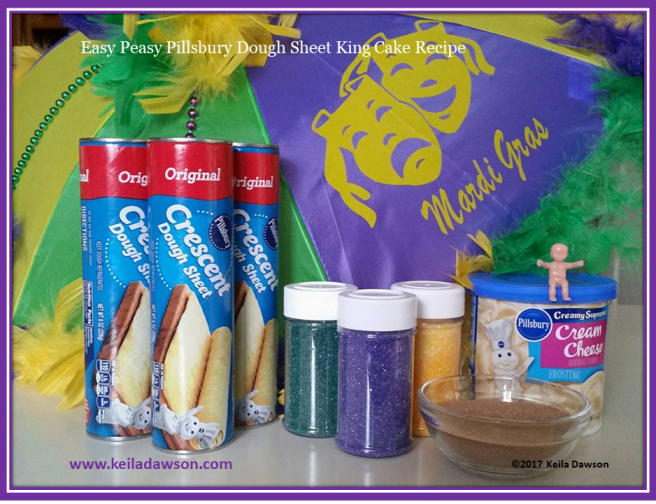
Eating King Cake is the tastiest way to celebrate Carnival and you don’t have to leave your home to do it. You can find many recipes online. In addition to the frozen bread dough recipe in my THE KING CAKE BABY, here’s my Easy Peasy Pillsbury King Cake recipe using dough sheets. Just don’t forget the baby!
*
ABOUT THE AUTHOR
 Before becoming a children’s book author, Keila Dawson worked as a teacher, school administrator, and educational consultant in the U.S., the Philippines, Japan, and Egypt.
Her debut picture book is THE KING CAKE BABY (Pelican Publishing Co. 2015), her second book, NO VOICE TOO SMALL: Fourteen Young Americans Making History, co-edited with Jeanette Bradley and Lindsay H. Metcalf (Charlesbridge) will release in September 2020.
Keila is a member of SCBWI, writes monthly author studies for the Reading for Research Month (ReFoReMo) blog, and reviews books for Multicultural Children’s Book Day. When Keila isn’t reading, writing, and visiting schools, she’s traveling, playing tennis, or digging in genealogical archives.
She is represented by Dawn Frederick, Red Sofa Literary
SOCIAL MEDIA/LINKS:
Twitter: @keila_dawson
Website: http://www.keiladawson.com
Facebook author page: @keilavdawson
*
🎉 SPECIAL BOOK GIVEAWAY! 🎈
One lucky winner will get a signed copy of The King Cake Baby. Enter the Rafflecopter HERE until February 14, 2020, at 11:59 p.m. EST. U.S. addresses and zip codes only. When time expires, the winner will be notified via email. Good Luck!! I hope you get the baby!!
* Copyright © 2020 Keila V. Dawson, for Jama’s Alphabet Soup. All rights reserved.



 Jama's Alphabet Soup