Then munch to your heart’s content, because February is National Snack Food Month!
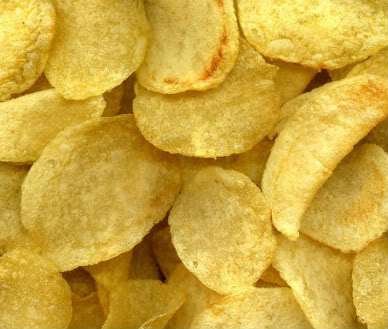
Potato chips are America’s favorite snack food — to the tune of over $6 billion worth consumed every year. But for all the chips we’ve inhaled in our lifetimes, how many of us know who invented them?
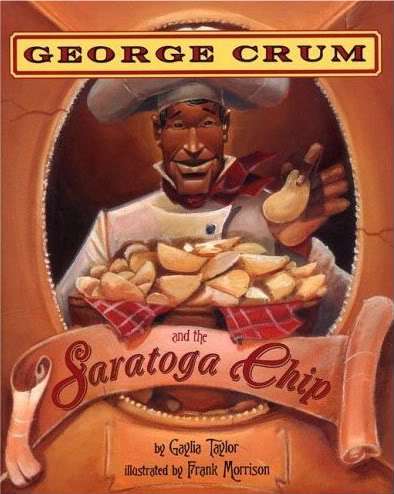
Enter, the perfect picture book biography, George Crum and the Saratoga Chip, by Gaylia Taylor, illustrated by Frank Morrison (Lee and Low, 2006). Like the perfect chip with just the right snap and crunch, this story, about a biracial chef who inadvertently invents these crispy rascals back in 1853, is both satisfying and inspiring.
Happy children, or you
Dolls, bears, other stuffed animals and toys
Leaves, twigs, sand, pine needles, mud, etc. Mud Pies and Other Recipes: A Cookbook for Dolls All the time in the world
Imagination.
I first saw this cookbook over 30 years ago. I was thrilled to find it, but disappointed that I wasn’t 8 or 9 at the time. It’s charming, a bit quirky, wholly original, and definitely timeless.
Pudding with First Pebble Press edition, published in 1983
Very often when I am feeling stuck with my own writing, I’ll thumb through this book. It wakes me up to new possibilities and turns my stilted, rutty thinking inside out. We all need this from time to time.
From the foreword:
This is a cookbook for dolls. It is written for kind climates and summertime.
It is an outdoor cookbook, because dolls dote on mud, when properly prepared. They love the crunch of pine needles and the sweet feel of seaweed on the tongue. The market place, then, will be a forest or a sand dune or your own back yard.
There are recipes for Appetizers, Soups, Salads, Sandwiches, Main Dishes, Pastries, Desserts, and Beverages — tempting favorites such as Wood Chip Dip, Tossed Leaves, Gravel En Casserole, and Pencil Sharpener Pudding. This is serious play, and children will love scavenging for ingredients and laying out a fine table for their favorite toys. The recipes are simple but never silly.
Consider Mud Puddle Soup:
Find a mud puddle after a rainstorm and seat your dolls around it. Serve.
Or Putty Fours:
If plumbers or painters are working in your neighborhood, ask them for some putty — enough to fill four acorn cups. These delicate cakes may take days to harden, so plan your party well ahead. Serves 4.
Who could resist Fried Water or Roast Rocks? And Erik Blegvad’s pen and ink drawings throughout are the perfect sides for these doll friendly dishes.
Yesterday, Pudding and I made Boiled Buttons in the alphabet soup test kitchen. We were thrilled with the result, and will serve it at our next teddy bear soiree.
BOILED BUTTONS
This is a hot soup that is simple but simply delicious. Place a handful of buttons in a saucepan half filled with water. Add a pinch of white sand and dust, 2 fruit tree leaves and a blade of grass for each button. Simmer on a hot rock for a few minutes to bring out the flavor. Ladle into bowls. Get out there and play!
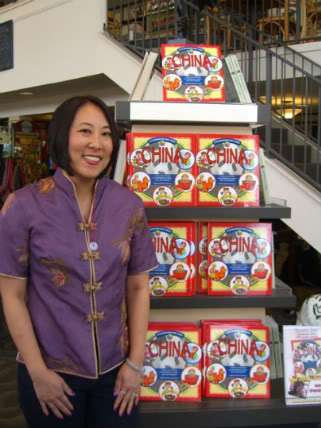
Debbi at her book launch party held at Books, Inc., Mountain View, CA
I’m very pleased today to welcome friend and children’s author, Debbi Michiko Florence, to the alphabet soup kitchen!
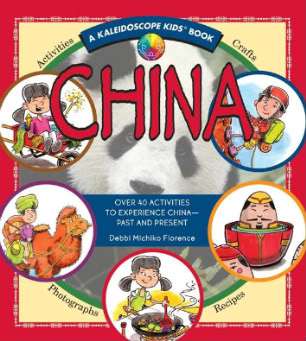
Debbi’s first book, China: A Kaleidoscope Kids Book, was just released in March, and it’s a beauty. A scrumptious volume containing over 40 activities and fascinating chunks of info about everything from China’s history, geography, culture, language, arts, to the all-important topic of food, it is the perfect hands-on learning resource for school or home.
Did you know the wheelbarrow was invented in China? What is the typical school day like for kids there? Maybe you’d like a calligraphy or chopsticks lesson, or are in the mood to embroider, make a clay soldier, juggle, or feast on mooncakes or dumplings. With an appealing format full of photos, cartoon drawings, maps, and diagrams, CHINA will surely get kids 8-13 excited and keep them engaged.
Debbi is visiting today from her home state of California, where she lives with her husband, teenage daughter, and rat terrier, Trixie. A full-time writer, Debbi has also been a fifth grade teacher, pet store manager, raptor rescue volunteer, and an Associate Curator for Education at the Detroit Zoo. She loves to travel, and has lived in such interesting places as Mexico City and Shanghai. Her next book, JAPAN, is due out next year.
Congratulations on getting your first book published, Debbi! Since CHINA is part of an existing series, how did this project come about? How much leeway were you given in selecting specific topics to include?
Thank you! I was very lucky to be asked to write this book. My friend, Nancy Castaldo, who has written many fabulous activity books on nature and the environment, was speaking to an editor when the editor mentioned she was looking for someone to write a book for kids about China. Nancy, who has read my work, recommended me and mentioned that I was living in Shanghai. The editor spoke with my agent, I wrote an outline, and I was given the contract! I have a background in education, so I think that helped. Because my book would be the first in the Kaleidoscope Kids Series under the new publishers, I had a lot of leeway. I was able to pick and choose the topics, with some guidance from the editor.
The research must have been a lot of fun. How did you gather all your information? Can you describe any especially interesting, surprising, or even frustrating experiences you had during this process?
It was a bit overwhelming at first. There was so much to learn and know and research and double-check! I probably over-researched. I was grateful to my editor for fact-checking and to my Mandarin teacher for her help. Because I lived in China, I was able to experience some of the things I wrote about first hand. That was pretty exciting!
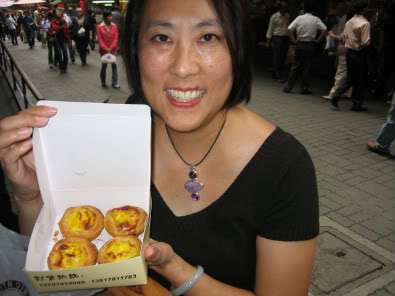
Debbi with her favorite dim sum treat, dan taht (egg custard), at Yuyuan Garden, Shanghai, China
I think the most frustrating experience for me was not knowing when to stop researching and start writing. I whined to friend and author Jerry Spinelli and he gave me this advice: “You can sit on the bench and study the game forever, but you’ll never score until you take off your sweats and start shooting.” Wise words! I think I knew I had enough research material, but was scared to start writing. Once he said that, I started writing, and the words just flowed, because by that time I did indeed know the material.
Briefly take us through the stages of bringing this project to completion, once you signed the contract.
I spent weeks and weeks researching and taking copious notes by longhand on yellow legal pads. I was lucky to have a large desk in China! I had piles of paper all over the desk and on the floor. Also on the floor, I had a huge map of China. It was like walking through a maze in my office.
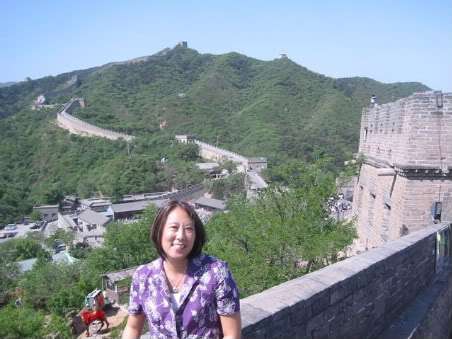
Debbi at the Great Wall
I typed up my manuscript on my computer, using my notes as I wrote. I kept separate files for each section. Once I finished writing the entire draft, I created and wrote up the activities to go with the text. That was the most fun for me, since I had had experience with that when I was an outdoor school teacher, classroom teacher, and Associate Curator of Education of a zoo.
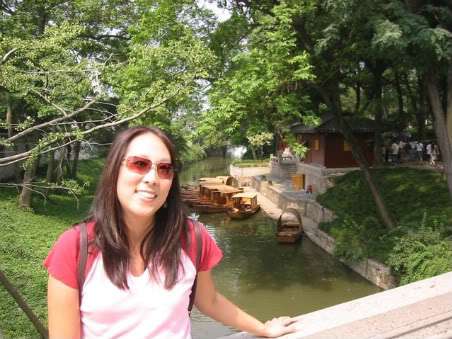
In front of a canal in Suzhou, China
I revised and proofed my manuscript and had my daughter test the activities to make sure the instructions were clear and that the activities worked out. I had to make some adjustments. I turned in my draft to my editor. We went back and forth on rewrites and edits. I proofed a final galley and then it went to print! The entire process took place within a year!
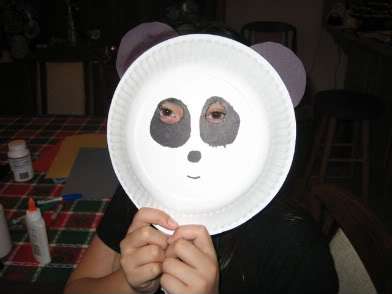
Debbi’s daughter tests the panda mask activity from CHINA
I especially love the chapters, “The Inventive Chinese,” “More Than Chow Mein,” and “China’s Amazing Art.” Do you have a favorite chapter?
I enjoyed writing all the chapters, but my favorite is a toss up between “More Than Chow Mein” (I love food) and the wildlife section. My college degree is in zoology and I’ve always had a strong interest in animals!
What’s next for you?
My agent is submitting my YA novel, so in the meantime, I’m trying to figure out what my next project will be. I have several WIPs in various stages. One is an incomplete first draft, another is on a third revision, and just recently, a new voice started speaking to me. This is unusual for me. In the past, I’ve always known what project was next. I’m also doing edits on my JAPAN book, a follow up to my CHINA book with Williamson Books (due out in summer of 2009).
Tell us about your general process when writing a novel. What is hardest for you? What do you feel are your strongest areas?
For my young adult novels, my process has changed over the years. I used to write a (crappy) first draft from beginning to end. Then I would spend time getting to know the characters and figuring out the story. Many revisions later, I’d have a draft I felt I could share for critique. More recently, however, a voice comes to me and I just freewrite — either scenes or dialogue, until I figure out what this character’s story is about. Then I write a (crappy) first draft. Some of those scenes/dialogue make it into the draft, but some do not. By nature, I am a plunger, making discoveries about my character and her story along the way. I don’t really outline, except that I think that my first drafts are in a way, a very long general outline.
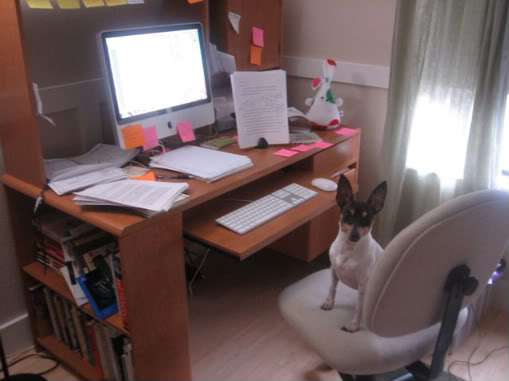
Trixie takes over Debbi’s writing space
Right now, for me, first drafts are the hardest part of writing a novel. I’m anxious to get to know the story and character, and I get frustrated that it takes so dang long. I’m much better, now, with revising drafts, especially with the smart help from my writing group!
What drew you to writing for children and young adults?
I started out writing travel articles (for a webzine) and adult short fiction. I had a couple of my short stories published in very small journals/magazines (TheBerkshire Review, AIM Magazine). When I started writing my first novel, however, I was pleased to discover it was about a teenage girl. I had the wonderful fortune of crossing virtual paths with Cynthia Leitich Smith and she generously offered advice to me. One important bit of advice that seems obvious but wasn’t to me then, was to read the genre. Cyn became my mentor and because of her I have grown as a writer! I’m forever grateful! But I digress! 😉 What drew me to writing for young adults? I think my emotional age is stuck at 15. The period between ages 14-18 is the most vivid for me.
What kind of child and teenager were you? Do you remember the first story you ever wrote?
Well, if you ask my mom, she’ll tell you I was an angel. I think she has selective memory. 😉 It should not surprise anyone who knows me that I have always loved to read and write.
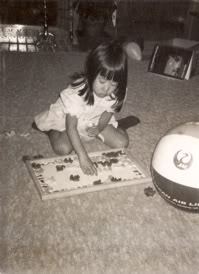
The first story I “wrote” was in picture form. I was probably in kindergarten or first grade. I can’t remember a time in my life when I wasn’t writing stories. The first real story I wrote that was “published” was in 4th grade for our class magazine. It was a story about Fluffy the dog and her puppies. I wonder if I have that stashed somewhere? Hmmmmm.
The author at work.
I’m a firm believer that people are what they eat. Please describe your favorite childhood food-related memory.
Then I am an umeboshi — a Japanese pickled plum. I just recently learned that it really isn’t a plum, but a type of apricot. Umeboshi is very sour and usually eaten with rice, but I love to eat it as a snack, plain. As I type this, I’m salivating!
When I was a toddler and visiting my great-aunt in Japan, she had a bunch of umeboshi drying in the sun outside. As I hear the story, I ran outside, grabbed handfuls of umeboshi, and shoved them in my mouth.
Today, if I receive homemade umeboshi, Bob (my husband) knows he can’t have any. I’ll share the store-bought kind, but homemade is all mine!
Do you like to cook? If so, what is your specialty? What food inspires your best work?
Despite my Soup Sister posts on my blog, I do not really love to cook. My husband is the chef in the family, but with him traveling so much for business, he hasn’t been around to feed me. That’s why I got the soup cookbook (New England Soup FactoryCookbook) and started making soups. I’m actually enjoying it. Perhaps I’ll branch out into other types of food! I don’t have a specialty yet. Ask me in a year or so! 🙂
Making dumplings from the recipe included in CHINA
What three authors, living or deceased, would you love to have dinner with?
Madeleine L’Engle, Barbara Kingsolver, Judy Blume.
QUICK BITES
Describe yourself in 5 words.
I am incapable of that. 😉
Passions besides reading and writing
Family and friends, fine dining, my dog, blogging, shopping, vacations!
Books/authors that have had the most influence on your writing.
Too many to list!
Describe your fantasy meal.
Foie gras, Sydney rock oysters, Maine lobster, steamed artichoke, sushi, mom’s potato salad, Bob’s BBQ ribs, Japanese rice, and of course umeboshi! Dessert: lemon meringue pie and cupcakes.
Okay, that’s not really my fantasy meal, since those things combined wouldn’t taste great together. But those are some of my favorite foods!
3 fondest wishes.
I would spend all month trying to come up with an answer for this! 😉
Please share a favorite recipe with us.
You know, I was going to share a soup recipe, but I think I’ll share the ONE thing I can make without looking at a recipe and kept me from starving when I was in college. (Thanks, Mom!) I’m no gourmet cook! I recently started making this again and both Bob and my daughter love it!
HAMBURGER STROGANOFF
1 lb ground beef
1 onion, diced
2 cloves of garlic, diced
oil
1 small carton fresh mushrooms, sliced
3 T flour
1 can condensed cream of mushroom soup
water
8 oz. sour cream
cooked Japanese rice (or noodles if you must)
Saute onions and garlic in oil. Brown ground beef. Drain oil. Add mushrooms and flour, stirring over medium high heat until mushrooms are cooked through. Add cream of mushroom soup and 3/4 can of water. Stir well. Cover and simmer on low for about 10 minutes, stirring occasionally. Remove from heat and add sour cream. Mix well. Serve immediately over rice. (It’s the only way I’ll eat it, no pasta for me on this dish!)
More Debbi, please:
A visit to her fabulous website is a must. Debbi’s archive of interviews with award-winning children’s authors dates back to 2001. Especially fun and fascinating is Trixie’s interview with Debbi!
Debbi’s Live Journal blog, One Writer’s Journey, is a warm and welcoming spot to chat and keep up with all of her adventures.
Finally, there is an excellent interview with Debbi at the Women on Writing ezine, where she offers advice for beginning writers and more insight into her writing process.
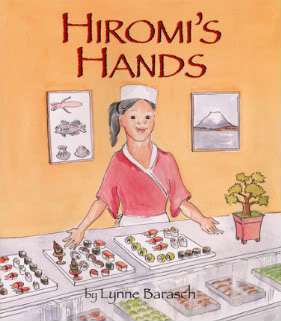
For this last Nonfiction Monday of Asian Pacific Heritage Month, here are two exceptional picture book biographies. First up is Hiromi’s Hands by Lynne Barasch (Lee and Low, 2007).
This is my favorite PB biography from last year. Sure, I might be a tad partial to a book about food. But the story of how Hiromi Suzuki became one of the first female sushi chefs in New York City touches on so many inspiring themes — the value of hard work and determination, respect for tradition, family love, and the importance of progressive thinking in realizing goals.
Told from Hiromi’s point of view, we see how her father, Akira, trained to be a sushi chef in Japan, working long hours for three years before he was even allowed to slice the fish. He is hired by a restaurant in NYC, and shortly thereafter opens his own restaurant, Akasaka. This is rewarding but demanding work, and Hiromi misses her father. When she is eight, she begs him to take her to the fish market where he purchases for the restaurant.
Recognizing her desire to become a sushi chef, Akira allows Hiromi to help in his restaurant when she is 13, even though the profession has always been dominated by males. Like her father, Hiromi works long and hard for 3 years before she is given her own yanagi (sushi knife), to truly begin her apprenticeship. The first person point of view will engage and endear readers, young and old alike.
Lynne Barasch’s ink and pastel watercolours are light, airy, and just detailed enough for depicting the bustling fish markets in Japan and NYC, trays of colorful sushi, and the warmth of father and daughter. There is an excellent glossary and pronunciation guide listing all kinds of sushi, as well as an author’s note about Hiromi, who was a childhood friend of the author’s daughter. Did I already mention the mouthwatering pictures of sushi?


 Jama's Alphabet Soup