
Dear Paul,
Today’s a very special day, and I’ve been looking for you everywhere.


photo of Jakob Dylan by Herb Ritts for Vanity Fair.
So, how’s your summer going so far?
Behold, a young blue-eyed musician — talented, sensitive, good-looking, and bound to set your heart a-flutter. Yes, whether you need to mellow out in your hammock, or spice up your salsa, Jakob Dylan’s your man.
I shamefully admit I overlooked Jake’s music entirely. Didn’t pay any attention to his albums with the Wallflowers. I thought, well, he is Bob Dylan’s offspring, yes, but how good could he be? He could never come close to his dad’s music; I would only find myself comparing the two and be disappointed. But earlier this year, I heard about Jakob’s first solo acoustic album, Seeing Things, and gave it a listen.

photo by josh c.
I fell into it right away. Love his smokey vocals, crisp guitar, lyrical songwriting and relevant themes. In this age of over-produced teeny bop mediocrity, it’s refreshing to hear a record that’s pared down to the basics of accessible emotion and honest, personal vision. Seeing Things gets better with every listen, and its subtle messages will sneak up on you. I’m one of many who have underestimated Jakob’s talents. He looks like Bob, some of his music harkens back to Bob, but Jakob is Jakob.

I’m happy to share some of his goodness today. Listen with an open mind, and take the time to let his sound wash over you, easy and clean. Be sure to click over to the PBS website featuring two videos of Jakob on Austin City Limits. One features a track from the album, “Something Good This Way Comes,” and the other is an interview. When you see Jakob talking, you will see for yourself just. how. hot. he. is! For the record, he’s also one of 18 beautiful male specimens vying for the title of Handsomest Man in the World in Vanity Fair’s June poll. Guess who I voted for? Good genes, all around. ☺
Here’s one of my fave songs from Seeing Things, “Will it Grow,” :
Click here if you wish to engage in more unabashed swooning and drooling over Jake on this fine summer day!
“I believe 100% in the power and importance of music . . . I don’t know much about God. But if everything does originate with God, then certainly songs do as well.” ~ James Taylor
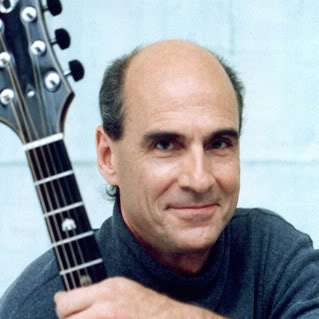
So, it’s all about comfort here at alphabet soup this month, and whenever I want to lick my wounds, find my center, or just kick back and reflect, James Taylor, who turned 61 yesterday, is my man.
Not too long ago, a fan forum on Facebook asked us to name our top five James Taylor songs. Immediately, these came to mind:
Carolina in My Mind
Sweet Baby James
Close Your Eyes
Long Ago and Far Away
You’ve Got a Friend
All but the last are Taylor’s own compositions. Each is gorgeously lyrical, calming and reassuring. His unmistakable, warm baritone voice has been described as the equivalent of a photogenic face. Some things just come to this world whole and perfect.

“I’ll let you be in my dreams, if I can be in yours.”
~ Bob Dylan
Come writers and critics who prophesize with your pen . . .
If you were banished to a desert island and could take along only one song to hear over and over again, what would it be?
My choice: “Like a Rolling Stone,” by Bob Dylan.
It’s a work of pure genius, which revolutionized popular music and officially marked the end of Dylan’s folk period. Even after more than forty years, the power and significance of this song have not diminished. “Like a Rolling Stone” affects me, perplexes me, challenges me. By its very nature, it gives me something new each time I hear it. The song feeds my intellect, and satisfies my craving for narrative structure, striking images, and intrinsic rhythm. Most important, this song makes me feel. And it goes deep.
Once upon a time you dressed so fine
You threw the bums a dime in your prime, didn’t you?
Though the invective seems to be directed at an unnamed young woman, Dylan’s continued use of “you” throughout the song engages the listener directly. The feelings of bitterness, regret, disillusionment, betrayal and pain are transferred to us whether we like it or not.
You said you’d never compromise
You stare into the vacuum of his eyes . . .
After he took from you, everything he could steal . . .
We come of age in this song — the specific details contained therein matter less than our own memories of foolish pride, hypocrisy, being misled by false ideologies, or having a belief system destroyed. We’ve all taken things for granted, taken something at face value, or trusted our superiors, i.e., our government, only to discover, quite painfully, it really “wasn’t where it’s at.”
Jann Wenner, co-founder of Rolling Stone Magazine, said in 1967, that the song is not necessarily about a rich person, but a “comfortable individual, or a comfortable society, suddenly discovering what’s going on. Vietnam — the society we’re talking about, and you realize, as you become aware, drug aware, socially aware, the disaster of the commercial society.”
Billboard once described Dylan’s songs as revealing a “painful awareness of the tragedy that underlies the contemporary human condition.” “Like a Rolling Stone” may just be the most telling portrait of our society ever created by an American artist. Who else has challenged the existing order in such a grand fashion?
Yet Dylan offers us hope, because ultimately this song is about liberation — freedom from past hang-ups, outworn beliefs, narrow thinking, lifelong fears. It is in this state of being invisible, stripped of all preconceived notions, with no secrets to conceal, that all of us, finally seeing clear, have everything to gain.
As John Hinchley states in Like a Complete Unknown (Stealing Home Press, 2002), “to be a rolling stone is to reclaim a sense of shame — of the boundaries of your own being — as the mark of your common humanity.”
How does it feel
How does it feel
To be on your own
With no direction home
Like a complete unknown
Like a rolling stone?
The song also marked an apocalytic point in Dylan’s career. In an interview with Marvin Bronstein (1966), he said:
If you’re talking about what breakthrough is for me, I would have to say, speaking totally, ‘Like a Rolling Stone.’ I wrote that after I had quit. I’d literally quit, singing and playing — I found myself writing this song, this story, this long piece of vomit, twenty pages long, and out of it I took ‘Like a Rolling Stone’ and made it as a single. And I’d never written anything like that before and it suddenly came to me that is what I should do.
“Like a Rolling Stone” was Dylan’s reaction to the pressures of fame, and frustration over being misunderstood, labeled, and peddled as the spokesperson for the social unrest of the 60’s. The socialite Dylan addresses in the song is really himself. As he examines his own conscience, he awakens ours.
A word about the sound of this song. Certainly the opening shot! of the drum beat, followed by the soaring notes of the Hammond organ, commands our attention instantly, but when we hear Dylan’s voice — of accusation, gloating, taunting, blaming, and sympathy, it sears unlike any other voice that preceded it.
I am reminded that poetry began with voice, and remained an oral tradition for centuries, the only means people had of recording history, praising their creators, expressing their wonder, and entertaining themselves. The breath was considered sacred, as it represented the soul and spirit of humanity.
In “No Direction Home,” the movie directed by Martin Scorsese, beat poet Allen Ginsberg, a longtime Dylan friend, talks about how Dylan became at one, or identical with his breath, like a Shaman with all of his intelligence and consciousness focused on a column of air. Part of Dylan’s genius is his ability to assimilate and reinvent, and his voice is part of his poetry, magical and primal.
Each song is rewritten with every performance. Dylan brings to the moment whatever it needs — a different inflection, drawing out a note, switching the phrasing, changing the tempo. As it was in ancient times, with bards reciting epics, a Dylan lyric is dynamic by nature, sometimes ethereal and elusive.
“Like a Rolling Stone” almost didn’t get recorded. For two days, Dylan, his studio musicians, and producer, Tom Wilson, struggled to tame the resistant beast. Dylan was after a “full” sound and went through take after take with no success. Finally, after 15 takes, “Like a Rolling Stone” was captured on tape, once and only once. Listening to the playback, they all knew, instantly, that something extraordinary had just happened.

June 1965, “Rolling Stone” recording session
I last heard Bob Dylan perform “Like a Rolling Stone” live about three years ago. He was wearing green, and standing at the organ (he hasn’t played guitar at his concerts for awhile now). His voice was ragged, but the college students who filled the arena clearly worshipped him. When the sharp drum beat that sounds like a gun shot signalled the last song, everyone rushed to the stage. I had waited for this song all night. There was the organ, and then that perfectly flawed voice.
Once upon a time you dressed so fine . . .
Tears filled my eyes. There’s just something about this song. In 2004, Rolling Stone Magazine named it the greatest song of all time.
Click here for the full lyrics and to hear an excerpt from “Like a Rolling Stone.”
What’s your desert island song?
P.S. Don’t forget I’m hosting Poetry Friday this week, in honor of Bob Dylan. Hope you’ll join us!
“Oppression won’t win.
The light comes from within.”
~ Linda McCartney
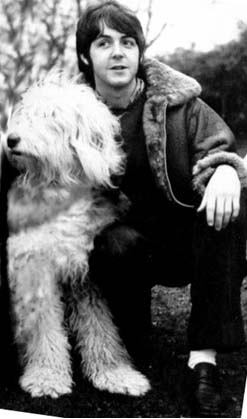
February is Love and Chocolate Month, and today it’s all about love.
Paul has always been the one.
Ever since 7th grade.
I’ll never stop idolizing him.
This week I’ve been drowning myself in Beatles music, using my big headphones, so I can listen to everything as loud as I want. The old songs still resonate and amaze even after 40 years, and I was once again blown away by some of my favorites: “She’s Leaving Home,” “I’ll Follow the Sun,” “Yesterday,” and what I consider to be Paul’s perfect lyrical masterpiece, “Blackbird.”
You’d think that after forty years, you’d know a song inside and out. I can’t even begin to estimate how many times I’ve heard “Blackbird,” — hundreds, maybe, thousands, of times? I’ve always taken it at face value — the bird symbolizing an inner need for personal expression, breaking free, overcoming adversity — not unlike some of the longings Hopkins expressed in his poem, “The Windhover.” I suppose Paul’s acoustic guitar and deceptively simple lyrics form the perfect whole — with something so sublime, why search for deeper meaning?
Blackbird singing in the dead of night
Take these broken wings and learn to fly
All your life
You were only waiting for this moment to arise.
And then I did a little research, and discovered that Paul had something else in mind. In Many Years from Now, Barry Miles quotes him as saying,
I developed the melody on guitar based on the Bach piece and took it somewhere else, took it to another level, then I just fitted the words to it. I had in mind a black woman, rather than a bird. Those were the days of the civil rights movement, which all of us cared about, so this was really a song from me to a black woman, experiencing these problems in the States: ‘Let me encourage you to keep trying, to keep your faith, there is hope.’
Now, of course, I love the song even more, with its added layer of meaning. And I truly understand what Paul means when he says, “This is symbolic of one of my themes: take a sad song and make it better, let this song help you. ‘Empowerment’ is a good word for it.”
Long before he wrote any songs, Paul wrote poetry. He tried to get his work published in a school magazine, but it was rejected. He has said that he’s been trying to get back at them ever since. Years after the Beatles broke up, Paul befriended Allen Ginsberg, who called “Eleanor Rigby,” one hell of a poem. Paul later returned to writing poetry in the 1990’s, after his friend, Ivan Vaugn, died of cancer. (Ivan had introduced Paul to John Lennon.)
There is an ongoing debate about whether song lyrics qualify as poetry. Jeffrey Stock attended Paul’s New York poetry reading when his new compilation, Blackbird Singing: Poems and Lyrics (1965-1999), was published in 2001. In his article for liveDaily.com, he relates that Paul makes no distinction between lyrics and poetry, citing Homer’s epics, traveling troubadors, and the Beat poets.
Stock contends that there is poetry in the best lyrics, and music in the best poetry. “A poem has its own independent propulsion, but a lyric is part of a whole, pulled ineluctably along a musical current. A good lyric must also make room for singing, which is why many superb lyrics presented without their music come off as light verse at best.”
Though Paul’s lyrics and poems both spring from the same creative well, they are composed in different ways. Paul says his lyrics and melodies are written simultaneously; there is a lot of working and reworking to make things fit perfectly. With poems, however, “the language tends to come and stay put.”
Paul wrote some very sweet love songs for Linda (“Maybe I’m Amazed,” and “I Will”), as well as some touching poems, which stand on their own quite well. Here are two of my favorites from Paul’s book:
BLESSED
I would come back from a run
With lines of poetry to tell,
And having listened, she would say,
“What a mind.”
(Read the rest here.)
HER SPIRIT
Her spirit moves wind chimes
When air is still
And fills the room
with fragrance of lily.
(Read the rest here.)
Poet Adrian Mitchell, who edited the book, says in his introduction:
Paul is not in the line of academic or modernist poets. He is a popular poet in the tradition of popular poetry. Homer was and is a popular poet and loved by millions of people who never saw a university . . . Paul takes risks, again and again, in all of his work. He’s not afraid to take on the art of poetry — which is the art of dancing naked . . . he’s a jeweler and a juggler when it comes to words. Both his poems and lyrics are full of surprises.
When I was teaching high school English in Wimbledon, England, one of my students told me she had seen Paul walking his sheepdog, Martha, in Hampstead Heath. After I stopped screaming, I begged her for more details. Janice and some friends had been kicking around a soccer ball, and Paul remarked that the game seemed a little rough for girls. He was cordial, interested, and gave Janice the nicest of smiles.
Thirty plus years later, I’m still insanely jealous.
Paul has that effect on me.
As I said, he’s always been the one.
For a live performance of “Blackbird,” click here.
To listen to a live performance of “Yesterday,” click here.
To visit the Paul McCartney YouTube channel, click here.
And, for a charming look at Paul in the kitchen, yes, the KITCHEN! — click here. He’s really really really adorable in this :)!
He can mash my potatoes any time . . .
Today’s Poetry Friday Roundup is at Big A little a.
 Jama's Alphabet Soup