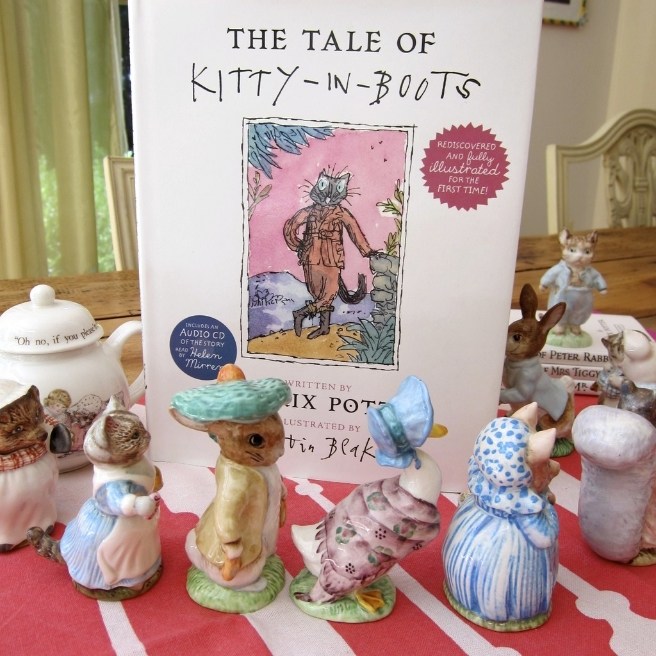
[catTEA review] The Tale of Kitty-in-Boots by Beatrix Potter and Quentin Blake

Holy catnip!

It’s a big day for Beatrix Potter fans: The Tale of Kitty-in-Boots is officially out in the world (UK release September 1, U.S. release September 6)!
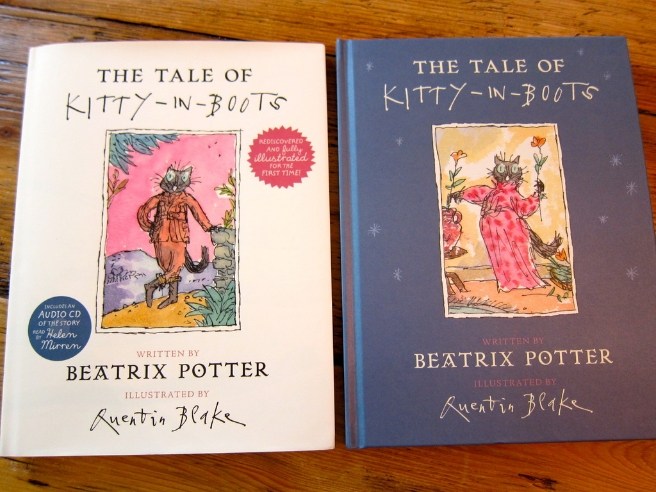
Ever since we first heard tell of this book back in January, all of us here in the Alphabet Soup kitchen have been counting down the days, hours, and minutes to this much anticipated event.

After all, it’s not every day that a long lost manuscript written over 100 years ago by such a beloved author is rediscovered and brought to life with brand new illustrations by celebrated illustrator Quentin Blake.
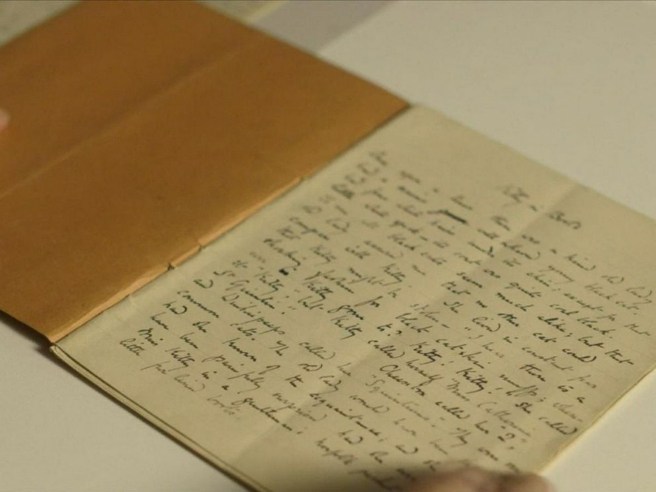
Potter wrote The Tale of Kitty-in-Boots in 1914, but had not finished illustrating it. Two years ago, editor and publisher Jo Hanks stumbled upon a reference to Kitty’s story in a letter from Beatrix to her publisher in an out-of-print collection of her writings. In the Warne archive at the Victoria & Albert Museum, Hanks found three Kitty-in-Boots manuscripts — two handwritten in children’s school notebooks and one typeset in dummy form — along with a colored sketch of Kitty and a pencil rough of foxy arch-villain Mr. Tod.
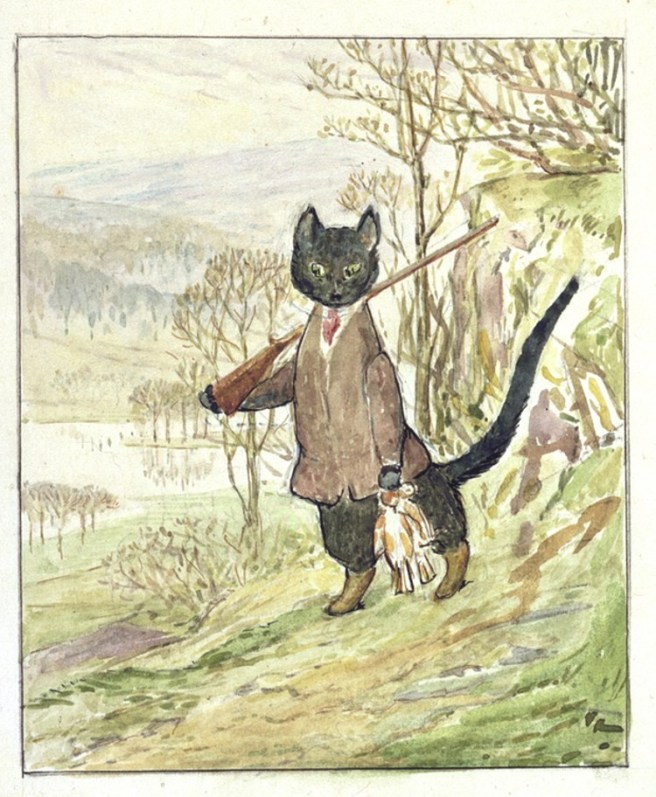
Supposedly Potter’s only finished illustration for the book, intended as the frontispiece. Courtesy Frederick Warne & Co./V&A.

Continue reading

beatrix part two: of guinea pigs, nursery rhymes and cupcakes

Today we are honored to welcome a very special guest to Alphabet Soup: the one and only Amiable Guinea-pig!

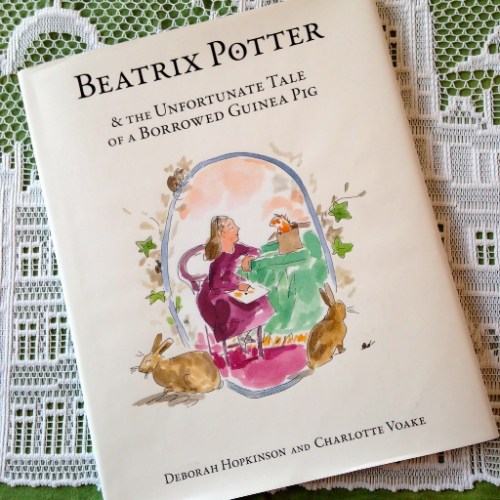
After reading and reviewing Beatrix Potter and the Unfortunate Tale of a Borrowed Guinea Pig by Deborah Hopkinson and Charlotte Voake (Schwartz & Wade, 2016), we felt a tasty homage to this dapper little fellow was definitely in order.

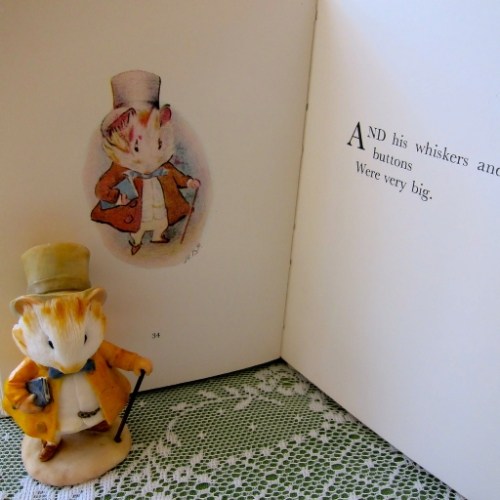
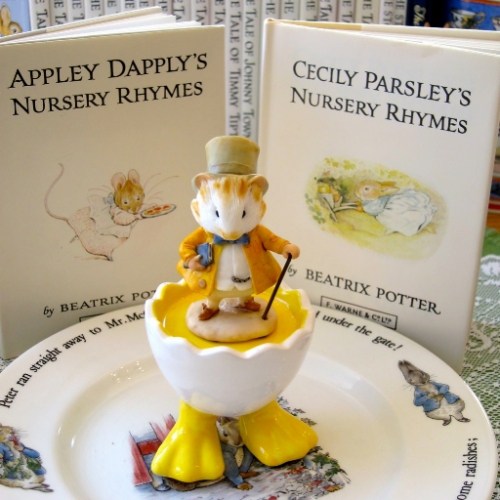
Peter Rabbit gets a lot of attention, as does Miss Tiggy-Winkle, Jemima Puddle-Duck, Jeremy Fisher, Tom Kitten and Squirrel Nutkin. In fact, they all have their own little books written about them. But not the Amiable one, who was actually the first guinea pig in Miss Potter’s work. She wrote a clever limerick about him that appeared in Appley Dapply’s Nursery Rhymes (1917).

But one limerick does not a book make. Wouldn’t you feel a little slighted? To add insult to injury, initially Miss Potter’s publisher Frederick Warne & Co. wasn’t that keen on the Appley Dapply rhyme collection, which she had hoped to publish following the release of The Tale of Peter Rabbit in 1902.

Continue reading

beatrix part one: a review of Beatrix Potter and the Unfortunate Tale of a Borrowed Guinea Pig + other guinea pig musings

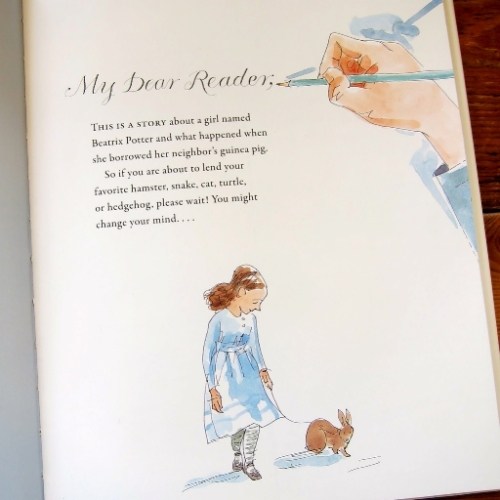
My Dear Reader,

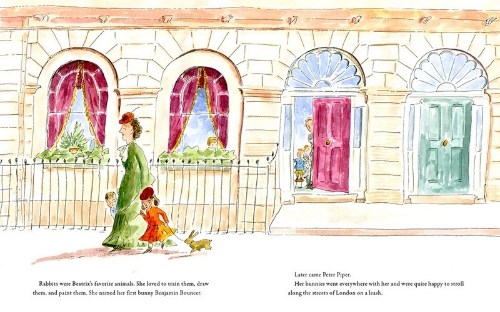
Since I’m a big Beatrix Potter fan, I was happy to see Beatrix Potter and the Unfortunate Tale of a Borrowed Guinea Pig by Deborah Hopkinson and Charlotte Voake published in time to celebrate Miss Potter’s 150th birthday this year.

I enjoyed the story immensely, but I must confess it reminded me of my own tragic guinea pig experience (*shudder*). But more on that later.

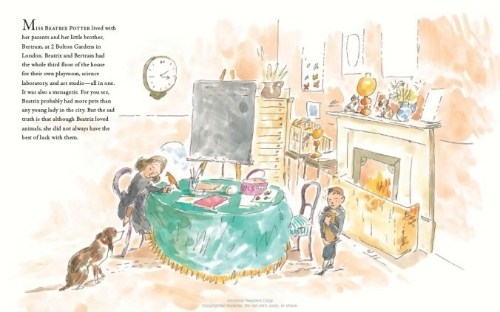
This charming cautionary tale is about the time young Beatrix, who loved to draw and paint wild as well as tame animals, borrowed a guinea pig from her neighbor to use as a live model. She and her younger brother Bertram had lots of pets in the third floor playroom/science lab/art studio of their London home — pets such as snakes, snails, bats, ducks, rabbits, hedgehogs and salamanders. Though Beatrix loved all these creatures, we are warned early on that “she did not always have the best of luck with them.”

We are given evidence of several animal mishaps via journal entries that note an escaped snake and newts, a family of dead and dried up snails, and even a bat which was dismembered by a jay. And what of the unfortunate guinea pig? Beatrix especially loved painting animals doing “ordinary, everyday things, like reading the newspaper, working in the garden, or taking tea. (And why not?).” And the day came when Beatrix just had to paint a guinea pig and they didn’t have one at 2 Bolton Gardens. Not to worry, though, as quite a few of them apparently lived in Miss Paget’s parlor.

Continue reading

a fond farewell to downton abbey

“All this unbridled joy has given me quite an appetite.” ~ Violet

The soufflés are sinking, the puddings are pouting, the meringues have taken to incessant weeping.

I fear much of our “unbridled joy” is rapidly dissipating — Downton Abbey is ending its 6-year run on PBS with the series finale on March 6!

Only one more episode to go. No! 😦 😦 😦

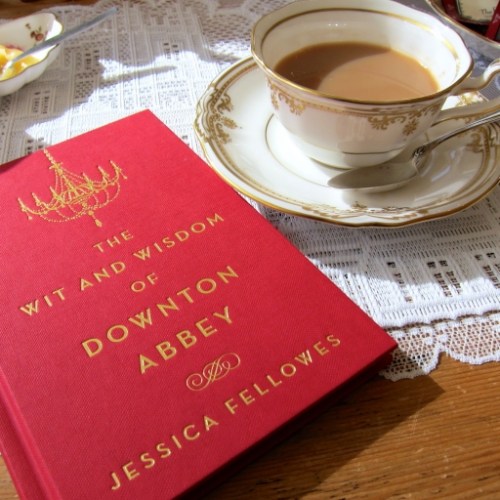
Treated myself to a Crawley family Spode Stafford White cup and saucer just to drown my sorrows.

I’ve been hooked since Season One, Episode 1, only too willing to spend my Sunday evenings with the entire Crawley family at their opulent digs in Yorkshire. Not since the original “Upstairs, Downstairs” (1971-1975) have I been so emotionally invested in the lives of an aristocratic British family and their servants. I find the entire class system fascinating, rooting for those who would dare defy the established social order, sympathetic to characters grappling with changes beyond their control.

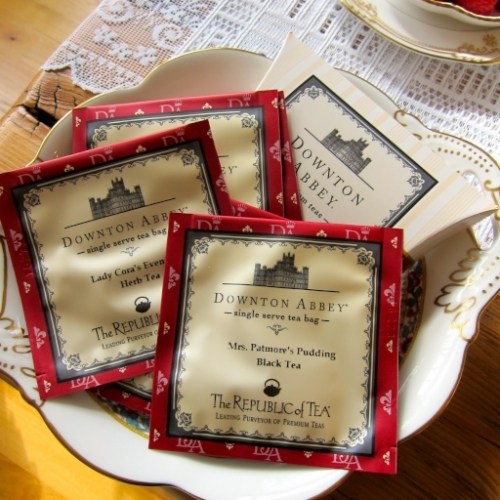
Today serving Mrs Patmore’s Pudding Tea: “This decadent dessert tea has the homemade flavors of vanilla cake drizzled with rich caramel sauce.” Good afternoon tea, a perfect pairing with puddings, scones, and shortbread.

Indeed, when I first started watching Downton, I was instantly reminded of “Upstairs, Downstairs.” The time periods somewhat overlapped, with UD beginning about a decade before the sinking of the Titanic and ending in 1930. Both series revealed interesting aspects of post-Edwardian social life set against significant historical events. Instead of Mrs Patmore there was Mrs Bridges, instead of Daisy, there was kitchen maid Ruby. Bellamy son James marries his secretary Hazel as Crawley daughter Sybil marries chauffeur Tom Branson — both compelling, frowned-upon liaisons championing the triumph of true love over all impediments.

Continue reading

Please Look After Michael Bond on His 90th Birthday. Thank You.

via The Sunday Times

HOLY MARMALADE!

The one and only Michael Bond is 90 years old today!

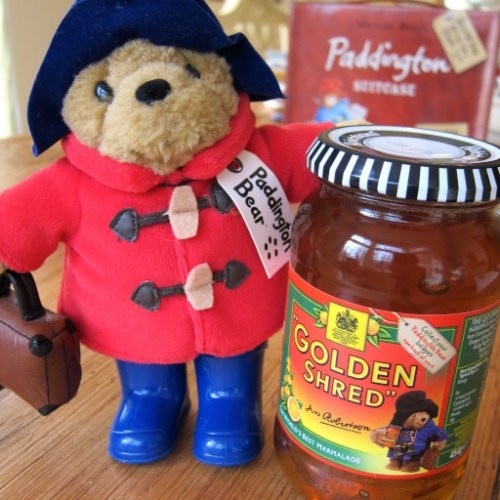
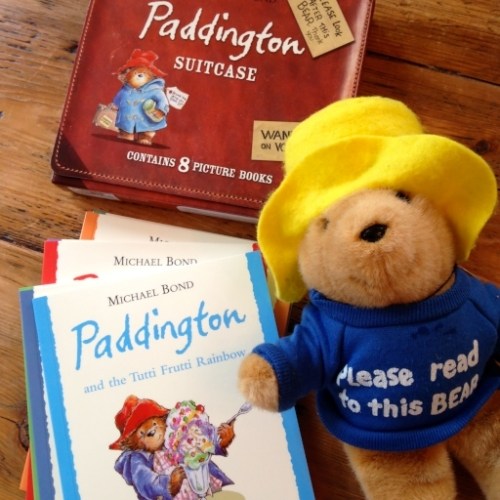
All of us here at Alphabet Soup — especially the 50-something resident Paddingtons — are in a full out tizzy of joy. We’ve been rereading the stories, noshing on marmalade sandwiches, sloshing about in our wellies, and ever-so-politely tipping our bush hats to honor the man who gave us our beloved bear from Darkest Peru some 57 years ago.

I’ve said it before and I’ll say it again. Rescuing a lone bear from a department store shelf on Christmas Eve says a lot about a man. This small kindhearted gesture would prove to be delightfully fortuitous, spawning a bear chapter book written in just 10 days, 25 more published novels, numerous picture books, board books, an avalanche of Paddington-related toys and other merchandise, several television series, a play, and an award-winning motion picture. Paddington’s likeness has appeared on postage stamps and marmalade jars, and a Paddington balloon was recently introduced in the Macy’s Thanksgiving Day Parade.

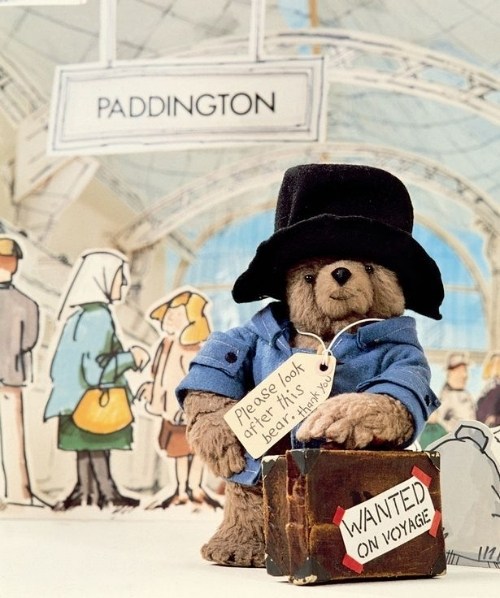
Paddington as a stop-motion puppet for his FilmFair television series (1975).

Continue reading