something sweet from cynthia chin-lee

I see you’re back again, with that hungry look on your face.

After wontons, Chinese chicken salad, bay scallops with lemon sauce, and masoor dalCynthia Chin-Lee has brought something sweet for our Asian Pacific American Heritage Month potluck!
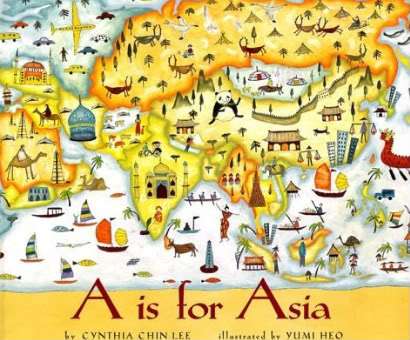
 One of the “Best 100 American Children’s Books of the Century” (Ruminator Review)

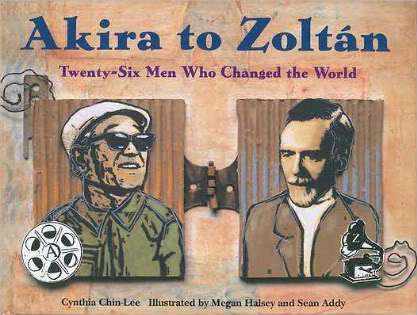
You may have noticed that I love soup — and cookies — and the alphabet. Cynthia Chin-Lee may just be the author of my dreams. Four out of her fivepicture books feature the alphabet. These are not baby portions, but ones that offer more substantial servings for sophisticated readers 9 and up, such as A is for Asia (Orchard,1997), A is for the Americas (Orchard, 1999), Amelia to Zora: Twenty-Six Women Who Changed the World (Charlesbridge, 2005), and Akira to Zoltan: Twenty-Six Men Who Changed the World (Charlesbridge, 2006).

In Amelia to Zora and Akira to Zoltan, we meet 26 courageous visionaries in each book, some well known and others not so well known, from many different professions, such as scientists, political leaders, writers, architects, doctors and performing artists, who have made a difference in the 20th century. I like the diversity of cultures and ethnicities represented, and the fact that the profiles are alphabetized according to the first names of the honorees, giving them a familiarity that will appeal to children.
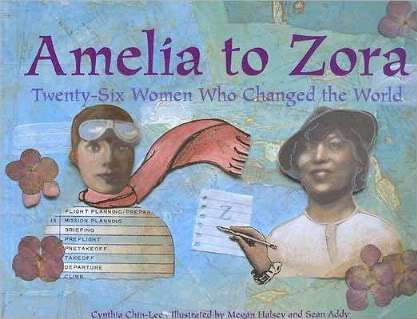
Each page features an enticing profile that will whet the appetite for further study, an inspiring quote, and a brilliant mixed media collage (whimsical, literally cutting edge, and very very cool), created from elements appropriate to each subject by Megan Halsey and Sean Addy. Especially appealing are the childhood anecdotes included in each juicy capsule. Akira to Zoltan focuses on peacemakers such as Gandhi, Langston Hughes, Octavio Paz, and Nelson Mandela. Some of the strong, imaginative, and innovative women include Kristi Yamaguchi, Yoshika Uchida, Grace Hopper, and Dolores Huerta.
This is one alphabet that is sure to inspire and delight. And thanks to Cynthia, we have something delish to munch on while enjoying her books. In 1993, Polychrome Publishing brought out Cynthia’s first picture book, Almond Cookies and Dragon Well Tea, illustrated by You Shan Tang. In this story, Erica visits Nancy, her Chinese American friend, for the first time. Erica is a little shy and apprehensive about what Nancy’s home will be like, but as soon as Nancy’s grandmother serves homemade almond cookies and special tea, Erica warms right up! 

Maybe you’d like to serve these cookies to your guests, if there are any left after you’ve tasted them! Mmmmm almond extract!

GRANDMA WONG’S ALMOND COOKIES
(makes about 48 cookies)

2-3/4 cups flour
1 cup white sugar
1/2 tsp baking soda
1/2 tsp salt
1 tsp almond extract
1 cup shortening (lard, margarine, butter, or Crisco)
1 egg
whole almonds, sliced
red and yellow food coloring

1. Preheat oven to 325 degrees F.

2. Sift flour, sugar, baking soda and salt together. Add shortening, egg, almond extract and food coloring into mixture. Color should be orange-yellow. Mix into a smooth dough.

3. Roll dough into 1-inch balls. Set about 2 inches apart on greased cookie sheet. Flatten ball with palm of hand and place an almond slice in center of each cookie.

4. Bake for 15-18 minutes.

Visit Cynthia’s website, or read a fab interview at papertigers.org!
it’s a tea party!


WELCOME TO THE TEA PARTY!

Happy April, my friends. So glad you’re here. 

I’ve put the kettle on, so come in and make yourselves at home. I hope all is well, and that Spring has inspired you to make a fresh start and follow some new leads.

Whatever work or play lies ahead of you this month, you’ll need proper nourishment. To feed your mind and spirit, you can savor some of the many beautiful poems being posted in the blogosphere in honor of National Poetry Month. While you’re doing that, sip some of your favorite black, herbal, or green tea, and wrap your lips around a favorite sweet. Taking the time to slow down, relax, and reflect will enhance your focus and concentration.

Now, I have a confession to make. I’ve never had a cup of coffee in my entire life. Sure, I smelled the fresh brew and watched zombies miraculously come to life under its influence. But I was never tempted.

Tea is an entirely different story. I grew up around Japanese green tea and the Jasmine served in Chinese restaurants. They calmed and cleansed after a large meal, and seemed to ignite sparkling conversation. Occasionally I even cavorted with a Lipton’s tea bag.

But it wasn’t until I took my sparkling self to England that I became a true tea lover. Those of you who delight in the wonderful ritual of “afternoon tea” know exactly what I’m talking about. A proper English tea is so civilized. It’s all about baby pink roses and fresh table linens, delicate bone china cups and saucers, fingertip sandwiches, scones, bath buns, biscuits, crumpets, and fairy cakes.

Invariably, it’s also about good behavior. No matter the hurt, stress, frustration, or disappointment, tea always makes it better. And it brings out the best in us.

This month, I’ll be posting my favorite tea recipes, along with some tea trivia, folklore, and history, as well as excerpts from children’s and adult literature that mention tea. I’d love for you to join the celebration by sharing your favorite tea time recipes, whether they be sweet or savory. Do you like muffins with your tea? Cookies or quick breads? Or do you fancy scones, cake, tarts, madeleines, eclairs or gingerbread? What’s your favorite sandwich filling?

Perhaps you’d rather share a memorable tea experience you’ve had, show off your teapot collection, pair your recipe with a poem, or talk about your favorite tea scene from a book or movie. Bring whatever you like to the party, and help us celebrate Spring!

Your place at the table will be available all month long, so post at your leisure.

Then:

1) Leave your link in the comments of any one of my upcoming tea party posts, or,

2) Email your recipe to me at readermail (at) jamakimrattigan (dot com), and I’ll post it sometime during the month.

I’ll round up all the posts, and you can access the list any time via the TEA PARTY link in my sidebar.

Here are some great resources for finding and enjoying poetry this month:

1. Elaine at Wild Rose Reader is celebrating National Poetry Month and the first birthday of her fabulous blog big time, with original poems, book recommendations, contests, and a list of resources for children, teachers and homeschoolers that goes on and on.

2. Check in regularly with Tricia at the Miss Rumphius Effect, who is featuring a poetry book every day, along with suggestions and activities for classroom application.

3. Cloudscome at A Wrung Sponge will be posting a haiga (haiku and image) every day this month. She also has a roundup of all the blogs featuring special poetry-related posts.

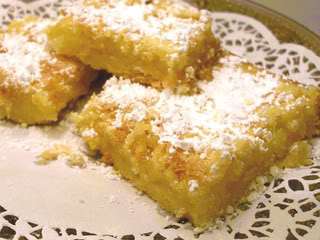
And now, it’s time for tea! Here is my favorite recipe for lemon bars to get you started. Simple to make, and perfect with a cup of Darjeeling!

LEMON BARS
(makes 32 bars)


1/2 cup butter
1/4 cup powdered sugar
1 cup flour
2 eggs, beaten
1 cup sugar
1/2 tsp baking powder
1/4 tsp salt
2 T flour
3 T lemon juice
lemon rind

Preheat oven to 350 degrees. Cream first 3 ingredients and press into a 9-inch square pan. Bake 15 minutes. Add together the beaten eggs, the sugar, baking powder, salt and flour. Then add the lemon juice and lemon rind. Pour over the crust and return to a 350 degree oven for 25 minutes. When cool, dust with powdered sugar.


SOUP’S ON: Laura Vaccaro Seeger in the Kitchen!


photo by Laura’s son Dylan

Today, my friends, is a very special day: dogs are barking, bears are growling, and eggs are rolling, because today, Caldecott and Geisel Silver Award winning, New York Times bestselling children’s author/illustrator, Laura Vaccaro Seeger, is right here in the kitchen!

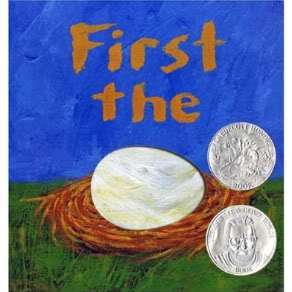
Laura is certainly no stranger to major awards, having received an Emmy for her work in television animation, and numerous accolades for every one of her ingeniously crafted concept books (The Hidden Alphabet, Lemons are Not Red, Walter Was Worried, Black? White! Day? Night!). Her first emergent reader, Dog and Bear: Two Friends, Three Stories, was named Boston Globe-Horn Book Best Picture Book for 2007. And then there’s First the Egg, Laura’s crowning glory.

This past January, First the Egg, a die-cut concept book about transformations, earned Caldecott and Geisel Honor Awards. It’s also a 2008 ALA Notable Book and 2007 New York Times Best Illustrated Book. Turn the page, and an egg becomes a chick. Turn another, and a seed becomes a flower; the next, and a tadpole becomes a frog. This organic process is ultimately transferred to the concept of creativity — “first the word, then the story; first the paint, then the picture,” which features a chicken, who then becomes an egg, bringing the cycle full circle. There is movement in the textured brushstrokes, and before you know it, the words and pictures have grown into an entire book. Beautiful, engaging, clever!

Recently, Laura, who lives on Long Island with her husband and two sons, very generously took time from her busy schedule to talk about her amazing books, her childhood, and what it feels like to get “the call” every children’s book creator dreams of. Oh, and she’s sharing a favorite recipe, of course!

Welcome to alphabet soup, Laura, and two big congratulatory hugs for winning Caldecott and Geisel Honor Awards for First the Egg! January 14th must have been a HUGE day for you. How did you find out that you had won both awards? Did you do anything special to celebrate?

Well, it is really very difficult to describe how it felt to receive those two phone calls. It’s something I’ve dreamed about every year since The Hidden Alphabet was published, never imagining that the dream could actually become a reality. In fact, a few years ago on the morning of the big announcements, I had a dream that I “got the call.” The dream was so real that even 20 minutes after I woke up, I wasn’t sure if it had actually happened or not. And, of course, when I finally realized that the call was truly just a dream, I spent the rest of that day moping around in despair. Now this year, more than a month after the actual calls, I am still pinching myself, worried that I am about to wake up any minute.

Continue reading

friday feast: bring on the brownies!


THE BROWNIE
by A.A. Milne (from When We Were Very Young, 1924)

In a corner of the bedroom is a great big curtain,
Someone lives behind it, but I don’t know who;
I think it is a Brownie, but I’m not quite certain,
(Nanny isn’t certain, too.)

I looked behind the curtain, but he went so quickly —
Brownies never wait to say, “How do you do?”
They wriggle off at once because they’re all so tickly
(Nanny says they’re tickly too.)


Come to think of it, I’ve always had a thing for little men.

You know, those cute, industrious little sprites who do your housework while you’re fast asleep and never make a sound? They like to make mischief, but never do any harm. In fact, they’re here right now, but of course grown-ups can’t see them.

Since this is Leap Year, and we have an extra special bonus day, I thought it only fitting to give Love and Chocolate Month a proper send-off with a BROWNIE celebration.

You know, just the word, brownie, makes me feel good. It’s childhood, warm and safe, all wrapped up in one. I think of class parties, picnics, pot-lucks, teas, the special treat in a lunchbox. And nothing tops that chocolatey aroma filling the kitchen with the promise of a warm brownie to come! Mmmmmm!!

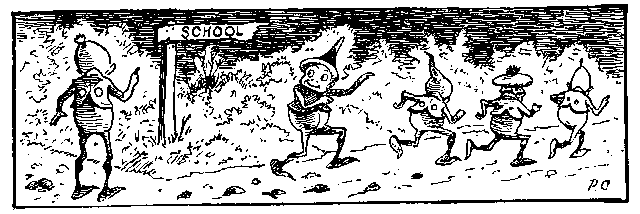
They say brownies were named after Palmer Cox’s Brownie books (16 in all), which were very popular during the late 19th century. All the stories were written in rhyming couplets, and featured hundreds of charming sprites (all male) working and playing together in all kinds of scenarios — skating, fishing, going to school, building a snowman, racing, yachting, and painting, etc.

Each Brownie had a name, but none were ever set as characters in a plot; Cox instead always featured them as a massive group. What is interesting is that Cox nevertheless drew them as individuals of different races and professions — so there’s an Indian chief, a policeman, an Irishman, German, Cowboy and Chinese peasant. This was not a time of widespread acceptance for ethnic minorities, yet somehow the Brownies managed to escape controversy.

The first Brownie story actually appeared in St. Nicholas Magazine (1883), closely followed by The Brownies: Their First Book (1887). Cox’s characters were based on the sprites of English and Scottish folklore, well known to him as a child in Quebec. Today he is considered a “pioneering artist of the Platinum Age of Comic Art.”

His highly detailed black and white illustrations are as charming today as they were in the 19th century, when it became a national pastime for readers to pick their favorite Brownie and follow him throughout the book. The little rascals race across the page, drop their fishing lines down the margin, and wrap themselves around the text (a precursor to today’s graphic novel?). The imaginative, funny verse stories are worth examining from a historical standpoint, but without central characters they can become repetitive.

*


THE BROWNIES AT SCHOOL (from The Brownies: Their First Book, 1887)

As Brownies rambled ’round one night,
A country schoolhouse came in sight:
And there they paused awhile to speak
About the place, where through the week
The scholars came, with smile or whine,
Each morning at the strike of nine.
“This is,” said one, “the place, indeed,
Where children come to write and read.
“T is here, through rules and rods to suit,
The young idea learns to shoot;
And here the idler with a grin
In nearest neighbor pokes the pin,

(Rest of this story here.)

In case you’re wondering, the Kodak Brownie Camera was named after the books, and Cox is recognized as a pioneer in the field of licensed merchandising, predating Disney by decades. He allowed his Brownies to appear on everything from soap to puzzles, games, dolls and figurines.

All this sales talk is making me hungry. Excuse me for a bit, while I take a batch of brownies out of the oven.

Okay, I’m back. The first mention of brownies appeared in the 1897 Sears Catalogue, but it referred to a type of candy, instead of cake. The first brownie recipes (using chocolate instead of molasses) came from Boston and Maine (1906-07). Story goes, A Bangor housewife made a chocolate cake which fell, and rather than toss it out, she cut it into squares. Thank god for New England frugality!

Here’s my favorite brownie recipe. It’s not one of those overly-rich, double chocolate chip jobs, but more of a good, basic (nuts or no) recipe for all times. If you like fudgy brownies, underbake by a few minutes; otherwise it will have more of a cakey texture. For the ultimate brownie experience, wear brown during preparation, and ask your husband or somebody to clean the house (quietly) while you’re asleep. Yay, little men (I married a Rattigan leprechaun)!

JAMA’S FAVORITE BROWNIES

2 sticks butter
2 squares Baker’s unsweetened chocolate
1-1/2 cups flour
1 tsp baking powder
1/2 tsp salt
4 eggs
2 cups sugar
2 tsp vanilla
2 cups nuts (optional)
4 tsp corn syrup

Melt butter and chocolate together over hot water. Cool.
Sift flour with baking powder and salt. Set aside.
Beat eggs until light. Add sugar, chocolate mixture and blend in corn syrup.
Add flour, vanilla, and nuts and mix well.
Bake in 9″ X 13″ pan coated with butter and flour in 350 degree oven for 30-35 minutes.
Cool and cut into squares. Sprinkle with powdered sugar.

*

Tantalizing links:

A not-to-be-missed page featuring Brownie Camera memorabilia and all the covers of the Brownie books.

All about Palmer Cox and the books.

Historical brownie recipes (scroll down).

Today’s Poetry Friday hostess is the lovely, Austenish Kelly R. Fineman, at Writing and Ruminating. She’ll be graciously serving a roundup of poems and some soulful tea!

Thanks so much for stopping in. You’ve definitely earned some brownie points!

friday feast: the educated cookie

Happy (burp) Holidays!

Do you think it’s possible to have too many cookies?

You see, for the past 3 weeks, I’ve been swimming in them.


Don’t misunderstand. I’ve been happier than clam cookies — dropping, rolling, sugaring, pressing, slicing, and yes, even inhaling them. By all accounts, I haven’t suffered any side effects, except for one teeny tiny thing.

Remember last week, when Sara Lewis Holmes came by with her Oatmeal Coconut Crisps? I admit I felt a little twinge then. She’s a doozy of a poet, apparently. Still, my behavior remained relatively normal.

Until — the lovely Kelly Fineman brought her Lumberjacks.

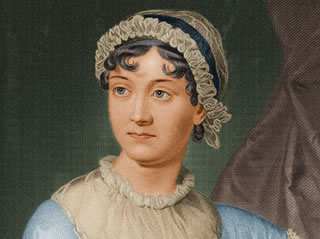
You know, there really is no way anyone can remain unaffected by Kelly’s presence. How many of you feel instantly smarter, more cultured, more refined, egads —  more apt to don a bonnet, after reading one of Kelly’s fabulous blog posts? Are you often reminded of how beautiful, versatile and exacting the English language really is, and do you feel inspired to read more, learn more, write more?

I thought so.

Now, having said all that, why didn’t anybody warn me? I made the mistake of eating some of Kelly’s Lumberjacks straight up. That’s right — no milk, no tea, no cider. Within minutes, I was waxing poetic. I began to breathe in dactyls.  Everything, even my eyebrows, wanted to rhyme.

So, with advance and profuse apologies, I present my first (and last) acrostic poem. In the spirit of the season, I beg your good will, and if you dare to try Kelly’s Lumberjacks, don’t say I didn’t warn you.

WHAT’S IN A NAME?
(for Kelly Fineman, the original Smart Cookie)


K elly took Jane to the cookie soiree,

E legant iambs gleamed on her tray.

L o, and behold —

L umberjack Lou fancied Jane,

Y earned for a kiss, that gingery swain.

F ie on thee, Woodman! Kelly cried in disgust.

I nch your way back to your forest of dust!

N o man is worthy of Jane’s witty crumb;

E at pride with your doggerel and lace it with rum.

M arry me, plaid-clad Jack, I’m high-born and well read,

A usten and Wordsworth are my daily bread.

N o matter the time, I’m bound to digress —

R adio waves in my brain rob me of rest.

O n top of these

C ookies

K elly’s sweetness is plain.

S ing thee her praises for she writes of Jane!

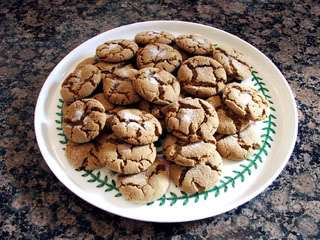
For those who crave poesy, intellectual stimulation, and weather reports of yore, these molasses cookies will sate your literary hunger. 

KELLY’S LUMBERJACKS
(makes 7 dozen)


1 cup sugar
1 cup shortening (I use butter; can use margarine or Crisco)
1 cup molasses
2 eggs
4 cups flour
1 tsp baking soda
1 tsp salt
2 tsp cinnamon
1 tsp ginger

Cream sugar and shortening. Add molasses and eggs, then the dry ingredients. Chill at least 2 hours. Have a small dish of sugar at hand (regular sugar, not colored or powdered or anything fancy). Dip fingers in sugar, pinch off a ball of cookie dough and roll. Place on ungreased tray and bake at 350 degrees F. “Underdone” at 12-15 minutes.

Note: Best enjoyed with a cup of tea. Wearing an empire-waisted gown, a bonnet, (and a spencer if it’s chilly), will enhance flavor. Feel free to ingest with abandon, as minimal undergarments are required with your costume.


Today’s Poetry Friday Roundup is at AmoXicalli.

We’d love to see you at the Cookie Party! Post your favorite recipe on your blog, then leave the link in the comments, or email your recipe to:  readermail (at) jamakimrattigan (dot com).