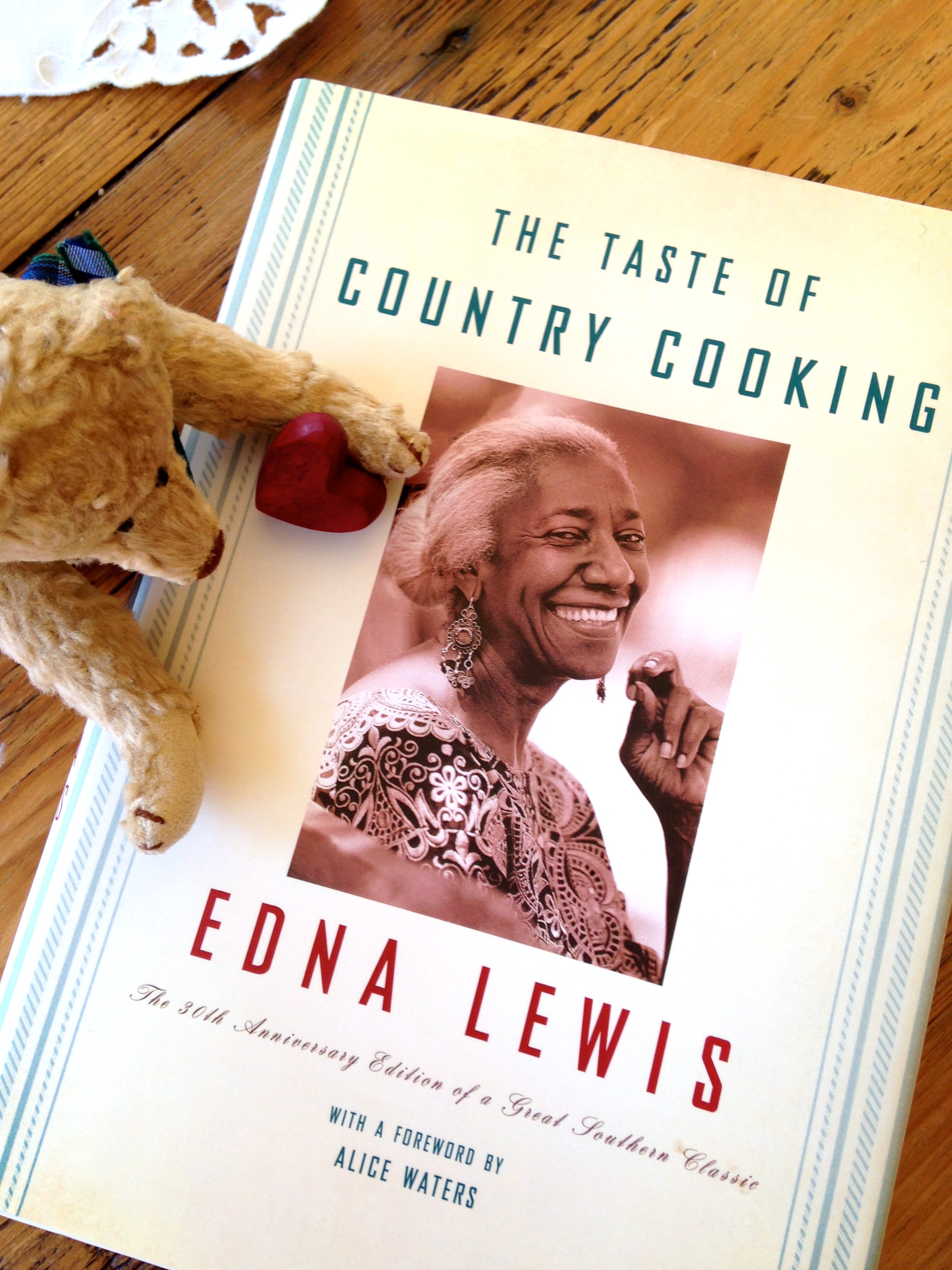
♥ miss edna lewis, my valentine ♥

“So many great souls have passed off the scene. The world has changed. We are now faced with picking up the pieces and trying to put them into shape, document them so the present-day young generation can see what southern food was like. The foundation on which it rested was pure ingredients, open-pollinated seed—planted and replanted for generations—natural fertilizers. We grew the seeds of what we ate, we worked with love and care.” ~ Edna Lewis (“What is Southern?”)
IMG_0222

For me, she’s the one. The more I learn about Edna Lewis, the more I love her.

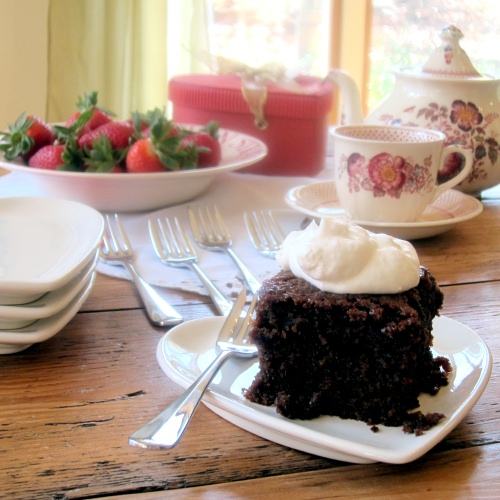
Since today marks the 7th anniversary of her passing at age 89, it’s a good time to celebrate her remarkable achievements as an award-winning chef, cooking teacher, caterer, cookbook author and Grand Dame of Southern Cuisine with a love-in-your-mouth piece of her Warm Gingerbread. Mmmmm-mmmmm!
long view

Miss Lewis, as she was always known, grew up in the small farming community of Freetown, which is located behind the village of Lahore in Orange County, Virginia (about 66 miles from where I live). Her grandfather founded Freetown with two other freed slaves and started the first area school in his living room.

Long before it became chic to advocate fresh, organic, seasonal ingredients and field-to-table cuisine, Edna and her fellow Freetown residents were enjoying a bucolic live-off-the-land existence — growing, harvesting and preserving their own food, gathering nature’s bounty (seeds, fruit, nuts), fishing the streams, hunting wild game in the woods, cultivating domestic animals.

In The Taste of Country Cooking (Knopf, 1976), a classic of Southern cuisine edited by the brilliant Judith Jones (also Julia Child’s editor), Edna shares recipes and reminiscences of the simple, flavorful, uniquely American, Virginia country cooking she grew up with, lovingly describing how they anticipated the select offerings of each season and celebrated special occasions like Christmas and Emancipation Day with full-out feasts.
IMG_0206

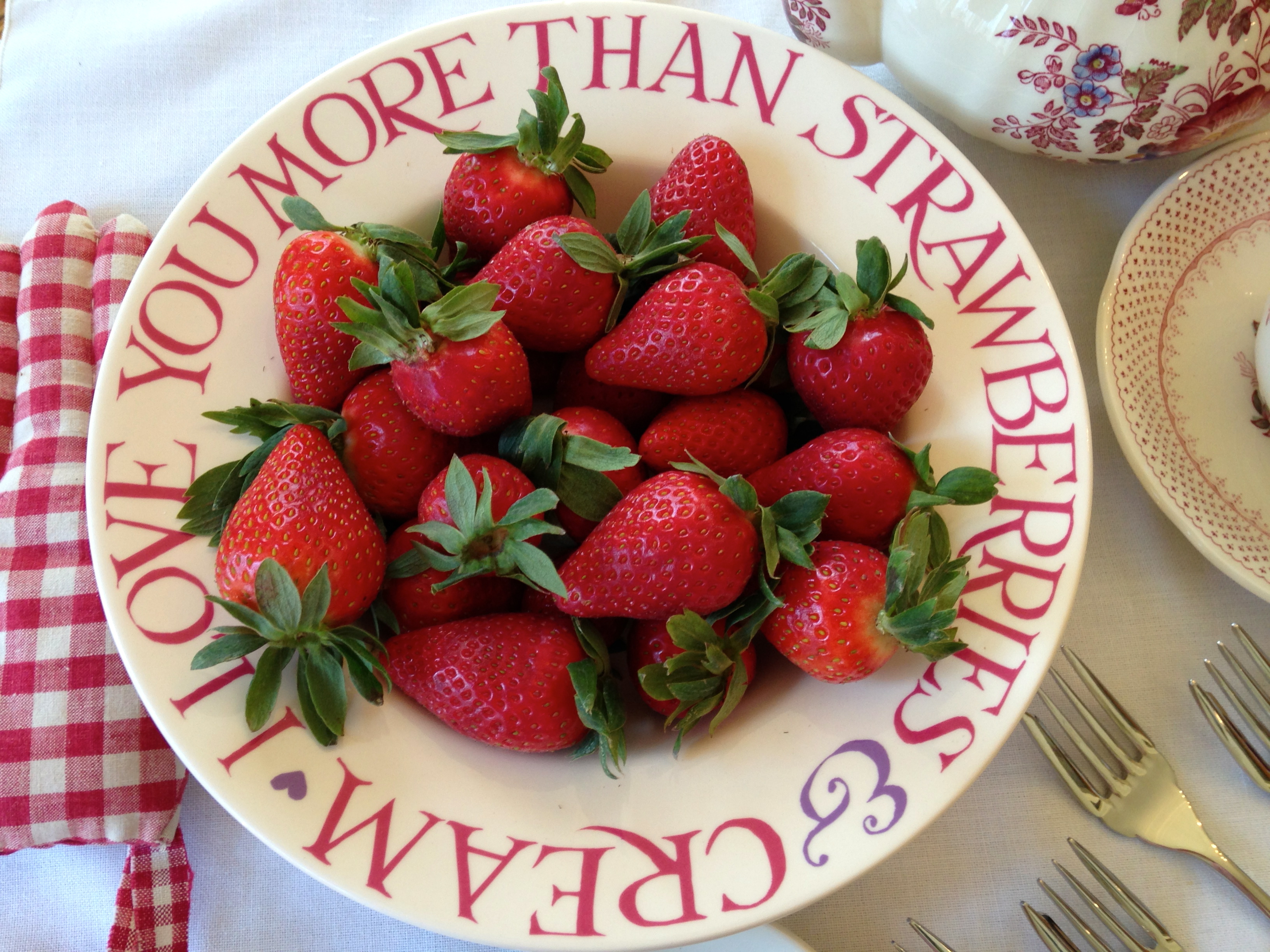
We are reminded that there’s nothing better than a freshly picked sun-ripened apple, relishing a dish of Spring’s mixed greens (poke leaves, lamb’s-quarters, wild mustard), celebrating Summer’s bounty with deep-dish blackberry pies, apple dumplings, peach cobblers and pound cakes, sitting down to a Fall Emancipation Day dinner of Guinea Fowl Casserole, “the last green beans of the season and a delicious plum tart or newly ripened, fresh, stewed quince.” As Alice Waters says in her introduction, “sheer deliciousness that is only possible when food tastes like what it is, from a particular place, at a particular point in time.”
Continue reading

JC 100th Birthday Week: the queen of cuisine and her favorite chocolate cake

“The best way to execute French cooking is to get good and loaded and whack the hell out of a chicken. Bon appétit. ” ~ Julia Child

photo by Jim Scherer

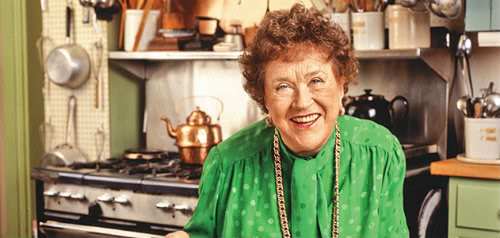
The more I learn about Julia Child, the more I love her.

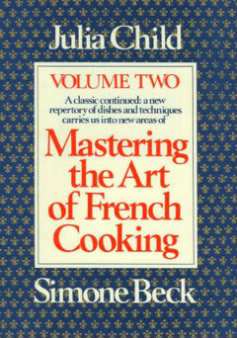
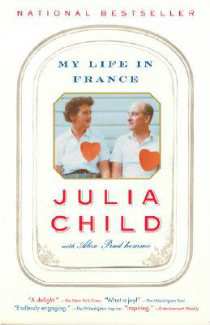
I’ve been having a ball rereading her memoir, My Life in France (Knopf, 2005), dipping into her letters with literary mentor Avis DeVoto, fanning myself at the juicy details of her courtship with Paul Child in Noël Riley Fitch’s biography, Appetite for Life (Doubleday, 1997), and marveling anew at both volumes of Mastering the Art of French Cooking (Knopf, 1961, 1970).
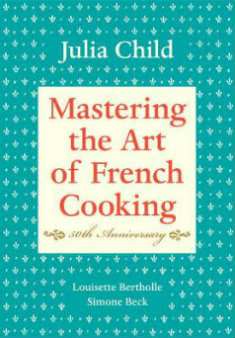
Dear Eater, I can honestly say that although I’d been aware of  MTAOFC for years and years — knew it was a classic, groundbreaking masterwork and veritable Bible for American cooks interested in French cuisine — it wasn’t until I made my first recipe from Volume One, La Reine de Saba (Queen of Sheba Chocolate and Almond Cake), that I truly realized what a culinary masterpiece it truly is. That the words, “master” and “art” are part of the title says it all. More on the magical cake in a bit.

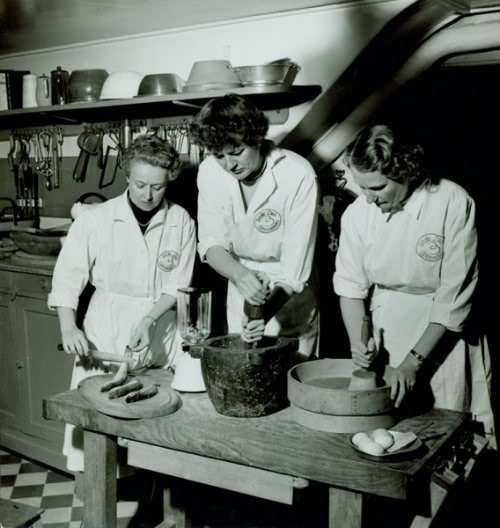
Julia with co-authors Simone Beck and Louisette Bertholle by Paul Child (courtesy of Schlesinger Library, Radcliffe Institute, Harvard University).

Continue reading

lee wardlaw’s pawsome catku

#22 in the Poetry Potluck Series, celebrating National Poetry Month 2012.

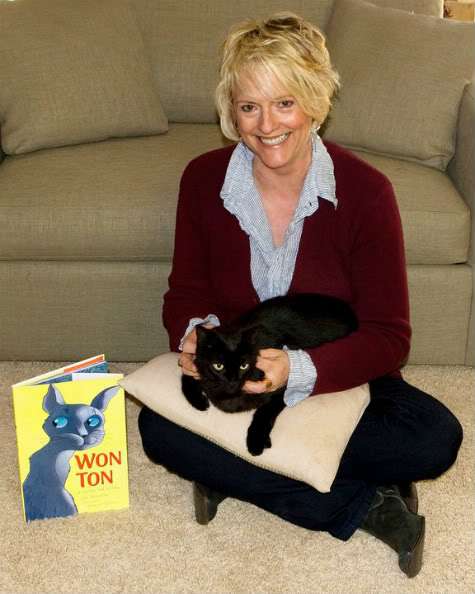
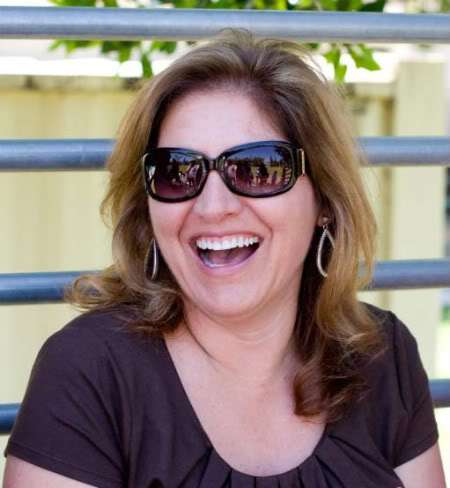
Lee with Mai Tai, the shelter cat who inspired her award-winning picture book.

ME-WOW!

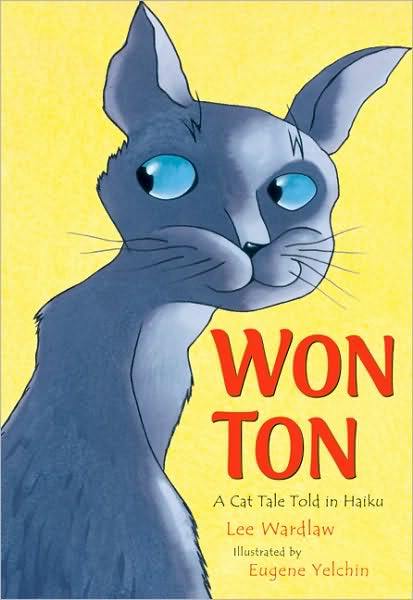
Please help me welcome the purrr-fect  guest to top off our Poetry Potluck: Lee Wardlaw, winner of the 2012 Lee Bennett Hopkins Poetry Award for Won Ton: A Cat Tale Told in Haiku (Henry Holt, 2011)!!


*cheers, wild applause, Scharffen Berger 70% bittersweet chocolate for everyone*

Lee’s favorite!
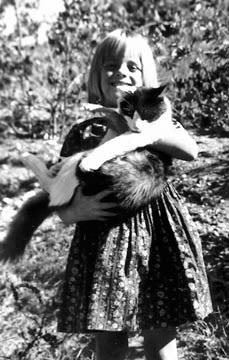
Lee (age 6) with her first kitty, Pit-a-Pat.

We’re thrilled to congratulate Lee on receiving this prestigious award, the most recent in a steady stream of honors and flat out love for this touching story of an adopted shelter cat (2011 NYPL Best Books of the Year (Poetry), 2012 CCBC Best Children’s Books of the Year, 2012 ALSC Notable Children’s Books, 2011 SLJ and Washington Post Best Books of the Year, 2011 Cat Writers’ Association Muse Medallion (Children’s Books), 2012 Bank Street Best Books of the Year (Star for Outstanding Merit), and more). Totally pawsome!

You probably know that Won Ton is written in a series of senryu, which are similar in form to haiku, but focus on human (or in this case, feline) foibles. Lee’s “petku”capture the very essence of catness: regal, in-the-moment, independent yet loving. Seems that Lee, a card-carrying cat lover since childhood, was always fated to pen this yowly gem. I’m sure Mai Tai wouldn’t have had it any other way, and I’m happy to report a Won Ton sequel is in the works! ☺

Continue reading

jill corcoran: dreaming of big things . . . and cupcakes!

#19 in the Poetry Potluck Series, celebrating National Poetry Month 2012.

Jill Corcoran wears many hats in the world of children’s books — she’s an award-winning author, poet, literary agent and editor who’s creating a new series of poetry anthologies for Kane Miller Books.

You may already know that the first anthology, Dare to Dream . . . Change the World, will be released this Fall, and I’m especially happy because it includes the work of many previous Poetry Potluck noshers, like Jane Yolen, Joyce Sidman, J. Patrick Lewis, Marilyn Singer, Lee Bennett Hopkins, Elaine Magliaro, Tracie Vaughn Zimmer, Rebecca Kai Dotlich, Laura Purdie Salas, Kelly R. Fineman, and of course, Janet Wong, who was just here yesterday.  How can you go wrong with a line-up like that?

Since I first “met” Jill online years ago through Poetry Friday, when she shared a touching poem inspired by her sister, it’s nice that for her first visit to Alphabet Soup she’s sharing a poem that just happens to be the title poem from the new anthology, which is fully illustrated by J Beth Jepson. She’s also brought a special recipe that she enjoys making with her daughter. (Those who know me, know that I get a tad ecstatic at the mention of cupcakes.)  If you need me, I’ll be drooling over by the dessert table.

Continue reading

olivia walton’s applesauce cake

“Two applesauce cakes were on display in the middle of the kitchen table when Clay-Boy walked in. He breathed in the spicy aroma appreciatively. Something had happened during his absence. There was some quickening of excitement, a sense of Christmas rushing inexorably down upon them, but in spite of the two proud cakes, he knew that his mother was not really prepared for the day.” ~ Earl Hamner (The Homecoming)

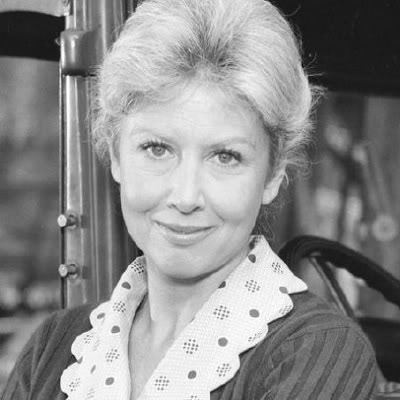
Miss Michael Learned earned 3 Emmy Awards for her role as Olivia Walton.

When I heard June 6th was National Applesauce Cake Day, the first person I thought of was Olivia Walton.

Though she and Grandma spend a lot of time in the kitchen serving up good old-fashioned country dishes like fried chicken, mashed potatoes, biscuits, beef stew, fresh corn on the cob, scrambled eggs, bacon and heavenly peach pie, it is her applesauce cake that holds special favor. Whenever there is something to celebrate, Olivia makes an applesauce cake, and it seems to work wonders with anyone needing a good serving of down home comfort.

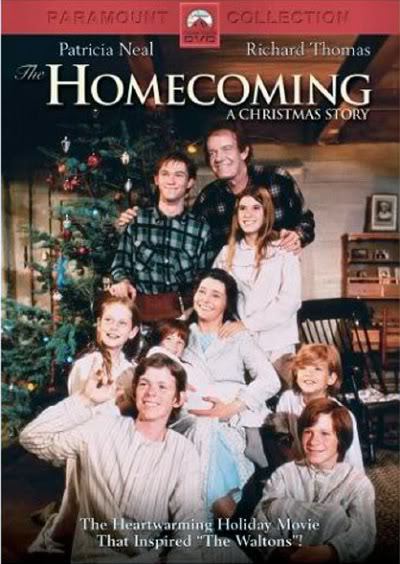
 “The Homecoming: A Christmas Story” aired in 1971.

In Earl Hamner’s novel, The Homecoming (1970), upon which the series pilot is based, Olivia Spencer makes two applesauce cakes for Christmas. She is apprehensive because her husband Clay, who’s been working in the city far from home, is late returning home on Christmas Eve. She tries to hide her worry from the children by asking them to help her crack black walnuts for the cakes.

Continue reading