[review + yummy cake recipe] Saving the Countryside: The Story of Beatrix Potter and Peter Rabbit by Linda E. Marshall and Ilaria Urbinati


Once upon another time, I was lucky enough to visit England’s glorious Lake District, where vistas of pristine lakes, rolling green pastures dotted with sheep, lush vales, charming stone cottages, miles of slate and dry stone walls bordering fertile farmland, and magnificent fells rising in the distance took my breath away.

I was curious to see the area after learning that England’s greatest poets and writers had flocked there for three centuries. Though studying the Romantic poets in college had stirred my wanderlust (my “friends” Wordsworth, Shelley, Keats, Coleridge, Blake, and Byron enabled me to envision this paradise on earth), it wasn’t until I fully tuned into Beatrix Potter’s connection with Lakeland that I became totally smitten. Visiting Hill Top Farm made me a forever diehard fan.


Hill Top Farm, Near Sawrey


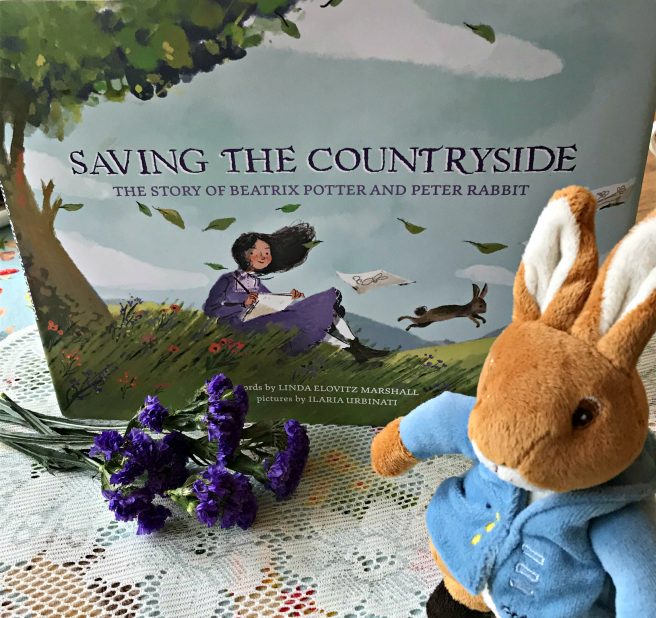
Beatrix didn’t just love the countryside, she helped preserve it for future generations. And she established this amazing legacy at a time when it was not proper for women to “travel, attend college, or work.” Her groundbreaking accomplishments are highlighted in this wonderful new picture book, Saving the Countryside: The Story of Beatrix Potter and Peter Rabbit, by Linda Elovitz Marshall and Ilaria Urbinati (little bee books, 2020).

Young readers will find it interesting that in addition to writing the beloved Peter Rabbit books, Beatrix was also a natural scientist, savvy businesswoman, sheep farmer, and ardent conservationist.

Continue reading

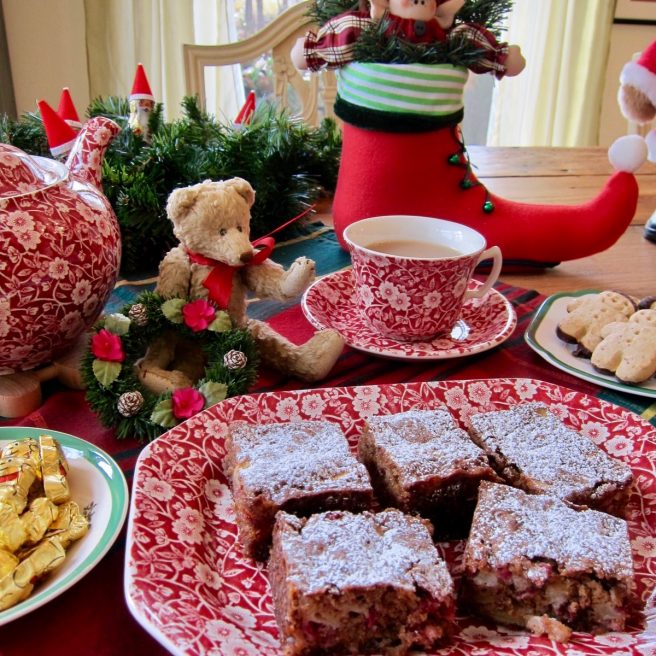
alcott’s little women: a pair of poems and yummy gingerbread (+ a holiday blog break)

“I do think that families are the most beautiful things in all the world!” ~ Jo March
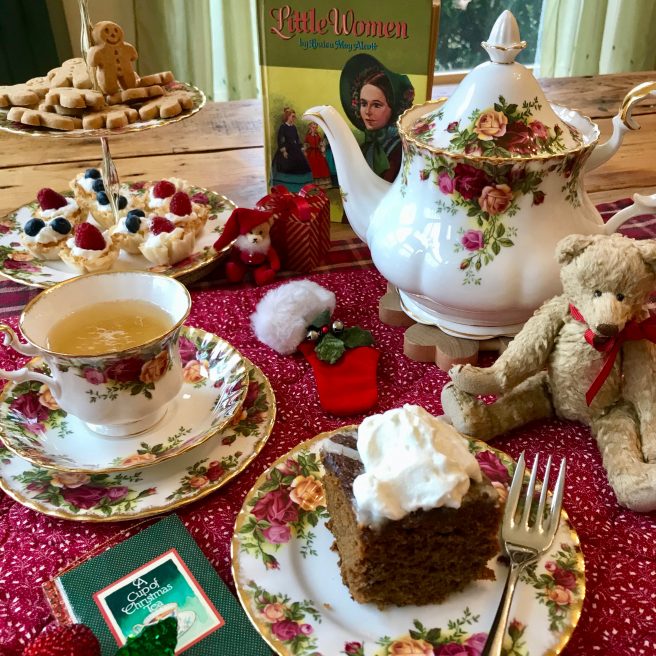
 

Season’s Greetings!

Are you excited about the Little Women movie opening on Christmas Day?

To get us in the mood for all things Meg, Jo, Beth, Amy, Marmee and Laurie, I’m sharing two poems from the novel and a recipe from the new Little Women Cookbook by Wini Moranville (Harvard Common Press, 2019).
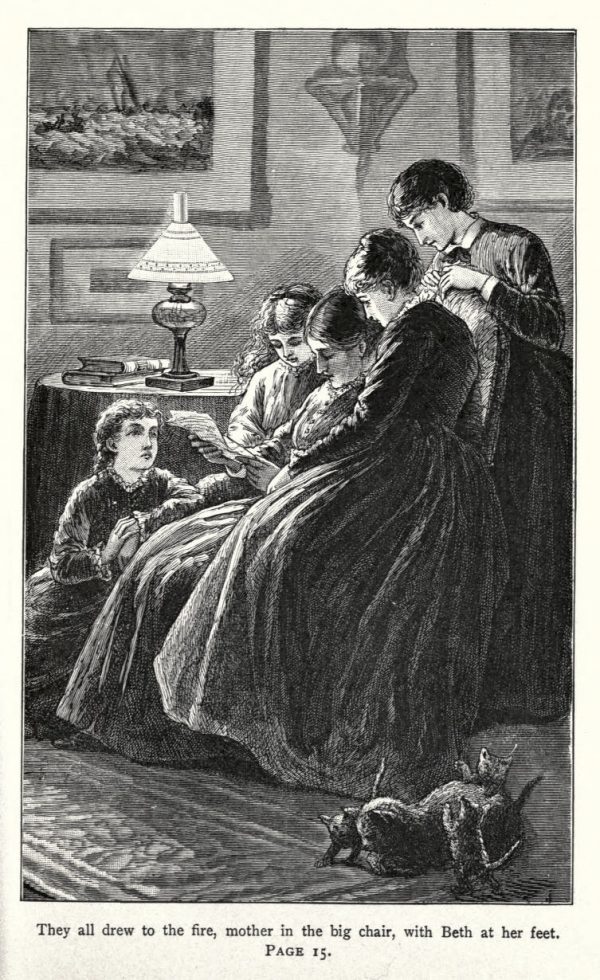


I think most of us can remember when we first read Louisa May Alcott’s classic — I was nine, staying with two older girl cousins downtown for about a week during the summer. We spent most of our time playing “school,” and during one of our “classes,” I began reading Little Women.


Since I wasn’t able to finish before it was time to return home, my cousin Judy let me take her copy with me (it was an abridged edition published by Whitman in 1955). I can’t remember if it was a loan or a gift, but I do remember her telling me how much she loved the book and that I should definitely read it.

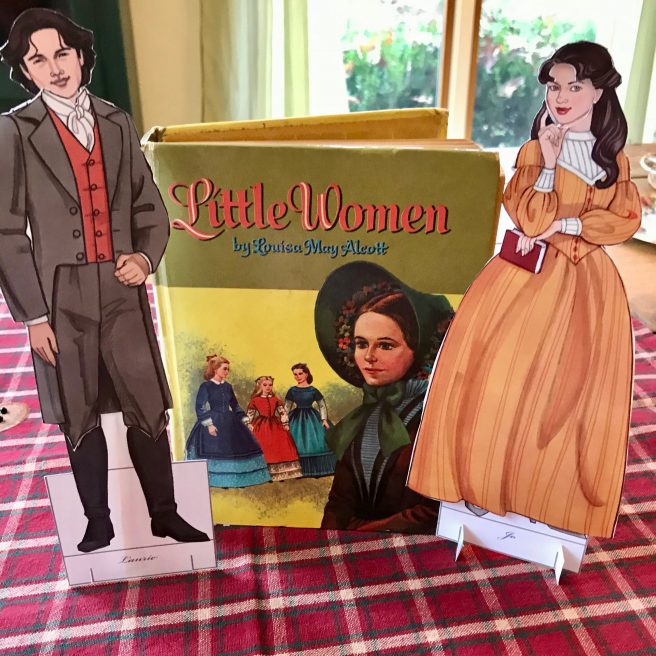
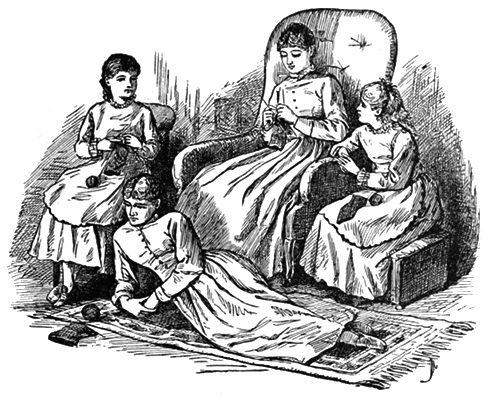
Fast forward to 6th grade, when we acted out the opening scene in English class. “Christmas won’t be Christmas without any presents,” was my Jo March ‘stage debut,’ marking the first time I would read the entire novel. Like so many others, generation after generation, I was hooked for life.


I so wanted to belong to the March family, to experience that deep bond of sisterhood. I had a huge crush on Laurie, and loved Mr. Laurence because just like Beth, I loved music and playing the piano. Of course I identified with Jo, because she was a writer, only wishing I could be as feisty and forthright. And wasn’t Marmee the best mother anyone could ever ask for? As the child of a working mother, I envied children whose moms had the time and patience to listen to all their concerns.

Just like The Secret Garden made me fall in love with England, Little Women made me long to visit New England — the gorgeous autumn colors and beautiful winter vistas! the rich history and Colonial architecture! the lobstah rolls, fish chowdah, maple syrup, brown bread, baked beans, boiled dinners, Indian pudding, Yankee pot roast . . . *drools* . . .  “licks chops”. . . oh wait, where was I?
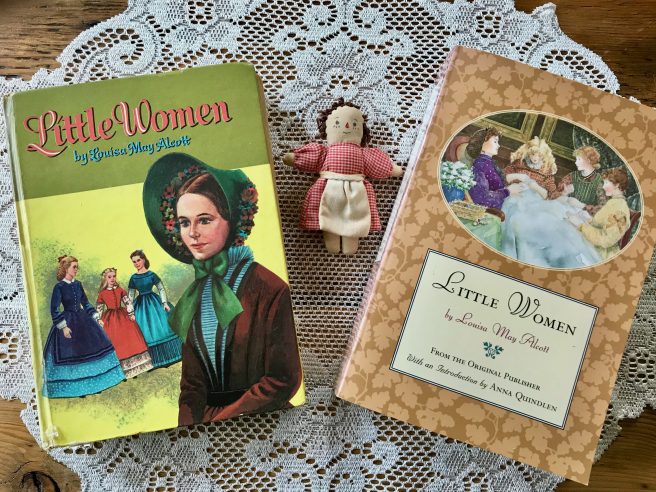


With the new movie coming, I decided to reread the book, since it had been about a decade since I last gave it my full attention. When I scanned my bookshelves, I found Judy’s copy alongside my Little, Brown edition. Didn’t realize I still had it! It’s probably the only book that survived my childhood. My mother gave away my entire Golden Books collection (still grieving), and though I read voraciously, I didn’t own many novels — mostly everything came from the library.
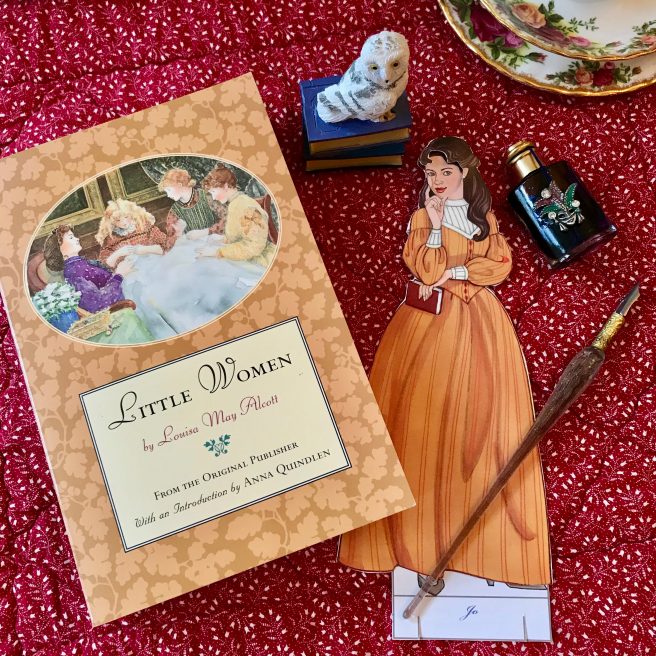


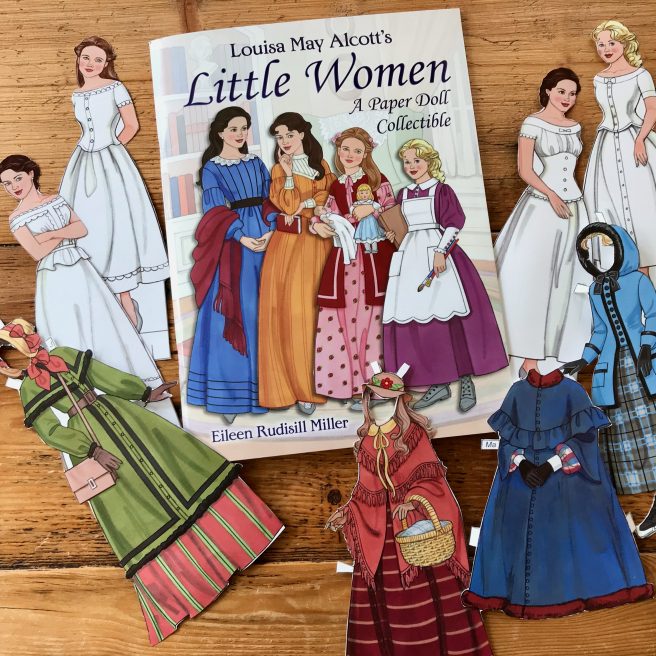
One of the things I especially enjoyed this time around was taking a closer look at the poems Alcott included in the story. There was the elegaic “My Beth” of course, as well as the incantations in Jo’s play featuring Hagar, Roderigo, and Zara. In a letter Jo sent to Marmee, she included “a silly little thing” for her to pass on to Father about helping Hannah with the wash, the delightful “A Song from the Suds.” And who can forget that splendid Christmas when Jo and Laurie made a snow-maiden,  complete with a crown of holly, a basket of fruit and flowers, and a carol, “The Jungfrau to Beth,” to cheer up the convalescent?
 

Continue reading

[tasty review + 2 recipes] In the French Kitchen with Kids by Mardi Michels

Many of us think of French cooking as complicated, time consuming and just plain intimidating. We assume it requires special ingredients we don’t usually have on hand and sophisticated equipment.

And to teach French cooking to kids? Sounds like a recipe for disaster, doesn’t it?

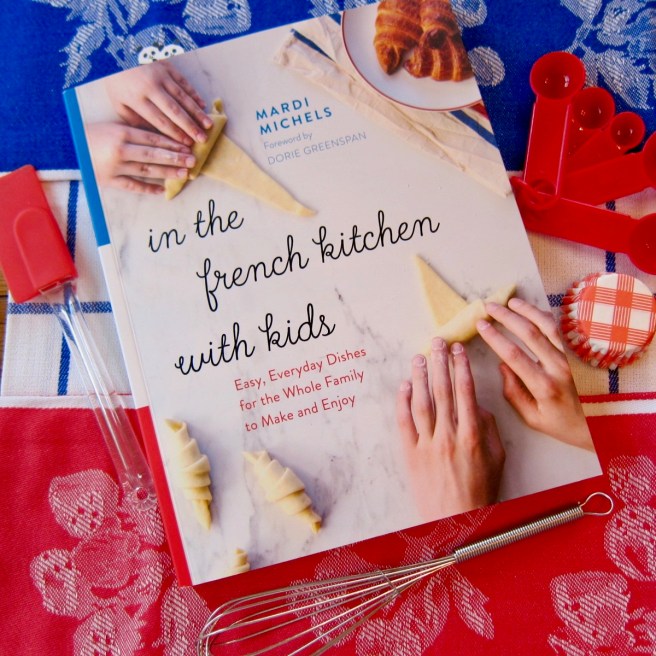
Toronto-based food and travel writer and educator Mardi Michels proves otherwise in her first cookbook, In the French Kitchen with Kids (Appetite/Random House, 2018).

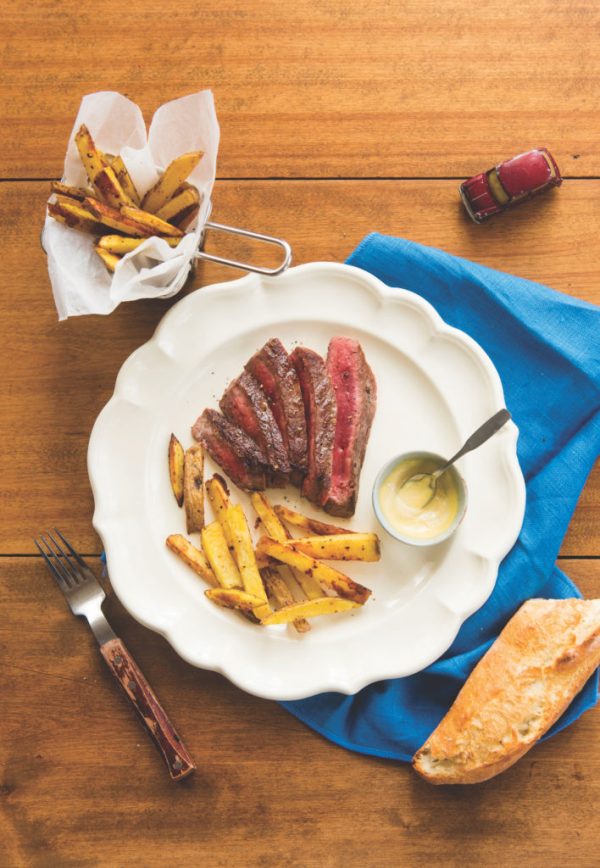
A full-time French teacher to elementary school-aged boys and author of the popular eat. live. travel. write. blog, she runs after school cooking classes twice a week for 7-14-year-olds called Les Petits Chefs and Cooking Basics. They meet in the science lab to whip up such classic favorites as macarons, madeleines, pains au chocolat, and baguettes. They make short crust and choux pastry from scratch, and with proper knife skills, chop, slice and dice fruit and veggies to make berry galettes, ratatouille, steak frites, and beef and carrot stew.

So what makes this particular kids’ cookbook a standout among the zillions of others?

Continue reading

ABCs of Christmas, a yummy recipe, and a holiday blog break

#58 in an ongoing series of posts celebrating the alphabet

Please help yourself to some of Susan Branch’s Christmas Coffee Cake 🙂


Ho Ho Ho!

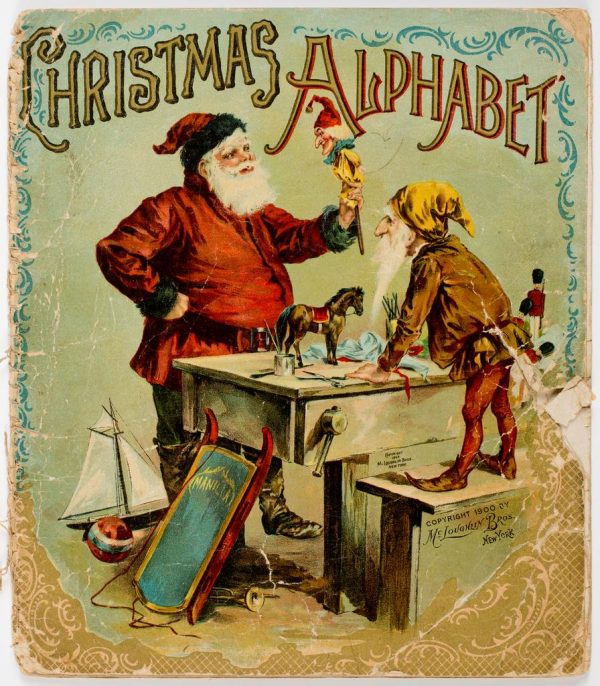
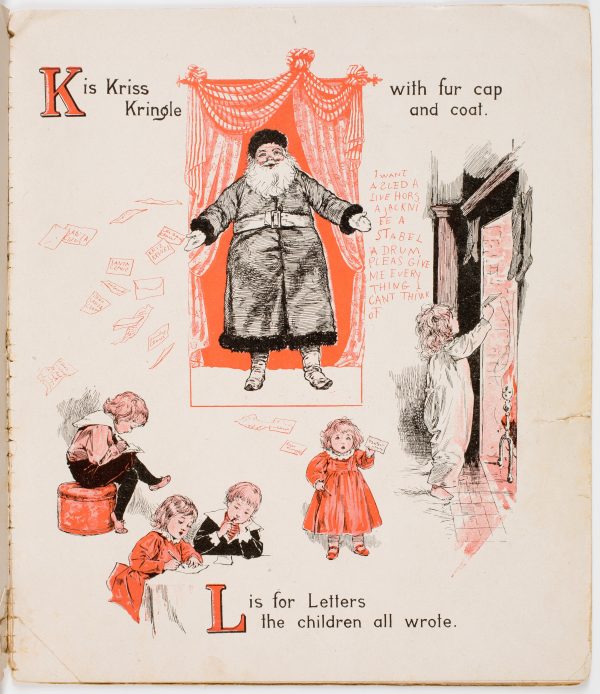
To celebrate the season, here’s an old fashioned Christmas abecedarian by American poet Carolyn Wells. This verse was first published as a picture book by McLoughlin Brothers in 1900, and describes how many of us still define Christmas more than a century later.

*

A CHRISTMAS ALPHABET
by Carolyn Wells

A is for Angel who graces the tree.
B is for Bells that chime out in glee.
C is for Candle to light Christmas Eve.
D is for Dreams which we truly believe.
E is for Evergreens cut for the room.
F is for Flowers of exquisite perfume.
G is for Gifts that bring us delight.
H is for Holly with red berries bright.
I is for Ice, so shining and clear.
J is the Jingle of bells far and near.
K is Kriss Kringle with fur cap and coat.
L is for Letters the children all wrote.
M is for Mother, who’s trimming the bough.
N is for Night, see the stars sparkling now.
O is for Ornaments, dazzling with light.
P for Plum Pudding that tasted just right.
Q the Quadrille, in which each one must dance.
R is for Reindeer that gallop and prance.
S is for Snow that falls silently down.
T is for Turkey, so tender and brown.
U is for Uproar that goes on all day.
V is for Voices that carol a lay.
W is for Wreaths hung up on the wall.
X is for Xmas, with pleasures for all.
Y is for Yule log that burns clear and bright.
Z is for Zest shown from morning till night.

*

Continue reading

♥️ love me some Cake by Maira Kalman and Barbara Scott-Goodman (+ a giveaway!)♥️

“Bring on the Cake. We really want to Live.” ~ Maira Kalman

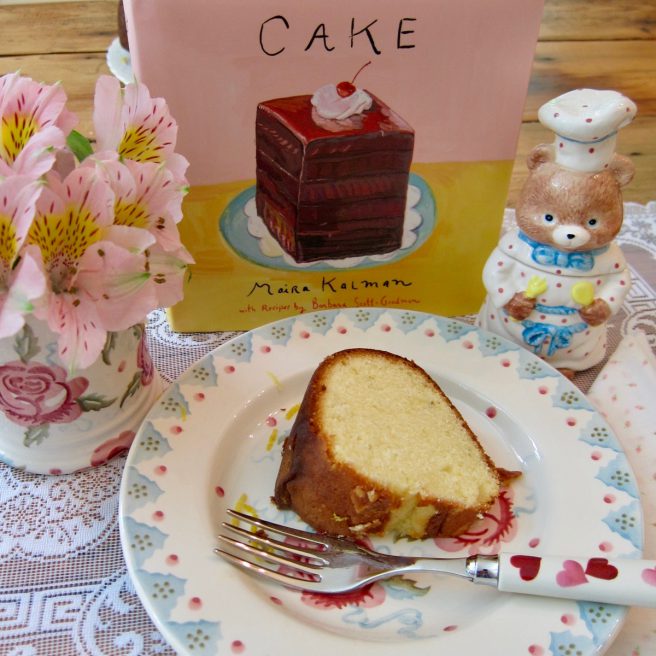
Help yourself to some lemon pound cake.

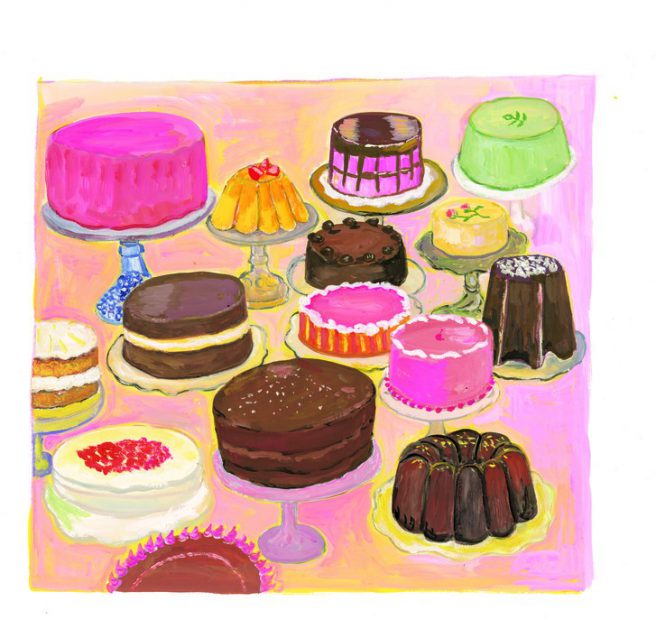
When a cake shows up, it’s party time.

Cakes enjoy stealing the show at our most important celebrations: birthdays, weddings, anniversaries, holidays, graduations. Fancy and festive, they know how to have fun.

But cakes don’t have to be luscious, layered, and laden with buttercream to make a lasting impression. As Maira Kalman and Barbara Scott-Goodman suggest in Cake (Penguin Press, 2018), it’s more about whom we share our cakes with and why.

The true deliciousness of cake? Baked-in love. For celebrations, yes, but even sweeter for life’s everyday travails.

With warmth, wisdom and her signature panache, Maira serves up a series of short, delectable illustrated vignettes, most culled from cherished family memories. These are interspersed with 17 of Barbara’s scrumptious recipes, each with a delightful headnote, some with Maira’s gouache paintings alongside.

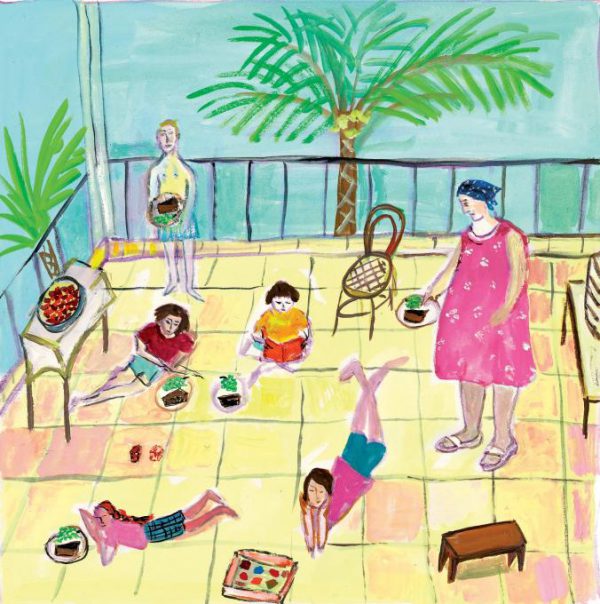
Maira begins with “The First Cake” she remembers, a chocolate cake with a side of grapes, an after beach treat she enjoyed on the “cool stone tiles” of Aunt Shoshana’s terrace in Tel Aviv.

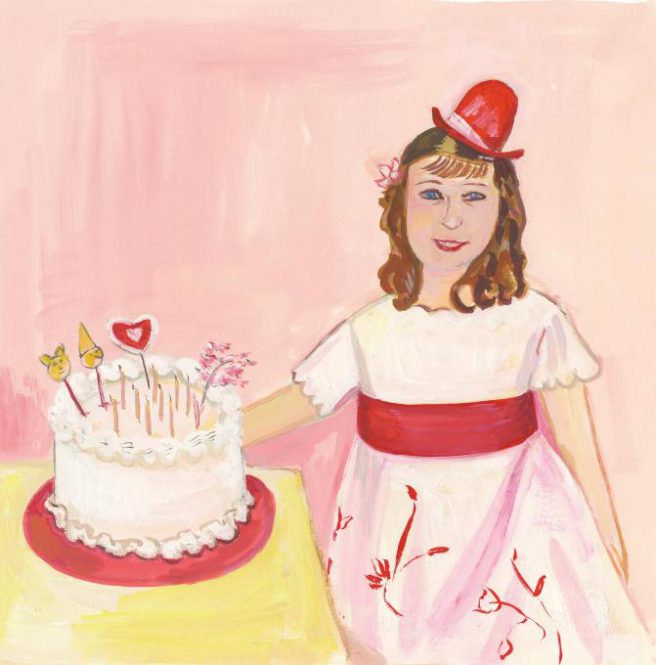
There’s her “Ninth Birthday” cake, part of a stellar celebration where “all the girls wore fancy dresses” and she was easily “the happiest one there,” and “The Broken Heart Cake,” which Shoshana baked to soothe Maira’s teenage soul.

Continue reading