do you know the muffin man?

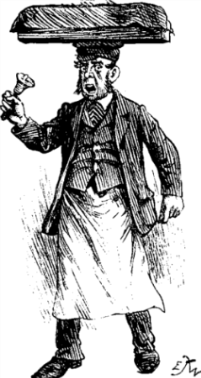
Punch 1892)


No, but I wish I did!

What a lovely thought, having warm, freshly baked muffins delivered to your front door! Back in the 19th century, the muffin man wandered the streets of England around teatime, ringing his bell and tempting everyone with his offerings.

But the muffins he peddled were not like the “American” muffins we are familiar with today. They were actually flat round cakes made from yeast dough. There’s always been a bit of confusion concerning muffins, crumpets, English muffins, and pikelets. Today, a muffin in England is more like a light textured roll, round and flat, and if you went to the grocers in search of “English muffins,” you wouldn’t find any. I was surprised to discover this when I lived there in the late 70’s.

But to me, it’s all good. Mere mention of a “muffin” and you’ve got my full attention.

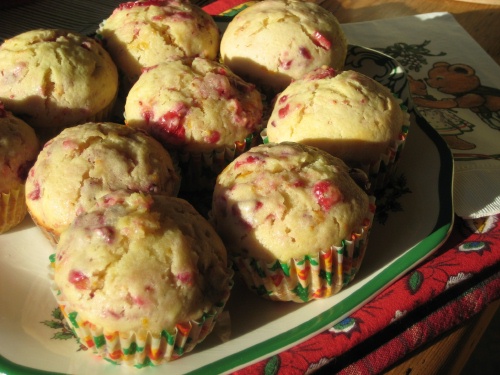
I’ve already shared my favorite recipes for blueberry and pumpkin muffins on this blog. So today, I’m serving up some cranberry orange, which are perfect for fall and the upcoming holiday season. Len and I love these for Christmas breakfast, too. The recipe actually calls for the big Texas-size muffin tins, but I’ve made them using standard size tins. Love ’em!

CRANBERRY ORANGE MUFFINS
(yield: one dozen regular, 6 Texas size)

1 cup chopped fresh or frozen cranberries
1/4 cup sugar
2 tsp freshly grated orange peel
2 cups flour
1/2 cup sugar
2 tsp baking powder
1/2 tsp salt
1/2 cup oil
1/2 cup orange juice
2 eggs
1/2 cup chopped nuts

Preheat oven to 375 degrees F. Grease muffin tin or use paper baking cups.

Mix cranberries, 1/4 cup sugar and orange peel; set aside.

In large bowl, combine all dry ingredients except nuts. In a separate bowl, mix oil, juice and eggs. Pour all at once into dry ingredients and stir only until moistened. Add cranberries and nuts. Divide batter evenly into muffin cups. Bake 25 minutes. Cool in pan 5 minutes before removing.
 

SPECIAL TREATS:

Click here to view Amy Winfrey’s animated muffin films. She did them for her MFA thesis at the UCLA Animation Workshop, and they’re way cool. Just click on the paper muffin cups for 12 different vignettes. Be sure to see the Muffinale! So adorable!

For some muffinalia ala Good Eats’ Alton Brown, click here.

For the kiddos: Daniel Pinkwater indulges his penchant for muffins in the Irving and Muktuk series, and in The Muffin Fiend (Skylark, 1987), where Wolfgang Mozart discovers who’s stealing all the muffins in Vienna. Perfect for off-the-wall dining.

And don’t forget the classic, If You Give a Moose a Muffin, by Laura Numeroff (HarperTrophy, 1994).

————————————————————–
SOUP’S ON: Maha Addasi in the Kitchen Interview

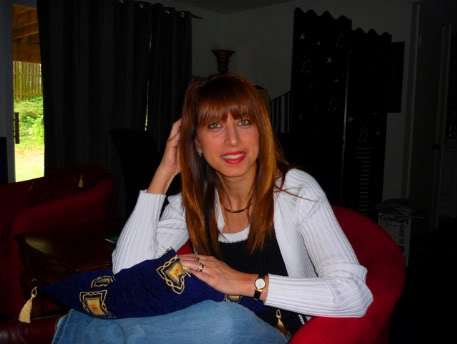
Today, I am pleased and excited to welcome dear writing friend and children’s author, Maha Addasi, to alphabet soup! When we first met in 2005, I never would have imagined that one day I would be interviewing her.

After all, she’s the one who had a fascinating, glamorous career as a news correspondent and producer for Jordan and Dubai Television. The one who interviewed royalty and heads of state, cosmonauts, opera singers, musicians, and world-renowned scientists. The one who attended openings of Parliament, lunched in the royal palaces in Jordan, and who, once upon a time, attended the New English School in Kuwait with Queen Rania.
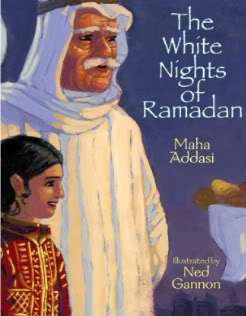
Maha once told me that she likes to keep busy. Since moving to the U.S. in 1998, she has shifted her focus to writing for children. And why not? She has four of her own — two teenage girls, and two boys under the age of 10, a little posse that would decidedly challenge even the most resilient of supermoms, while at the same time providing neverending story fodder.Just last month, Maha’s first picture book, The White Nights of Ramadan, was released by Boyds Mills Press (my review is here). The “white nights” refer to three days in the middle of
Ramadan — the full moon, and the days before and after. In Maha’s native Kuwait and other countries in the Persian Gulf Region, these days mark the candy festival called Girgian, which is highly anticipated by children.

Since we’re right in the middle of the holy month, it’s the perfect time for Maha to tell us all about her book and share a special family recipe. She’s visiting today from her home in Fairfax, Virginia, where, in her “spare” time, she’s busy working on her MFA from Vermont College and building a career as an image consultant.

Welcome to alphabet soup, Maha, and congratulations once again on the publication of your first picture book! How does it feel to finally be able to call yourself a “published children’s author?” Is it what you expected?

Thank you, Jama, for this wonderful opportunity. I feel honored to be selected as an interviewee on alphabet soup.  I get to laugh every time I read it. It’s well organized, and so much fun to read.

In terms of being a published children’s author, the feeling is very special, but there is also a lot of responsibility that comes with it. For me, there’s the self-imposed pressure of wanting to produce another book and the feeling of being overwhelmed about finding a new idea. There’s also the What If factor: What if the book does not sell? What if it is not perceived well? I had not anticipated that beforehand. So I’m dealing with that along with enjoying the fact that the book is now published.

Please tell us how The White Nights of Ramadan evolved. What did you learn from this experience?

The idea of writing about Ramadan came from my own need to find a book about this month that was a fun read. I was able to find several books that captured the month of fasting very well, but they seemed very encyclopedic. I had the chance to speak at an interfaith event held at Church of the Redeemer that the Arabic school I belong to arranged with the church and Am Kolel Synagogue. We had several interactive children’s events, but when it came time to sharing a book, there were none that seemed to work for the children.

So I decided to write my own. At the time I did not feel there was a market for this kind of book. I wrote the book in rhyme. It was a fun read, but the meter did not quite work all the way through. Several stanzas seemed forced. It sat in my folders for some time. And I continued to market other works to various publishing houses.

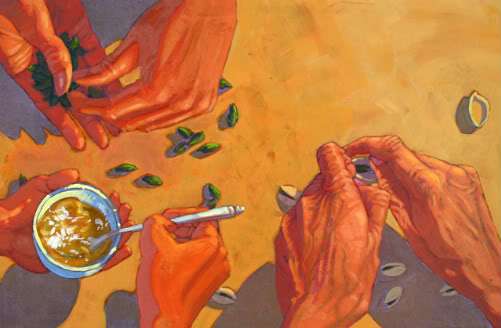
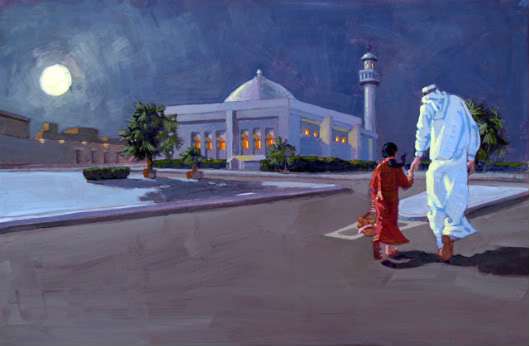
All illos for The White Nights of Ramadan were rendered in oil by Ned Gannon.

One day, I got a letter from Boyds Mills Press. I had sent them a story that was about a cultural event, but it ended up on someone else’s desk. The letter said that the subject did not exactly work for a picture book, but to keep them in mind for other works and to email him if I had something. Of course I panicked a little. Actually, I panicked a lot, and then I suggested a folk tale, which I had recently written. It was not what this editor was looking for.

I then said I had a story in rhyme called, “The Moon Has Been Seen,” about Ramadan. The response was immediate. “Please email it to me right away.” I nearly fainted. I went into emergency mode and contacted the members of my writer’s group, and did some on-line critiquing and I sent it in. The reply: “It has potential, but the meter does not quite work.” I tried other versions. Eventually, to add to the storyline, I included something about Girgian.
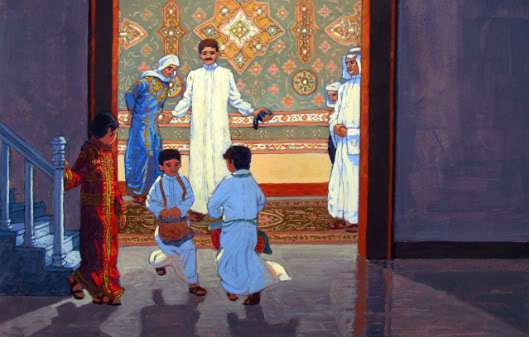
Main character, Noor, with her two brothers, ready for Girgian

The response was, “What is Girgian?” I explained that it was a candy festival. Eventually, I attended the SCBWI conference, at which the author of these correspondences was a speaker. I got to meet Larry Rosler in person and he told me that he would like for me to try writing a story about Girgian and preferably not in rhyme. I had been living with the characters of my story for several months and it took a very short time to come up with the story in prose. It was accepted and we took it from there.

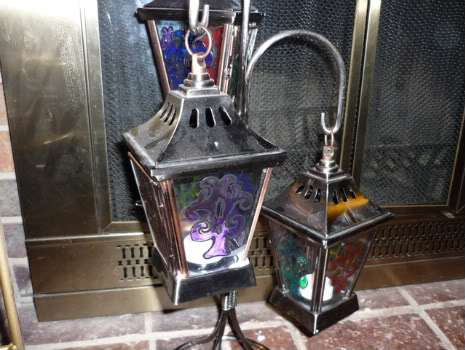
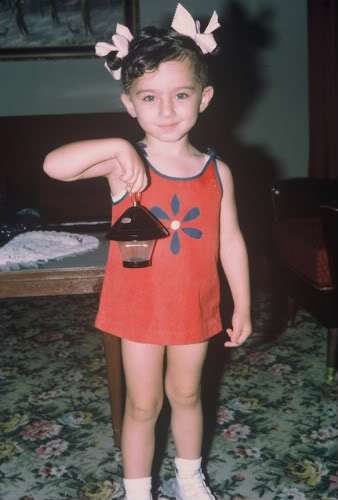
Typical fanous (lanterns) carried by children for Girgian

Working with Larry is like living a beautiful dream. He is so very kind. I am overwhelmed by how wonderful he is in terms of expressing himself and how warm he comes across and how masterful he is as an editor. To have the opportunity to work with him and the team at Boyds Mills Press is such a great honor.

Aside from its focus on Girgian, what do you think sets your book apart from the many other children’s books about Ramadan? Were you trying to dispel any popularly-held misconceptions? If so, which ones?

My children were somewhat frustrated and wanted to be able to share books with friends that described the month of Ramadan in an incidental way, as part of a story. Most books talked about the fasting part in a somewhat didactic way, so it was not an easy read for them.

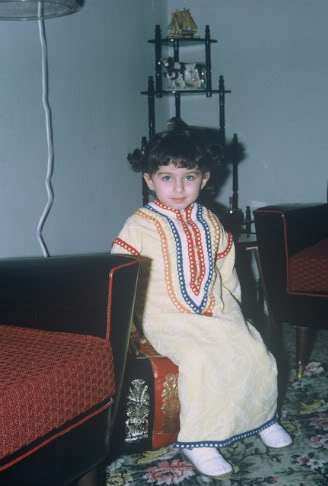
 Maha in traditional Girgian gown

In terms of Ramadan, the fasting is a major part of it, but the reasons behind the fasting are what make it meaningful. Muslims fast to place themselves at equal footing with those less fortunate. Nothing makes you relate to someone deprived of food more than the pinching ache of hunger.

But what I wanted to show was that Ramadan is not a month of suffering, but a month that holds beautiful meanings of sharing and interacting with family and friends. Even young children plead with their parents to fast, if only for a day. It makes them proud to be able to accomplish such a feat, and it gives them a chance to get closer to family and friends.

Generally, how old are children when they begin to fast? Did you find it difficult when you first began? Is it difficult now?

Children are not required to fast until they are in their teens. However, many children start to practice at around 6 or 7. I remember fasting the last three days of Ramadan when I was 6. I had a cousin who was one year older and he started that same year, and my best friend at the time also fasted for Lent.  We all got so much attention; it was well worth it, and we felt so grown up.

Noor and her grandfather take a charity basket to the Mosque

As an adult it is not very difficult. I think the first day was tough in some years because my biggest problem on the first day was developing headaches from caffeine withdrawal. I no longer drink caffeinated coffee, if I have coffee at all, and that made it so much easier. It is somewhat difficult for teens in schools, but they go to school fasting and take food with them, in case they have to break their fast. If they do they can make up missed days in the winter when the days are shorter.

I personally love the month, for the feelings of tranquility and peace that come with it. It’s a month that deprives you of food but fills your spiritual soul to the brim. It also makes you focus on what the important things in life are.


How did you feel when you first saw Ned Gannon’s illustrations? Was his vision close to the one you had in mind? What do you think his art brings to your story?

When I first saw Ned Gannon’s illustrations I loved how elaborate they were. I saw a black and white sketch first and he had captured the details so well. I have to say I absolutely loved his use of color and the effect of light and shade that seem to be his signature. I feel he captured the essence of the festival and the country and the characters superbly.

Please tell us the story behind your dedication: “To Mom and Dad, I walked and walked.”

Oh, that may seem funny now, but when I was about 5, I was learning to read. I actually learned to read English before Arabic, even though I lived in Kuwait. I had to bring home books from school to practice and one of the books was called, “I Walked and Walked.” The main character walks and encounters a dog, then a cat and so on through a series of events. My dad wanted me to read the book so that I made no mistakes. So I would start: “I walked and walked and what did I see?” (All is well so far.

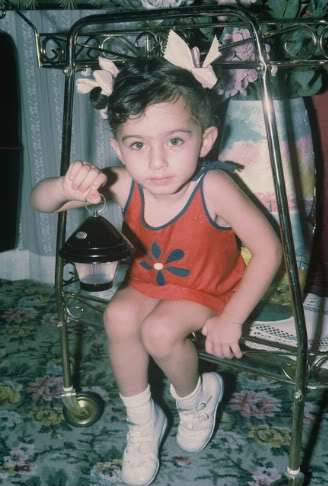
Maha at about age 3

Then, on the second line, I would say “I saw a bog” (instead of dog), and I would have to start the book all the way from the start. Sometimes I would mess up on the very last sentence! I have to say there were tons of tears, but my dad, a physician, told me that he wanted me to perfect the English language. “One day you’ll be better than me in language,” he said. “I learned English in medical school and that was really tough. I want you to do it now when you’re young.” Of course I still remember the book word for word to this day.

What was your childhood like? Which books did you love most?

I had a lovely childhood. My dad worked for Getty Oil Company in Kuwait and we had friends from all over the world living in this American campus. Our house was on the sea shore and I spent long hours discovering sea life and picking shells and building sand castles. The weather is very warm in Kuwait and with the exception of a few weeks in winter, walking along the beach is a year long affair.

I loved to draw and write from a very young age. I loved reading Charlotte’s Web, Paddington Bear. Jack London’s Call of the Wild and White Fang were my favorites and so were all the Enid Blyton books I could get my hands on. I also loved the Famous Five and Agatha Christie mysteries. But what I also enjoyed reading were books in Arabic.

There was this series called “The Green Library,” that revolved around folktales and legends. They are so rich in detail and I bought the entire series as an adult and sometimes read them to capture the nostalgia of my childhood.

Why did you decide to re-craft your journalistic training into writing for children, and how does it influence your work today?

I have always enjoyed writing stories. On parents’ day my parents were often mortified to find out that our family ‘news’ was in my daily writing book in school for all to read. It was inevitable that I would end up in journalism. But turning to writing for children was much tougher than being a journalist. It took some seven years of work to re-craft my writing toward children’s writing. I enrolled in the Institute of Children’s Literature. This writing field is so immense and there is always so much more to learn.
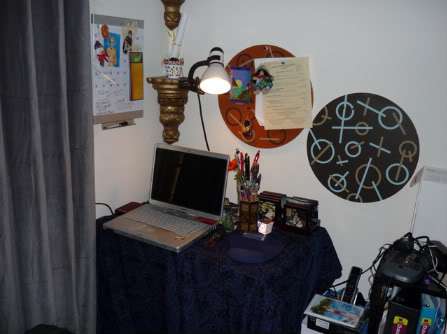
Maha’s workspace at home.

I have just started my MFA at Vermont College of Fine Arts, and I know how much more I still have to learn. Learning to write for children well is a lifetime commitment. I find my journalistic background feeds my work every day in two ways. First, it gave me several unique experiences and perspectives to draw on, and second, it made me able to work fast. Journalistic deadlines are cut-throat. Television satellite feeds teach you the value of every nano second. I feel that I can rework my children’s writing fast, if I have to.

I am so much in awe of how much you do. How do you manage to balance your writing life with your personal life?

Some weeks are very tough. Close your eyes and point to the calendar to any day and I guarantee that day was not a typical one for me. I start my day at around 4:45 a.m. I do a little reading and sometimes a little writing, but I go back to bed for another hour. It may sound strange, but in college when I had writing assignments for English class and woke up early (and went back to sleep for a little more), I was able to will my mind to think of themes and story ideas. It happened several times so I knew it was no coincidence.
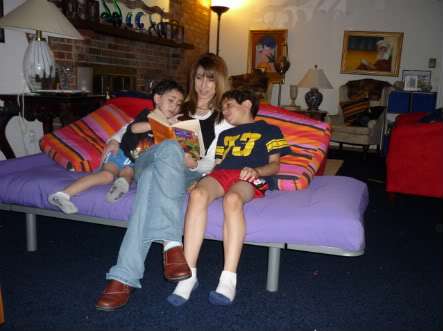
Maha reads to Ramzy and Samer

Balancing home life is very hard sometimes. My teen daughters are a blessing. They are very independent and help me out with my younger boys. In the summer especially, they help with babysitting. One of my daughters loves to cook and she’s really good at it, so she takes over the cooking. During the year it’s hit or miss. I try to plan ahead, but sometimes you get things from left field so you have to improvise. Usually things tend to work themselves out. Writing gets squeezed in very early or very late in the day, or both.

Picture books are still a tough sell. Any advice for those hoping to break in?

I think that if you enjoy writing picture books keep on writing them. Don’t worry about the market. Write for your own personal enjoyment first, which makes for better writing, and this leads to publication. I think the key is to want to write for writing itself, versus having publication be your main focus. Also, try to constantly read as many picture books as you can. It’s amazing how that can spark ideas.

What’s next for you?

I sold my second fiction picture book to Boyds Mills Press, and I’m working on a third, which is a little different, because it is nonfiction. 

Describe yourself in 5 words.

Always wanting to do more.

Passions besides reading and writing.

I love antique stores and yard sales; I’ve also recently learned to bead bracelets. I enjoy doing watercolor painting with my son, who recently started art lessons with renowned watercolor artist Lou Negri.

3 fondest wishes.

I wish for my children to all find a field of study that gives them lifelong enjoyment.
I wish to find that magic button that once pressed gives one total peace of mind.
I wish for world peace and the end of stereotyping and alienating of people and nations that choose other ways of life.

5 favorite foods.

Anything my mother cooks. I hate to brag, but my mom cooks Asian, Italian, and Mediterranean food like an expert gourmet chef. I also love seafood from my days living by the sea. Fishermen walked along the shore in front of our house with boxes filled with fish so fresh they still moved!

Please describe your favorite childhood food-related memory.

I grew up in a close-knit family of four. On weekends my dad had a ritual of getting up early to make a special breakfast dish that had hummus as its main ingredient, but which is served warm. So we would have stations. My mom would make the hummus, my dad would toast the bread (which went into the dish); my brother would mince garlic, and I would squeeze lemons.

We had a little garden so I also got to get the fresh herbs. Then the ingredients were mixed together with hot water and the dish was dressed up with pine seeds sauteed in olive oil. This breakfast dish is tangy and with green olives its flavors danced on your tongue. Of course we would have this with mint tea. The dish is called Fatet Hummus.

Please share a recipe with us, something you might prepare for Iftar (meal taken at sunset to break the fast during Ramadan).

Iftar food often starts with soup and then mostly stews and savory pastries, but the thing most associated with the month is the Ramadan desserts. I make five or six different desserts through the month. Some take a long time to make, while others have fast prep time and are just as tasty.

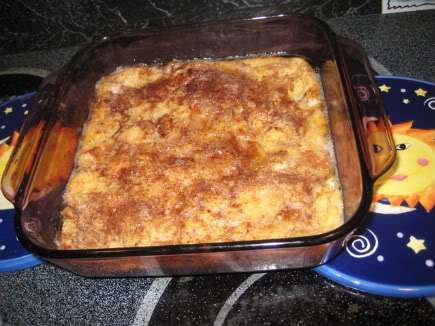
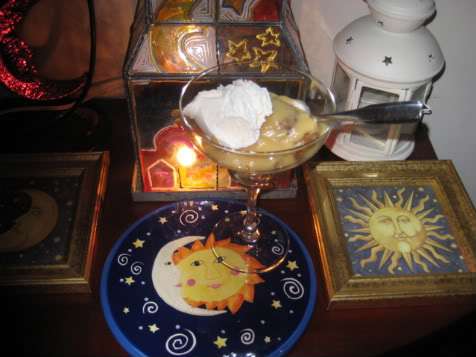
For instance, I make a basic bread pudding, but the moment it’s done baking, I drench it with sweetened condensed milk and whipped cream. It is awesome. I also make pastries with homemade pancake-like pastry, filled with walnuts (or pecans), cinnamon and sugar, deep fried and drenched in homemade syrup. This dessert is also perfect with substitute sugar and works with store-bought puff pastry which you can bake, instead of fry.

BREAD PUDDING WITH CONDENSED MILK TOPPING


Pudding:
8 slices of white bread (hand shredded into small pieces)
4 eggs, lightly whisked (or 5 egg whites)
1 12-oz can evaporated milk (you could use fat-free)
1 T sugar
1 tsp ground cinnamon
1/2 tsp ground nutmeg
1/3 cup raisins (optional)
1 T butter cut into small patsTopping:1 can sweetened, condensed milk
1 8-oz tub of Cool WhipPreheat oven to 325 degrees F.Spray an 8″ x 8″ baking dish with non-stick spray.Place bread in baking dish.In a separate bowl, whisk eggs, evaporated milk, sugar, cinnamon and nutmeg (and raisins, if you are using them), and pour over bread in baking dish. Use a spoon to push down the bread to ensure it is soaked well with the milk mixture.Put pats of butter on top.Bake uncovered for 25 minutes at 325 degrees F, and for an additional 5 minutes at 400 degrees F, or until golden brown.

Remove from oven, scoop immediately into individual serving ramekins/glass bowls. Drizzle with sweetened condensed milk (to taste). Add a dollop of Cool Whip.

*Store extras covered in fridge. This pudding tastes great the second day. Just microwave for 30 seconds and add condensed milk and Cool Whip and it tastes just as fresh as on the first day.

*You could add chocolate chips and toasted pecans to this recipe over the Cool Whip, but it tastes really good plain.


Thanks to Maha’s daughters, Serena and Diana, for the lovely photos!

—————————–

*Interior images posted by permission, copyright © 2008 Ned Gannon, published by Boyds Mills Press. All rights reserved.


breakfast with george


Every morning at 7 a.m., George Washington ate three hoecakes and drank 3 cups of tea for breakfast.

It sounds a little meager for a man six feet tall, especially since he had a country to run.

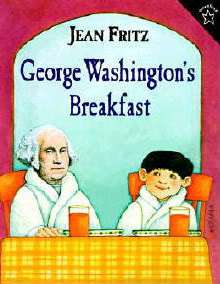
Until two weeks ago, I didn’t even know what a hoecake was. I’m guessing oodles of kids around the country are already on to George and his cakes, because they’ve read this cool book: George Washington’s Breakfast, by Jean Fritz (Putnam, 1998).

Young George W. Allen shares Washington’s name and birthday. Since he feels almost related to him, he wants to know everything he can about the father of our country. But one day at breakfast, George realizes he doesn’t know what Washington ate every morning. So begins an enthusiastic, determined quest for the answer, which drives the plot and makes for a fun, engaging read.

Kids will immediately note George’s dated use of a card catalog, but will admire his tenacity as he reads book after book, searching for the answer. They will also pick up some interesting facts about Washington as their anticipation steadily builds, so that by the time George finds out about the hoecakes, they’ll be anxious to try them.

The New York Times Book Review called George Washington’s Breakfast “delightful,” as it “combines history, biography, research, cooking, and a determined child.” After eating the hoecakes, George felt even more related to Washington than ever before.

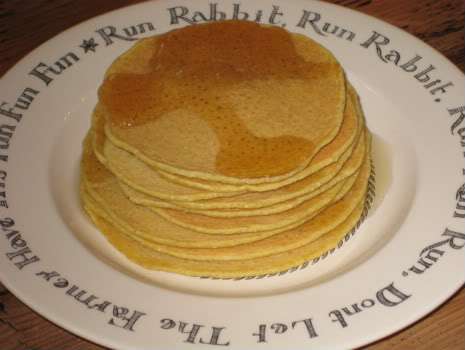
So what are they? A traditional Southern cornmeal pancake, originally cooked by field hands on the blade of a hoe over an open fire. Washington’s hoecakes were probably cooked on a griddle in the oven, though, and he liked them slathered with butter and dripping with honey.

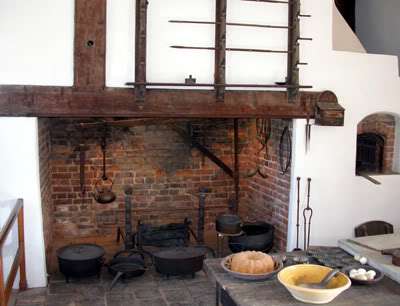
GW’s meals were cooked in this fireplace at Mt. Vernon

Of course I simply had to try making some of my own. I opted for this modernized recipe, which calls for milk instead of water, and unlike the gargantuan recipe posted at the Mt. Vernon website, uses baking powder rather than yeast.

They make a nice change from traditional flour-based pancakes, and are good with maple syrup, honey, or butter and jam. For a fluffier (albeit less authentic) hoecake, use 1 cup of flour plus 1 cup of cornmeal.

Make some this weekend — it’s your patriotic duty!

Here’s a cute webpage showing some third and fourth graders enjoying hoecakes prepared by a library media specialist.

INFO BITES:

Washington was modest, courteous, and had flawless manners. He subscribed to the five-minute rule: all guests must be seated within five minutes of the dinner bell.

The Washingtons were among the first colonial Americans to acquire Wedgwood’s cream-colored ‘Queen’s Ware,’ and among the first to purchase porcelains brought back from Canton.

He also acquired the nation’s first service of French porcelain to grace state dinners.

His farms (8,000 acres) were self sufficient, providing most of the meat and produce he needed to entertain his constant flow of guests.

He had dinner at 3, tea at 6 or 7, and retired by 9 p.m.

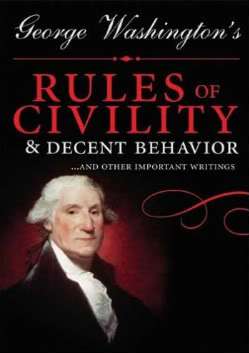
Regarding behavior at the dinner table, Washington wrote:

Make no shew of taking great Delight in your Victuals, Feed not with Greediness; cut your Bread with a Knife, lean not on the Table, neither find fault with what you Eat.

~ from Rules of Civility and Decent Behavior in Company and Conversation.

an unexpected party


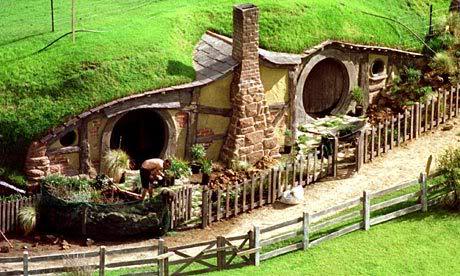
“In a hole in the ground there lived a hobbit.”

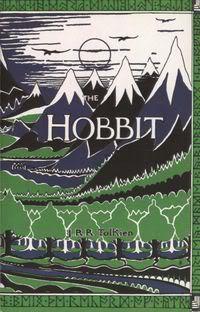
So begins one of the greatest fantasies ever written. The Hobbit, by J.R.R. Tolkien, is deliciousness in itself, and this prelude to Tolkien’s masterwork trilogy, Lord of the Rings, begins with a tea party!

In Chapter One, “The Unexpected Party,” we are introduced to the diminutive Bilbo Baggins. In the bucolic world of Middle-earth, an entire race of people under four feet tall practice farming, eat at least six meals a day, never have to wear shoes, and prize socializing and comfort above all.

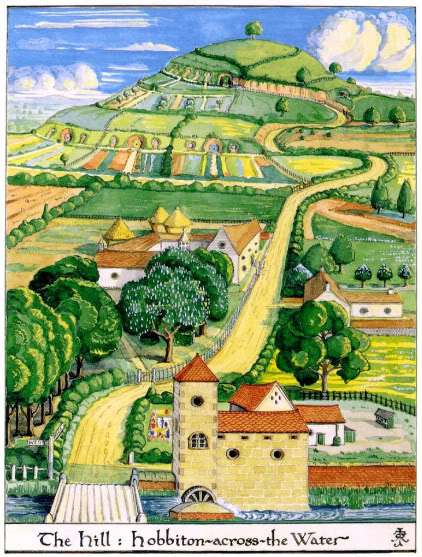
Bilbo is middle-aged and fairly well-to-do, and when the story begins, he is perfectly happy with his life just the way it is. He has two breakfasts, elevenses, lunch, afternoon tea, supper and an after-supper snack — and several pantries in the cellar full of provisions. The first time I read this story back in high school, I immediately wanted to live in The Hill with Bilbo and his friends.  They lived their lives with a certain gentle nobility and simple joy. I could identify with their shyness of the Big People, and found their charm irresistible.


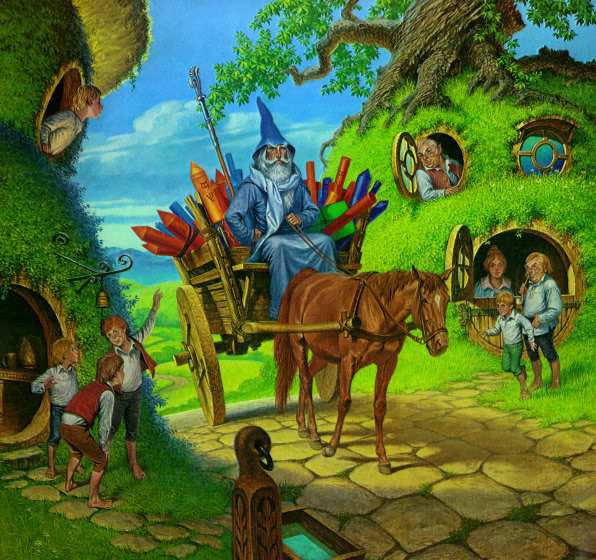
“By some curious chance one morning long ago in the quiet of the world, when there was far less noise and more green,” Bilbo was standing at his round, green front door smoking a pipe after breakfast when Gandalf the Wizard comes by.  He was taken with Gandalf because of his reputation for wonderful tales of goblins and wizards and dragons, and for making excellent fireworks. But he politely declines when Gandalf mentions he is seeking someone for an excellent adventure. Before hurrying back inside, he invites Gandalf to tea the following day, regretting it as soon as he shuts the door.

Relieved that he has avoided an unwanted adventure, Bilbo is flummoxed the next day when he is visited by not one or two, but a throng of dwarves — 13 to be exact, who act like they had been expected all along. Bilbo, the good host, invites them to tea, for “what would you do, if an uninvited dwarf came and hung his things up in your hall without a word of explanation?”

Gandalf finally arrives, and all this unexpected company keeps Bilbo hopping. Not only are they devouring all the seed-cakes he had baked especially for his after supper snack, but they keep asking for everything under the sun, except tea:

Some called for ale, and some for porter, and one for coffee, and all of them for cakes . . . A big jug of coffee had just been set in the hearth, the seed-cakes were gone, and the dwarves were starting on a round of buttered scones . . .

After the great Thorin Oakenshield arrives (a very important dwarf), he and Gandalf ask for red wine (no tea, thank you)! And the others, who haven’t stopped eating since they arrived, chime in:

‘And raspberry jam and apple-tart,’ said Bifur.
‘And mince-pies and cheese,’ said Bofur.
‘And pork-pie and salad,’ said Bombur.
‘And more cakes — and ale — and coffee, if you don’t mind,’ called the other dwarves through the door.
‘Put on a few eggs, there’s a good fellow!’ Gandalf called after him, as the hobbit stumped off to the pantries. ‘And just bring out the cold chicken and pickles!’

Feeling more and more put out, Bilbo feels obligated to invite them to supper, and they end up staying overnight (and ordering big breakfasts before retiring). After supper, the dwarves play beautiful music and sing about reclaiming the Lonely Mountain and its treasure, guarded by the dragon, Smaug:

Far over the misty mountains grim
To dungeons deep and caverns dim
We must away, ere break of day,
To win our harps and gold from him!

As they sang the hobbit felt the love of beautiful things made by hands and by cunning and by magic moving through him, a fierce and jealous love, the desire of the hearts of dwarves. Then something Tookish woke up inside him, and he wished to go and see the great mountains, and hear the pine-trees and the waterfalls, and explore the caves, and wear a sword instead of a walking-stick.

And so a somewhat reluctant, home-loving hobbit sets out on a grand adventure, which all began when unexpected guests arrived for tea.

Since one never knows when an opportunity like this will present itself, it is always best to have some seed-cakes on hand. This is an authentic recipe from 16-17th century England adapted for the modern kitchen. This type of sweet, almost bread-like round cake was very common during the Middle Ages, and is also described in Chaucer’s Canterbury Tales.

I think your dwarves will like it!

SEED CAKE

1-1/2 cups unbleached flour
1 cup cracked wheat flour
1 pkg. yeast
1/8 cup warm ale
1/8 tsp salt
4 oz (1 stick) sweet butter
3/4 cup sugar
2 eggs, beaten
1 T seed (crushed anise, caraway, coriander, cardamon, etc.)
1/2 – 1 cup milk

Sift together the flours and salt; set aside in large bowl. Dissolve yeast in warm ale, along with 1/8 tsp of the flour mixture. Cream together the butter and sugar. Beat in eggs and seeds. Make a well in the flour and add the dissolved yeast. Fold flour into yeast mixture, then fold in the butter. Slowly beat in enough milk to make a smooth, thick batter. Pour batter in an 8″ round greased cake pan. Bake in middle of oven at 350 degrees for 45 minutes, or until a toothpick inserted in the center comes out clean. Let cool slightly before turning onto a cake rack.
*

a little smackerel from jeannine atkins

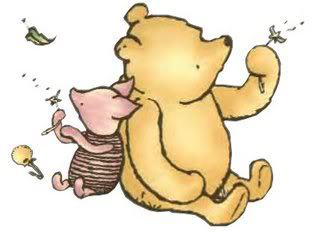
“By-and-by Pooh and Piglet went on again. Christopher Robin was at home by this time, because it was the afternoon, and he was so glad to see them that they stayed there until very nearly tea-time, and then they had a Very Nearly tea, which is one you forget about afterwards, and hurried on to Pooh Corner, so as to see Eeyore before it was too late to have a Proper Tea with Owl.”  ~ from THE HOUSE AT POOH CORNER, by A.A. Milne (E.P. Dutton & Co., 1928). 

The other morning I was feeling a little odd. 

It was almost eleven and I needed a little smackerel of something.

Just in time, I received this lovely email from author Jeannine Atkins:

Jama, this is my favorite scone recipe, which I doubled and brought into my children’s literature class after reading WINNIE-THE-POOH and feeling like we needed ‘a little something.’ One student said he was happy to ‘walk into class and see two big cookie-like things on the table.’

Rum-tum-tiddle-um-tum!

Scones!

No tea party would be complete without them. Whether you pronounce it skon to rhyme with John (as in most of the UK), or skoan to rhyme with Joan (as in the U.S.), there’s no denying their appeal. Split them in half while they’re still warm, lay on the butter, strawberry jam, and clotted cream (if you’re lucky), and you’ve got home and heaven in one little cake!

Scones, originally from Scotland, are perfect anytime — breakfast, elevenses, very nearly tea, or proper afternoon tea. Make them plain with cream, milk or buttermilk, add fruit or even chocolate chips — then roll and cut them into little rounds, or pat the dough onto a sheet, and cut in wedges. They can be baked or dropped on a griddle. Your tum-iddle-um will thank you.

When Jeannine’s students walked into the classroom, they probably felt like this:

When you’ve been walking in the wind for miles, and you suddenly go into somebody’s house, and he says, ‘Hello, Pooh, you’re just in time for a little smackerel of something,’ and you are, then it’s what I call a Friendly Day.

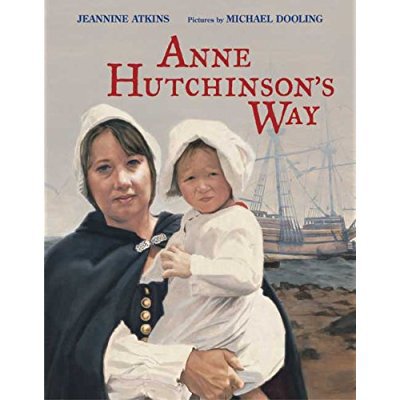
Very friendly Jeannine has written quite a few fabulous books herself, the latest of which is Anne Hutchinson’s Way (FSG, 2007). In this historical fiction picture book (illustrated by Michael Dooling), Anne leaves England with her husband and ten children for the Massachusetts Colony, seeking religious freedom.


When she disagrees with the minister’s ways, Anne holds meetings in her own home to preach the gospel herself. Told from her daughter Susanna’s point of view, this inspiring story of a strong woman who believed in the freedom of speech, was recently named a 2008 Amelia Bloomer Project Recommended Title, one of 32 books which encourages girls to be “smart, brave, and proud.”

Jeannine has written several other wonderful books about strong girls and women, such as Aani and the Tree Huggers (Lee and Low, 2000), Girls Who Looked Under Rocks: The Stories of Six Pioneering Naturalists (Dawn, 2000), and How High Can We Climb: The Story of Women Explorers (FSG, 2005). All reflect Jeannine’s love of history, research, and personal interest in feminism.

So, next time you crave a little something, mix up a batch of Jeannine’s scones, pour yourself a cup of your favorite tea (maybe Republic of Tea’s  All Day Breakfast or Assam Breakfast ), and curl up with one of her books. It’ll get you humming, and may even inspire you to greater things. What could be friendlier?

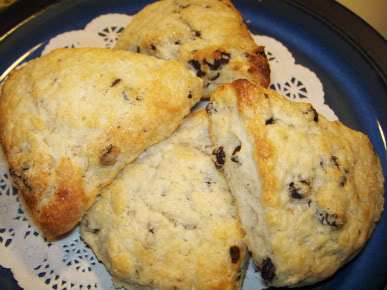
DRIED FRUIT SCONES
from Jeannine Atkins

1-1/4 cups all purpose flour
3/4 cup whole wheat flour
1/4 cup light brown sugar
2 tsp cream of tartar
1 tsp baking soda
1/2 tsp salt
1/2 cup butter, cut in bits
1-1/4 cups mixed dried fruit: chopped apricots, dried cranberries or cherries, and raisins
1/2 cup heavy cream
1 large egg

Preheat oven to 400 degrees. Grease baking sheet. Combine dry ingredients, then cut in butter with pastry blender or two knives until mixture resembles cornmeal. Mix in fruit. Combine cream and egg, then pour into the flour mixture. Stir with a fork just until the dough forms a ball. Pat this into a round and squash about 8 inches wide. Cut about halfway through into twelve wedges and put it on the baking sheet. Bake about twenty minutes until golden.

Visit Jeannine’s Website and Blog for more about her books!