The king of nonsensical verse is here! Purrrrrrrrrrr.
Yes, I knew that when it comes to exuberant, outlandish, riotously funny poems, J. Patrick Lewis is totally the cat’s pajamas. The man sells underwear, for crying out loud, and even has a wickedly chewy collection called, The Bookworm’s Feast: A Potluck of Poems. Hi-Ho Silver Away!
Clever is as clever does, and I say it’s always good to invite a shockingly clever person to a poetry party.
Take Karen Edmisten, for example. She brought a finely wrought, exquisitely nuanced poem using bread as a central metaphor. Yes, give us this day our daily bread, and with it, a beautiful reflection on marriage.
Her poem reminded me that things worth having — whether they are relationships, a good piece of writing, or a delicious loaf of bread – are the result of patience, conscious effort, allowing time for maturation, and keeping the faith through the sometimes unwieldly process of growth.
“After a few days spent almost entirely out of doors Mary wakened one morning knowing what it was to be hungry, and when she sat down to her breakfast she did not glance disdainfully at her porridge and push it away, but took up her spoon and began to eat it and went on eating it until her bowl was empty.”
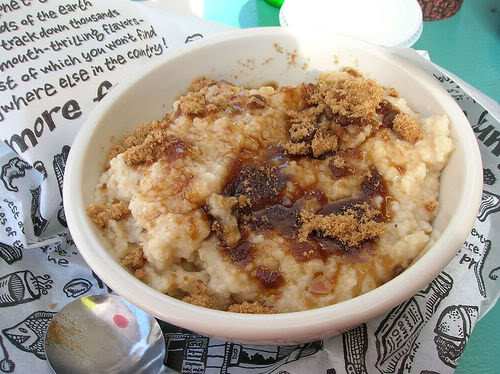
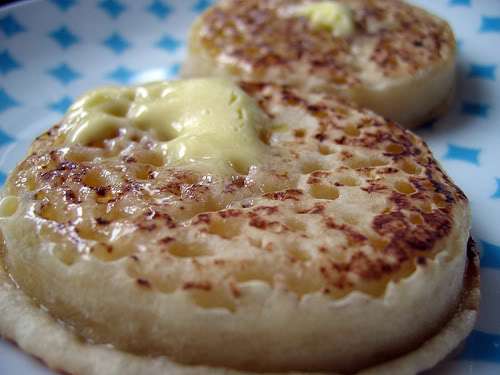
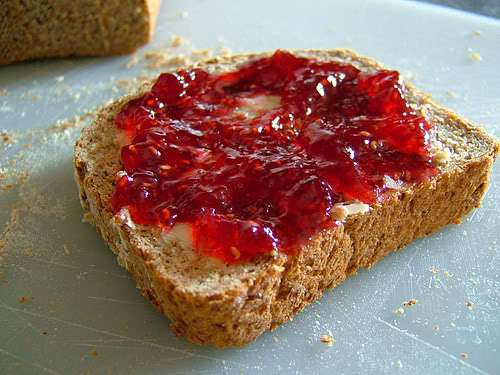
The Secret Garden is first and foremost about the wonder and magic of making things come alive — the blossoming of an abandoned garden and two lonely, neglected children. But food is also magical and plays a crucial role in the story. As the flowers and plants grow, so do Mary’s and Colin’s appetites — and who can blame them, with pails of fresh milk, homemade cottage bread slathered with raspberry jam and marmalade, buttered crumpets, currant buns, hot oatcakes, muffins, dough-cakes, and the all-important bowl of warm porridge, sweetened with treacle or brown sugar.
Oatmeal Porridge was eaten by both rich and poor in Yorkshire during Victorian times.photo by Dave Knapik
My recent rereading of the novel yielded new insights about the self sufficiency of manor houses like Misselthwaite during Victorian times, and Burnett’s advocacy of homegrown and lovingly shared food as a key component in establishing physical and emotional health. We see Mary change from a sickly, sallow, ill-tempered waif, to a happy, engaged, more caring individual. Colin undergoes a dramatic transformation from a pessimistic, overprotected, bedridden tyrant to a budding evangelical Christian scientist. Purposeful activity centered around nature, lots of fresh air, exercise and companionship certainly contributed to healing, but so did unlimited access to a bounty of locally sourced nourishment.
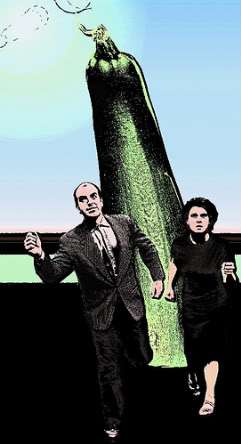
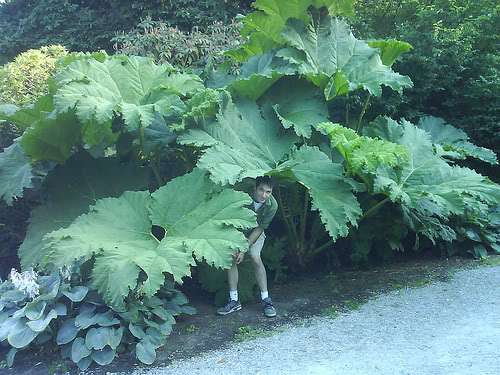
It happens every year. It doesn’t take much — maybe a little extra rain, or you leave town for a day or two. You innocently go out back to check your vegetable garden to find Mother Nature has GONE WILD.
“Once you begin being naughty, it’s easier to go on and on, and sooner or later, something dreadful happens.” ~ Laura Ingalls Wilder
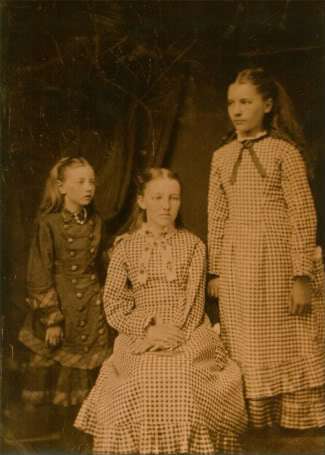
Carrie, Mary, and Laura Ingalls
Which children’s book character would you most like to be for just one day?
I’d like to be Laura Ingalls, mainly because her childhood was so vastly different from mine. I would love to have three sisters, a father who plays the fiddle, a dog named Jack, and a more intimate knowledge of how food was grown, cultivated, preserved, and prepared in the late 19th century. It would also be quite cool to be called, “Half-pint.”
Pioneer life was much harder than is depicted in the Little House books, so I wouldn’t necessarily want to actually be Laura Ingalls Wilder — no, just the Laura in the stories who eagerly watches Ma make Pancake Men, takes her turn at churning the cream, marvels at eating a little heart-shaped cake made from white flour, and is there to smell and taste all the bread and biscuits fresh from the wood-fired oven.


 Jama's Alphabet Soup