marc chagall’s blue world

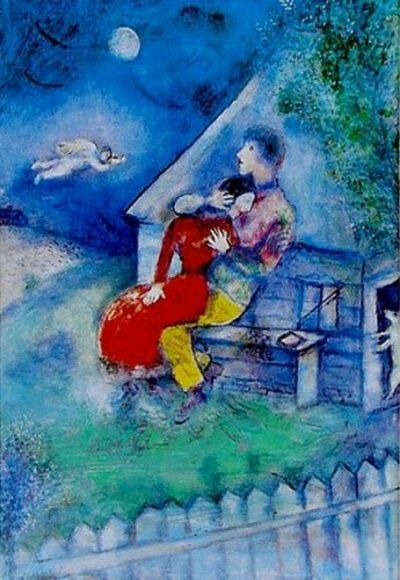
“Only love interests me, and I am only in contact with things that revolve around love.” ~ Marc Chagall
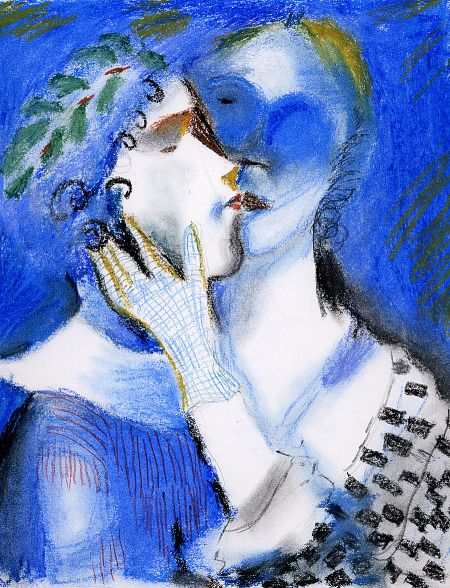
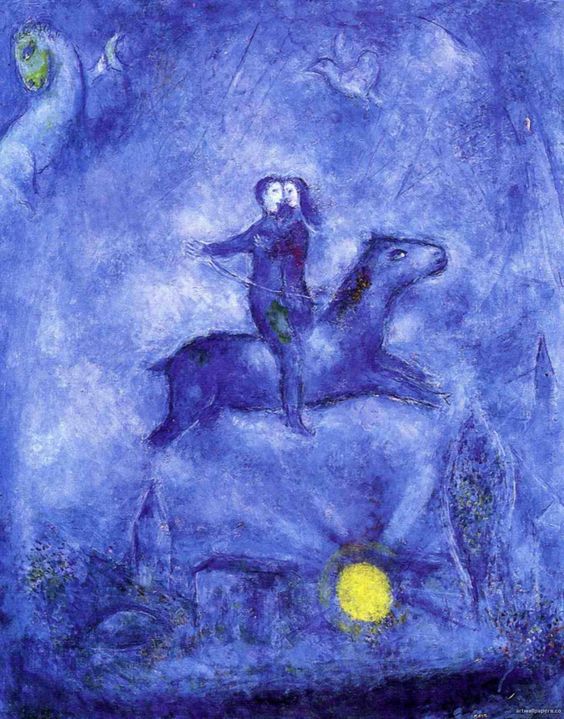
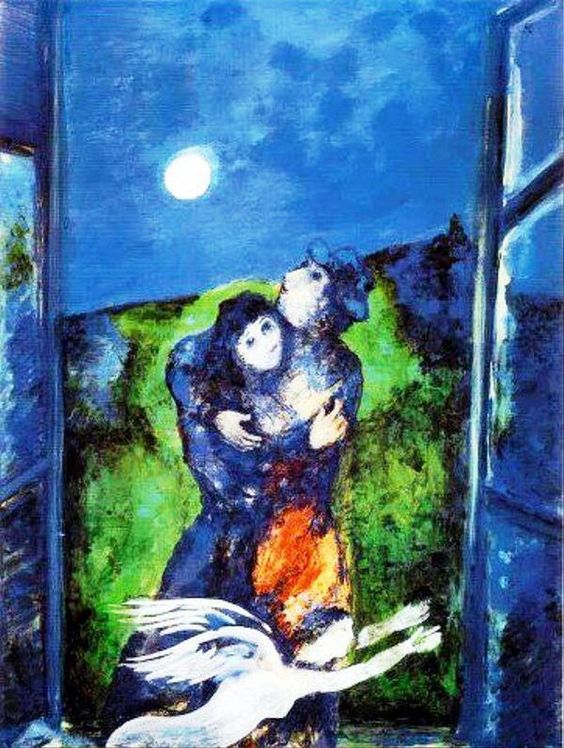
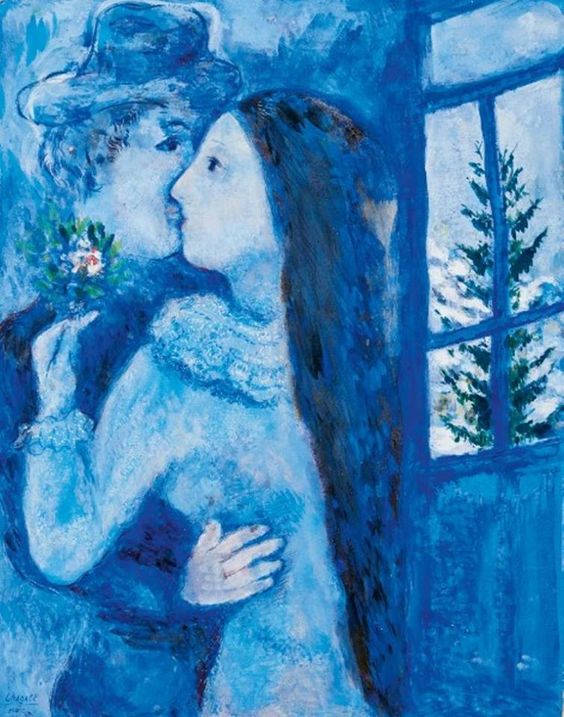
“Lovers in Blue” (1914)


I’m a longtime Marc Chagall fan, and during this, my THINK BLUE year, I’m finding his work especially nourishing.

Who can resist his beautiful paintings– poetic inner dreamscapes replete with joy and childlike imagination? We are reminded that truth of vision is neither linear nor precise, but often abstract. He asks us to feel what he feels.
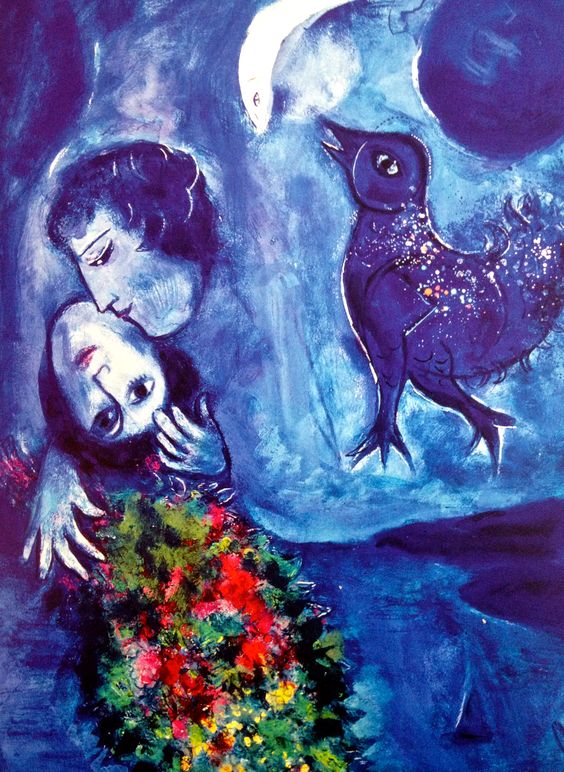
 

“Le Paysage Bleu” (1949)


French art critic Raymond Cogniat said this about Chagall’s work:

The most obviously constant element is his gift for happiness and his instinctive compassion, which even in the most serious subjects prevents him from dramatization . . .  Musicians have been a constant during all stages of his work. After he first got married, ‘lovers have sought each other, embraced, caressed, floated through the air, met in wreaths of flowers, stretched, and swooped like the melodious passage of their vivid day-dreams. Acrobats contort themselves with the grace of exotic flowers on the end of their stems; flowers and foliage abound everywhere.

Sigh. And he said this about Chagall’s use of color, which is what initially attracts the viewer and captures his attention:

The colors are a living, integral part of the picture and are never passively flat, or banal like an afterthought. They sculpt and animate the volume of the shapes. . . they indulge in flights of fancy and invention which add new perspectives and graduated, blended tones . . . His colors do not even attempt to imitate nature but rather to suggest movements, planes and rhythms.

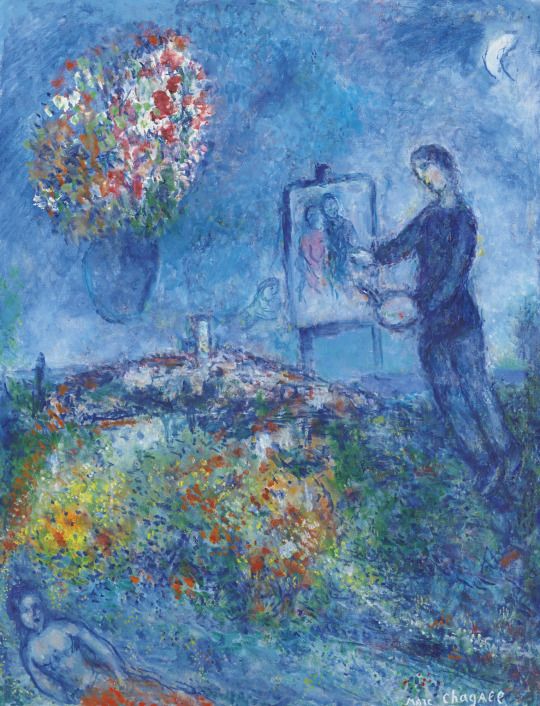
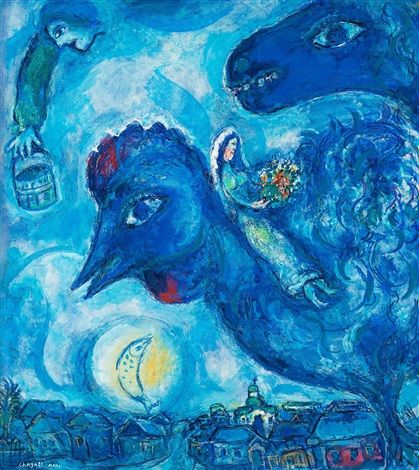
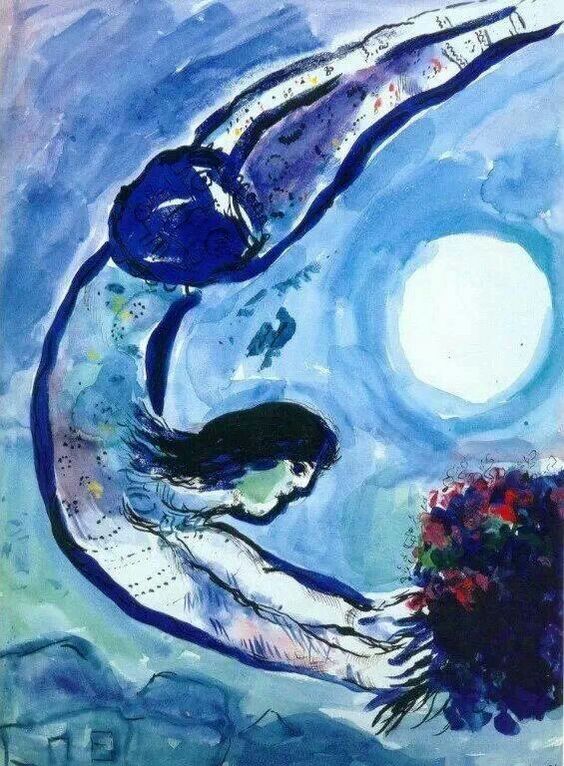
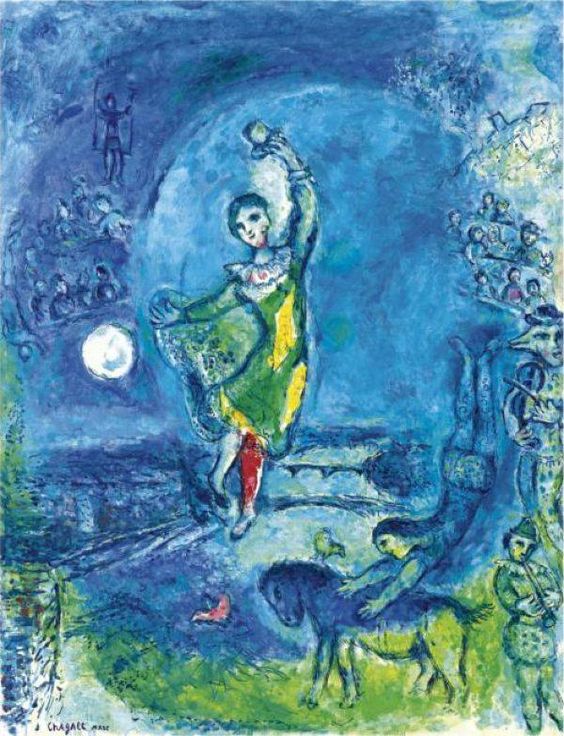
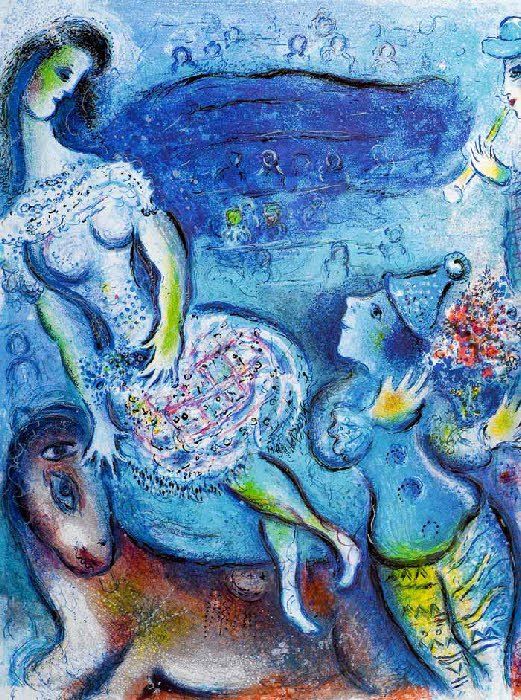
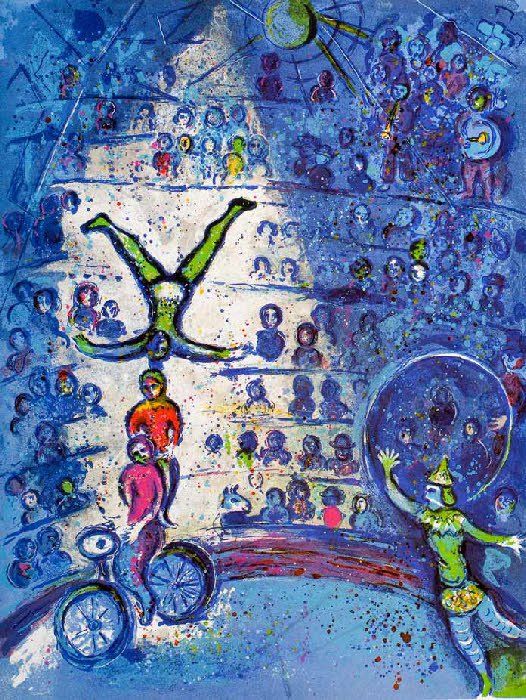
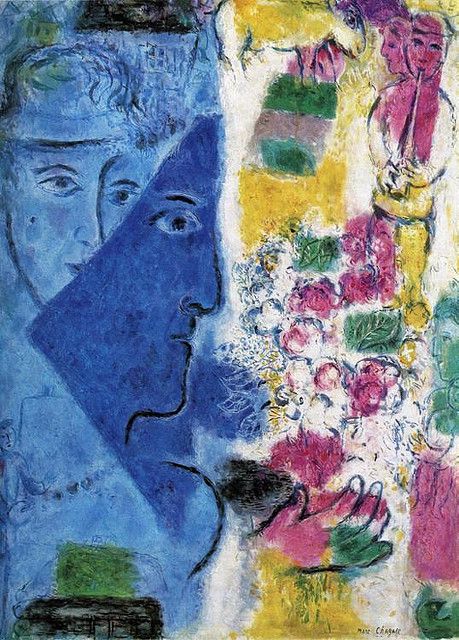
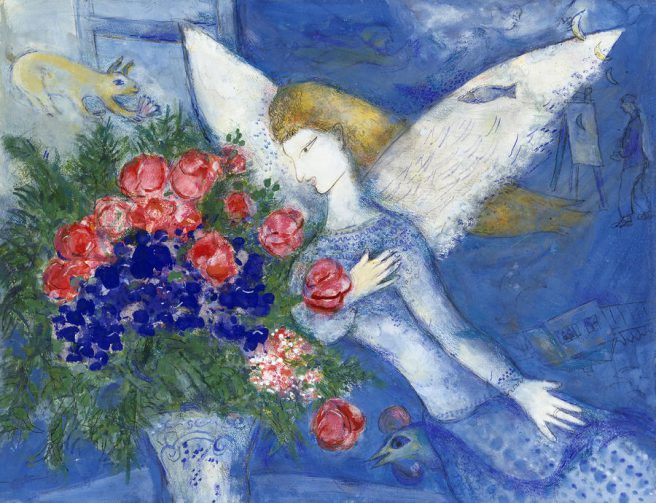
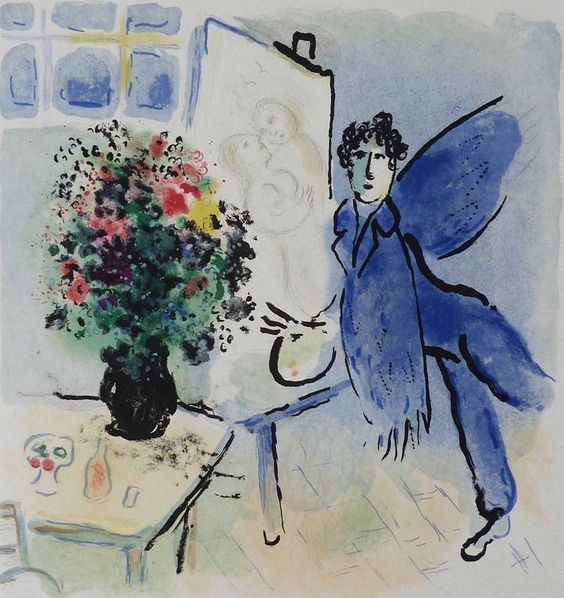
Chagall was able to convey striking images using only two or three colors. Look what he was able to do with BLUE!
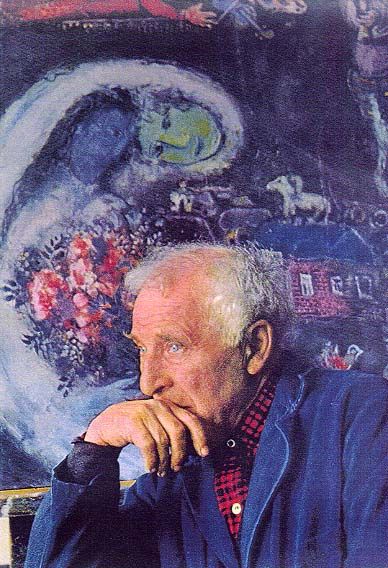
Sometimes up is down, and down is up. Chagall painted his heart on the canvas. He once said:

In our life there is a single color, as on an artist’s palette, which provides the meaning of life and art. It is the color of love . . . If I create from the heart, nearly everything works; if from the head, almost nothing.

These days there seems to be a shortage of love in this country. A good antidote is to immerse oneself in Chagall’s work — the stunning, swirling blues of moonlight, romance, memory, compassion, holiness, fantasy, truth. A blue face, a blue angel, a blue village, all help to heal a broken world.
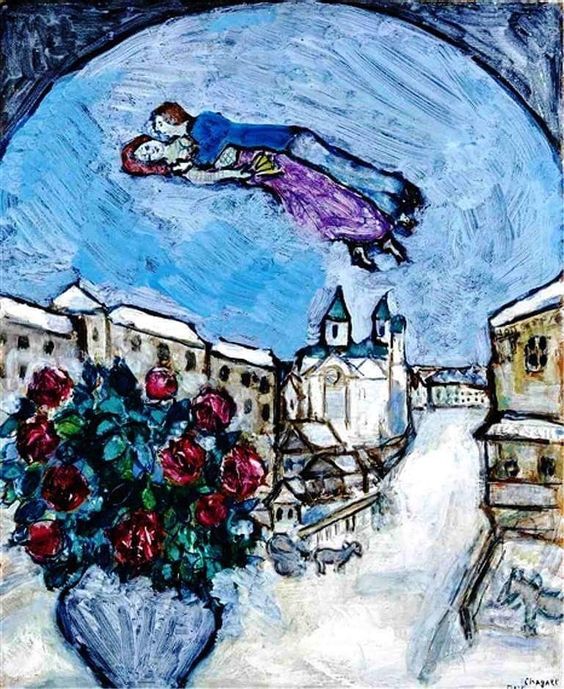
 

“Lovers in the Sky” (1928-30)


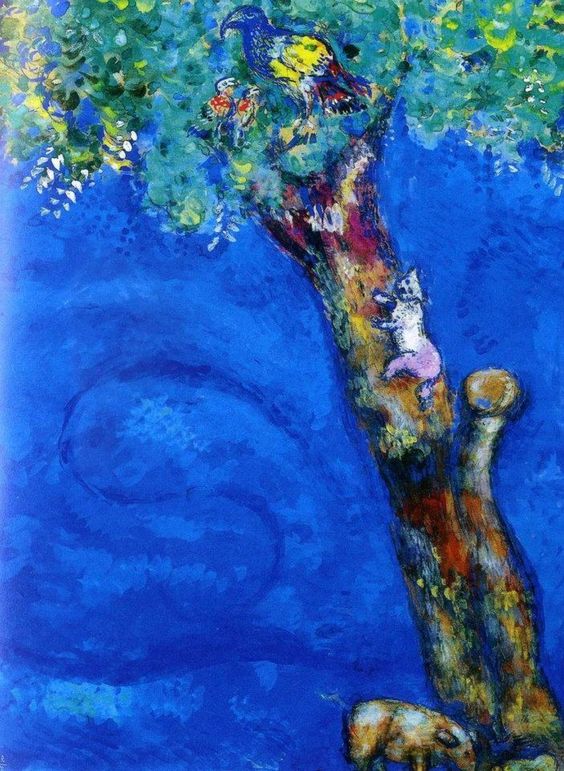
from Fables of La Fontaine (1997)


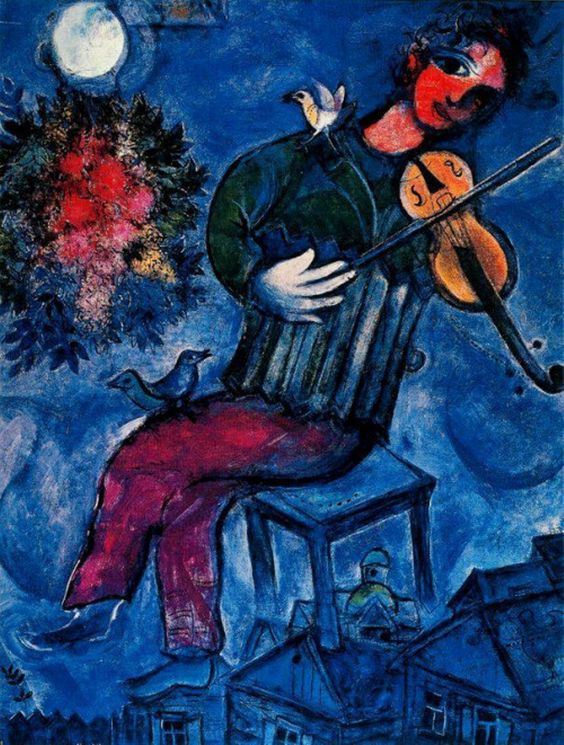
“Le Violoniste Bleu” (1947)


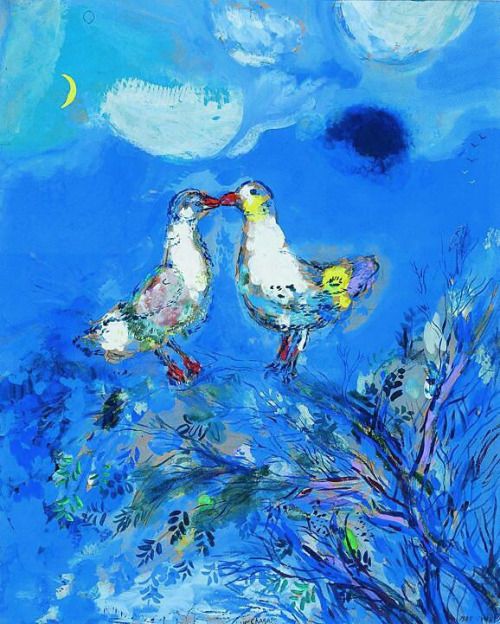
“Two Pigeons” (1925)


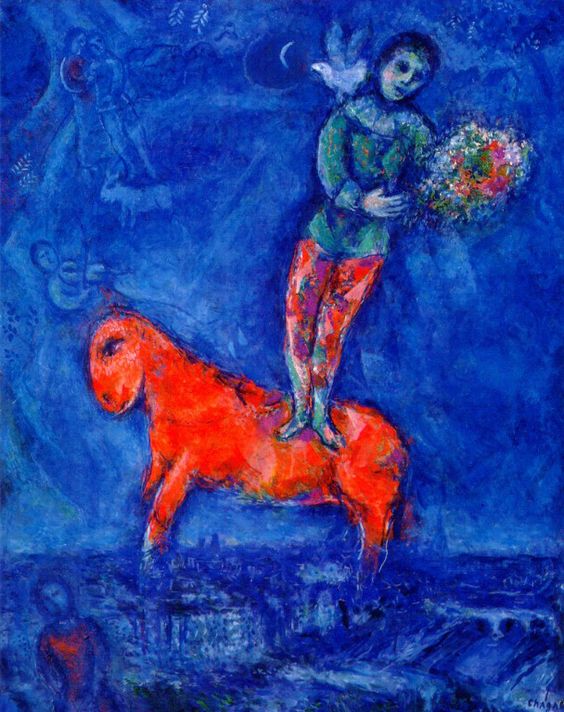
“Enfant avec une Colombe” (1977)


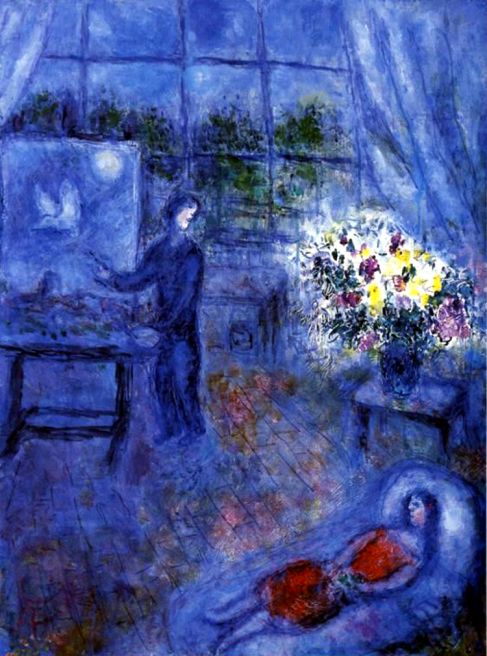
“Artist and His Model” (1973)


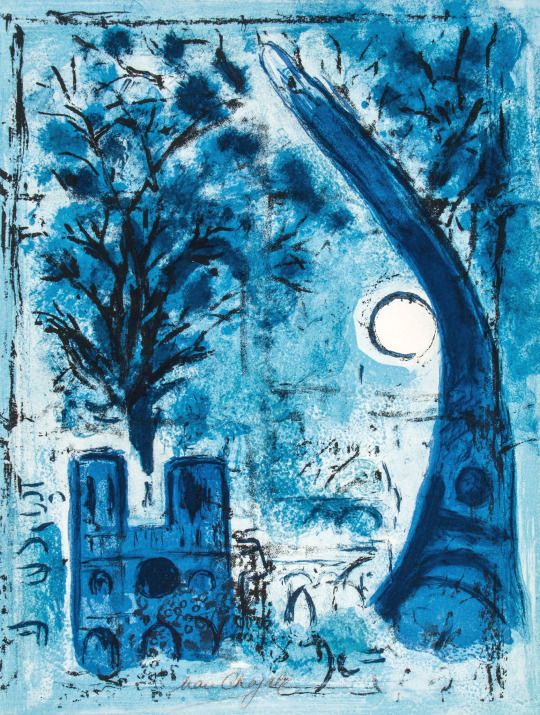
“Notre Dame et La Tour Eiffel” (1960)


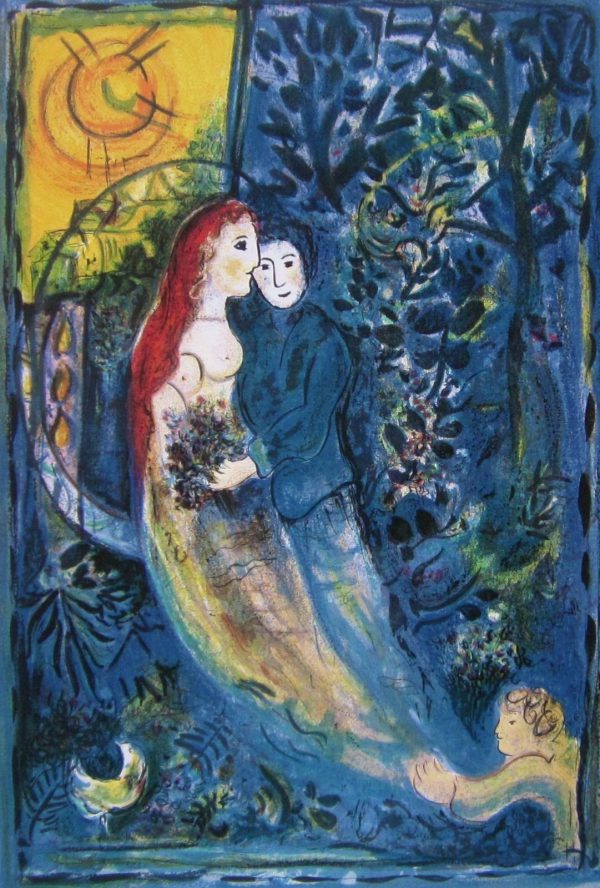
“The Wedding” (1980)


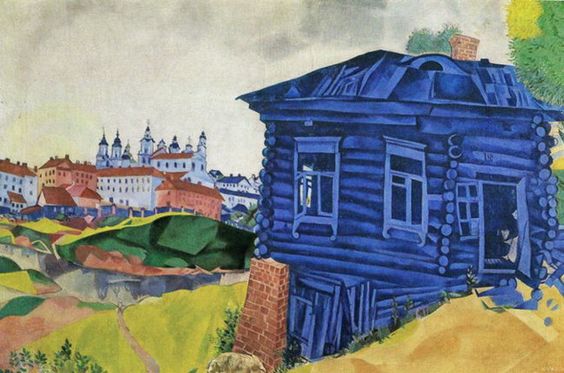
“The Blue House” (1917)


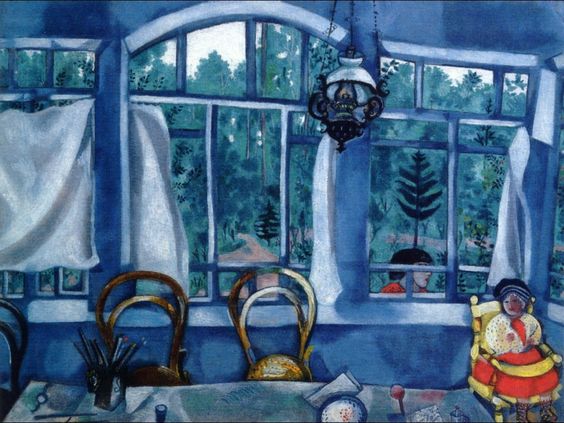
“Window Over a Garden” (1917)


“Ebony Horse/Arabian Nights” (1948)


“The Painter” (1978)


“Le Rêve de Chagall sur Vitebsk” (1950-53)


“Acrobat with Bouquet” (1963)


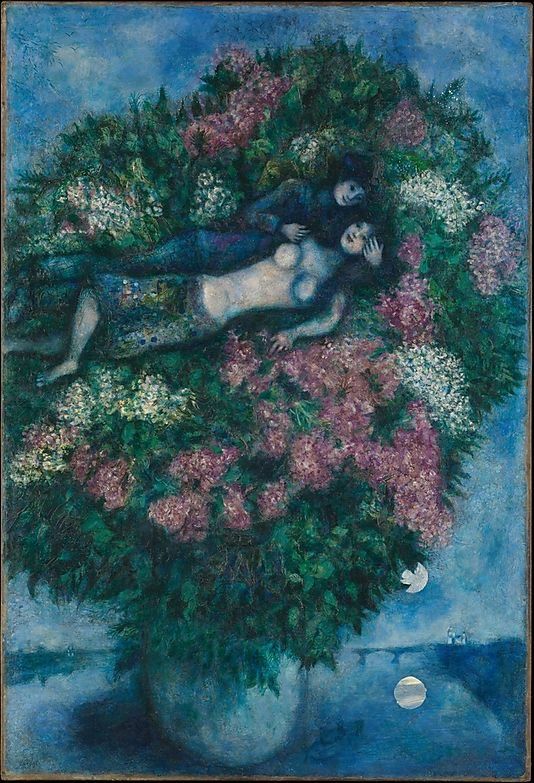
“Lovers Among Lilacs” (1930)


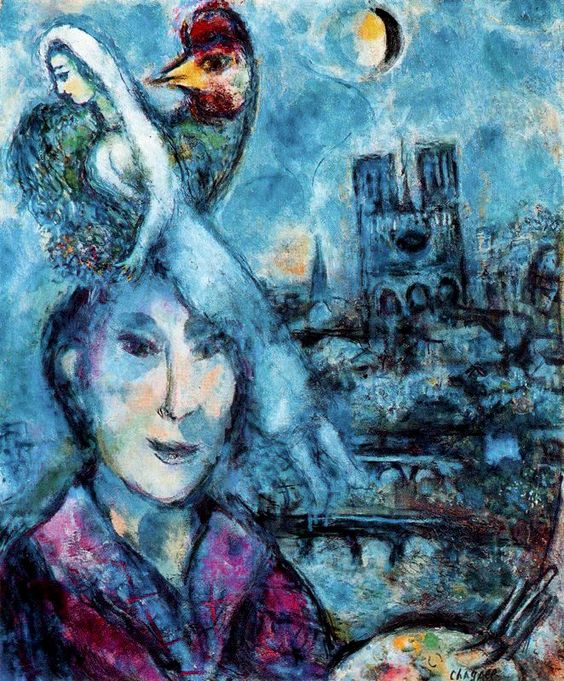
“Self Portrait” (1959-1968)


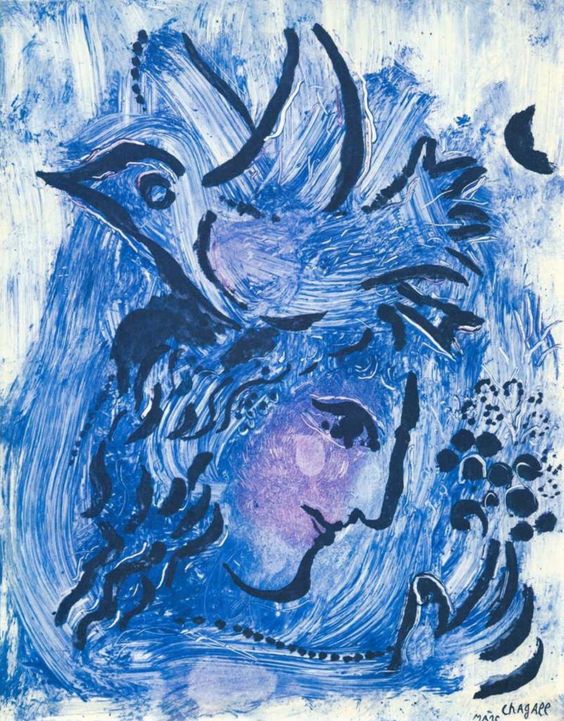
“Monotypes en couleur” (1963)


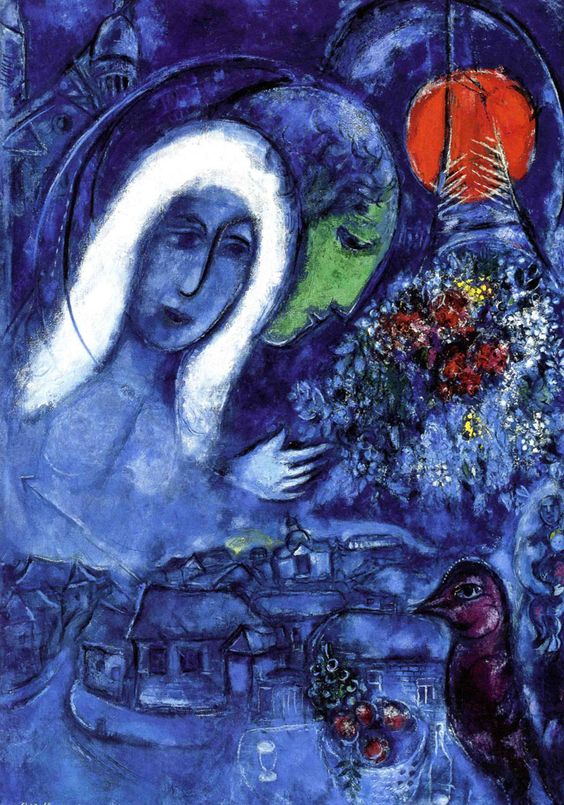
“Le Champ de Mars” (1954-55)


“The Juggler of Paris” (1969)


“Le Cirque, Paris” (1967)


“Le Cirque, Paris” (1967)


“The Lovers” (1929)


“Lovers in Moonlight” (1938)


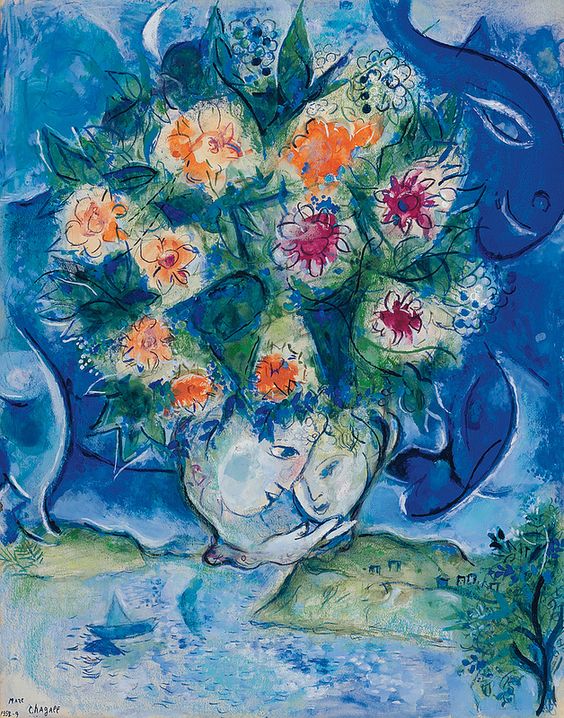
“Animal dans les fleurs” (1952-59)


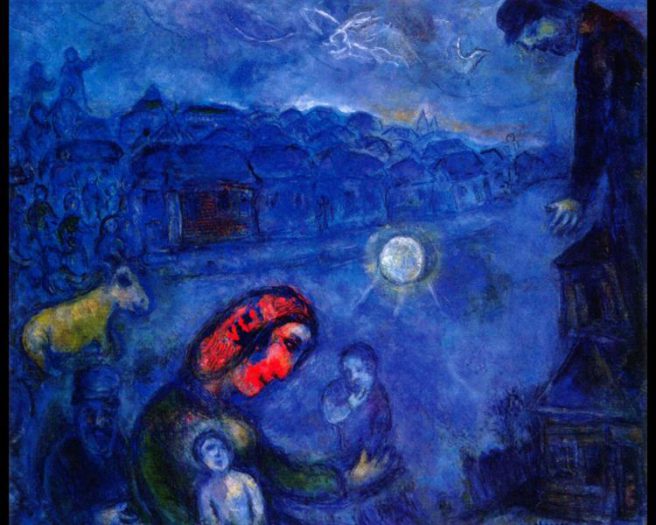
“Blue Village” (1975)


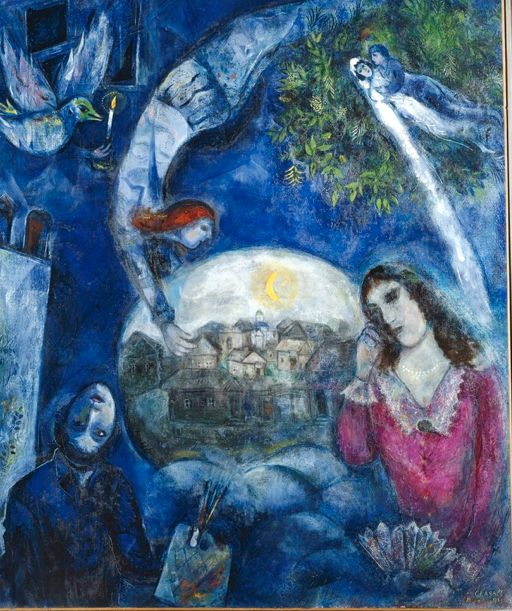
“Around Her” (1945)


“Blue Face” (1967)


“Blue Angel” (1937)


“The Blue Studio” (1973)


“Les Amoureux en Bleu” (1930)


“I had only to open my bedroom window, and blue air, love, and flowers entered with her.” ~ Marc Chagall

*


HAPPY TUESDAY

HOPE YOU SOAR

THINK BLUE

🥣 🥣 🥣 🥣 🥣


Copyright © 2018 Jama Rattigan of Jama’s Alphabet Soup. All rights reserved.
bob dylan birthday blues

“The land created me. I’m wild and lonesome. Even as I travel the cities, I’m more at home in the vacant lots.” ~ Bob Dylan

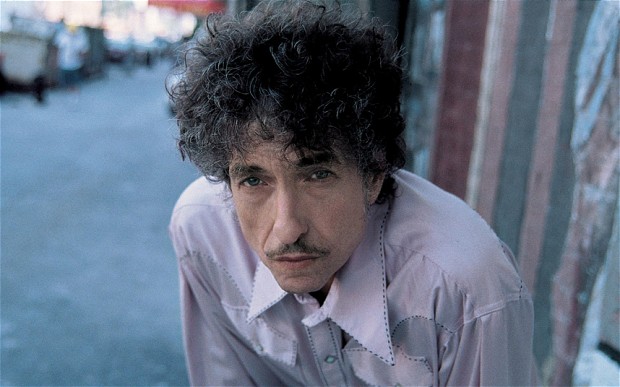
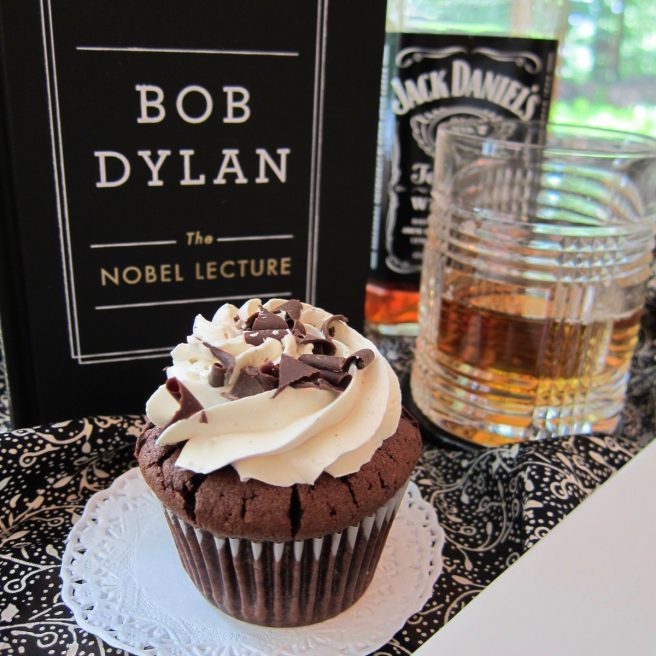
Since the man is turning 77 today, we’re gonna sing a little birthday blues by featuring some of Dylan’s “blue paintings” paired with bits of his song lyrics.

Did you know that besides being a 12-time Grammy Award winning singer-songwriter, poet, author, small-batch whiskey entrepreneur, metal works artist, and Nobel, Pulitzer, Medal of Freedom, Oscar, and Golden Globe winner, Dylan is also an accomplished painter?

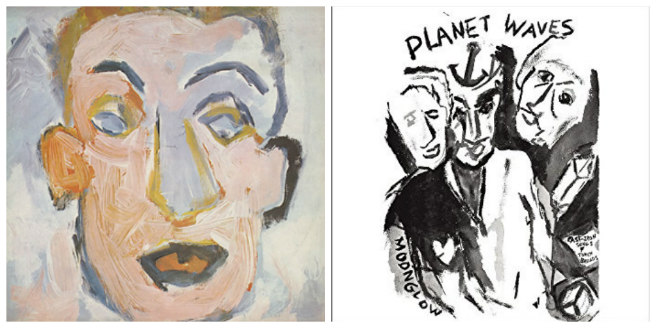
We first saw his work gracing the covers of two 70’s albums (Self Portrait and Planet Waves), but he didn’t start seriously exhibiting and selling his paintings until 2007. Like many extraordinarily gifted creatives, his output benefits from the cross-fertilization of art forms.

Dylan is that rare person who can move effortlessly between music, word, ink, paint, as if he’s just futzing around with a few different instruments in the studio. Yet again and again he reflects life back to us with a truth and simplicity that defy words . . . seemingly unworried about how something looks, he’s not after artistic perfection, but something larger, a moment, a feeling. The effect is enthralling.

~ Marisha Pessl, New York Times

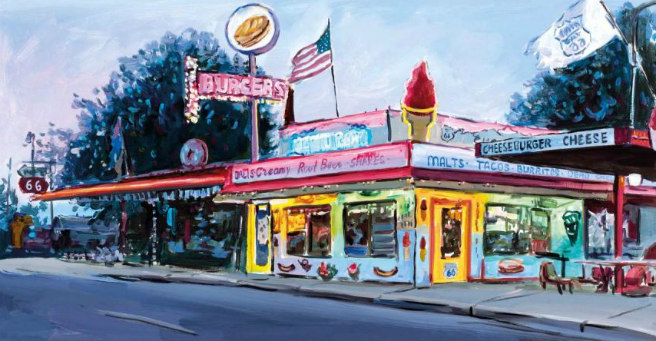
I love his frequent use of blues, and of course how often he depicts eateries. It’s fascinating to see the world through Dylan’s (blue) eyes 🙂 — he’s drawn to back streets, alley ways, country roads, bridges, train tracks — landscapes and urban scenes “unpolluted by the ephemera of pop culture.” There’s a noted absence of people in most of these paintings, conveying a sense of loneliness and a nostalgia for simpler times.

“Nowhere and Anywhere” (2017)

Continue reading

kobayashi issa: a little haiku blues

Issa is probably my favorite of the four great haiku masters. I love the endearing humanity in his poems and seeing traces of his personality shining through. How could I not appreciate a poet whose pen name translates as “cup of tea,” or, “a single bubble in steeping tea”?

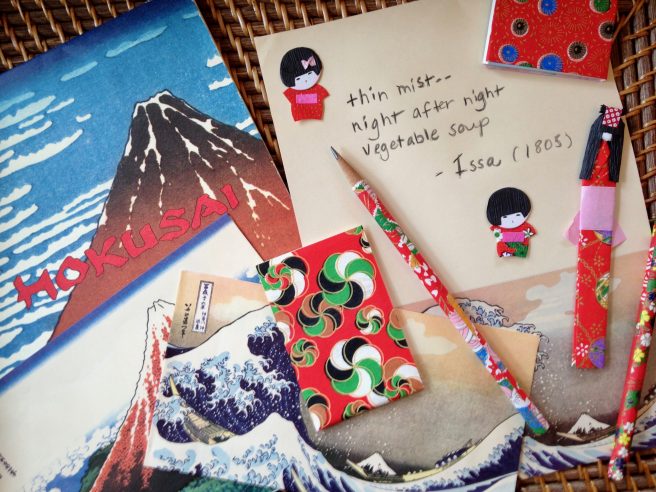
Recently, I was happy to stumble upon some of his “soup” haiku (many about pufferfish soup). While I’ll pass on pufferfish every time, I can certainly get behind this poem:

thin mist —
night after night
vegetable soup

Don’t you think Issa wrote it with me in mind, knowing its irresistible aroma would awaken my senses 213 years later? 🙂

Because May is the fifth month, today I’m serving up five of Issa’s “blue” haiku, paired with Japanese woodblock prints. Enjoy these lovely one-breath poems (all translated from the Japanese by David G. Lanoue). I hope their beauty will add a little joy, light, and the sweet fragrance of revelation to your day.


*

Continue reading

singing the picture book blues

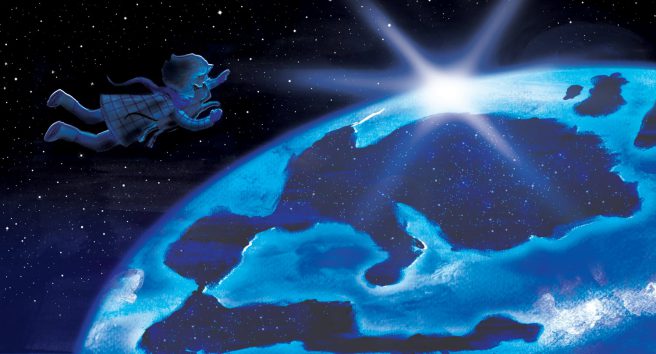
“To see the earth as it truly is, small and blue in that eternal silence where it floats, is to see riders on the earth together, brothers on that bright loveliness in the eternal cold —  brothers who know now they are truly brothers.” ~ Archibald MacLeish

Art ©2018 Ashley Crowley (The Boy and the Blue Moon)

I’m diving and flying into the deep blue today with a trio of recently published picture books. I love immersing myself in the beauty, wonder, and heart of these cleverly conceived and beautifully executed stories. Oh, for the ultimate blueness of water and sky!

Whether considering the unique “adventures” of a beloved object, pondering the many colors of the world, or taking a magical journey to the moon, these three blue ribbon titles will touch, delight, and inspire, and are already well on their way to becoming perennial favorites.

*

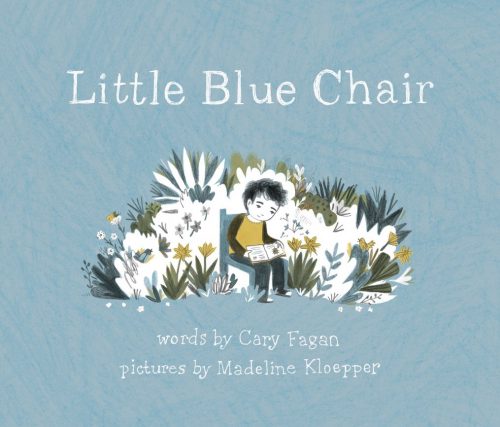
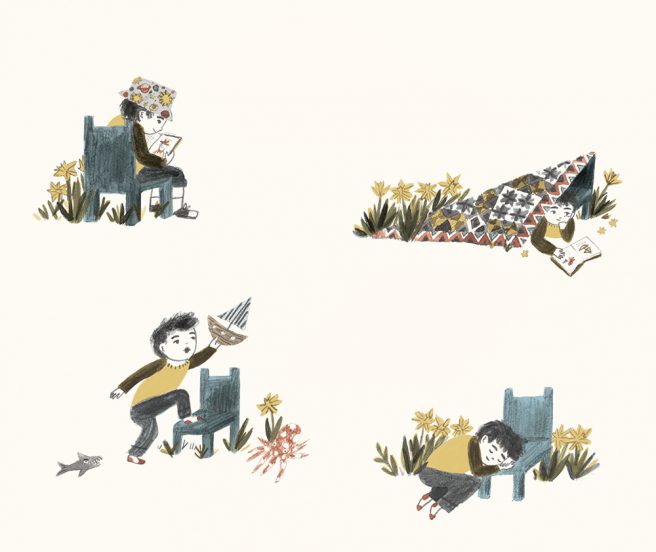
Little Blue Chair by Cary Fagan and Madeline Kloepper (Tundra Books, 2017).  In this enchanting, heartwarming story, we follow the journey of a little blue wooden chair as it travels “from place to place and bottom to bottom.” It starts out as young Boo’s favorite chair; he sits in it for breakfast, lunch and dinner, reads on it outdoors and makes a tent around it. When he outgrows it, his mother leaves it by the mailbox, where a man with a truck picks it up.

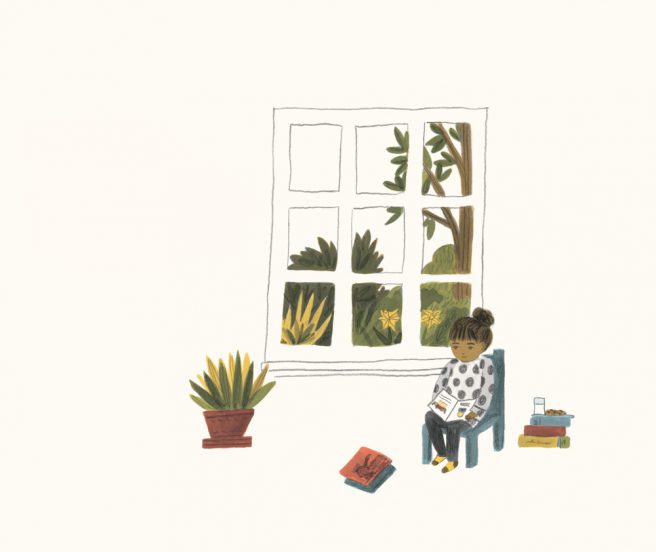
He sells the blue chair to a junk shop, where it eventually goes home with a lady who uses it as a plant stand. Each time the chair is no longer needed, it is passed on to someone else who deems it perfect for his/her needs. The chair sails the high seas, is propped atop an elephant for rides, and is enjoyed as a birdseed platform and ferris wheel seat, before it’s won by another little boy, who uses it on his go-kart and as a king’s throne.

Held aloft by three balloons, the blue chair then floats back over the ocean and wondrously lands in the front garden of a grown-up Boo, who repaints it and passes it on to his daughter.

This story has a reassuring feeling of continuity to it, as the blue chair circles back to its original owner. Though the ending is a bit predictable, the narrative itself is not, as each time the chair changes hands the circumstances are novel and interesting. Kloepper’s charming ink and pencil illustrations make good use of white space, allowing the blue chair to take center stage in each scene. A whimsical, satisfying story about the rewards of repurposing, reminding us that the inherent value of any object is only limited by our imagination.

*

Continue reading

a case of the Hasui Kawase blues

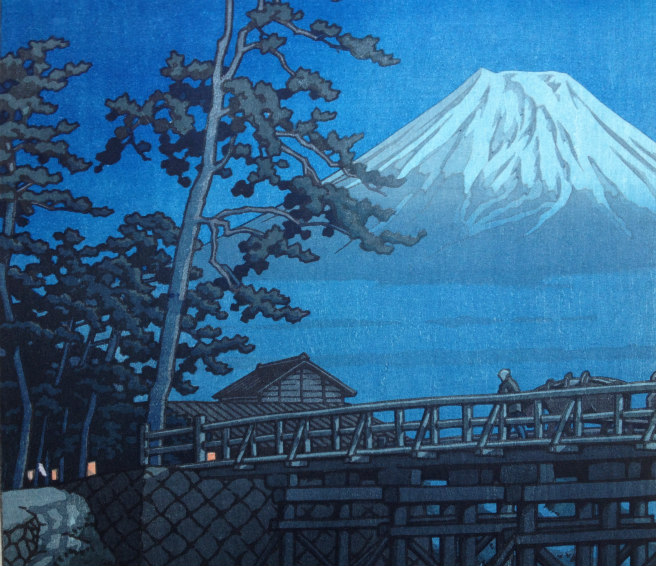
Mt. Fuji and Kawai Bridge (1947)


For a little over a year, I’ve been sharing children’s book illustrations on Facebook every day. The best part is learning about so many new-to-me artists. In my online travels, I often stumble upon pieces I love that are not by children’s book illustrators, but prompt me to explore further.

This was the case with Japanese master woodblock printmaker Hasui Kawase (1883-1957), one of the most prominent artists of the shin-hanga (“new prints”) movement. Though I know very little about Japanese art, Hasui’s work spoke to me instantly. Such exquisite understated beauty! So peaceful and calming!

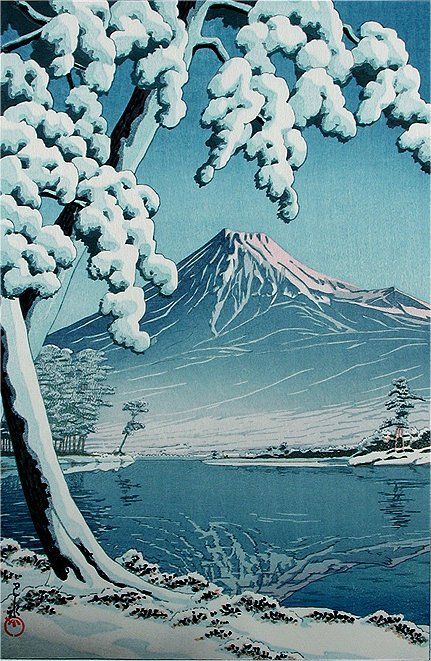
Mt. Fuji After Snow (1932)


Born in Tokyo, he studied both Japanese and European painting techniques and is known as the “Master of Snow.” He liked to travel around Japan, sketching and making watercolors of scenic landscapes and townscapes, upon which he based his prints. The shin-hanga movement focused on traditional themes (landscapes, famous places, beautiful women, birds and flowers) but incorporated Western elements (effects of light, expression of moods).

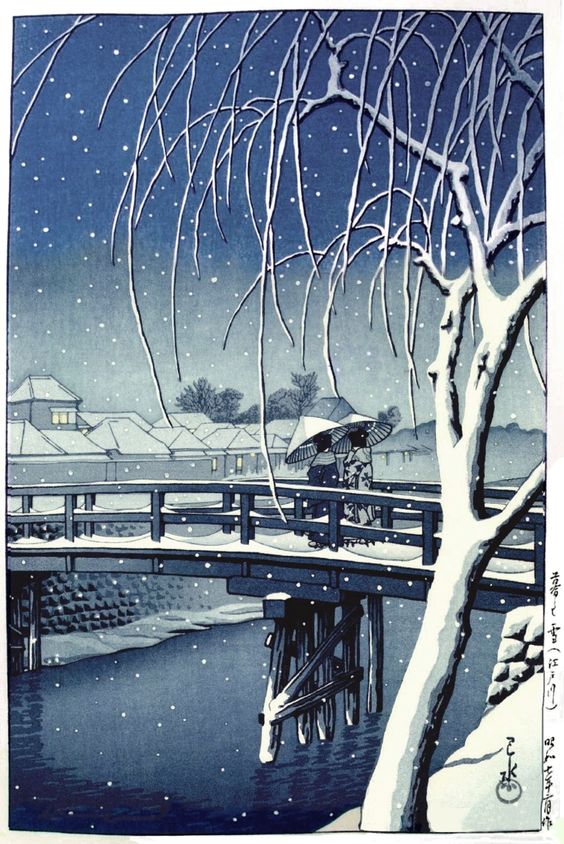
Evening Snow at Edo River (1932)


Hasui considered himself a realist, and his prints express a certain longing for a bygone Japan during a time of rapid social and cultural change. His work is characterized by its delicacy, restraint, and flawless composition.

Continue reading