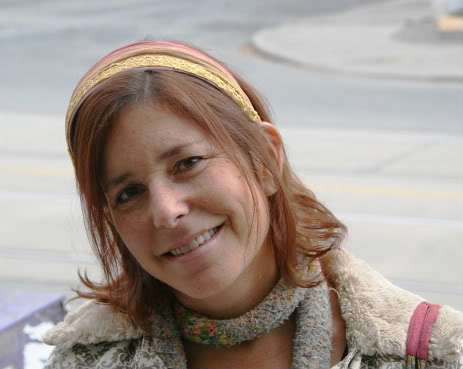
We’ve got a very special treat today: extremely prolific New York Times best selling children’s book author Amy Krouse Rosenthal has stopped by for a quick snack!
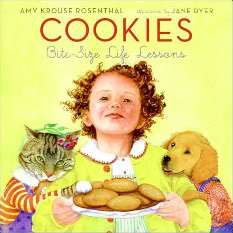
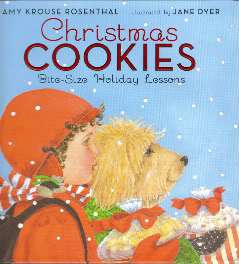
You probably know her from such gems as Little Pea and Little Hoot, or maybe, like me, you couldn’t resist tasting her fresh baked cookie wisdom in Cookies: Bite-Size Life Lessons, and Christmas Cookies: Bite-Size Holiday Lessons (which I reviewed here).
But as I mentioned in this post about her new film project, The Beckoning of Lovely (a mammoth undertaking which received enthusiastic response from around the world), Amy’s creative endeavors include not only children’s books, but a best selling adult memoir, Encyclopedia of an Ordinary Life (which I loved!), gift books and journals, parenting books, humor columns, videos, book reviews, and a gig as a public radio talk show host.
Grab your coffee or tea and settle in, folks. We’ve got such a treat today! Debut children’s book author, Zoë B. Alley, is in the alphabet soup kitchen!
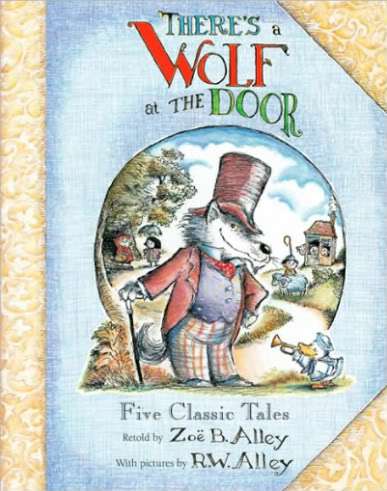
I first heard about There’s a Wolf at the Door (Roaring Brook Press, 2008), last year, when I interviewed Zoë’s very talented husband, Paddington illustrator, R.W. Alley, for Robert’s Snow: Blogging for a Cure. He was excited about the book, and shared a sketch and finished cover art. I asked how he liked working with his wife, and he said everything went very smoothly. She wrote the text, then simply handed it over, giving him free rein.
Together, the Alleys have created “a graphic folklore wonder” for picture book fans, though, as I mentioned in my review last week, the humor and sheer exuberance of the stories will appeal to all ages. Judging from the many accolades the book has already received, it’s more than safe to say that this husband and wife team have struck gold. Zoë is visiting today from her home in Barrington, Rhode Island, where she and Bob live with their two children, Cassie (18) and Max (15).
Today, I am pleased and excited to welcome dear writing friend and children’s author, Maha Addasi, to alphabet soup! When we first met in 2005, I never would have imagined that one day I would be interviewing her.
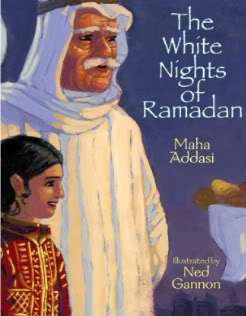
After all, she’s the one who had a fascinating, glamorous career as a news correspondent and producer for Jordan and Dubai Television. The one who interviewed royalty and heads of state, cosmonauts, opera singers, musicians, and world-renowned scientists. The one who attended openings of Parliament, lunched in the royal palaces in Jordan, and who, once upon a time, attended the New English School in Kuwait with Queen Rania.Maha once told me that she likes to keep busy. Since moving to the U.S. in 1998, she has shifted her focus to writing for children. And why not? She has four of her own — two teenage girls, and two boys under the age of 10, a little posse that would decidedly challenge even the most resilient of supermoms, while at the same time providing neverending story fodder.Just last month, Maha’s first picture book, The White Nights of Ramadan, was released by Boyds Mills Press (my review is here). The “white nights” refer to three days in the middle of
Ramadan — the full moon, and the days before and after. In Maha’s native Kuwait and other countries in the Persian Gulf Region, these days mark the candy festival called Girgian, which is highly anticipated by children.
Since we’re right in the middle of the holy month, it’s the perfect time for Maha to tell us all about her book and share a special family recipe. She’s visiting today from her home in Fairfax, Virginia, where, in her “spare” time, she’s busy working on her MFA from Vermont College and building a career as an image consultant.
Welcome to alphabet soup, Maha, and congratulations once again on the publication of your first picture book! How does it feel to finally be able to call yourself a “published children’s author?” Is it what you expected?
Thank you, Jama, for this wonderful opportunity. I feel honored to be selected as an interviewee on alphabet soup. I get to laugh every time I read it. It’s well organized, and so much fun to read.
In terms of being a published children’s author, the feeling is very special, but there is also a lot of responsibility that comes with it. For me, there’s the self-imposed pressure of wanting to produce another book and the feeling of being overwhelmed about finding a new idea. There’s also the What If factor: What if the book does not sell? What if it is not perceived well? I had not anticipated that beforehand. So I’m dealing with that along with enjoying the fact that the book is now published.
Please tell us how The White Nights of Ramadan evolved. What did you learn from this experience?
The idea of writing about Ramadan came from my own need to find a book about this month that was a fun read. I was able to find several books that captured the month of fasting very well, but they seemed very encyclopedic. I had the chance to speak at an interfaith event held at Church of the Redeemer that the Arabic school I belong to arranged with the church and Am Kolel Synagogue. We had several interactive children’s events, but when it came time to sharing a book, there were none that seemed to work for the children.
So I decided to write my own. At the time I did not feel there was a market for this kind of book. I wrote the book in rhyme. It was a fun read, but the meter did not quite work all the way through. Several stanzas seemed forced. It sat in my folders for some time. And I continued to market other works to various publishing houses.
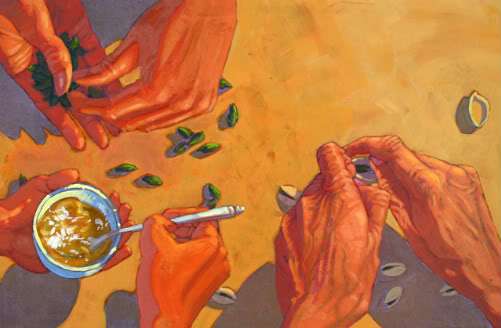
All illos for The White Nights of Ramadan were rendered in oil by Ned Gannon.
One day, I got a letter from Boyds Mills Press. I had sent them a story that was about a cultural event, but it ended up on someone else’s desk. The letter said that the subject did not exactly work for a picture book, but to keep them in mind for other works and to email him if I had something. Of course I panicked a little. Actually, I panicked a lot, and then I suggested a folk tale, which I had recently written. It was not what this editor was looking for.
I then said I had a story in rhyme called, “The Moon Has Been Seen,” about Ramadan. The response was immediate. “Please email it to me right away.” I nearly fainted. I went into emergency mode and contacted the members of my writer’s group, and did some on-line critiquing and I sent it in. The reply: “It has potential, but the meter does not quite work.” I tried other versions. Eventually, to add to the storyline, I included something about Girgian.
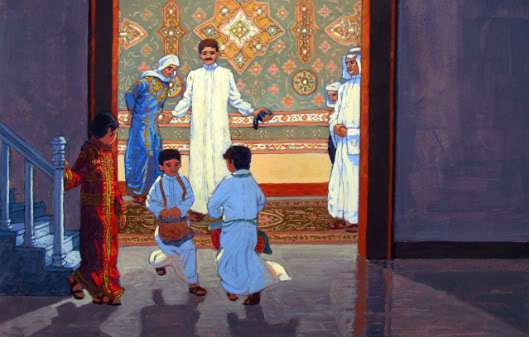
Main character, Noor, with her two brothers, ready for Girgian
The response was, “What is Girgian?” I explained that it was a candy festival. Eventually, I attended the SCBWI conference, at which the author of these correspondences was a speaker. I got to meet Larry Rosler in person and he told me that he would like for me to try writing a story about Girgian and preferably not in rhyme. I had been living with the characters of my story for several months and it took a very short time to come up with the story in prose. It was accepted and we took it from there.
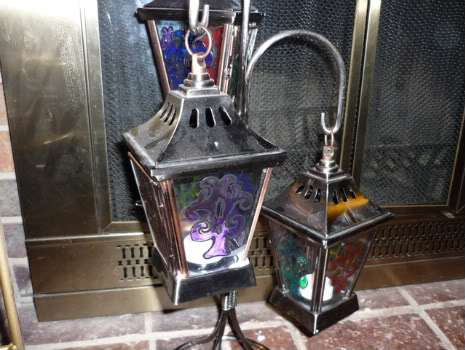
Typical fanous (lanterns) carried by children for Girgian
Working with Larry is like living a beautiful dream. He is so very kind. I am overwhelmed by how wonderful he is in terms of expressing himself and how warm he comes across and how masterful he is as an editor. To have the opportunity to work with him and the team at Boyds Mills Press is such a great honor.
Aside from its focus on Girgian, what do you think sets your book apart from the many other children’s books about Ramadan? Were you trying to dispel any popularly-held misconceptions? If so, which ones?
My children were somewhat frustrated and wanted to be able to share books with friends that described the month of Ramadan in an incidental way, as part of a story. Most books talked about the fasting part in a somewhat didactic way, so it was not an easy read for them.
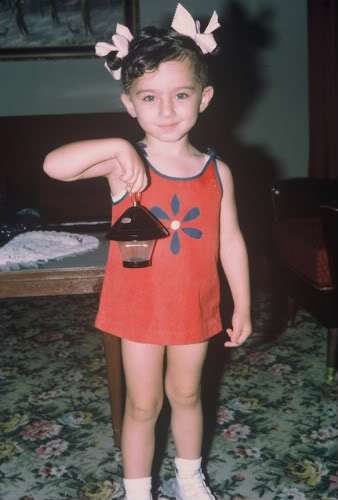
Maha in traditional Girgian gown
In terms of Ramadan, the fasting is a major part of it, but the reasons behind the fasting are what make it meaningful. Muslims fast to place themselves at equal footing with those less fortunate. Nothing makes you relate to someone deprived of food more than the pinching ache of hunger.
But what I wanted to show was that Ramadan is not a month of suffering, but a month that holds beautiful meanings of sharing and interacting with family and friends. Even young children plead with their parents to fast, if only for a day. It makes them proud to be able to accomplish such a feat, and it gives them a chance to get closer to family and friends.
Generally, how old are children when they begin to fast? Did you find it difficult when you first began? Is it difficult now?
Children are not required to fast until they are in their teens. However, many children start to practice at around 6 or 7. I remember fasting the last three days of Ramadan when I was 6. I had a cousin who was one year older and he started that same year, and my best friend at the time also fasted for Lent. We all got so much attention; it was well worth it, and we felt so grown up.
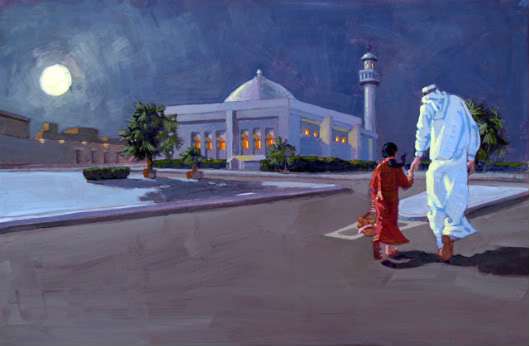
Noor and her grandfather take a charity basket to the Mosque
As an adult it is not very difficult. I think the first day was tough in some years because my biggest problem on the first day was developing headaches from caffeine withdrawal. I no longer drink caffeinated coffee, if I have coffee at all, and that made it so much easier. It is somewhat difficult for teens in schools, but they go to school fasting and take food with them, in case they have to break their fast. If they do they can make up missed days in the winter when the days are shorter.
I personally love the month, for the feelings of tranquility and peace that come with it. It’s a month that deprives you of food but fills your spiritual soul to the brim. It also makes you focus on what the important things in life are.
How did you feel when you first saw Ned Gannon’s illustrations? Was his vision close to the one you had in mind? What do you think his art brings to your story?
When I first saw Ned Gannon’s illustrations I loved how elaborate they were. I saw a black and white sketch first and he had captured the details so well. I have to say I absolutely loved his use of color and the effect of light and shade that seem to be his signature. I feel he captured the essence of the festival and the country and the characters superbly.
Please tell us the story behind your dedication: “To Mom and Dad, I walked and walked.”
Oh, that may seem funny now, but when I was about 5, I was learning to read. I actually learned to read English before Arabic, even though I lived in Kuwait. I had to bring home books from school to practice and one of the books was called, “I Walked and Walked.” The main character walks and encounters a dog, then a cat and so on through a series of events. My dad wanted me to read the book so that I made no mistakes. So I would start: “I walked and walked and what did I see?” (All is well so far.
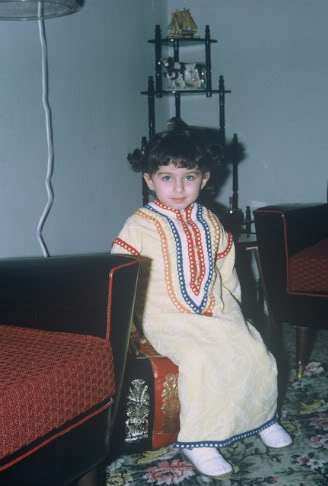
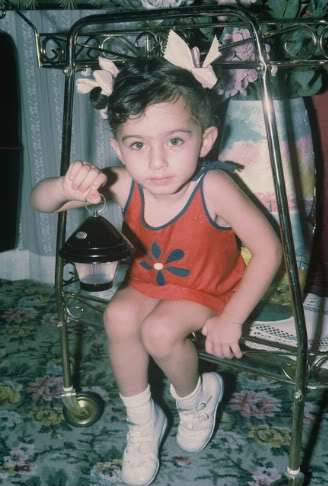
Maha at about age 3
Then, on the second line, I would say “I saw a bog” (instead of dog), and I would have to start the book all the way from the start. Sometimes I would mess up on the very last sentence! I have to say there were tons of tears, but my dad, a physician, told me that he wanted me to perfect the English language. “One day you’ll be better than me in language,” he said. “I learned English in medical school and that was really tough. I want you to do it now when you’re young.” Of course I still remember the book word for word to this day.
What was your childhood like? Which books did you love most?
I had a lovely childhood. My dad worked for Getty Oil Company in Kuwait and we had friends from all over the world living in this American campus. Our house was on the sea shore and I spent long hours discovering sea life and picking shells and building sand castles. The weather is very warm in Kuwait and with the exception of a few weeks in winter, walking along the beach is a year long affair.
I loved to draw and write from a very young age. I loved reading Charlotte’s Web, Paddington Bear. Jack London’s Call of the Wild and White Fang were my favorites and so were all the Enid Blyton books I could get my hands on. I also loved the Famous Five and Agatha Christie mysteries. But what I also enjoyed reading were books in Arabic.
There was this series called “The Green Library,” that revolved around folktales and legends. They are so rich in detail and I bought the entire series as an adult and sometimes read them to capture the nostalgia of my childhood.
Why did you decide to re-craft your journalistic training into writing for children, and how does it influence your work today?
I have always enjoyed writing stories. On parents’ day my parents were often mortified to find out that our family ‘news’ was in my daily writing book in school for all to read. It was inevitable that I would end up in journalism. But turning to writing for children was much tougher than being a journalist. It took some seven years of work to re-craft my writing toward children’s writing. I enrolled in the Institute of Children’s Literature. This writing field is so immense and there is always so much more to learn.
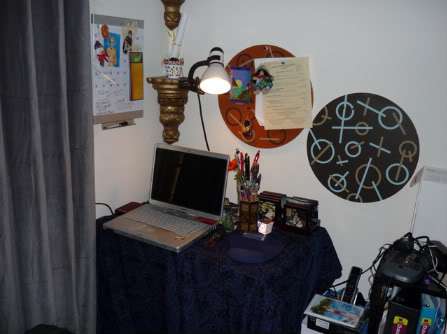
Maha’s workspace at home.
I have just started my MFA at Vermont College of Fine Arts, and I know how much more I still have to learn. Learning to write for children well is a lifetime commitment. I find my journalistic background feeds my work every day in two ways. First, it gave me several unique experiences and perspectives to draw on, and second, it made me able to work fast. Journalistic deadlines are cut-throat. Television satellite feeds teach you the value of every nano second. I feel that I can rework my children’s writing fast, if I have to.
I am so much in awe of how much you do. How do you manage to balance your writing life with your personal life?
Some weeks are very tough. Close your eyes and point to the calendar to any day and I guarantee that day was not a typical one for me. I start my day at around 4:45 a.m. I do a little reading and sometimes a little writing, but I go back to bed for another hour. It may sound strange, but in college when I had writing assignments for English class and woke up early (and went back to sleep for a little more), I was able to will my mind to think of themes and story ideas. It happened several times so I knew it was no coincidence.
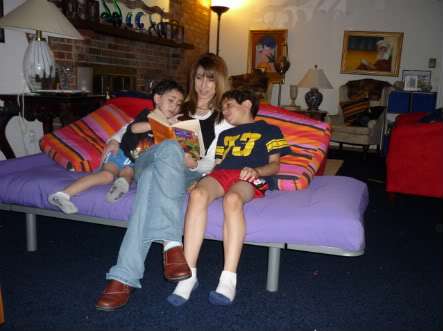
Maha reads to Ramzy and Samer
Balancing home life is very hard sometimes. My teen daughters are a blessing. They are very independent and help me out with my younger boys. In the summer especially, they help with babysitting. One of my daughters loves to cook and she’s really good at it, so she takes over the cooking. During the year it’s hit or miss. I try to plan ahead, but sometimes you get things from left field so you have to improvise. Usually things tend to work themselves out. Writing gets squeezed in very early or very late in the day, or both.
Picture books are still a tough sell. Any advice for those hoping to break in?
I think that if you enjoy writing picture books keep on writing them. Don’t worry about the market. Write for your own personal enjoyment first, which makes for better writing, and this leads to publication. I think the key is to want to write for writing itself, versus having publication be your main focus. Also, try to constantly read as many picture books as you can. It’s amazing how that can spark ideas.
What’s next for you?
I sold my second fiction picture book to Boyds Mills Press, and I’m working on a third, which is a little different, because it is nonfiction.
Describe yourself in 5 words.
Always wanting to do more.
Passions besides reading and writing.
I love antique stores and yard sales; I’ve also recently learned to bead bracelets. I enjoy doing watercolor painting with my son, who recently started art lessons with renowned watercolor artist Lou Negri.
3 fondest wishes.
I wish for my children to all find a field of study that gives them lifelong enjoyment.
I wish to find that magic button that once pressed gives one total peace of mind.
I wish for world peace and the end of stereotyping and alienating of people and nations that choose other ways of life.
5 favorite foods.
Anything my mother cooks. I hate to brag, but my mom cooks Asian, Italian, and Mediterranean food like an expert gourmet chef. I also love seafood from my days living by the sea. Fishermen walked along the shore in front of our house with boxes filled with fish so fresh they still moved!
Please describe your favorite childhood food-related memory.
I grew up in a close-knit family of four. On weekends my dad had a ritual of getting up early to make a special breakfast dish that had hummus as its main ingredient, but which is served warm. So we would have stations. My mom would make the hummus, my dad would toast the bread (which went into the dish); my brother would mince garlic, and I would squeeze lemons.
We had a little garden so I also got to get the fresh herbs. Then the ingredients were mixed together with hot water and the dish was dressed up with pine seeds sauteed in olive oil. This breakfast dish is tangy and with green olives its flavors danced on your tongue. Of course we would have this with mint tea. The dish is called Fatet Hummus.
Please share a recipe with us, something you might prepare for Iftar (meal taken at sunset to break the fast during Ramadan).
Iftar food often starts with soup and then mostly stews and savory pastries, but the thing most associated with the month is the Ramadan desserts. I make five or six different desserts through the month. Some take a long time to make, while others have fast prep time and are just as tasty.
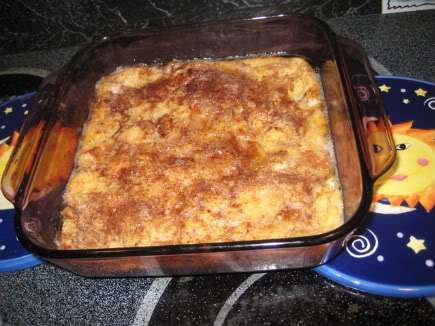
For instance, I make a basic bread pudding, but the moment it’s done baking, I drench it with sweetened condensed milk and whipped cream. It is awesome. I also make pastries with homemade pancake-like pastry, filled with walnuts (or pecans), cinnamon and sugar, deep fried and drenched in homemade syrup. This dessert is also perfect with substitute sugar and works with store-bought puff pastry which you can bake, instead of fry.
BREAD PUDDING WITH CONDENSED MILK TOPPING
Pudding:
8 slices of white bread (hand shredded into small pieces)
4 eggs, lightly whisked (or 5 egg whites)
1 12-oz can evaporated milk (you could use fat-free)
1 T sugar
1 tsp ground cinnamon
1/2 tsp ground nutmeg
1/3 cup raisins (optional)
1 T butter cut into small patsTopping:1 can sweetened, condensed milk
1 8-oz tub of Cool WhipPreheat oven to 325 degrees F.Spray an 8″ x 8″ baking dish with non-stick spray.Place bread in baking dish.In a separate bowl, whisk eggs, evaporated milk, sugar, cinnamon and nutmeg (and raisins, if you are using them), and pour over bread in baking dish. Use a spoon to push down the bread to ensure it is soaked well with the milk mixture.Put pats of butter on top.Bake uncovered for 25 minutes at 325 degrees F, and for an additional 5 minutes at 400 degrees F, or until golden brown.
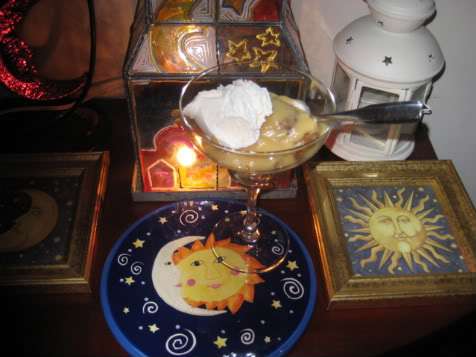
Remove from oven, scoop immediately into individual serving ramekins/glass bowls. Drizzle with sweetened condensed milk (to taste). Add a dollop of Cool Whip.
*Store extras covered in fridge. This pudding tastes great the second day. Just microwave for 30 seconds and add condensed milk and Cool Whip and it tastes just as fresh as on the first day.
*You could add chocolate chips and toasted pecans to this recipe over the Cool Whip, but it tastes really good plain.
Thanks to Maha’s daughters, Serena and Diana, for the lovely photos!
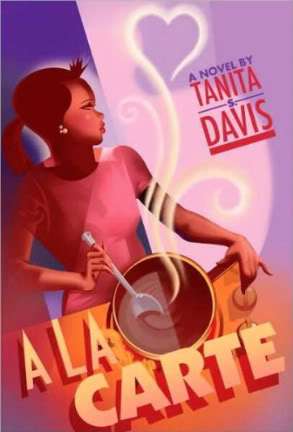
Take one smart-as-a-whip, talented, vegetarian, Thai-food-loving, gregariously introverted, voracious reader and lifelong writer named Tanita S. Davis,
Give her a laptop, quiet time, patience, perseverance, and a husband, David, who just happens to be the world’s best baker,
Allow her imagination to concoct a coming-of-age story about a 17-year-old girl named Lainey, who dreams of having her own vegetarian cooking show;
Add Lainey’s ex-best friend and secret crush, Simeon, who stirs things up by hanging with new friends, taking her for granted, and suddenly leaving home,
Then let everything simmer and stew in scenes that are fresh, biting, sweet, a little spicy, and explosive, every chapter enhanced with handwritten recipes —
And you have, One. Feast. Of. A. Good. Book.
A La Carte, Tanita’s first novel, was just released in June, and I would call it a favorite even if I wasn’t already shamelessly partial to food-related books. The kitchen scenes are engaging, sensual, convincing, and emotionally resonant, and the story of how Lainey comes into her own, despite being treated so poorly by the guy she loves, will stay with me for a long time.
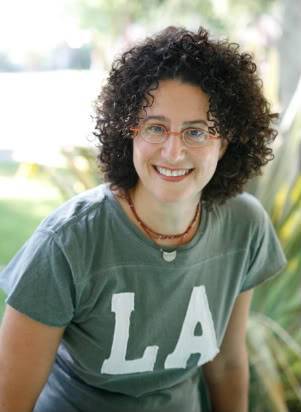
Originally from California, Tanita is visiting today from Glasgow, Scotland, where she lives with David in a converted church called the Angel Building. How cool is that?! Some of you may know that she’s also an avid blogger, reviewer, and champion of YA books, who goes by the name of TadMack. And this girl can cook! I know you’ll enjoy what she’s serving up today:
Today I am thrilled and honored to have multiple award-winning picture book writer and illustrator Marla Frazee as my special guest here at alphabet soup!
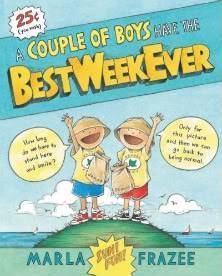
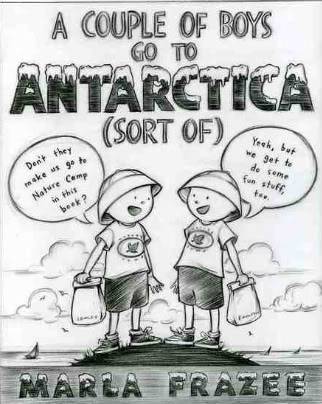
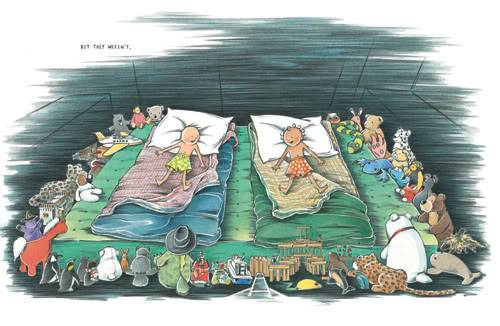
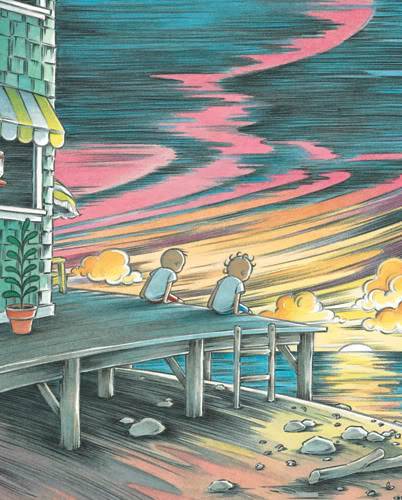
This past March, Houghton Mifflin Harcourt released A Couple of Boys Have the Best Week Ever — an engaging, rollicking real-life Nature Camp experience that lovingly captures the essence of summer and friendship. It has already received many starred reviews, and just two weeks ago, A Couple of Boys earned a 2008 Boston Globe-Horn Book Honor Award.
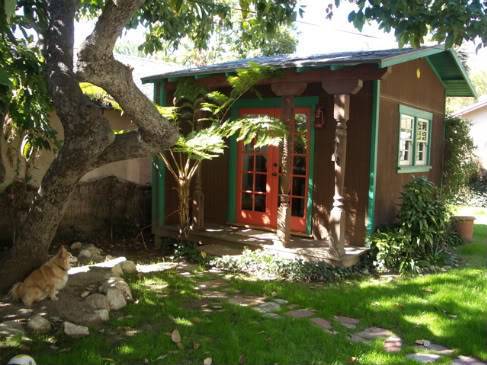
Marla is visiting us today from Pasadena, where she lives with her husband, three sons, and dog, Rocket. She creates all her picture book magic in a charming backyard studio nestled beneath an avocado tree, and teaches children’s book illustration at the Art Center College of Design.
Welcome to alphabet soup, Marla, and congratulations on winning the Boston Globe-Horn Book Honor Award! Please tell us about the interesting genesis of A Couple of Boys Have the Best Week Ever. What did you find most challenging about transforming a real-life event into an emotionally satisfying picture book?
A Couple of Boys came out of an experience that my youngest son, James, and his friend, Eamon, had a few summers ago. James and Eamon were invited to attend a week of Nature Camp in the Santa Monica Mountains and stay with Eamon’s grandparents, Bill and Pam, who live at the beach in Malibu. Eamon’s mom is Allyn Johnston, my editor, and Bill and Pam are Allyn’s parents.
That part of the story is undisputed.
Boston Globe Horn Book HonorJames and Eamon, camp days
I picked the boys up from Bill and Pam’s when Nature Camp was over and brought them back to our house to hang with my two older boys. It was over 100 degrees in Pasadena and the four guys and I were lying around in the house, wilting. It was on one of those sweltering afternoons when Allyn (who at that time was the Editor-in-Chief of Harcourt Children’s Books in San Diego) called from her air conditioned corporate office.
Allyn denies what happened next.
She asked if I would maybe write her folks a thank-you note for the Nature Camp week.
Sure, I said, while secretly thinking that I don’t need to be told to write a thank-you note. Of course I was going to write her folks a thank-you note.
Then she suggested that the note be in the form of a book. You know, with PICTURES, she said.
I didn’t respond.
Filling the silence, she had yet another suggestion — James and Eamon could help me with it and draw some pictures of their own!
We all know that when our editors tell us to do something, we eventually do it, right? So that very evening, I sat down with James and Eamon at my side, and we made a goofy little thank-you-note book — with pictures. I sent it to Bill and Pam the next day.
They loved it, and Pam sent a copy to Harcourt where Allyn showed it around the office, and then she made a copy for me. She said there was something to it. That I was finally writing in my own voice again — unlike the totally self-conscious picture book texts I’d been fiddling around with for the past year. She said that maybe I should consider working on this.
I thought she was crazy.
An early sketch idea with a different title
The little thank-you-note book then languished for months on the floor of my car, where I would occasionally pick it up, read it, and then toss it back down. It seemed too personal, too odd, and too specific to work in any way as a picture book. Then, six months later, when I was driving my oldest son to the airport to send him back to college after his first Christmas break, he picked it up and started reading. There I was, close to tears because he was leaving, and there he was, sitting next to me, laughing his head off. It was his reaction that finally made me take it seriously as a possible project.
I called Allyn on the way out of the airport parking lot and told her I was ready to get cracking.
Then she freaked out about whether her colleagues would think she was nuts to be editing a book that featured her son as a main character. And she wasn’t wrong. Many people both in and out of the publishing house thought we had both lost our minds and were caught up in some vanity project. But others believed in it, and that kept us going.
It was a complicated process, one in which we were each vulnerable. The most challenging part was for both of us to keep working on it, even though we were both wracked with doubt at various points — although thankfully not often at the same time.
A Couple of Boys is part scrapbook, part chronicle, and part comic book. The words and pictures work together like a seasoned comedy team, the words providing the setup, and the pictures delivering the punch lines. Did you write the text beforehand, or did words and pictures come simultaneously? This is your first book using cartoon bubbles. Did this come from the thank-you note? If not, how and why did you decide to incorporate this element? Which is harder for you, words or pictures?
I worked hard on the text to this book. And I learned a lot. The words and the pictures are very intertwined, so it’s impossible to say which was harder. The whole thing was like trying to braid an unruly head of hair. I’d get one strand controlledand another would start to unravel.
The word/picture relationship in the original thank-you note evolved quickly, organically, and without a lot of effort — something that is useful for me to keep in mind. As I said, I’d been working on some not-so-happening picture book texts. It was only when I didn’t think I was working on a picture book (it was a silly thank-you note, remember!) that my picture book voice emerged again. The revision process was all about retaining that relationship between text and pictures, but making it work in a larger, more universal context.
Regarding the comic book elements in the book, I have often used speech bubbles to annotate cards, photos, etc., so this wasn’t an unusual thing for me to do in the thank-you note. Keeping that in the picture book allowed the boys to have their own say in the story. Allyn also wanted me to retain the goofy, cartooned, stylized drawings that were in the original note. The book continued to move even more in this direction as it evolved.
Did you receive ongoing input (solicited or unsolicited) from James and Eamon during the process? What do each of them like most about the way they are depicted? How do they, along with Bill and Pam, feel about being immortalized in your book?
Well, the boys were not shy about letting us know what they thought at every turn. In the beginning, their comments were in the category of “That’s not what happened!” But they quickly caught on to the idea that this was a work of fiction and began to evaluate it as to whether or not it made any sense. By the time they saw the finished book, I think they felt deservedly proud of the result from being asked to weigh in so often with their astute opinions.
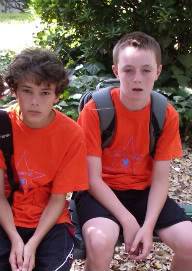
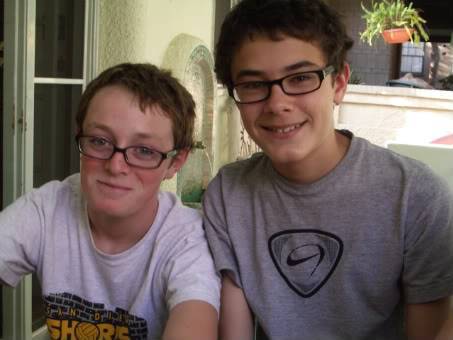
Eamon and James now
I don’t remember James and Eamon making a single comment about how they were depicted visually (except, maybe, that they liked their hair). But they did actually look like the boys in the book before they both got so tall and started wearing cool, arty glasses.
Bill and Pam, being grownups, never objected (at least to me) about the fact that I made them look completey unlike the way they really look. Both of them are tall, slender, stylish, and erudite. But when I drew them that way, it was so not a funny book.
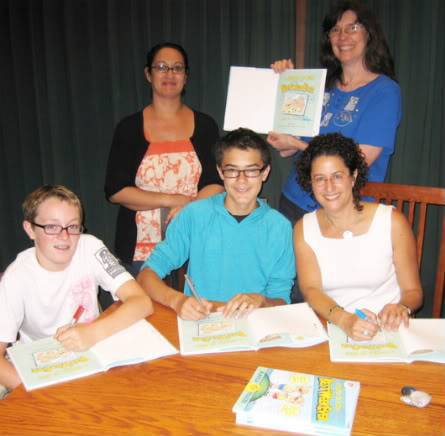
Marla and boys at Vroman’s book signing, June 2008 (Jan Ramos and Kris Vreeland, rear)
Did you use the computer for your illustrations, or was everything done by hand? Why did you feel the felt-like surface of the recycled French paper you chose would be appropriate for this story? Overall, what is your favorite medium?
I don’t use a computer to do my pictures. I liked the felt-like paper because it took the black pencil so well. I guess my favorite medium is, um, a black pencil. Oh, God, I hate talking about technique.
Marla’s studio in Pasadena neath the avocado tree
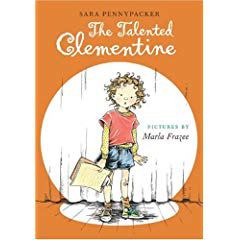
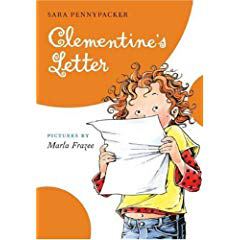
Your drawings for the Clementine series by Sara Pennypacker are totally brilliant — they complete the character and deepen the narrative to a degree that harkens back to a previous era in children’s publishing. Are these illustrations easier or harder to do than those that are in color? Aside from using clues from the text, did you model Clementine after anyone you know?
I thought line drawings in the Clementine books were going to be easier than illustrating a full-color picture book. But they are hard! I’m doing them in pen-and-ink, which I like to compare to walking a tightrope — something I have absolutely no personal experience doing, by the way. But somehow it feels that scary to me. One little mistake and it is bad, bad, bad. When I flub up — and sometimes it’s right about when I am almost finished with a drawing that has taken many hours — I have to start over again on a new piece of paper. You can’t erase with pen-and-ink.
I wanted the Clementine books to reflect the same period of time when Louis Darling was illustrating the Beverly Cleary books. I have been very inspired by his work and the work of other great pen-and-ink illustrators, too, like Robert Lawson, Ernest Shepard, Doris Burns, and Chris Riddell.
As for the character of Clementine, I have long been infatuated with Little Sal, the protagonist in Robert McCloskey’s Blueberries for Sal, and, it goes without saying, Cleary’s Ramona. Clementine is certainly a similar type of quirky little girl. Early on, I took pictures of an 8-year-old friend named Kate along with all her stuff (shoes, clothes, toys, knick-knacks) to help me get a handle on The Girl Thing. As a mom of three boys, I felt like I was dealing with a whole other species. But as soon as I really started drawing, Clementine became Clementine. I feel as if I know her pretty well now.
How do you decide which parts of the story to draw?
Deciding which parts of the story to draw takes some time. First I just read the text. I don’t take notes, underline anything, or think too much. I just read it. The second time through, knowing what the major threads are and what moments are important, I have a pencil in hand and take copious notes. I look for the spaces in the text where I can add detail, give weight to some event, reinforce humor, wink obliquely, allow for a visual pause, and most importantly, deepen the emotional moments.
Sara Pennypacker’s writing allows this to happen. I have never felt that I needed to compensate for something that wasn’t in the text. It is all there. Sara’s writing is so tight, so funny, and so perfectly attuned, that it is just a matter of choosing what I want to accentuate.
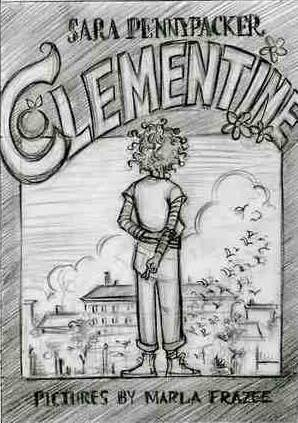
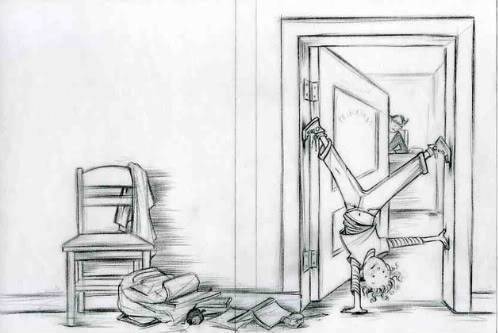
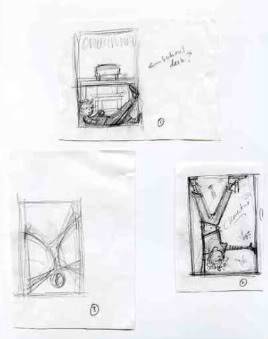
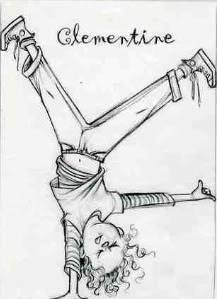
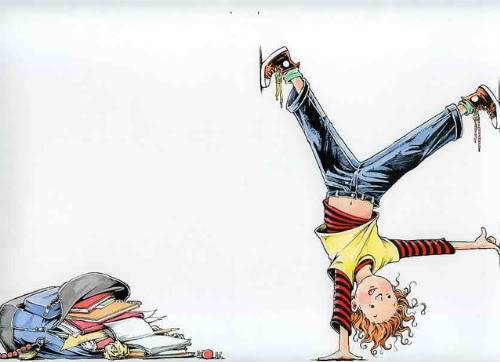
(Evolution of the first Clementine Cover):
Some of my first sketches incorporated some orange crate elements in the design, playing off her fruit name.
In one exploratory sketch, I drew her doing a handstand in Principal Rice’s doorway.
I reduced the elements down to where it was simply Clementine, framed by the edges of the book. This was getting somewhere, but her expression was too exaggerated.
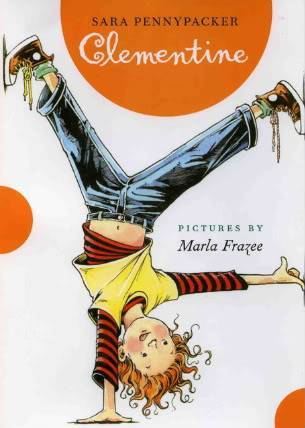
Here’s the final painting,
and the book!
I read that you encourage your children’s book illustration students to find their own voice and style, and that it is important to you for artists to move beyond commercial, generic depictions that merely echo the text. You’ve also said that it took at least 10 years for you to find your own voice. Can you share any light bulb moments during this period that facilitated this breakthrough?
I spent many years working as a commercial illustrator, doing things like Kellogg’s cereal boxes, children’s clothing ads, McDonald’s Happy Meals containers, Mattel toy packaging, etc. Meanwhile I was peddling my portfolio to children’s publishers. One of my main targets during those years was Linda Zuckerman who was then an editor with Harper and Row, working out of her Southern California office.
I’m not sure why Linda agreed to see me as often as she did, but every six months or so I would make an appointment to show her new samples in my portfolio. Every single time, I was such a wreck that I’d get off the road a few miles from her place and hyperventilate for awhile. Then I’d go sit across from her desk once again, waiting for her to tell me what she thought. And she would.
Patiently, kindly, firmly, she told me everything I needed to know but wasn’t always able to understand. My characters were generic and stereotypical; my work wasn’t expanding on the text but instead was saying the same thing; the entire portfolio wasn’t narrative enough; it was all too slick. I would nod my head. I would thank her. And then I’d drive back home feeling more disoriented than ever.
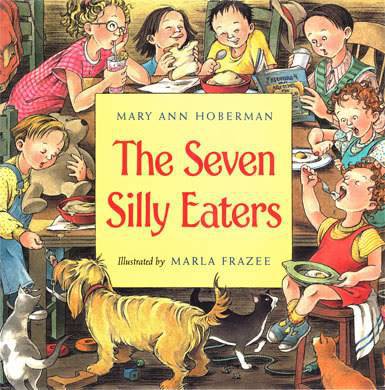
Eventually Linda gave me some YA jacket illustrations to do and then at last, my first picture books. I learned a whole hell of a lot from Linda. The Seven Silly Eaters was our third book together and remains one of the books I am most proud of. I am so lucky that she was my first editor, and that she saw enough of a tiny glimmer in my work all those years ago to take a chance with me. I am thoroughly indebted to her. And the best part of this story is that Linda is a close friend and colleague of mine today.
What general advice can you offer about making illustrations more “narrative” rather than just mirror reflections of the text?
Well, this is the basis of the class I teach. It is essentially the same advice you would give with writing. Get to know your characters, inside and out. Do not be afraid to dig deep, because that is where you are going to find the beating heart of what you are trying to do. Revise, revise, revise. Each revision brings you closer to your true intention. Stay open to surprises. Feel it. If you aren’t communicating in an emotional way, then you aren’t communicating.
Right now I am finishing up the paintings on a picture book called All the World, written by Liz Garton Scanlon. It is a gorgeous, brief-yet-expansive text and I am trying to do it justice.
What inspires you?
Walking, hiking, driving. I LOVE to be alone and moving. It is a potent combination.
In your 2007 Cynsations interview, you mentioned how you first turned down the opportunity to illustrate Mrs. Biddlebox, written by Linda Smith, and then changed your mind. What makes you say yes to a project?
Saying yes to a manuscript is, for me, like deciding to move into a house. There are a lot of homes I think are gorgeous and I might even love, but very, very few I would actually want to uproot myself and move into. When I say yes to a story it is because the manuscript has me by the throat,and I can’t say no. When I read a manuscript, I want not to like it. In all honesty, I want to say no. If I end up liking it, I want not to like it enough. If I love it, then it starts to get complicated. If I can walk away from it without feeling regret, I will. I have to love it so intensely that I will be bereft, insane, crazed if I can’t make it mine.
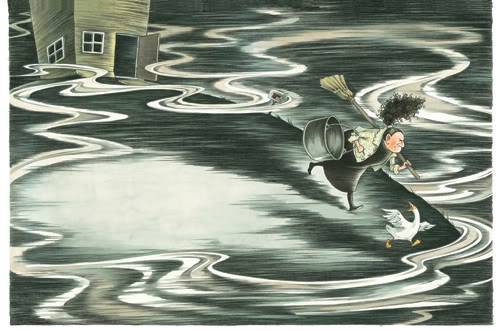
from Mrs. Biddlebox by Linda Smith, pictures by Marla Frazee
Only once I’ve walked away and regretted it — and that was with Mrs. Biddlebox — and then, lucky me, I was given a second chance. But for all the other manuscripts I’ve said yes to, I knew immediately upon reading them that I was a goner. My personal favorite of the books you illustrated but didn’t write is The Seven SillyEaters by Mary Ann Hoberman. The pictures create a fully-realized, detailed world that perfectly complements the escalating tension and frenzy of the story, with your own added storylines (mother with cello, presence of father). Of course, food and food preparation play a huge role in this book. Do you like to cook? If so, please describe a favorite food-related memory from your childhood.
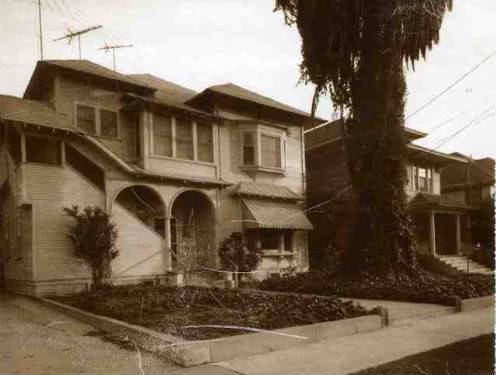
Food was and still is at the center of everything my extended Lebanese family does together. When I was growing up, my Sito (“Sit-u” is grandmother in Arabic) and her sister lived in side-by-side houses in the middle of downtown Los Angeles. Many people called my grandmother “Fudgie” because she made great fudge. Her sister (who was a bit heavy long before I was born, but for the rest of her life was a tiny little wisp of a woman), was called “Fatty.”
Fudgie and Fatty’s side-by-side houses in downtown Los Angeles
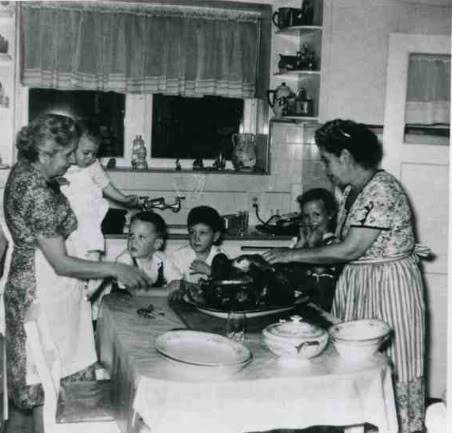
For every family gathering, Fudgie and Fatty orchestrated enormous and delicious Arabic feasts on three gorgeous old stoves. One stove was in Sito’s kitchen, one was in her sister’s kitchen, and one was between the two houses on the outside patio. My little sister and I ran food back and forth between the three stoves. All the women in the family were aproned, laughing, and busy doing things like rolling grape leaves, stuffing zucchini, rendering butter, chopping parsley, browning pine nuts . . .
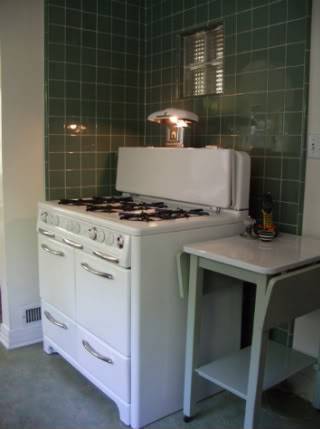
Fudgie and Fatty cooking with grandchildren After the meal was served and cleaned up — and I was helping from the time I was born, I believe — Sito would wipe down her 1939 six-burner Wedgewood, close the enamel cover, and turn on the little nightlight on the top near the clock. To me it was always as if she put that stove to bed.
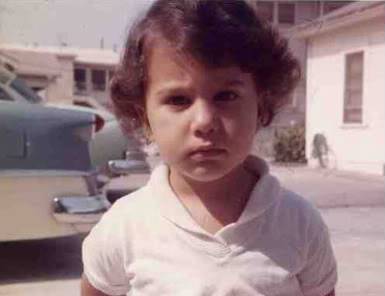
Marla at about age 3
Once when Sito and I were tucking the stove in for the night, I told her how very, very much I loved it. She said, “Well, then it will be yours one day.”
And, amazingly, it is.
Fudgie’s stove now lives in Marla’s kitchen
Could you share a recipe, either something you make yourself, or something you simply love to eat?
If there is a ripe avocado sitting around, I will probably cut it in half, sprinkle it with salt, and eat it with a spoon.
For more about Marla:
Her lovely website features all of her books, along with a fascinating “Studio” section discussing tools and techniques, characterization, thumbnail sketches, portfolio preparation and color studies.
Cynsations 2007 Interview with Marla, focusing on Mrs. Biddlebox by Linda Smith (Harcourt, 2007).
 Jama's Alphabet Soup