SOUP’S ON: Debbi Michiko Florence in the Kitchen Interview!

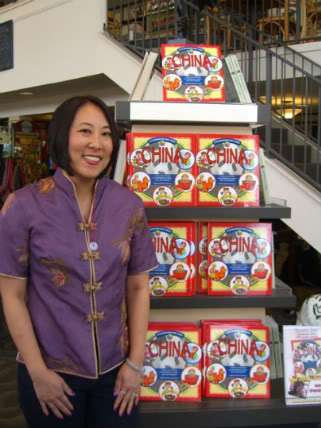
Debbi at her book launch party held at Books, Inc., Mountain View, CA


I’m very pleased today to welcome friend and children’s author, Debbi Michiko Florence, to the alphabet soup kitchen!

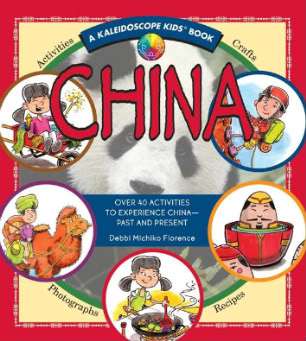
Debbi’s first book, China: A Kaleidoscope Kids Book, was just released in March, and it’s a beauty. A scrumptious volume containing over 40 activities and fascinating chunks of info about everything from China’s history, geography, culture, language, arts, to the all-important topic of food, it is the perfect hands-on learning resource for school or home.

Did you know the wheelbarrow was invented in China? What is the typical school day like for kids there? Maybe you’d like a calligraphy or chopsticks lesson, or are in the mood to embroider, make a clay soldier, juggle, or feast on mooncakes or dumplings. With an appealing format full of photos, cartoon drawings, maps, and diagrams, CHINA will surely get kids 8-13 excited and keep them engaged.

Debbi is visiting today from her home state of California, where she lives with her husband, teenage daughter, and rat terrier, Trixie. A full-time writer, Debbi has also been a fifth grade teacher, pet store manager, raptor rescue volunteer, and an Associate Curator for Education at the Detroit Zoo. She loves to travel, and has lived in such interesting places as Mexico City and Shanghai. Her next book, JAPAN, is due out next year.    

 Congratulations on getting your first book published, Debbi! Since CHINA is part of an existing series, how did this project come about? How much leeway were you given in selecting specific topics to include?

Thank you! I was very lucky to be asked to write this book. My friend, Nancy Castaldo, who has written many fabulous activity books on nature and the environment, was speaking to an editor when the editor mentioned she was looking for someone to write a book for kids about China. Nancy, who has read my work, recommended me and mentioned that I was living in Shanghai. The editor spoke with my agent, I wrote an outline, and I was given the contract! I have a background in education, so I think that helped. Because my book would be the first in the Kaleidoscope Kids Series under the new publishers, I had a lot of leeway. I was able to pick and choose the topics, with some guidance from the editor.


The research must have been a lot of fun. How did you gather all your information? Can you describe any especially interesting, surprising, or even frustrating experiences you had during this process?

It was a bit overwhelming at first. There was so much to learn and know and research and double-check! I probably over-researched. I was grateful to my editor for fact-checking and to my Mandarin teacher for her help. Because I lived in China, I was able to experience some of the things I wrote about first hand. That was pretty exciting!
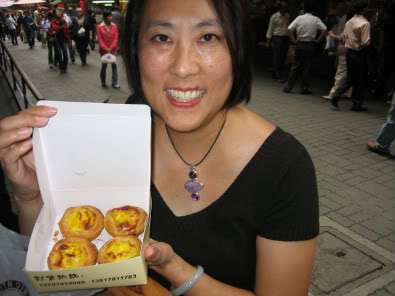
Debbi with her favorite dim sum treat, dan taht (egg custard), at Yuyuan Garden, Shanghai, China


I think the most frustrating experience for me was not knowing when to stop researching and start writing. I whined to friend and author Jerry Spinelli and he gave me this advice: “You can sit on the bench and study the game forever, but you’ll never score until you take off your sweats and start shooting.” Wise words! I think I knew I had enough research material, but was scared to start writing. Once he said that, I started writing, and the words just flowed, because by that time I did indeed know the material.

Briefly take us through the stages of bringing this project to completion, once you signed the contract.

I spent weeks and weeks researching and taking copious notes by longhand on yellow legal pads. I was lucky to have a large desk in China! I had piles of paper all over the desk and on the floor. Also on the floor, I had a huge map of China. It was like walking through a maze in my office.
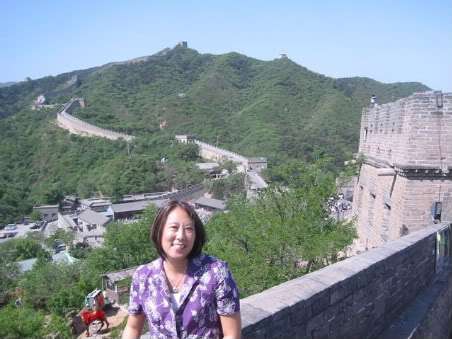
Debbi at the Great Wall


 I typed up my manuscript on my computer, using my notes as I wrote. I kept separate files for each section. Once I finished writing the entire draft, I created and wrote up the activities to go with the text. That was the most fun for me, since I had had experience with that when I was an outdoor school teacher, classroom teacher, and Associate Curator of Education of a zoo.
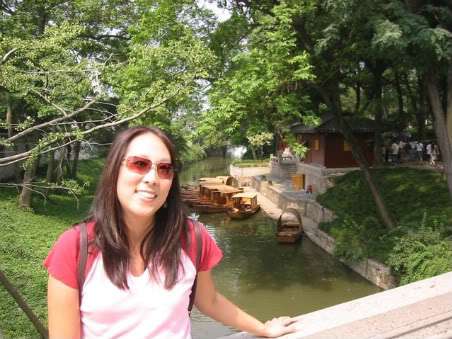
In front of a canal in Suzhou, China


 I revised and proofed my manuscript and had my daughter test the activities to make sure the instructions were clear and that the activities worked out. I had to make some adjustments. I turned in my draft to my editor. We went back and forth on rewrites and edits. I proofed a final galley and then it went to print! The entire process took place within a year!
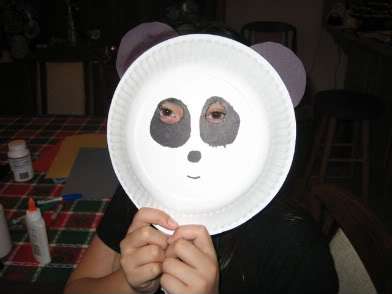
Debbi’s daughter tests the panda mask activity from CHINA


I especially love the chapters, “The Inventive Chinese,” “More Than Chow Mein,” and “China’s Amazing Art.” Do you have a favorite chapter?

I enjoyed writing all the chapters, but my favorite is a toss up between “More Than Chow Mein” (I love food) and the wildlife section. My college degree is in zoology and I’ve always had a strong interest in animals!

What’s next for you?

My agent is submitting my YA novel, so in the meantime, I’m trying to figure out what my next project will be. I have several WIPs in various stages. One is an incomplete first draft, another is on a third revision, and just recently, a new voice started speaking to me. This is unusual for me. In the past, I’ve always known what project was next. I’m also doing edits on my JAPAN book, a follow up to my CHINA book with Williamson Books (due out in summer of 2009).

Tell us about your general process when writing a novel. What is hardest for you? What do you feel are your strongest areas?

For my young adult novels, my process has changed over the years. I used to write a (crappy) first draft from beginning to end. Then I would spend time getting to know the characters and figuring out the story. Many revisions later, I’d have a draft I felt I could share for critique. More recently, however, a voice comes to me and I just freewrite — either scenes or dialogue, until I figure out what this character’s story is about. Then I write a (crappy) first draft. Some of those scenes/dialogue make it into the draft, but some do not. By nature, I am a plunger, making discoveries about my character and her story along the way. I don’t really outline, except that I think that my first drafts are in a way, a very long general outline.
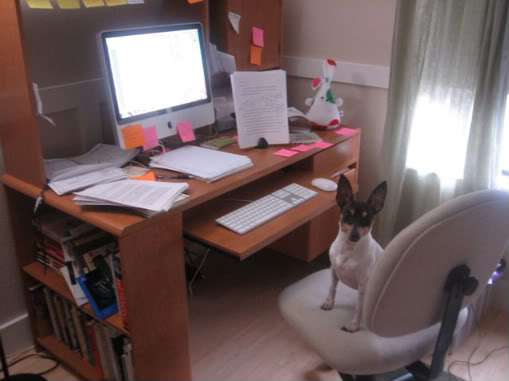
Trixie takes over Debbi’s writing space

Right now, for me, first drafts are the hardest part of writing a novel. I’m anxious to get to know the story and character, and I get frustrated that it takes so dang long. I’m much better, now, with revising drafts, especially with the smart help from my writing group!

What drew you to writing for children and young adults?

I started out writing travel articles (for a webzine) and adult short fiction. I had a couple of my short stories published in very small journals/magazines (The Berkshire Review, AIM Magazine). When I started writing my first novel, however, I was pleased to discover it was about a teenage girl. I had the wonderful fortune of crossing virtual paths with Cynthia Leitich Smith and she generously offered advice to me. One important bit of advice that seems obvious but wasn’t to me then, was to read the genre. Cyn became my mentor and because of her I have grown as a writer! I’m forever grateful! But I digress! 😉 What drew me to writing for young adults? I think my emotional age is stuck at 15. The period between ages 14-18 is the most vivid for me.

What kind of child and teenager were you? Do you remember the first story you ever wrote?

Well, if you ask my mom, she’ll tell you I was an angel. I think she has selective memory. 😉 It should not surprise anyone who knows me that I have always loved to read and write.

The first story I “wrote” was in picture form. I was probably in kindergarten or first grade. I can’t remember a time in my life when I wasn’t writing stories. The first real story I wrote that was “published” was in 4th grade for our class magazine. It was a story about Fluffy the dog and her puppies. I wonder if I have that stashed somewhere? Hmmmmm.
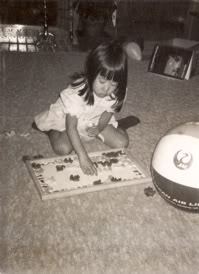
The author at work.


I’m a firm believer that people are what they eat. Please describe your favorite childhood food-related memory.

Then I am an umeboshi — a Japanese pickled plum. I just recently learned that it really isn’t a plum, but a type of apricot. Umeboshi is very sour and usually eaten with rice, but I love to eat it as a snack, plain. As I type this, I’m salivating!

When I was a toddler and visiting my great-aunt in Japan, she had a bunch of umeboshi drying in the sun outside. As I hear the story, I ran outside, grabbed handfuls of umeboshi, and shoved them in my mouth.

Today, if I receive homemade umeboshi, Bob (my husband) knows he can’t have any. I’ll share the store-bought kind, but homemade is all mine!

Do you like to cook? If so, what is your specialty? What food inspires your best work?

Despite my Soup Sister posts on my blog, I do not really love to cook. My husband is the chef in the family, but with him traveling so much for business, he hasn’t been around to feed me. That’s why I got the soup cookbook (New England Soup Factory Cookbook) and started making soups. I’m actually enjoying it. Perhaps I’ll branch out into other types of food! I don’t have a specialty yet. Ask me in a year or so! 🙂
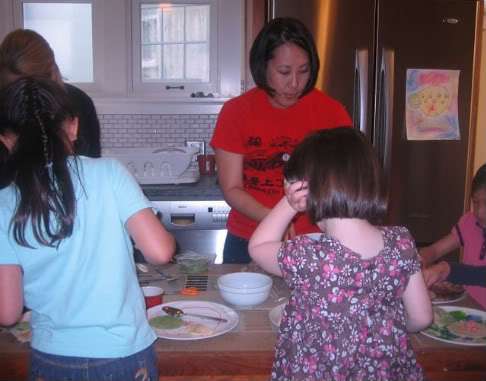
Making dumplings from the recipe included in CHINA

What three authors, living or deceased, would you love to have dinner with?

Madeleine L’Engle, Barbara Kingsolver, Judy Blume.

QUICK BITES

Describe yourself in 5 words.

I am incapable of that. 😉

Passions besides reading and writing

Family and friends, fine dining, my dog, blogging, shopping, vacations!

Books/authors that have had the most influence on your writing.

Too many to list!

Describe your fantasy meal.

Foie gras, Sydney rock oysters, Maine lobster, steamed artichoke, sushi, mom’s potato salad, Bob’s BBQ ribs, Japanese rice, and of course umeboshi! Dessert: lemon meringue pie and cupcakes.

Okay, that’s not really my fantasy meal, since those things combined wouldn’t taste great together. But those are some of my favorite foods!

3 fondest wishes.

I would spend all month trying to come up with an answer for this! 😉

Please share a favorite recipe with us.

You know, I was going to share a soup recipe, but I think I’ll share the ONE thing I can make without looking at a recipe and kept me from starving when I was in college. (Thanks, Mom!) I’m no gourmet cook! I recently started making this again and both Bob and my daughter love it!

HAMBURGER STROGANOFF

1 lb ground beef
1 onion, diced
2 cloves of garlic, diced
oil
1 small carton fresh mushrooms, sliced
3 T flour
1 can condensed cream of mushroom soup
water
8 oz. sour cream
cooked Japanese rice (or noodles if you must)

Saute onions and garlic in oil. Brown ground beef. Drain oil. Add mushrooms and flour, stirring over medium high heat until mushrooms are cooked through. Add cream of mushroom soup and 3/4 can of water. Stir well. Cover and simmer on low for about 10 minutes, stirring occasionally. Remove from heat and add sour cream. Mix well. Serve immediately over rice. (It’s the only way I’ll eat it, no pasta for me on this dish!)


 More Debbi, please:

A visit to her fabulous website is a must. Debbi’s archive of interviews with award-winning children’s authors dates back to 2001. Especially fun and fascinating is Trixie’s interview with Debbi!

Debbi’s Live Journal blog, One Writer’s Journey, is a warm and welcoming spot to chat and keep up with all of her adventures.

Click on over to papertigers.org to read Debbi’s wonderful essay, “Great Expectations: Breaking Down the Wall of Assumptions,” and a great review of CHINA!

Finally, there is an excellent interview with Debbi at the Women on Writing ezine, where she offers advice for beginning writers and more insight into her writing process.

Xie xie (thank you), and Zai jian (goodbye)!
 

something sweet from cynthia chin-lee

I see you’re back again, with that hungry look on your face.

After wontons, Chinese chicken salad, bay scallops with lemon sauce, and masoor dalCynthia Chin-Lee has brought something sweet for our Asian Pacific American Heritage Month potluck!

 One of the “Best 100 American Children’s Books of the Century” (Ruminator Review)

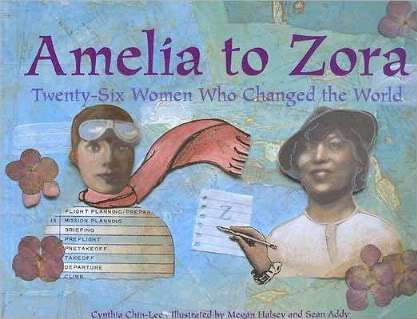
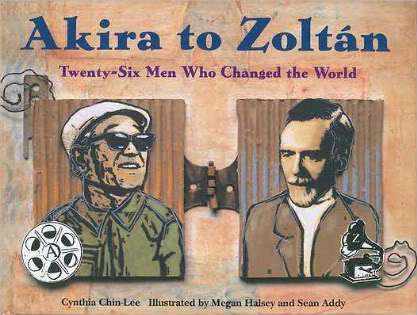
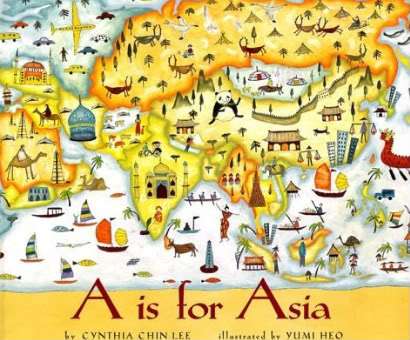
You may have noticed that I love soup — and cookies — and the alphabet. Cynthia Chin-Lee may just be the author of my dreams. Four out of her fivepicture books feature the alphabet. These are not baby portions, but ones that offer more substantial servings for sophisticated readers 9 and up, such as A is for Asia (Orchard,1997), A is for the Americas (Orchard, 1999), Amelia to Zora: Twenty-Six Women Who Changed the World (Charlesbridge, 2005), and Akira to Zoltan: Twenty-Six Men Who Changed the World (Charlesbridge, 2006).

In Amelia to Zora and Akira to Zoltan, we meet 26 courageous visionaries in each book, some well known and others not so well known, from many different professions, such as scientists, political leaders, writers, architects, doctors and performing artists, who have made a difference in the 20th century. I like the diversity of cultures and ethnicities represented, and the fact that the profiles are alphabetized according to the first names of the honorees, giving them a familiarity that will appeal to children.

Each page features an enticing profile that will whet the appetite for further study, an inspiring quote, and a brilliant mixed media collage (whimsical, literally cutting edge, and very very cool), created from elements appropriate to each subject by Megan Halsey and Sean Addy. Especially appealing are the childhood anecdotes included in each juicy capsule. Akira to Zoltan focuses on peacemakers such as Gandhi, Langston Hughes, Octavio Paz, and Nelson Mandela. Some of the strong, imaginative, and innovative women include Kristi Yamaguchi, Yoshika Uchida, Grace Hopper, and Dolores Huerta.

This is one alphabet that is sure to inspire and delight. And thanks to Cynthia, we have something delish to munch on while enjoying her books. In 1993, Polychrome Publishing brought out Cynthia’s first picture book, Almond Cookies and Dragon Well Tea, illustrated by You Shan Tang. In this story, Erica visits Nancy, her Chinese American friend, for the first time. Erica is a little shy and apprehensive about what Nancy’s home will be like, but as soon as Nancy’s grandmother serves homemade almond cookies and special tea, Erica warms right up! 

Maybe you’d like to serve these cookies to your guests, if there are any left after you’ve tasted them! Mmmmm almond extract!

GRANDMA WONG’S ALMOND COOKIES
(makes about 48 cookies)

2-3/4 cups flour
1 cup white sugar
1/2 tsp baking soda
1/2 tsp salt
1 tsp almond extract
1 cup shortening (lard, margarine, butter, or Crisco)
1 egg
whole almonds, sliced
red and yellow food coloring

1. Preheat oven to 325 degrees F.

2. Sift flour, sugar, baking soda and salt together. Add shortening, egg, almond extract and food coloring into mixture. Color should be orange-yellow. Mix into a smooth dough.

3. Roll dough into 1-inch balls. Set about 2 inches apart on greased cookie sheet. Flatten ball with palm of hand and place an almond slice in center of each cookie.

4. Bake for 15-18 minutes.

Visit Cynthia’s website, or read a fab interview at papertigers.org!

presidential potluck with mitali perkins

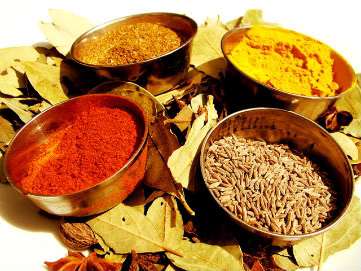
Friends, can you smell that positively divine aroma of fresh ginger, turmeric, cumin, chilies, and mustard emanating from your computer screen? 


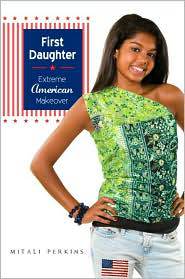
Thanks to First Daughter Sameera “Sparrow” Righton and her creator, Mitali Perkins, we can enjoy some authentic Indian food at our Asian Pacific American Heritage Month potluck today!

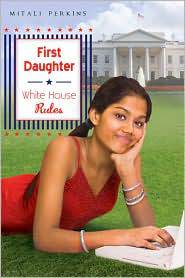
I don’t know about you, but I’m ready to don my salwar kameez and bhangra around the kitchen. I just read the first two books in Mitali’s First Daughter series, First Daughter: Extreme American Makeover, and First Daughter: White House Rules (Dutton, 2007, 2008). Loved them.

I admit I didn’t know quite what to expect. I had enjoyed The Not-So-Star-Spangled Life of Sunita Sen and Monsoon Summer. Positively adored Rickshaw Girl, which, as you probably know, has received loads of well deserved accolades, the latest of which is the 2008 Jane Addams Honor Award.

In 16-year-old Sparrow, I found a highly intelligent, compassionate, resourceful humanitarian, who just happens to be the President’s adopted daughter. In Extreme American Makeover, we see how Sparrow’s strong sense of self prevails, despite a physical makeover and attempts to “Americanize” the Pakistani heritage out of her while her dad is running for office.

Once her dad wins the election, they move into the White House, where things get even more interesting. In the second book, we see just how many of the White House “rules” Sparrow adheres to, as she interacts with her cousin Miranda, plays Cupid for her mom’s personal assistant, hangs with her SARSA friends at the Revolutionary Cafe, longs for her soulmate, Bobby, deepens her friendship with not-so-privileged Mariam, and of course, continues to blog. Despite the restrictions of a high profile lifestyle, somehow Sparrow manages to stay true to herself and positively affect those around her.

And how about those oatmeal scotchies! We first tasted them in Extreme American Makeover, but in White House Rules, these frosted wonders take on a life of their own. After the Swedish Ambassador raves about them, they become a staple at White House teas, enabling Miranda to earn some needed funds. Never underestimate the value of farm fresh milk! All I know is, I MUST make those cookies. Good thing Mitali has linked to some scotchies recipes here.

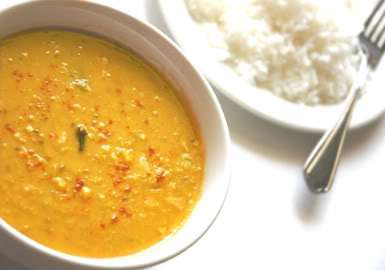
Speaking of recipes, Mitali has brought a childhood favorite today. She says, “We used to eat this almost every day when I was growing up. I LOVED it as a kid, mixed with steaming basmati rice and a side of hot mango pickle, and still do!”

So go ahead, whip this up. You know you want to. And while it’s simmering, peek into the White House to see what Sparrow is up to. I want her there come November.

BENGAL RED LENTILS (MASOOR DAL)


1-1/2 cups red lentils
3-1/2 cups water
6 sliced serrano chilies
1/4 tsp turmeric
1-1/2 tsp salt
4 T vegetable oil
1 cup minced onions
1 cup chopped tomatoes
1 T grated fresh ginger
1 T panch phanon mix (equal proportions of whole cumin, fenugreek, anise, mustard, and Indian black onion seeds mixed and sold as one spice; you’ll need to get this at an Indian store and it’s called “five spice mix”)
4 dried small red chilies (depending on how spicy you want it)
3 cloves crushed garlic

1. Rinse lentils well, add water, serrano chilies, turmeric and salt. Bring carefully to boil and cook over low to medium heat, partially covered, for 25 minutes. Cover and cook another 10 minutes. Adjust salt.

2. While lentils are cooking, cook onions in a frying pan in two tablespoons of oil until they are golden brown (approximately 10 minutes), stirring constantly. Add tomatoes and ginger and continue cooking until the tomatoes turn into a delicious and fragrant mush (approximately 8 minutes). Stir constantly so that tomato mixture doesn’t stick. Turn heat to low if necessary.

3. Scrape out the tomato mixture into the lentils and stir it in. Let lentils sit while you make the spiced oil.

4. Do a quick rinse of the frying pan, without soap, and dry thoroughly. Add the remaining two tablespoons of oil and heat over medium high heat. When oil is hot add panch phanon mix and heat until the seeds begin to pop, about 15 seconds. Add red chilies and fry for another 15 seconds, until they turn a little darker. Turn off heat and add the crushed garlic and let sizzle for about 30 seconds. Stir this mixture into the lentil/tomato mixture and serve with rice. Adjust salt.

*


the perfect blend from lensey namioka

It’s time for the second course in our Asian Pacific American Heritage Month potluck!

Last week, Lisa Yee tempted us with her won ton appetizers, but she wouldn’t share Colin Firth. This has left me hungrier than ever. How about you?

I’ve been a Lensey Namioka fan since the early 90’s, when I read the first book in her Yang family series for middle grade readers, Yang the Youngest and His Terrible Ear (Yearling,1994). I found the story of 9-year-old Yingtao, the only one of four siblings who is not musically inclined, warm and captivating, and it provided something relatively rare in books featuring Asian characters back then — humor. 

I was ecstatic when Lensey followed up with three more books spotlighting Yingtao’s sisters, Yingmei and Yinglang, and his older brother, Yingwu. Each sibling, with his/her respective personal, social, and cultural challenges, is lovingly depicted in Lensey’s engaging and refreshingly simple prose.

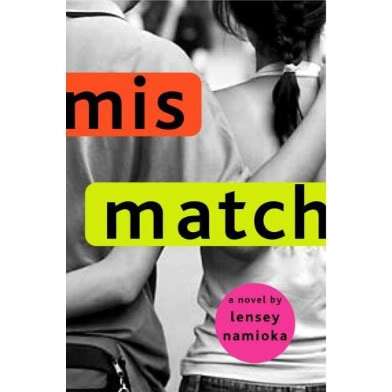
Lensey’s most recent book is a young adult novel called Mismatch (Delacorte, 2006), which I devoured over the weekend. Fifteen-year-old Sue Hua, a Chinese American girl whose family moves from culturally diverse Seattle to a mostly white suburb, falls for Andy Suzuki, who plays violin in the school orchestra. They are seen as an ideal couple since they are both Asian, but this is just one of many misconceptions that are examined and dispelled in the course of the novel.


Sue’s grandmother has painful memories of the Japanese occupation of China during WWII. Andy’s father harbors resentment over ill treatment he received on a visit to Beijing. What I found especially enlightening about this story is that it moves beyond familial disapproval of Sue and Andy’s relationship, to questions of personal identity and reverse prejudice. When Sue and Andy go to Japan on a school orchestra trip, questions of ethnicity are deepened as they interact with their host families.  

Lensey herself was born in Beijing, and could not speak English when her family moved to the U.S. at age nine, so she knows well the problems of cultural assimilation. She attended Radcliffe and UC Berkeley, and majored in mathematics, but decided she liked writing better. After marrying Isaac Namioka, a fellow mathematician, she visited Japan and became interested in the culture (she has written a series of samurai adventure mysteries set in 16th century Japan).

Mismatch beautifully weaves together Lensey’s wisdom and understanding of both Japanese and Chinese mores. The intercultural and intergenerational dynamics make for a fascinating and often surprising read.

I was nervous emailing Lensey, since I’ve admired her for so long, but discovered she is the generous, unassuming person I hoped she would be. She was busy packing for a trip to Europe, but took the time to send a favorite childhood recipe. She says, “The amounts of the ingredients are all approximate, since my mother didn’t have a recipe, and I just learned from watching her make the dish.”

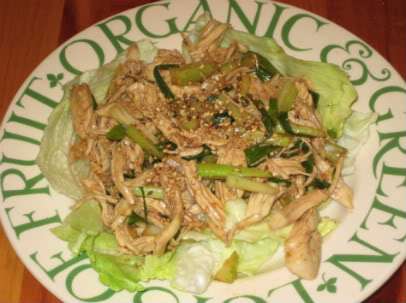
I made this Sunday night, and found it to be easy, light, healthy and delish. Since tastes differ, I advise adding the soy sauce gradually until desired saltiness is achieved.

CHINESE CHICKEN SALAD


2 cups cooked chicken meat (can be boiled or microwaved), torn into shreds, about 1/4-inch thick
1/4 cup (or less) soy sauce
3 T sesame oil
2 stalks scallions, cut into slivers about 1 inch long
slivers of celery and cucumber, 1 inch long (optional)

Mix together all ingredients and serve cold.


For more about Lensey and her books, visit her website. There is also a nice feature about her at papertigers.org.

somethin’ sizzling from lisa yee!

Ni hao (hello)!

If you’re craving a little Chinese, you’ve come to the right place.

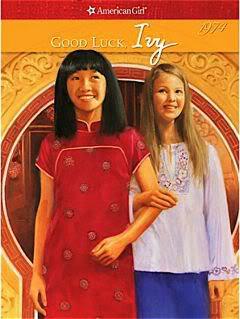
Our first dish in this month’s Asian Pacific Heritage Month potluck comes courtesy of the one-and-only Lisa Yee,  winner of the 2004 Sid Fleischman Humor Award and author of the wildly popular kids’ favorites, Millicent Min, Girl Genius, Stanford Wong Flunks Big-TimeSo Totally Emily Ebers (all published by Scholastic, 2003, 2005, 2007), and her newest book, Good Luck, Ivy (American Girl, 2007).


Good Luck, Ivy, a companion book to the American Girl Julie Series (by Megan McDonald), is set in 1970’s San Francisco. Ten-year-old Ivy Ling, Julie’s best friend, must decide between participating in a very important gymnastics tournament or attending a family reunion.

A perfect older brother, a mother in law school, a father working two jobs, and Julie moving away, often make Ivy feel invisible. A traumatic fall in a previous tournament has shaken her confidence, and she feels terrible after unintentionally hurting her grandparents’ feelings. And what about her report for Chinese school? How Ivy finds balance — both on the balance beam and in her life, makes for an engaging story sure to please young readers ages 8-12.

I especially like the warm family scenes featuring food! Ivy and her brother, Andrew, visit their grandparents, Gung Gung and Po Po, every Saturday morning for a steaming bowl of breakfast jook at their Chinese restaurant, the Happy Panda. But there are also scenes involving spaghetti, hamburgers, and Julie and Ivy’s invention: Chinese Almond Twisters — symbolizing the perfect blend of things American and Chinese, old traditions and new.

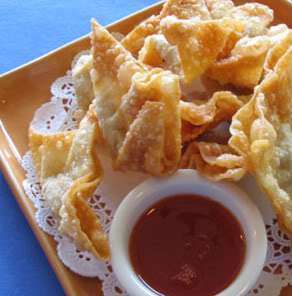
Today, Lisa is sharing a recipe for deep fried wonton, probably served at the Happy Panda, but more prominently featured in Stanford Wong Flunks Big-Time. Stanford’s grandmother, Yin-Yin, is famous for her dim sum (‘to touch the heart’), theorizing that if people’s mouths are full, they can’t fight. In a very touching scene, Stanford visits Yin-Yin in her nursing home, where she whips up a batch of wonton. He says, “I’ve missed Yin-Yin’s fried wontons almost as much as I’ve missed having her live with us.”

So, get into the spirit of Asian Pacific Heritage Month and fry up a batch of these. Of course, their flavor will be enhanced ten-fold if enjoyed alongside any one of Lisa’s fabulous books!

YIN-YIN’S WONTONS


1-1/2 T minced garlic
4 stalks green onions, finely chopped
1-1/2 lbs. ground pork (you can substitute ground beef or diced chicken)
3-1/2 T soy sauce
1-1/2 T sugar or honey
1 12-oz pkg. pre-made wonton skins
1 egg, beaten
3 cups cooking oil

1. Heat a tablespoon of the cooking oil in a large skillet. Add garlic and cook until browned.
2. Add green onions and saute.
3. Add ground meat and cook until the meat is browned. Drain the oil.
4. In a separate container, mix the soy sauce and the sugar or honey. Pour over the meat and cook. When the meat is done, turn off the burner and set the skillet aside.
5. Lay out the wonton skins in rows.
6. Place one tablespoon of meat in the center of each wonton skin.
7. Dip a pastry brush or the back of a spoon into the beaten egg, then “paint” two adjoining edges of the wonton skins.
8. Fold the skin in half diagonally so it forms a triangle, and press the edges together to be sure they are sealed.
9. Heat the remaining cooking oil in a large pot.
10. Drop wontons into the heated oil and cook until golden brown. Be sure to turn them while they’re cooking so they don’t get overdone.
11. Drain and let cool.
12. Eat!

Thanks, Lisa!