What could be more comforting on a cold winter’s day than rich, velvety hot chocolate? Sip the steamy, frothy goodness from your favorite cup and all’s right with the world.
No matter how you get your daily chocolate fix – bar, bonbon, chip or cocoa – a good way to enhance your enjoyment is to learn more about chocolate’s fascinating history.
Like me, some of you fellow chocoholics are familiar with chocolate’s origins in Mesoamerica and how Don Hernán Cortés brought cacao to Spain after conquering the Aztecs in the early 16th century. But did you know Jewish traders played a critical role in popularizing chocolate around the world?
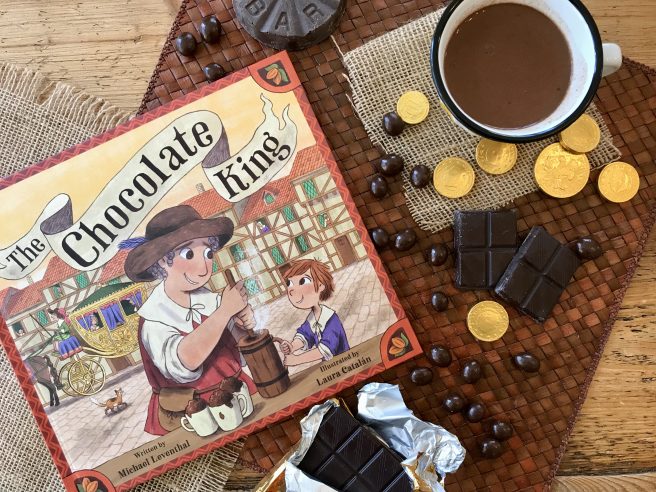
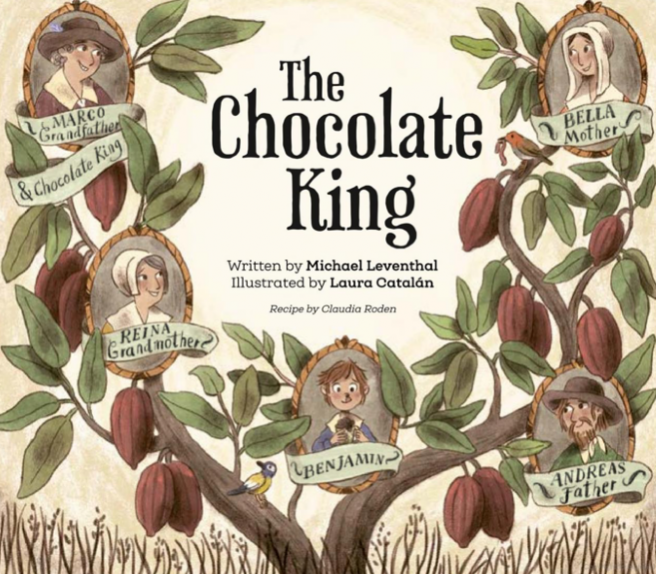
In his debut picture book, The Chocolate King (Apples & Honey Press, 2022),Michael Leventhal highlights chocolate’s little known Jewish connection. When Spanish Jews were forced to flee the country during the Inquisition, they took their chocolate making skills with them.
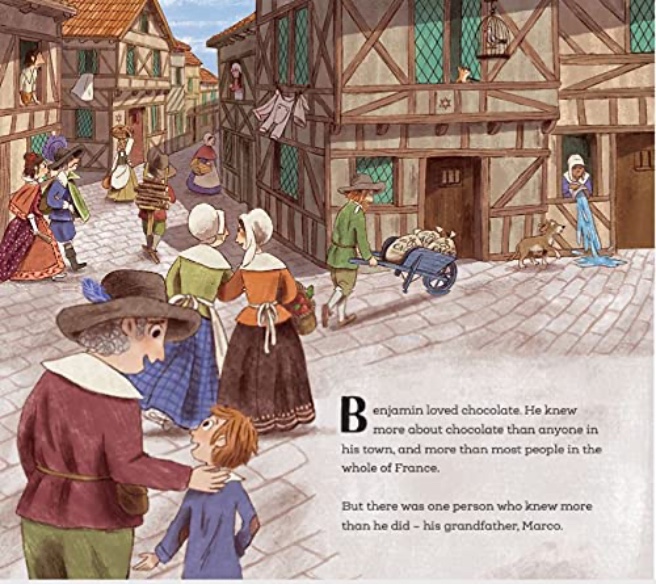
This tasty bit of historical fiction is set in early 17th century Bayonne, where we meet young chocolate lover Benjamin. Not only does he love to eat chocolate, he knows more about it “than most people in the whole of France.”
Enjoy this enchanting poem by former UK Poet Laureate Carol Ann Duffy.
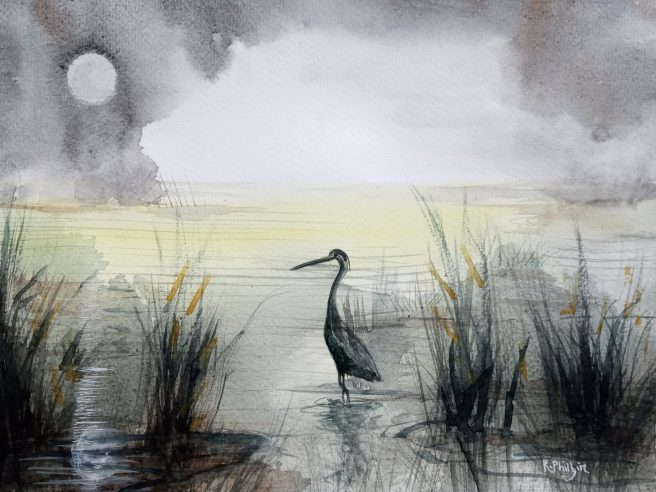
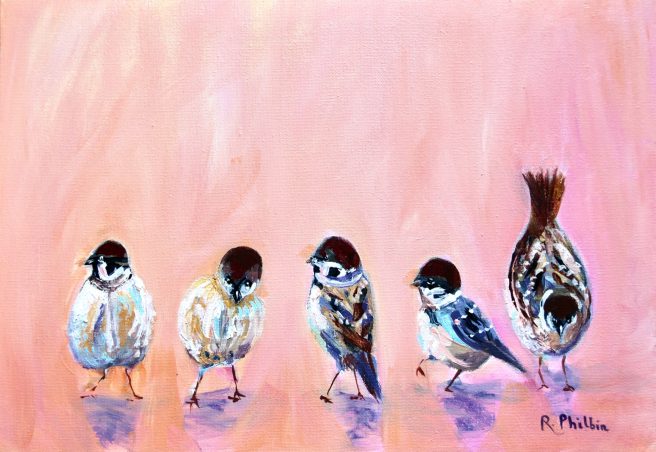
“Heron by Moonlight” by Rine Philbin
THE LOOK
by Carol Ann Duffy

The heron’s the look of the river.
The moon’s the look of the night.
The sky’s the look of forever.
Snow is the look of white.

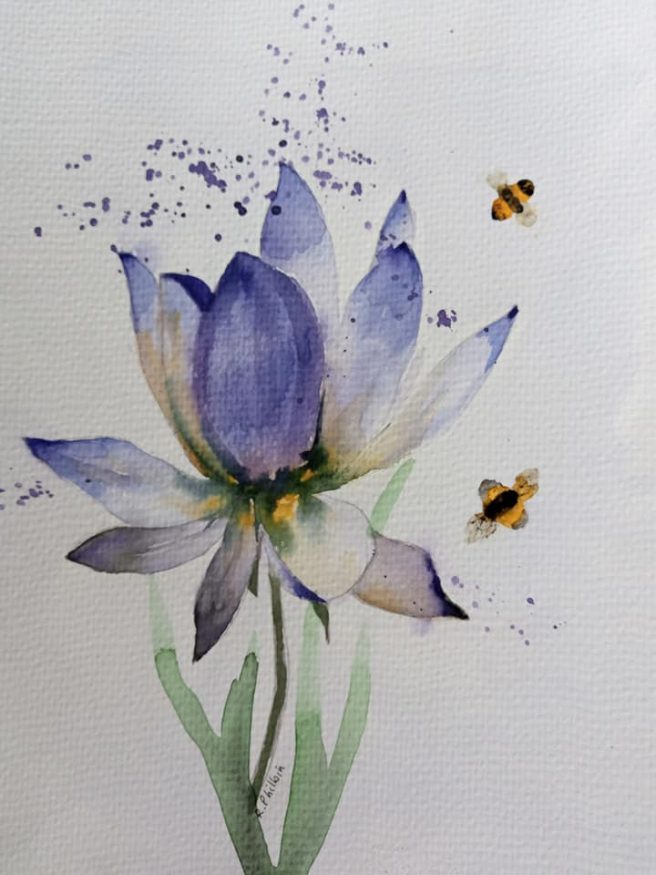
The bees are the look of the honey.
The wasp is the look of pain.
The clown is the look of funny.
Puddles are the look of rain.

The whale is the look of the ocean.
The grave is the look of the dead.
The wheel is the look of motion.
Blood is the look of red.

The rose is the look of the garden.
The girl is the look of the school.
The snake is the look of the Gorgon.
Ice is the look of cool.

The clouds are the look of the weather.
The hand is the look of the glove.
The bird is the look of the feather.
You are the look of love.

~ from The Hat (London: Faber & Faber, 2007).
Art by Rine Philbin
*
Art by Rine Philbin
I love Duffy’s line of thinking — that one thing can be emblematic of another. We see how the human mind works, making associations and connections, sometimes between the tangible and intangible.
She actually had me at the first stanza: “the sky’s the look of forever” is such a lovely way to define the infinite. Poets do love a good metaphor.
Did the final line catch you by surprise? Duffy saved her direct address, one that veers from the established syntax, to powerful effect. “You are the look of love” trumps all that came before.
Art by Rine Philbin
With its rhyme, repetition, and parallel structure, “The Look” reads like a revelatory incantation, arousing the reader’s curiosity as the pattern is established and each line introduces another comparison. Once the narrator has you in her thrall, she reveals the most important look of all at the very end.
Art by Rine Philbin
This poem made me think:
The poem is the look of the heart.
Though I’m not a poet, I can see that “The Look” would make an excellent mentor text. Please feel free to share any “looks” of your own in the comments. 🙂
*
The lovely and talented Irene Latham is hosting the Roundup at Live Your Poem. Check out the full menu of poetic goodness being shared around the blogosphere this week and have a beautiful weekend!
*
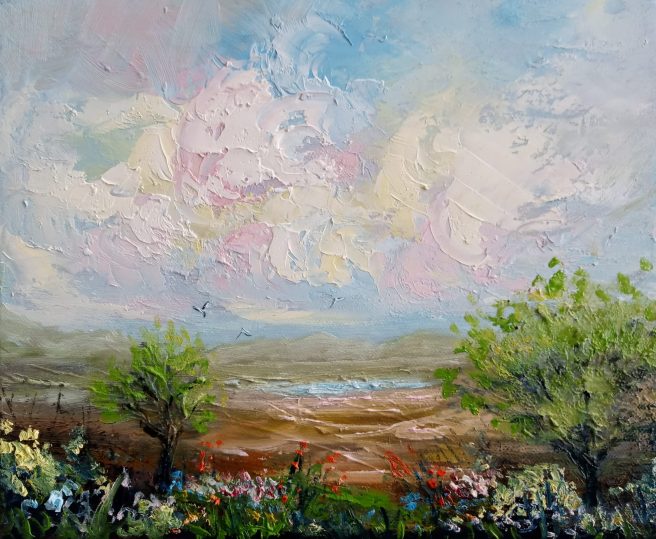
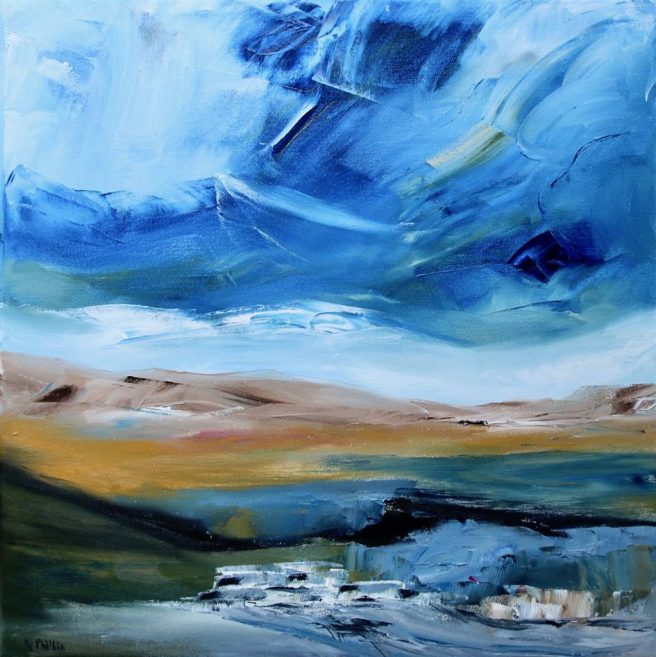
♥️ Self taught Irish artist Rine Philbin, whose work graces this post, has been painting since childhood. Having grown up on a farm near the sea, her art is informed by the beautiful seascapes, landscapes and woods she has known and loved all her life. She works in watercolor, acrylics, and oil. Learn more at her Official Website.
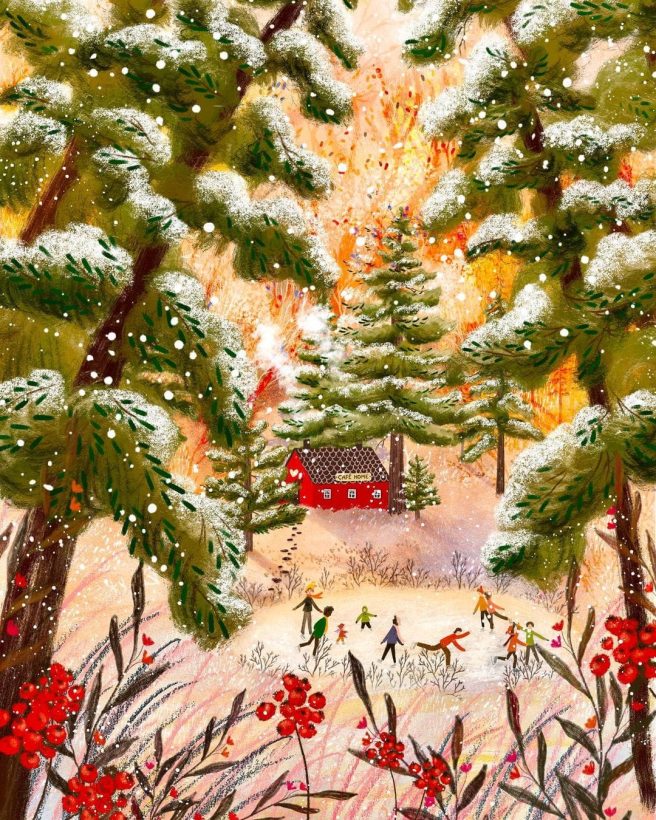
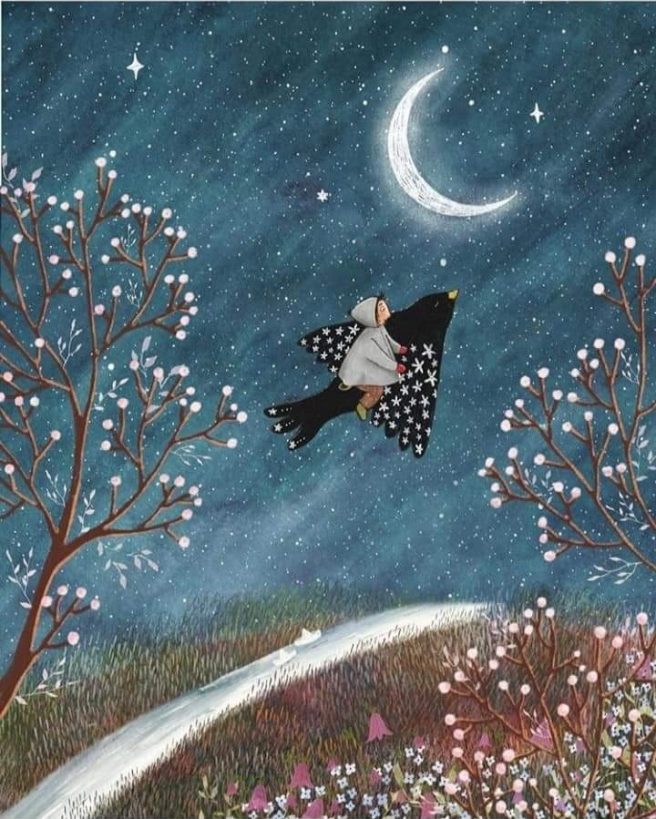
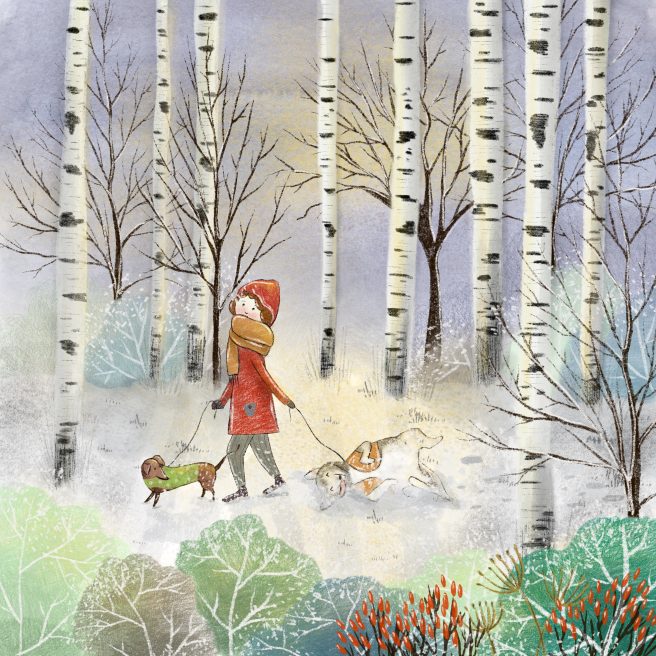
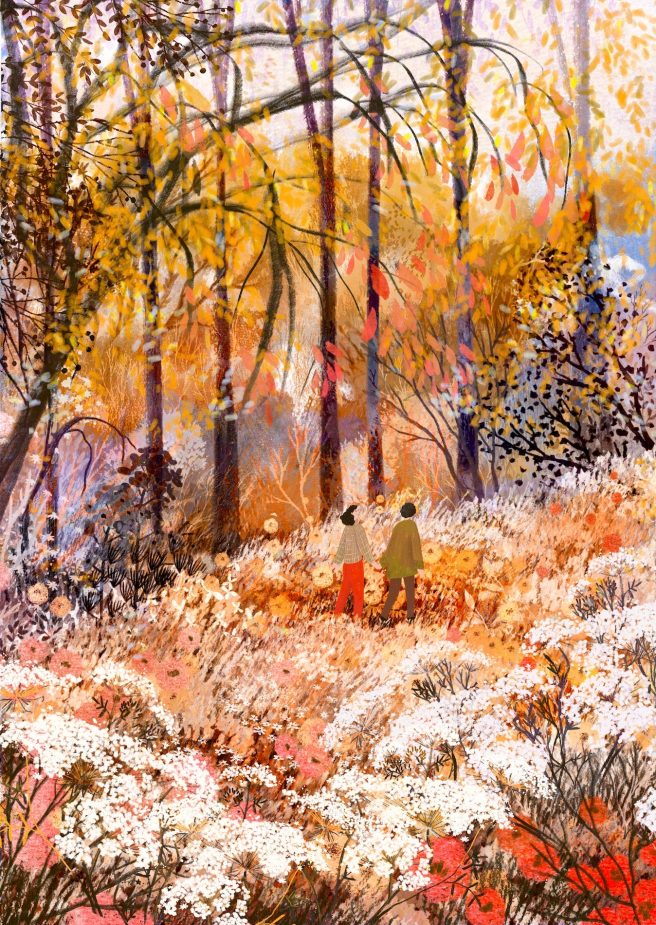
1.Happy Wintering! Let’s wander into nature’s wonderland with Laivi Põder’s enchanting art.
Originally from Estonia, Laivi currently lives and works in London. She derives most of her inspiration by visiting nearby and distant woodlands, forests, meadows, lakes, botanical gardens and parks.
She loves creating dreamy and peaceful atmospheres with Procreate, adding details digitally after painting backgrounds in watercolor.
Laivi initially worked for several years as a nurse, but in her twenties she quit her job to pursue her dream of becoming a full-time artist.
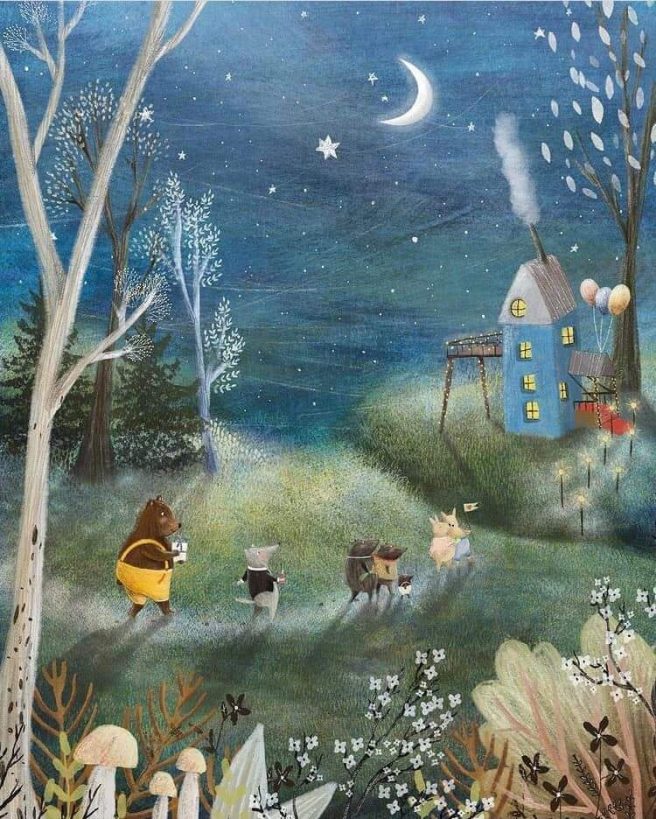
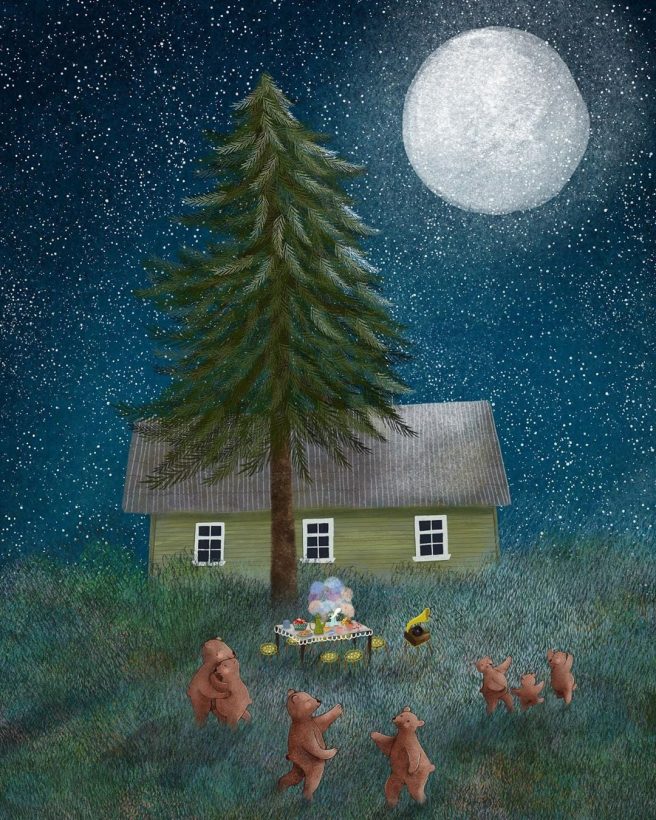
I especially love her moonlight scenes, especially this one with bears partying outdoors.
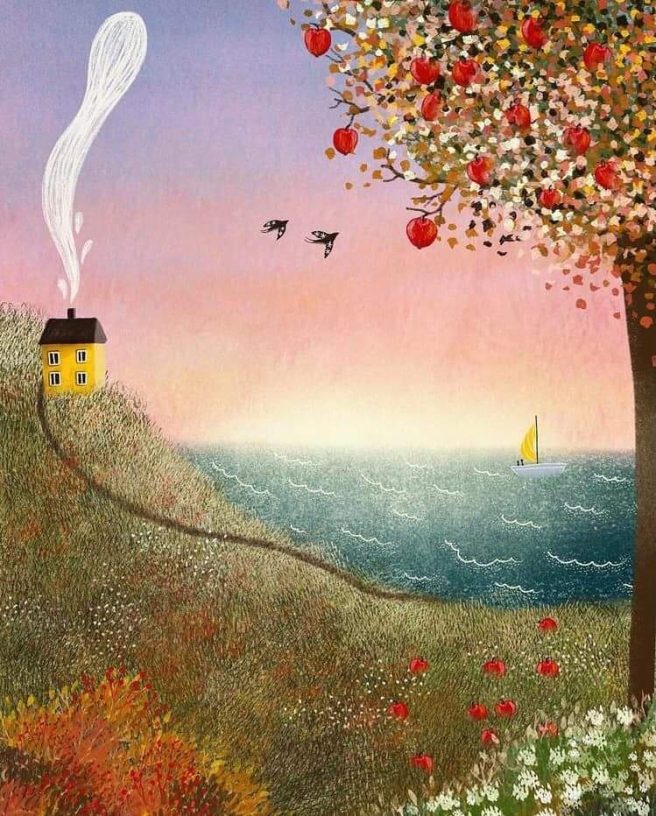
See more of Laivi’s work at her Official Website and Instagram. Don’t miss her gorgeous autumnal scenes with their exquisite colors and details.
“It is more fun to talk with someone who doesn’t use long, difficult words but rather short, easy words like ‘What about lunch?’” ~ A.A. Milne (Winnie-the-Pooh)
Why, hello . . . and brrrrrrrrrr!
Have you been hibernating? Must say your freshly brushed fur looks stunning!
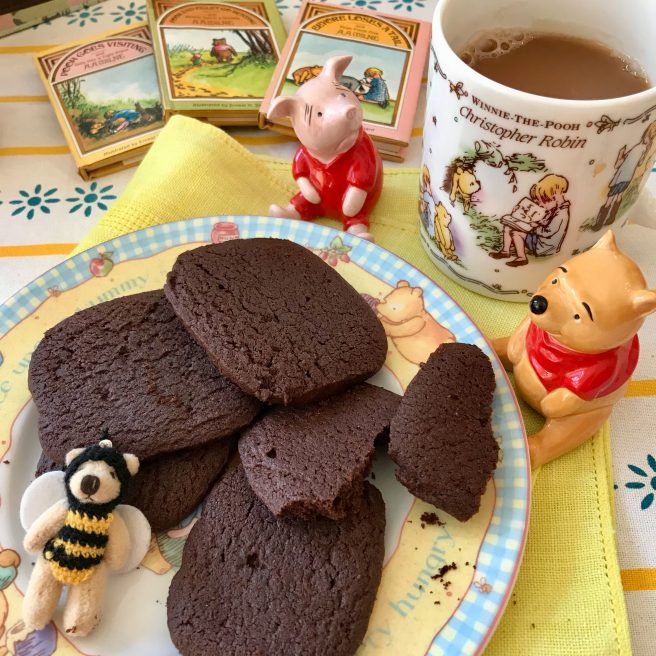
Since we’re feeling quite bearish after our holiday break, today we’re serving up some tea, cookies, and huggable poems to help us get back into the swing of things.
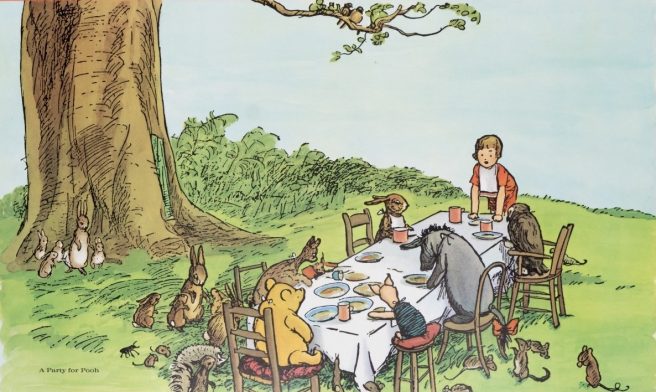
All art by Ernest H. Shepard.
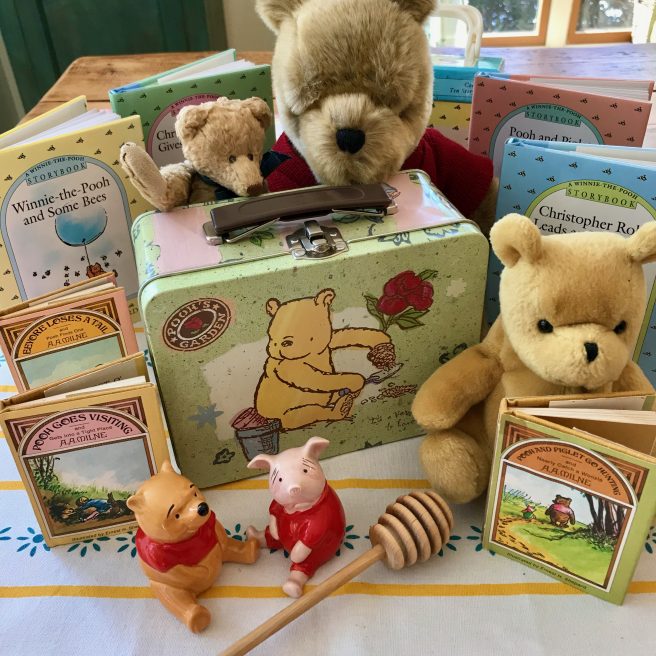
Our friend Pooh is joining us in remembrance of his creator A.A. Milne, born 140 years ago this week.
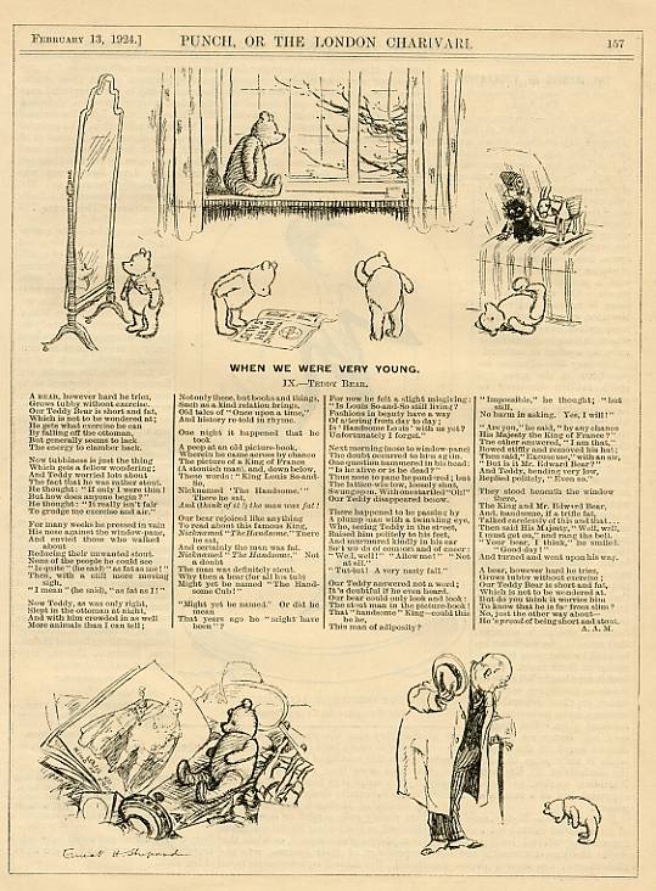
You probably know the world first “met” Pooh in Milne’s poem, “Teddy Bear” (initially published in Punch Magazine and then republished in his first book of verse, When We Were Very Young (1924)).
“Teddy Bear” as it appeared in Punch with Shepard’s illustrations (1924).
Though he wasn’t yet named ‘Winnie-the-Pooh,’ there’s no doubt whom Milne was referring to. Though at first worried about his size, Edward Bear comes to embrace his adiposity after a chance meeting with the King of France, who’s not only stout but handsome!
They stood beneath the window there,
The King and Mr. Edward Bear,
And, handsome, if a trifle fat,
Talked carelessly of this and that . . .

A bear, however hard he tries,
Grows tubby without exercise.
Our Teddy Bear is short and fat,
Which is not to be wondered at.
But do you think it worries him
To know that he is far from slim?
No, just the other way about --
He's proud of being short and stout.
 Jama's Alphabet Soup